
Full text loading...





The Infrastructure of an Excavation. Harald Ingholt’s Excavation Journals from Hama, Syria, 1931–1938, Page 1 of 1
< Previous page | Next page > /docserver/preview/fulltext/10.1484/M.ARC-EB.5.144099/M.ARC-EB.5.144480-1.gif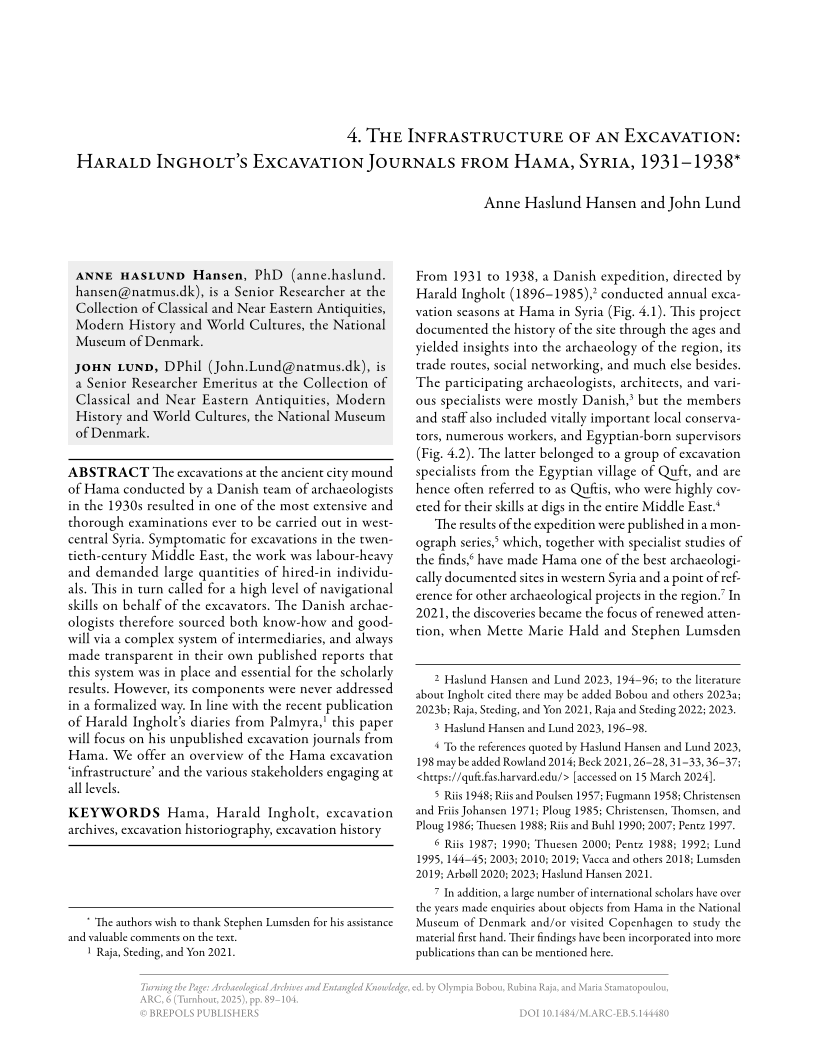
The excavations at the ancient city mound of Hama conducted by a Danish team of archaeologists in the 1930s resulted in one of the most extensive and thorough examinations ever to be carried out in west-central Syria. Symptomatic for excavations in the twentieth-century Middle East, the work was labour-heavy and demanded large quantities of hired-in individuals. This in turn called for a high level of navigational skills on behalf of the excavators. The Danish archaeologists therefore sourced both know-how and goodwill via a complex system of intermediaries, and always made transparent in their own published reports that this system was in place and essential for the scholarly results. However, its components were never addressed in a formalized way. In line with the recent publication of Harald Ingholt’s diaries from Palmyra,1 this paper will focus on his unpublished excavation journals from Hama. We offer an overview of the Hama excavation ‘infrastructure’ and the various stakeholders engaging at all levels.
Full text loading...