
Full text loading...





Le sottoscrizioni greche nei documenti pugliesi. Esempi di epoca normanna, Page 1 of 1
< Previous page | Next page > /docserver/preview/fulltext/10.1484/M.BIB-EB.6.09070802050003050305020003/M.BIB-EB.3.4521-1.gif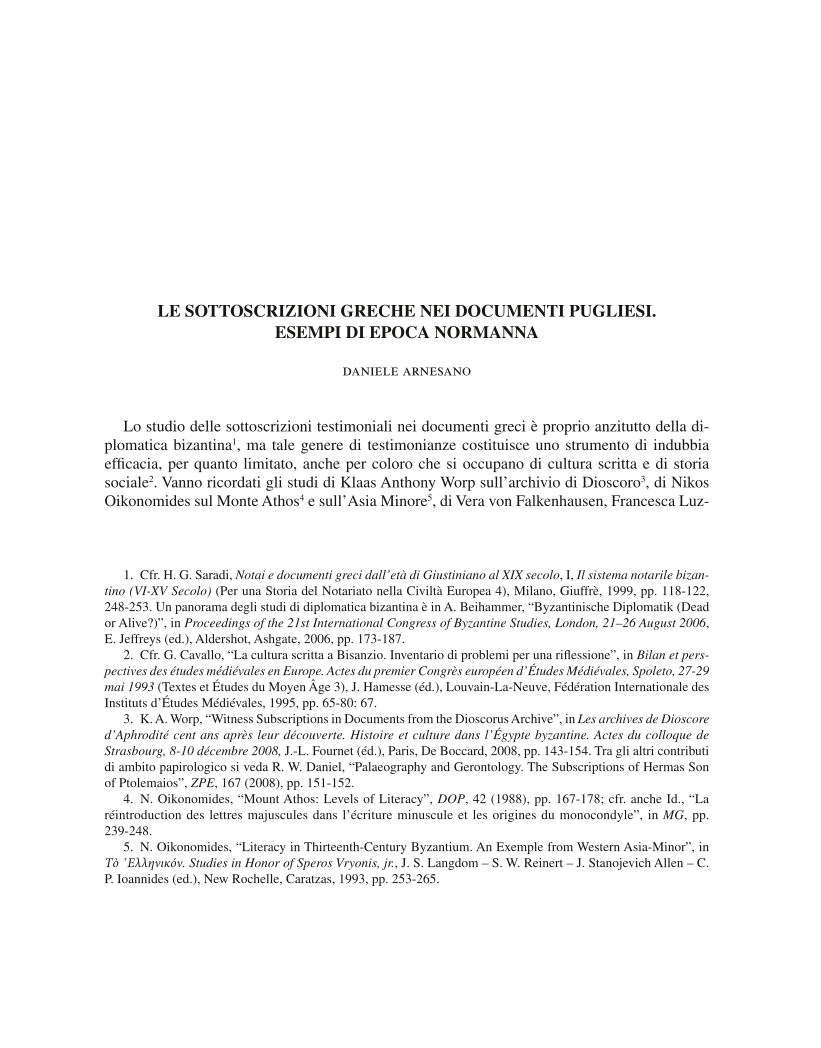
[
This article reports the provisional results of a palaeographical study of Greek subscriptions in Greek and Latin documents of the Medieval period written in Apulia. The subscriptions, dated from the 10th to the 16th century, come from different areas spread over the whole region. The author describes some examples of scripts in subscriptions of the Norman period, contemporary with the reign of the Comnenoi: there are calligraphic, cursive, documentary and chancery handwritings, employed by common people, high officials, soldiers, notaries, priests, and hegumens (the skill level varies from most expert hands to bradeos graphontes). This research sheds light on the levels of literacy and Greek writing in Apulia, especially in the areas of Bari and Taranto, for which, unlike the case of Southern Salento, almost no Greek manuscripts are known.
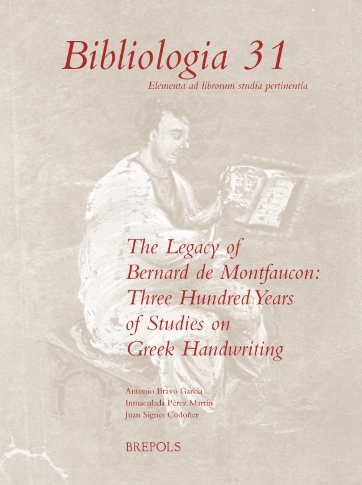
,In September 2008, the seventh edition of the International Colloquium of Greek Palaeography (Madrid-Salamanca, 15-20 September 2008) celebrated the 300th anniversary of the Palaeographia Graeca, the pioneer work of the Benedictine Bernard de Montfaucon that established the fundamentals of the discipline. Papers by renowned specialists in the field contributed to the methodology of study and to our knowledge of Greek manuscripts, and opened new perspectives for the study of the Greek manuscripts preserved mostly in European libraries, taking into account new methodological approaches, the possibilities of online resources and the results of ongoing research projects.
The Proceedings published here include contributions by specialists from over ten different countries, dealing with palaeographical issues such as ancient capital and lower-case lettering, writing and books in the Macedonian, Comnenian and Palaeologan periods, and Greek scribes and ateliers in the Renaissance (especially in manuscripts from the Iberian Peninsula). Many contributors also take a codicological approach and consider the material aspects of the codex, as well as other new research techniques. Finally, some papers deal with the book as object and how this relates to its content, as well as with the history of texts.
The International Colloquia of Greek Palaeography are organized by the International Committee of Greek Palaeography, presided by Prof. Dieter Harlfinger. The seventh edition payed tribute to the memory of the late Jean Irigoin, who died in 2006.
]
Full text loading...