


oa Errors in Archetypes and Publication: Observations on the Tradition of Dante’s Works
- By: Luca Azzetta
- Publication: The Art of Publication from the Ninth to the Sixteenth Century , pp 269-292
- Publisher: Brepols
- Publication Date: January 2023
- DOI: https://doi.org/10.1484/M.IPM-EB.5.133085


Errors in Archetypes and Publication: Observations on the Tradition of Dante’s Works, Page 1 of 1
< Previous page | Next page > /docserver/preview/fulltext/10.1484/M.IPM-EB.5.131849/M.IPM-EB.5.133085-1.gif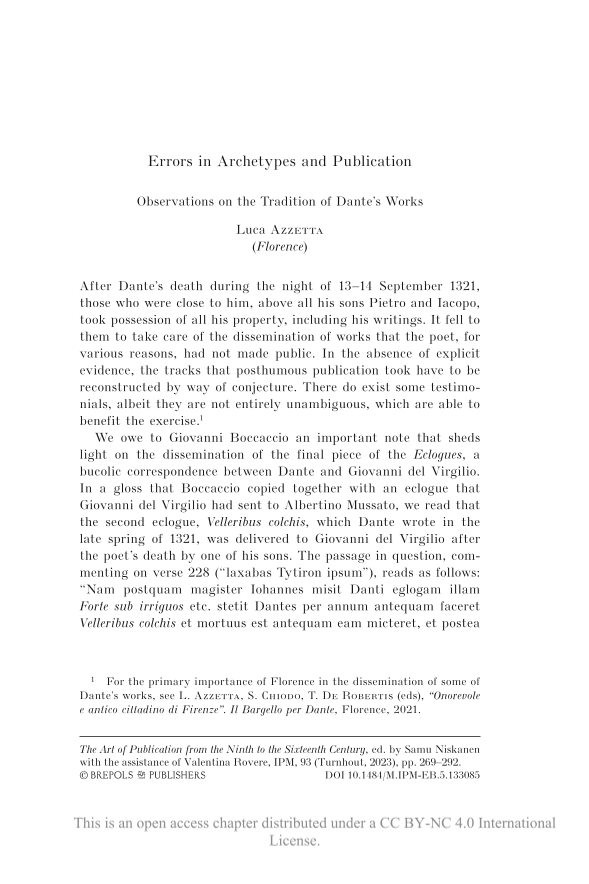
Several of Dante’s works got into circulation only after his death, often derived from an original not prepared for publication and thus introducing errors and lacunae. This applies to De vulgari eloquentia, Convivio, and Epistola a Cangrande. This chapter first introduces the case of the two former works, both uncompleted treatises, and then focuses on Epistola a Cangrande. The analysis of the direct tradition, the reconstruction of the archetype, and insights provided by the indirect tradition up to the sixteenth century suggest that Dante wrote the Epistola towards the end of his sojourn at Verona, but that he never sent it to the addressee. Descending from an original not intended for publication, the archetype was a severely corrupt text, something that undermines the opinion that the letter was a forgery made in north-eastern Italy, as has been proposed in the past. In contrast, study of the manuscripts demonstrates that dissemination began at Florence after Dante’s death, where the poet’s sons brought their father’s other writings, the Epistola among them.

Full text loading...
-
From This Site
/content/books/10.1484/M.IPM-EB.5.133085dcterms_title,dcterms_subject,pub_serialIdent,pub_author,pub_keyword-contentType:Contributor -contentType:Concept -contentType:Institution105