


oa Le palimpseste Parisinus graecus 1330, le plus ancien témoin manuscrit du Corpus Dionysiacum. Notes paléographiques et codicologiques
- By: Margherita Matera
- Publication: Organising a Literary Corpus in the Middle Ages , pp 63-91
- Publisher: Brepols
- Publication Date: January 2024
- DOI: https://doi.org/10.1484/M.IPM-EB.5.137789


Le palimpseste Parisinus graecus 1330, le plus ancien témoin manuscrit du Corpus Dionysiacum. Notes paléographiques et codicologiques, Page 1 of 1
< Previous page | Next page > /docserver/preview/fulltext/10.1484/M.IPM-EB.5.136883/M.IPM-EB.5.137789-1.gif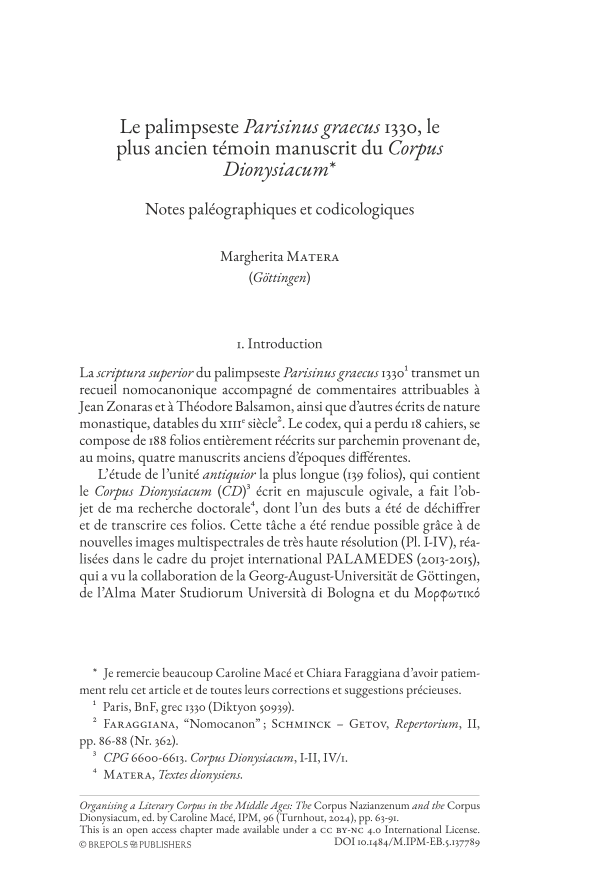
The object of this contribution is a codicological and palaeographical description of the largest unit antiquior (139 folios) of the manuscript Parisinus graecus 1330 (thirteenth century). It is written in ogival majuscule, and contains the complete Corpus Dionysiacum, albeit with considerable lacunae; the commentary, which exclusively transmits the exegesis of John of Scythopolis, is interposed between the text pericopes. The scribe’s hand can be dated between the late eighth and the early ninth centuries. There are also some marginals notes in ancient minuscule of the same period, whose content is attributable to Andrew of Crete († 740). The Parisinus graecus 1330 is the oldest Greek manuscript of the Corpus Areopagiticum we know so far.

Full text loading...
-
From This Site
/content/books/10.1484/M.IPM-EB.5.137789dcterms_title,dcterms_subject,pub_serialIdent,pub_author,pub_keyword-contentType:Contributor -contentType:Concept -contentType:Institution105