


f Front Matter ("Contents", "List of Maps and Illustrations", "Preface", "Contributors", "Maps", "List of Abbreviations", "A Note on Names")
Access full text
Chapter
- Publication: Medieval Livonia , pp 1-29
- Publisher: Brepols
- Publication Date: January 2025
- DOI: https://doi.org/10.1484/M.OUTREMER-EB.5.150643
Preview this chapter:



Front Matter ("Contents", "List of Maps and Illustrations", "Preface", "Contributors", "Maps", "List of Abbreviations", "A Note on Names"), Page 1 of 1
< Previous page | Next page > /docserver/preview/fulltext/10.1484/M.OUTREMER-EB.5.114279/M.OUTREMER-EB.5.150643-1.gif
Hardbound ISBN:
978-2-503-57806-4
E-book ISBN:
978-2-503-57807-1

Full text loading...
/deliver/fulltext/10.1484/M.OUTREMER-EB.5.114279/M.OUTREMER-EB.5.150643.html?itemId=/content/books/10.1484/M.OUTREMER-EB.5.150643&mimeType=html&fmt=ahah
Front Matter ("Contents", "List of Maps and Illustrations", "Preface", "Contributors", "Maps", "List of Abbreviations", "A Note on Names")
https://doi.org/10.1484/M.OUTREMER-EB.5.150643
/content/books/10.1484/M.OUTREMER-EB.5.150643
/content/books/10.1484/M.OUTREMER-EB.5.150643
View:
Figures
Figures
/content/figure/10.1484/M.OUTREMER-EB.5.150643.chp2_map1
Map 1.
Estonia and Latvia, in around 1200. In most cases the provinces were separated by natural obstacles like forests and marshes. Drawing by Kristel Roog.
10.1484/M.OUTREMER-EB.5.114279/Map_1_050318_thmb.png
10.1484/M.OUTREMER-EB.5.114279/Map_1_050318.png
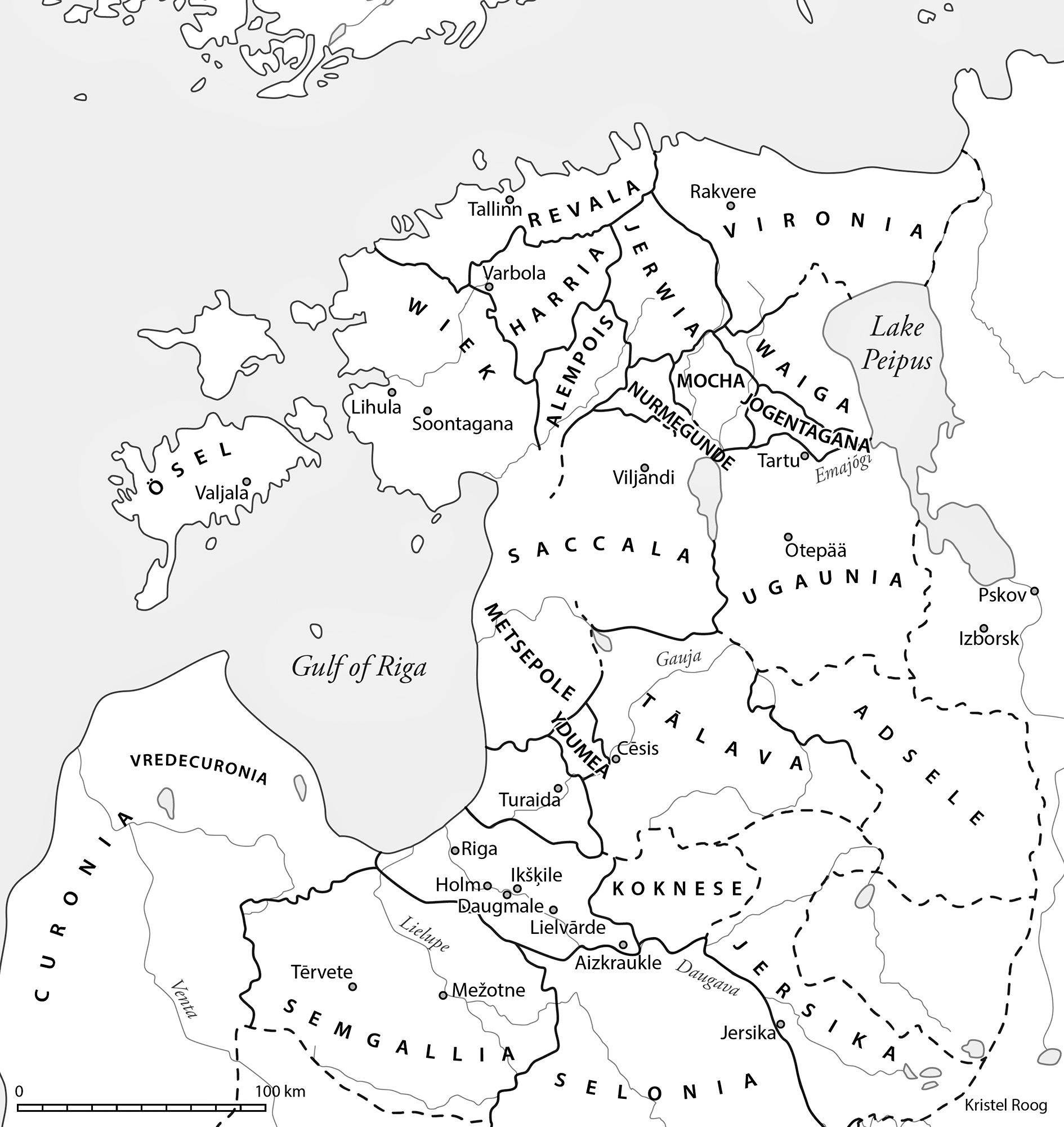
Map 1.
Estonia and Latvia, in around 1200. In most cases the provinces were separated by natural obstacles like forests and marshes. Drawing by Kristel Roog.
/content/figure/10.1484/M.OUTREMER-EB.5.150643.chp2_map2
Map 2.
Livonia in around 1300. By about this time the external borders of the country generally took shape.
1 – chartered town. Drawing by Kristel Roog.
10.1484/M.OUTREMER-EB.5.114279/Map_2_050318_thmb.png
10.1484/M.OUTREMER-EB.5.114279/Map_2_050318.png
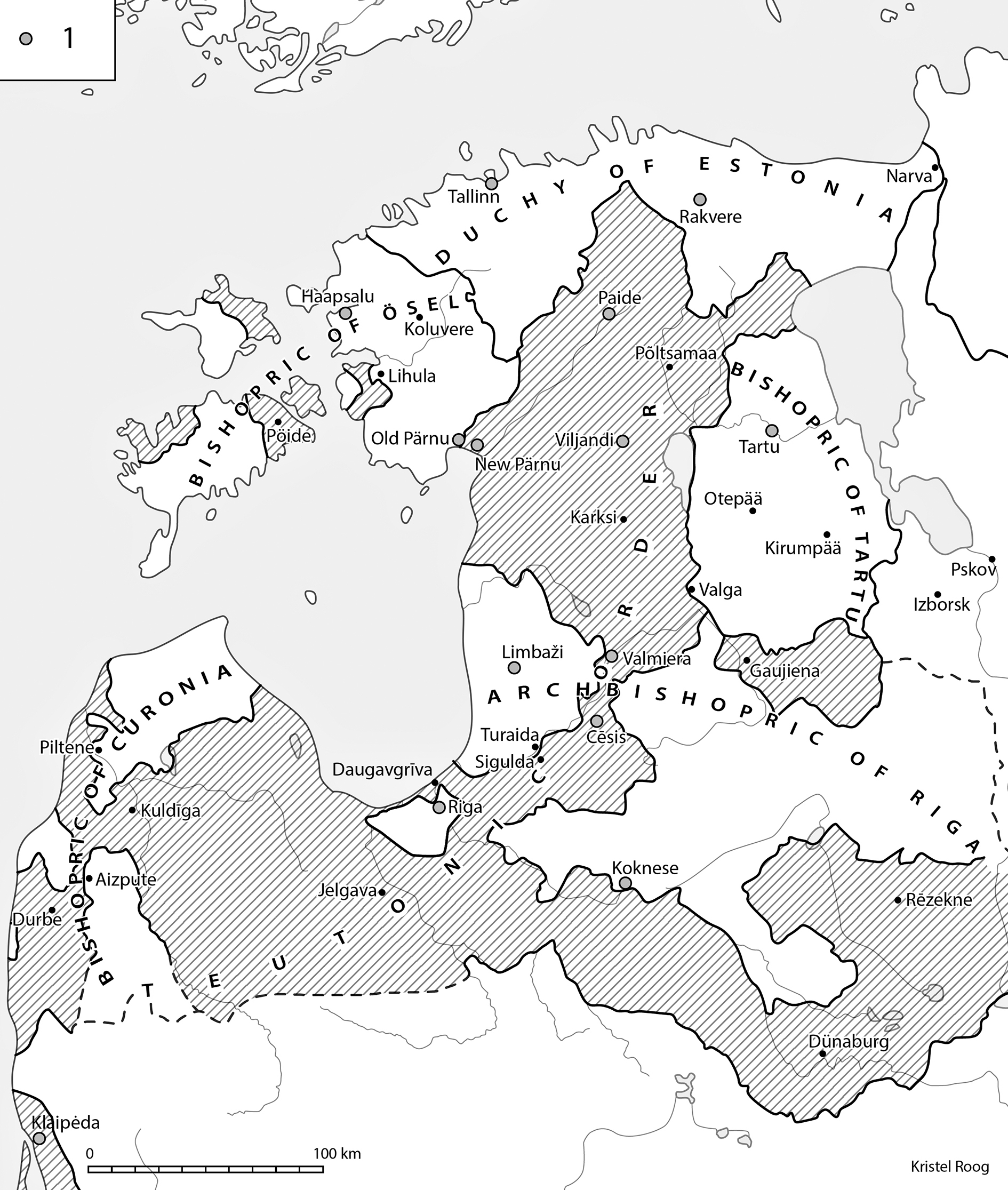
Map 2.
Livonia in around 1300. By about this time the external borders of the country generally took shape.
1 – chartered town. Drawing by Kristel Roog.
/content/figure/10.1484/M.OUTREMER-EB.5.150643.chp2_map3
Map 3.
The church in Livonia at the end of the Middle Ages. The uneven distribution of parochial churches generally reflects the settlement geography.
1 – cathedral; 2 – Cistercian monastery; 3 – parochial church; 4 – chartered town. Drawing by Kristel Roog.
10.1484/M.OUTREMER-EB.5.114279/Map_3_050318_thmb.png
10.1484/M.OUTREMER-EB.5.114279/Map_3_050318.png
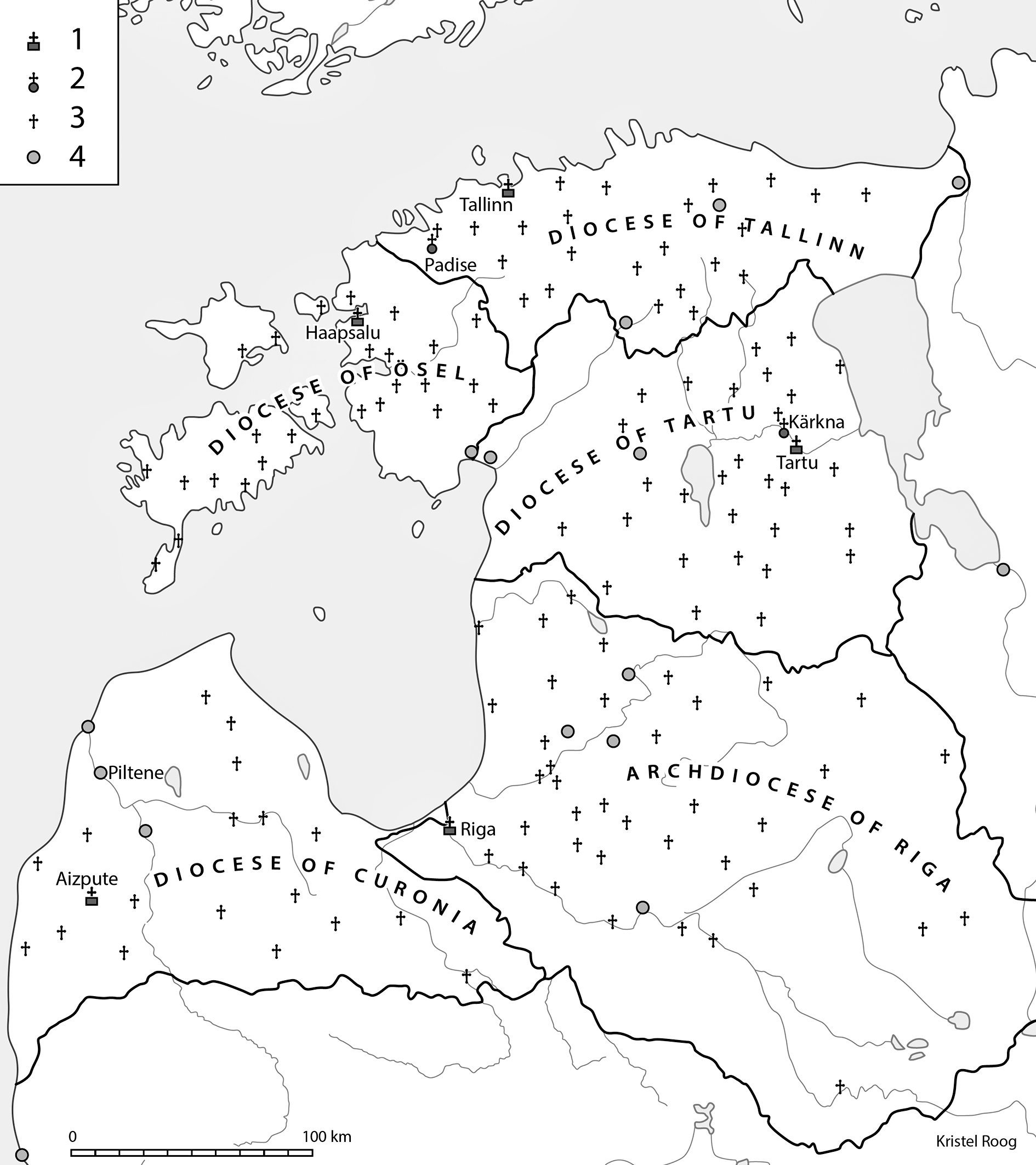
Map 3.
The church in Livonia at the end of the Middle Ages. The uneven distribution of parochial churches generally reflects the settlement geography.
1 – cathedral; 2 – Cistercian monastery; 3 – parochial church; 4 – chartered town. Drawing by Kristel Roog.
/content/figure/10.1484/M.OUTREMER-EB.5.150643.chp2_map4
Map 4.
The forces of the Teutonic Order in Livonia according to the 1451 visitation. The manpower and supplies were concentrated in the larger interior castles.
1 – centre of commandery; 2 – knight brother; 3 – priest brother; 4 – sergeant. Source: Friedrich Benninghoven, ‘Probleme der Zahl und Standortverteilung der livländischen Streitkräfte im ausgehenden Mittelalter’, Zeitschrift für Ostforschung 12 (1963), 601–22. Drawing by Kristel Roog.
10.1484/M.OUTREMER-EB.5.114279/Map_4_070318_thmb.png
10.1484/M.OUTREMER-EB.5.114279/Map_4_070318.png
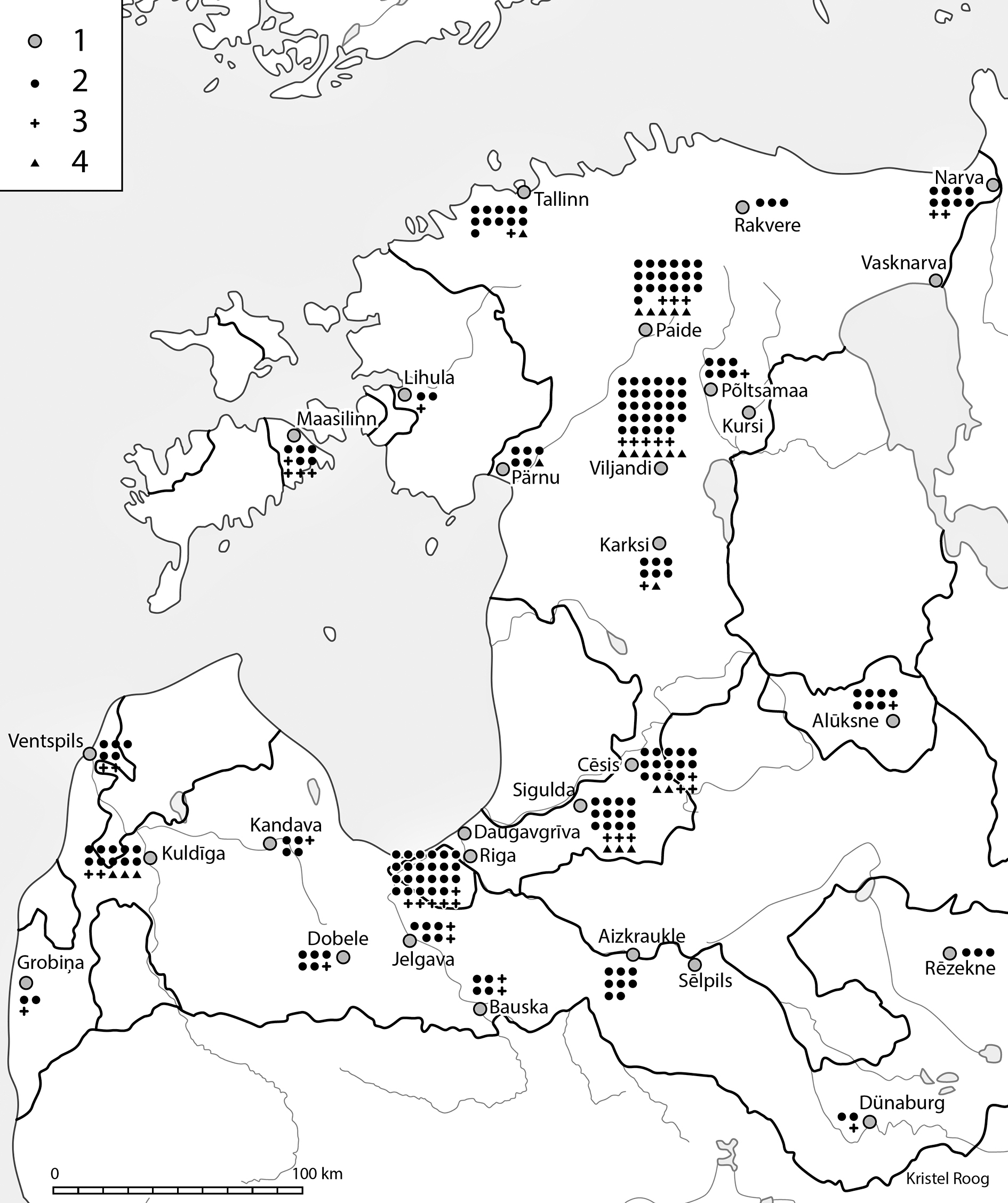
Map 4.
The forces of the Teutonic Order in Livonia according to the 1451 visitation. The manpower and supplies were concentrated in the larger interior castles.
1 – centre of commandery; 2 – knight brother; 3 – priest brother; 4 – sergeant. Source: Friedrich Benninghoven, ‘Probleme der Zahl und Standortverteilung der livländischen Streitkräfte im ausgehenden Mittelalter’, Zeitschrift für Ostforschung 12 (1963), 601–22. Drawing by Kristel Roog.
/content/figure/10.1484/M.OUTREMER-EB.5.150643.chp2_map5
Map 5.
Nobility in Livonia at the end of the Middle Ages. Possessions of families and their branches in several territories were an important integrating factor in Livonia. Only the mightiest families held castles of their own.
1 – holding of Üxküll; 2 – castle of Üxküll; 3 – holding of Tiesenhausen; 4 – castle of Tiesenhausen; 5 – holding of Wrangel. >Compiled by Anti Selart. Drawing by Kristel Roog.
10.1484/M.OUTREMER-EB.5.114279/Map_5_050318_thmb.png
10.1484/M.OUTREMER-EB.5.114279/Map_5_050318.png
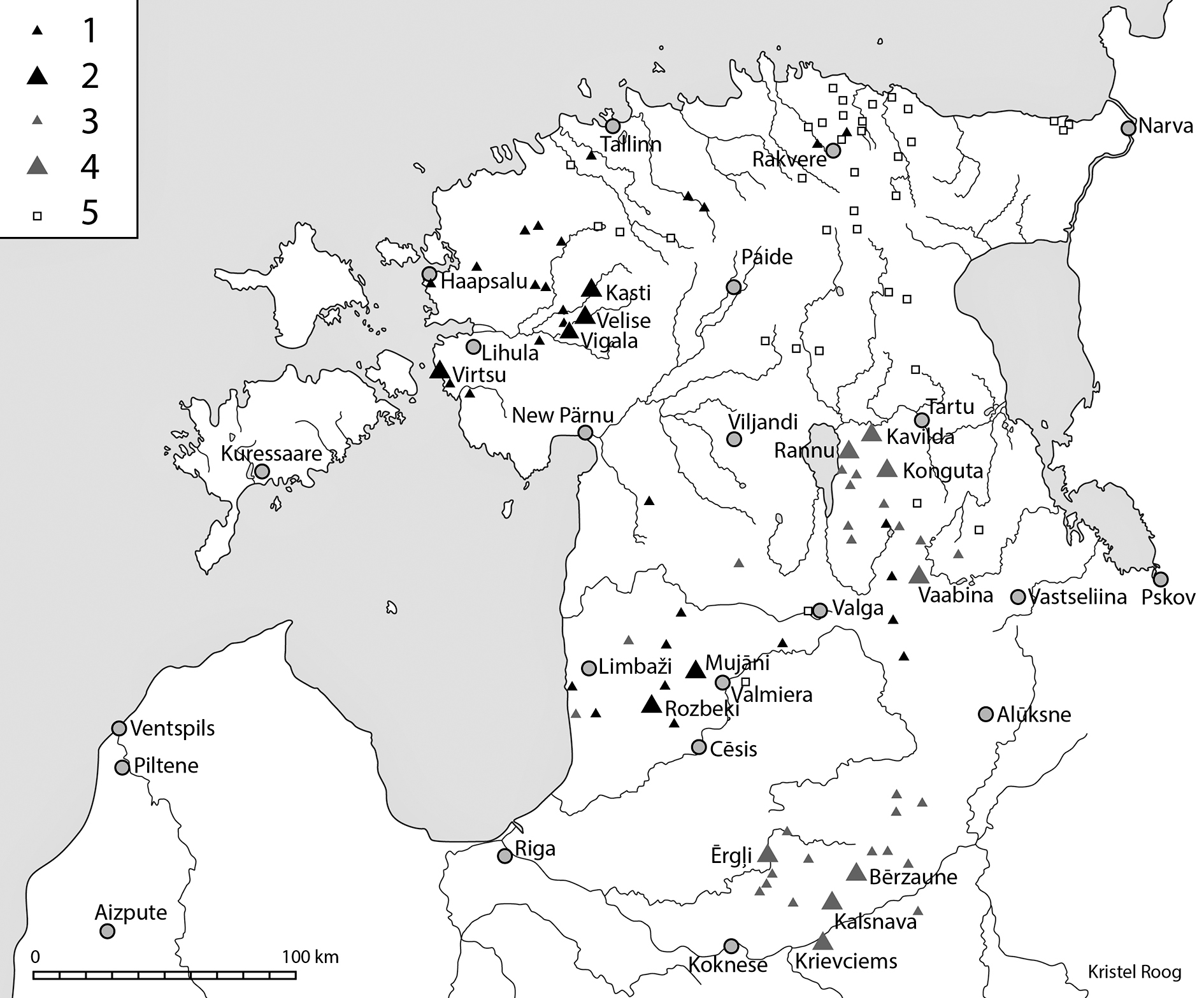
Map 5.
Nobility in Livonia at the end of the Middle Ages. Possessions of families and their branches in several territories were an important integrating factor in Livonia. Only the mightiest families held castles of their own.
1 – holding of Üxküll; 2 – castle of Üxküll; 3 – holding of Tiesenhausen; 4 – castle of Tiesenhausen; 5 – holding of Wrangel. >Compiled by Anti Selart. Drawing by Kristel Roog.
/content/figure/10.1484/M.OUTREMER-EB.5.150643.chp2_map6
Map 6.
Layouts of Tallinn, Tartu, Riga, and Cēsis at the end of the Middle Ages. Cēsis presents a typical small town at the foot of a large castle. Drawing by Kristel Roog.
10.1484/M.OUTREMER-EB.5.114279/Map_6_050318_thmb.png
10.1484/M.OUTREMER-EB.5.114279/Map_6_050318.png
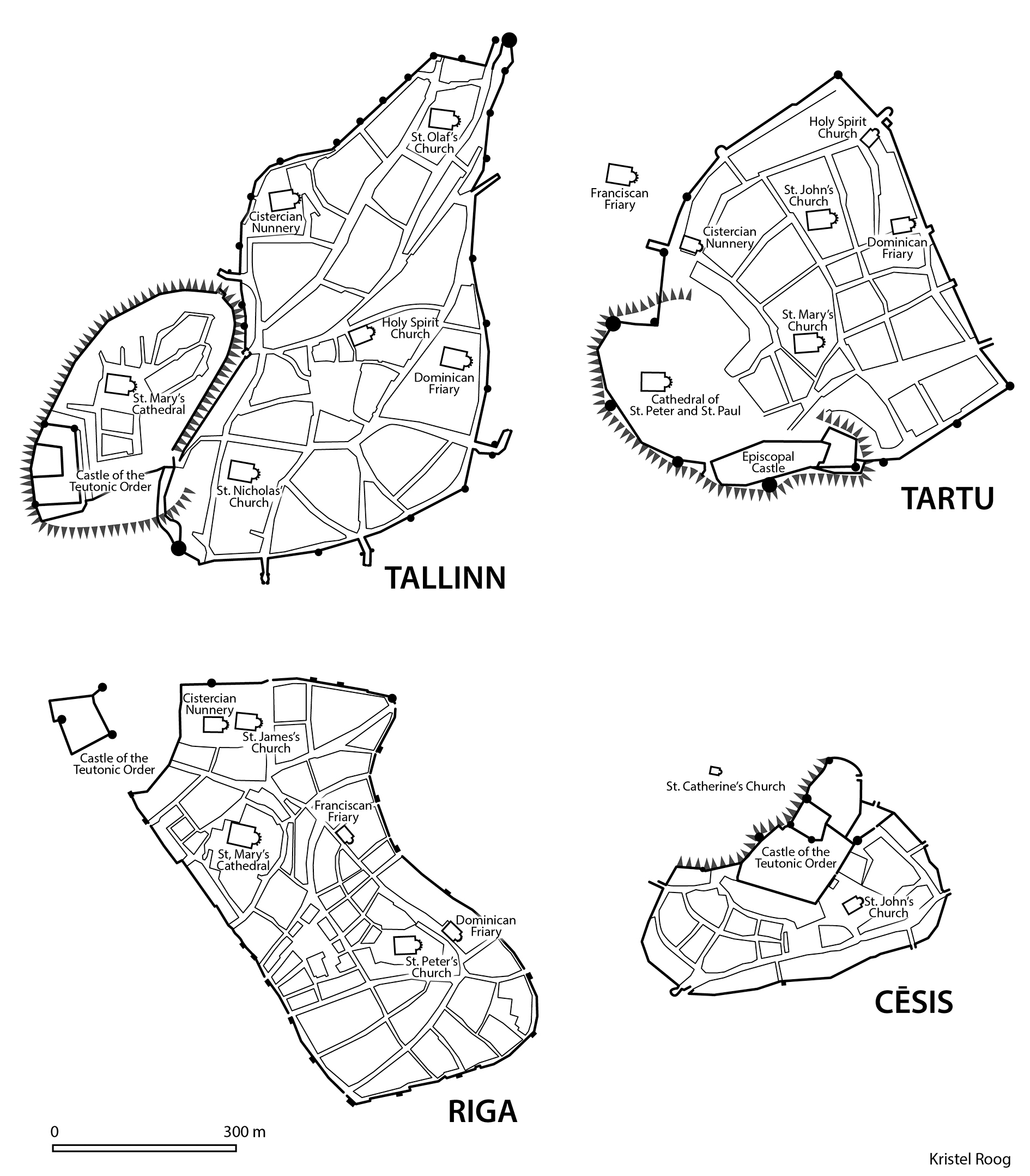
Map 6.
Layouts of Tallinn, Tartu, Riga, and Cēsis at the end of the Middle Ages. Cēsis presents a typical small town at the foot of a large castle. Drawing by Kristel Roog.
/content/figure/10.1484/M.OUTREMER-EB.5.150643.chp2_map7
Map 7.
Livonia in around 1500. The internal borders of Livonia remained stable after the sale of North Estonia by the king of Denmark in 1346.
1 – chartered town. Drawing by Kristel Roog.
10.1484/M.OUTREMER-EB.5.114279/Map_7_050318_thmb.png
10.1484/M.OUTREMER-EB.5.114279/Map_7_050318.png
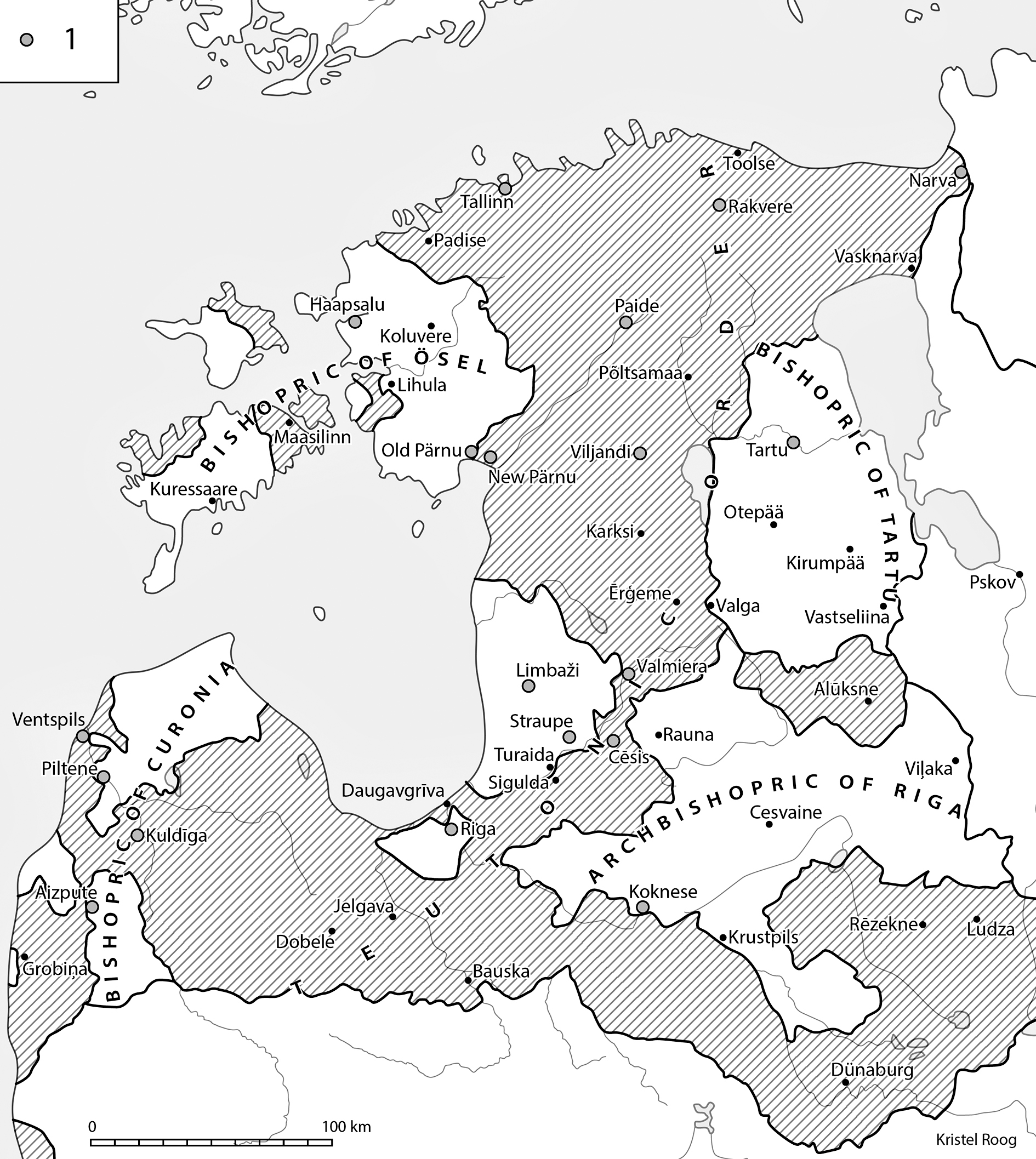
Map 7.
Livonia in around 1500. The internal borders of Livonia remained stable after the sale of North Estonia by the king of Denmark in 1346.
1 – chartered town. Drawing by Kristel Roog.
-
From This Site
/content/books/10.1484/M.OUTREMER-EB.5.150643dcterms_title,dcterms_subject,pub_serialIdent,pub_author,pub_keyword-contentType:Contributor -contentType:Concept -contentType:Institution105
/content/books/10.1484/M.OUTREMER-EB.5.150643
dcterms_title,dcterms_subject,pub_serialIdent,pub_author,pub_keyword
-contentType:Contributor -contentType:Concept -contentType:Institution
10
5