
Full text loading...





Handmade Pottery, Page 1 of 1
< Previous page | Next page > /docserver/preview/fulltext/10.1484/M.SCA-EB.5.145037/M.SCA-EB.5.149712-1.gif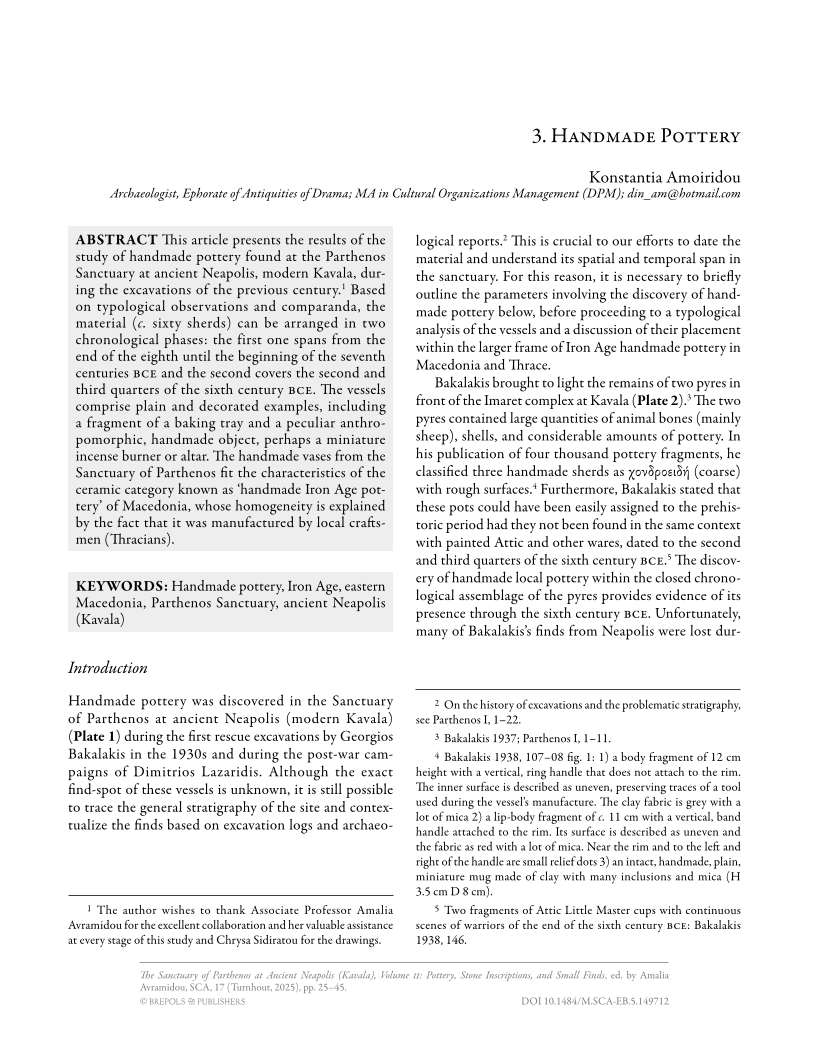
This article presents the results of the study of handmade pottery found at the Parthenos Sanctuary at ancient Neapolis, modern Kavala, during the excavations of the previous century. Based on typological observations and comparanda, the material (c. sixty sherds) can be arranged in two chronological phases: the first one spans from the end of the eighth until the beginning of the seventh centuries bce and the second covers the second and third quarters of the sixth century bce. The vessels comprise plain and decorated examples, including a fragment of a baking tray and a peculiar anthropomorphic, handmade object, perhaps a miniature incense burner or altar. The handmade vases from the Sanctuary of Parthenos fit the characteristics of the ceramic category known as ‘handmade Iron Age pottery’ of Macedonia, whose homogeneity is explained by the fact that it was manufactured by local craftsmen (Thracians).
Full text loading...