


oa The texts of the Tongeren tablets and their significance
- Authors: Jürgen Blänsdorf and Markus Scholz
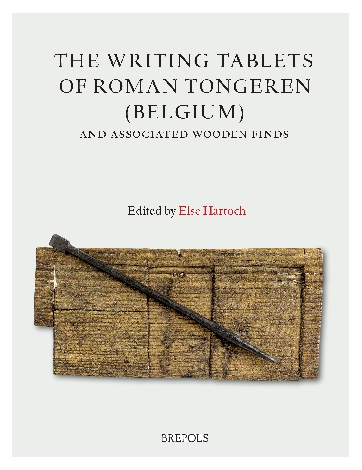
- Publication: The Writing Tablets of Roman Tongeren (Belgium) , pp 21-31
- Publisher: Brepols
- Publication Date: January 2025
- DOI: https://doi.org/10.1484/M.STIA-EB.5.150339


The texts of the Tongeren tablets and their significance, Page 1 of 1
< Previous page | Next page > /docserver/preview/fulltext/10.1484/M.STIA-EB.5.144107/M.STIA-EB.5.150339-1.gif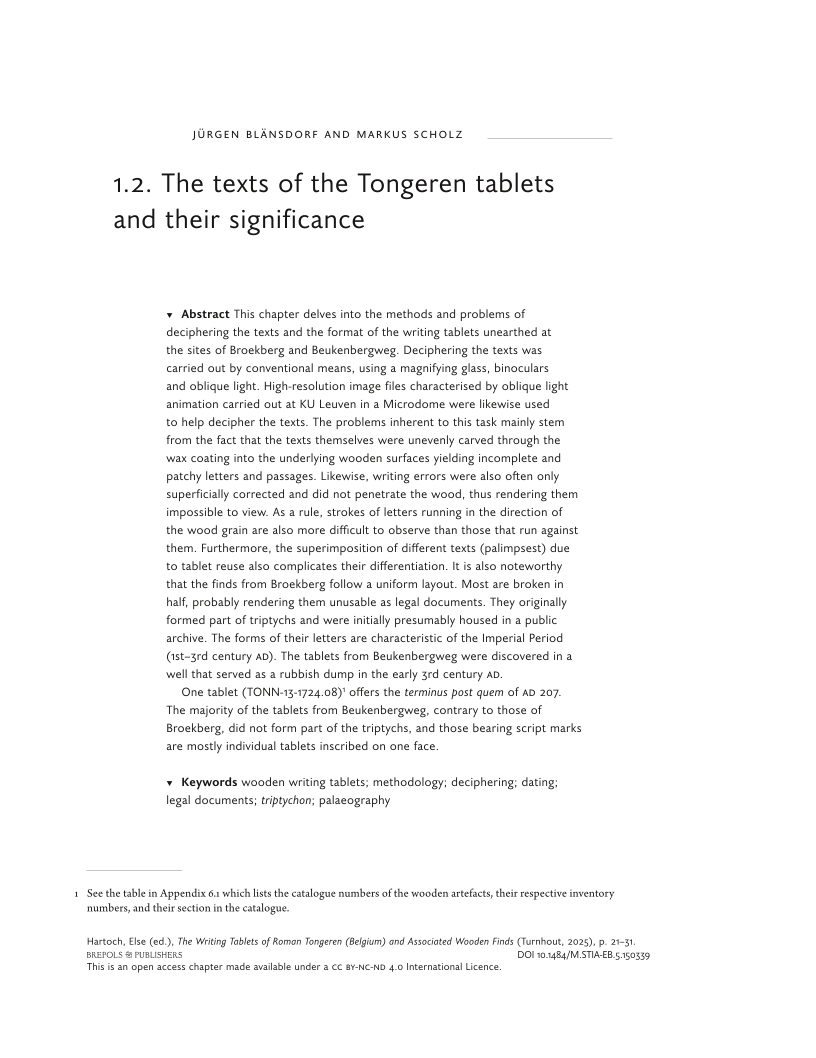
This chapter delves into the methods and problems of deciphering the texts and the format of the writing tablets unearthed at the sites of Broekberg and Beukenbergweg. Deciphering the texts was carried out by conventional means, using a magnifying glass, binoculars and oblique light. High-resolution image files characterised by oblique light animation carried out at KU Leuven in a Microdome were likewise used to help decipher the texts. The problems inherent to this task mainly stem from the fact that the texts themselves were unevenly carved through the wax coating into the underlying wooden surfaces yielding incomplete and patchy letters and passages. Likewise, writing errors were also often only superficially corrected and did not penetrate the wood, thus rendering them impossible to view. As a rule, strokes of letters running in the direction of the wood grain are also more difficult to observe than those that run against them. Furthermore, the superimposition of different texts (palimpsest) due to tablet reuse also complicates their differentiation. It is also noteworthy that the finds from Broekberg follow a uniform layout. Most are broken in half, probably rendering them unusable as legal documents. They originally formed part of triptychs and were initially presumably housed in a public archive. The forms of their letters are characteristic of the Imperial Period (1st–3rd century ad). The tablets from Beukenbergweg were discovered in a well that served as a rubbish dump in the early 3rd century ad.
One tablet (TONN-13-1724.08)1 offers the terminus post quem of ad 207. The majority of the tablets from Beukenbergweg, contrary to those of Broekberg, did not form part of the triptychs, and those bearing script marks are mostly individual tablets inscribed on one face.

Full text loading...
-
From This Site
/content/books/10.1484/M.STIA-EB.5.150339dcterms_title,dcterms_subject,pub_serialIdent,pub_author,pub_keyword-contentType:Contributor -contentType:Concept -contentType:Institution105