


oa The Roman wooden writing tablets of Tongeren: Contextualising the finds
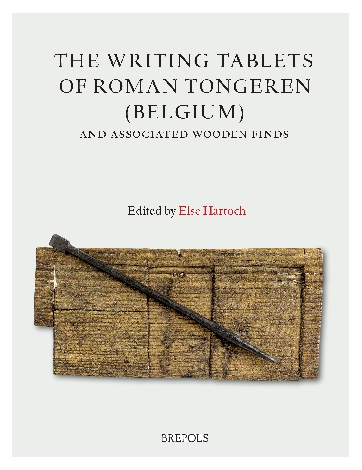
- By: Dirk Pauwels
- Publication: The Writing Tablets of Roman Tongeren (Belgium) , pp 125-163
- Publisher: Brepols
- Publication Date: January 2025
- DOI: https://doi.org/10.1484/M.STIA-EB.5.150346


The Roman wooden writing tablets of Tongeren: Contextualising the finds, Page 1 of 1
< Previous page | Next page > /docserver/preview/fulltext/10.1484/M.STIA-EB.5.144107/M.STIA-EB.5.150346-1.gif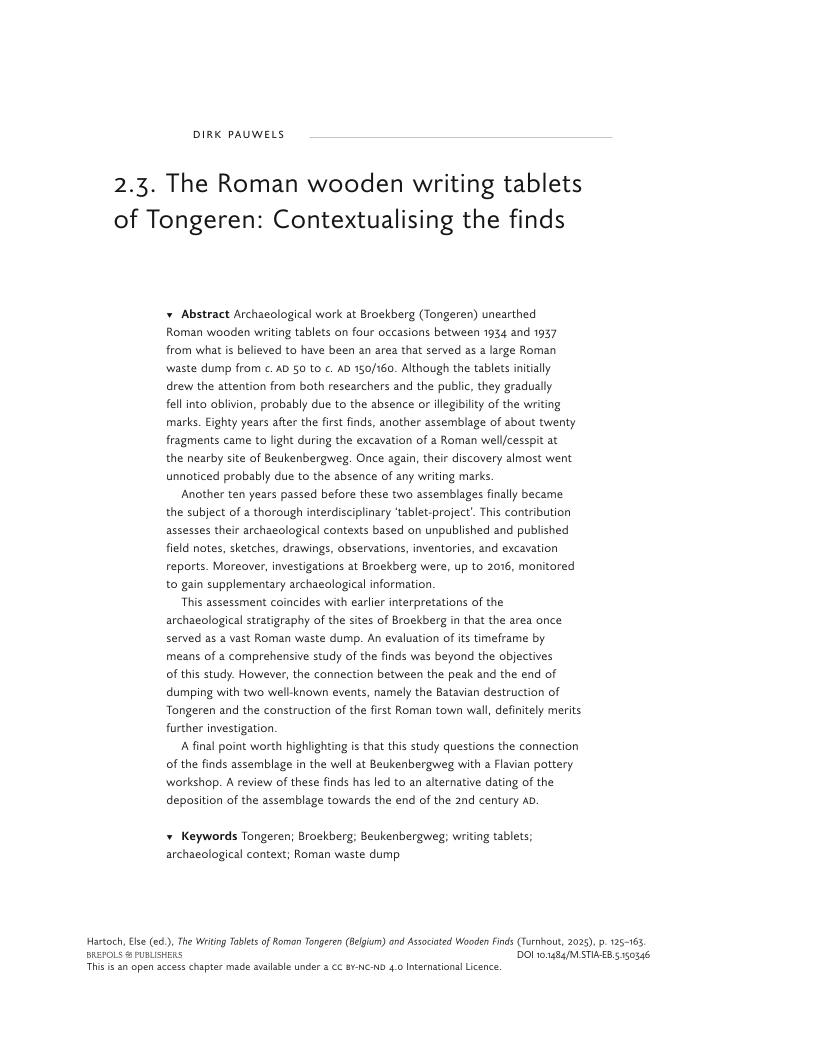
Archaeological work at Broekberg (Tongeren) unearthed Roman wooden writing tablets on four occasions between 1934 and 1937 from what is believed to have been an area that served as a large Roman waste dump from c. ad 50 to c. ad 150/160. Although the tablets initially drew the attention from both researchers and the public, they gradually fell into oblivion, probably due to the absence or illegibility of the writing marks. Eighty years after the first finds, another assemblage of about twenty fragments came to light during the excavation of a Roman well/cesspit at the nearby site of Beukenbergweg. Once again, their discovery almost went unnoticed probably due to the absence of any writing marks.
Another ten years passed before these two assemblages finally became the subject of a thorough interdisciplinary ‘tablet-project’. This contribution assesses their archaeological contexts based on unpublished and published field notes, sketches, drawings, observations, inventories, and excavation reports. Moreover, investigations at Broekberg were, up to 2016, monitored to gain supplementary archaeological information.
This assessment coincides with earlier interpretations of the archaeological stratigraphy of the sites of Broekberg in that the area once served as a vast Roman waste dump. An evaluation of its timeframe by means of a comprehensive study of the finds was beyond the objectives of this study. However, the connection between the peak and the end of dumping with two well-known events, namely the Batavian destruction of Tongeren and the construction of the first Roman town wall, definitely merits further investigation.
A final point worth highlighting is that this study questions the connection of the finds assemblage in the well at Beukenbergweg with a Flavian pottery workshop. A review of these finds has led to an alternative dating of the deposition of the assemblage towards the end of the 2nd century ad.

Full text loading...
-
From This Site
/content/books/10.1484/M.STIA-EB.5.150346dcterms_title,dcterms_subject,pub_serialIdent,pub_author,pub_keyword-contentType:Contributor -contentType:Concept -contentType:Institution105