


oa Holding, Handling, Flipping. Remarks on the Perception of Medals (Fifteenth to Seventeenth Centuries)
- By: Agnieszka Smołucha-Sładkowska
- Publication: Proceedings of the XVI International Numismatic Congress, 11–16.09.2022, Warsaw, Vol. iv: Medals, Modern and General Numismatics , pp 163-169
- Publisher: Brepols
- Publication Date: January 2025
- DOI: https://doi.org/10.1484/M.WSA-EB.5.145475


Holding, Handling, Flipping. Remarks on the Perception of Medals (Fifteenth to Seventeenth Centuries), Page 1 of 1
< Previous page | Next page > /docserver/preview/fulltext/10.1484/M.WSA-EB.5.143657/M.WSA-EB.5.145475-1.gif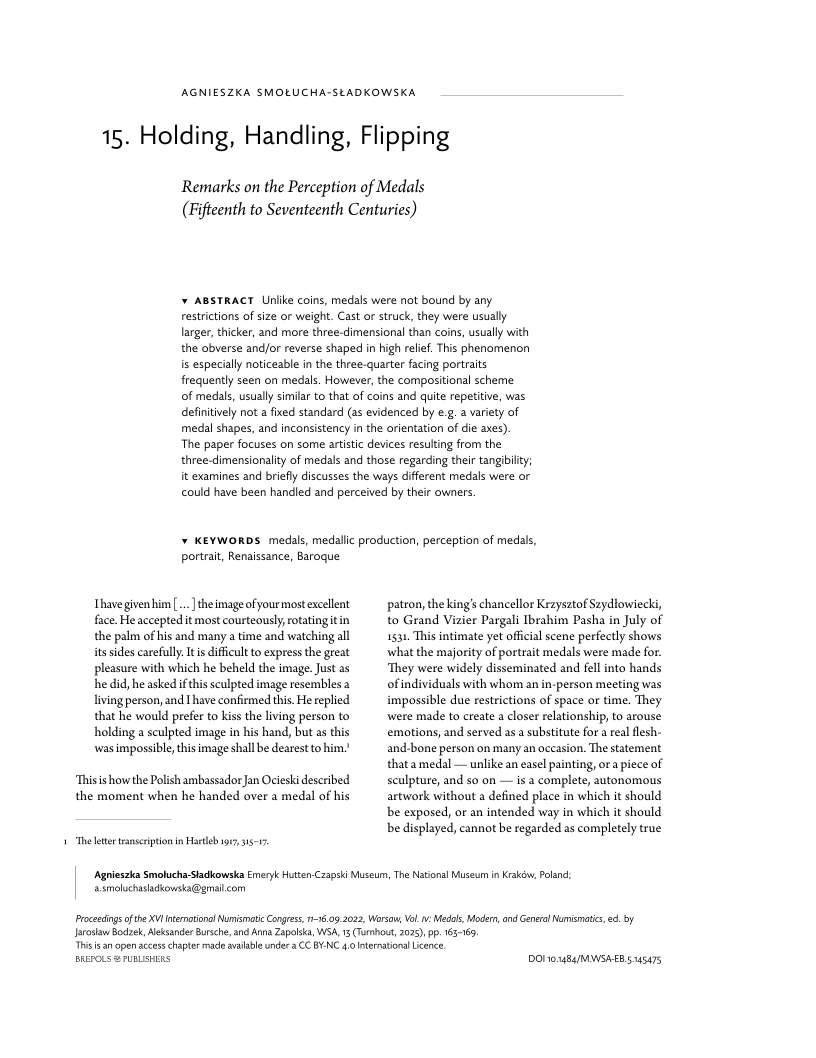
Unlike coins, medals were not bound by any restrictions of size or weight. Cast or struck, they were usually larger, thicker, and more three-dimensional than coins, usually with the obverse and/or reverse shaped in high relief. This phenomenon is especially noticeable in the three-quarter facing portraits frequently seen on medals. However, the compositional scheme of medals, usually similar to that of coins and quite repetitive, was definitively not a fixed standard (as evidenced by e.g. a variety of medal shapes, and inconsistency in the orientation of die axes). The paper focuses on some artistic devices resulting from the three-dimensionality of medals and those regarding their tangibility; it examines and briefly discusses the ways different medals were or could have been handled and perceived by their owners.

Full text loading...
-
From This Site
/content/books/10.1484/M.WSA-EB.5.145475dcterms_title,dcterms_subject,pub_serialIdent,pub_author,pub_keyword-contentType:Contributor -contentType:Concept -contentType:Institution105