


Brepols
Brepols is an international academic publisher of works in the humanities, with a particular focus in history, archaeology, history of the arts, language and literature, and critical editions of source works.2681 - 2700 of 3194 results
-
-
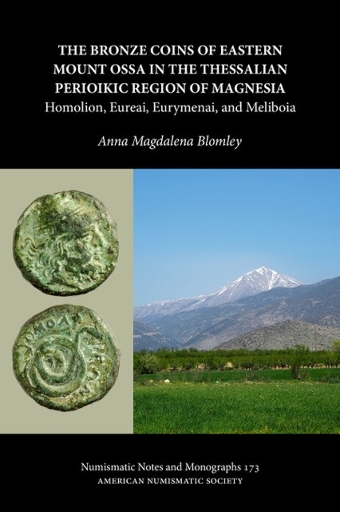
The Bronze Coins of Eastern Mount Ossa in the Thessalian Perioikic Region of Magnesia
Homolion, Eureai, Eurymenai, and Meliboia
show More to view fulltext, buy and share links for:The Bronze Coins of Eastern Mount Ossa in the Thessalian Perioikic Region of Magnesia show Less to hide fulltext, buy and share links for: The Bronze Coins of Eastern Mount Ossa in the Thessalian Perioikic Region of MagnesiaThis monograph examines the Late Classical and Hellenistic bronze coinages of five mints in the Thessalian perioikic region of Magnesia. At the core of this work lies a new die-study of the coins produced by the strategically and economically important coastal cities of Homolion and Meliboia as well as the lesser-known mints of Eureai, Eurymenai, and Rhizous. Combining this die-study with a close examination of the cities’ topographical context in a border region between Thessaly and Macedon and drawing on archaeological data from Magnesia and beyond, the monograph addresses key questions concerning the chronology, denominations, and circulation patterns of the bronze issues minted on eastern Mount Ossa. This analysis not only throws new light on coin production in Late Classical and Hellenistic Magnesia, but also allows a discussion of the possible military and non-military functions of the region’s different bronze issues.
Placing the coins of Eureai, Eurymenai, Homolion, Meliboia, and Rhizous in their wider context, this monograph furthermore addresses broader issues in the history of Thessalian coinage. In particular, the monograph’s regional approach offers an unusual opportunity to examine to what extent Thessaly’s Late Classical and Hellenistic civic coins were genuinely local in design, production, and function. The monograph thus both explores the coins of Mount Ossa and contributes towards a better understanding of the introduction and development of bronze coinages in the wider Thessalian region and beyond.
-
-
-
The Byzantine Historiographical Prefaces (4th–15th Centuries)
A Study on the Praxis and Culture of Writing History in Byzantium
show More to view fulltext, buy and share links for:The Byzantine Historiographical Prefaces (4th–15th Centuries) show Less to hide fulltext, buy and share links for: The Byzantine Historiographical Prefaces (4th–15th Centuries)In recent years a lively debate has developed on the features of Byzantine historiography. The increasingly dominant tendency today is to treat historical texts more as pleasant literary narratives than as systematic historical accounts of the political and military history of Byzantium. The present study aims to contribute to this debate by revisiting the voices of the Byzantine authors themselves, focusing on the extant historical prefaces from the Early, Middle, and Late Byzantine eras. This seemed timely, more than a century after the publication of Ηeinrich Lieberich’s fundamental work on Byzantine historiographical proems.
Obviously, not all prefaces are of equal interest: some serve a purely conventional function, while others are composed more thoughtfully and merit more careful attention. The book’s goal is twofold: firstly, to outline the details of the prefatory function of the Byzantine historiographical proems as microtexts; secondly, to detect and evaluate the theoretical views expressed by the authors of each period regarding the genre of Byzantine historiography. This will expand our knowledge of how the Byzantines wrote (praxis) and thought (culture) about historiography.
-
-
-
The Calligraphy of Medieval Music
show More to view fulltext, buy and share links for:The Calligraphy of Medieval Music show Less to hide fulltext, buy and share links for: The Calligraphy of Medieval MusicThe Calligraphy of Medieval Music treats the practical aspects of the book making and music writing trades in the Middle Ages. It covers most major regions of music writing in medieval Europe, from Sicily to England and from Spain to the eastern Germanic regions. Specific issues raised by the contributors include the pricking and ruling of books; the writing habits of scribes and their reliance on memory; the cultural influence of monastic orders such as the Carthusians; graphic variants between regional styles of music notation ranging from tenth-century Saint-Gall to sixteenth-century Cambrai; and the impact of print on late medieval notation. The volume opens with a few essays dealing with general issues such as page layout and manuscript production both in and out of medieval Europe. The second part of the book covers early music notations from the tenth and eleventh centuries, and the third part, the twelfth to the sixteenth centuries.
-
-
-
The Cambridge Gloss on the Apocalypse
Cambridge University Library Dd.X.16
show More to view fulltext, buy and share links for:The Cambridge Gloss on the Apocalypse show Less to hide fulltext, buy and share links for: The Cambridge Gloss on the ApocalypseThe Glossa in Apocalypsin (Cambridge Gloss on the Apocalypse) is a recently-discovered anonymous Hiberno-Latin (that is, authored by an Irish cleric writing in Latin) commentary on the Apocalypse of John found in a tenth-century manuscript at Cambridge University Library. This gloss is written in a similar style to other Irish-authored exegetical texts of the same period. That is, the author proceeds verse by verse through the entire Apocalypse, citing short phrases or even single words of the biblical text, followed by brief explanations that serve to clarify meaning and are often moral or allegorical in nature, as well as offering alternative interpretations of a given passage. The text has a marked dependence on the hermeneutical method of the fourth-century Donatist Tyconius as laid out in his Liber Regularum (Book of Rules), and applied in his Exposition on the Apocalypse. The Cambridge Gloss promotes an ecclesiological and spiritual interpretation of the Apocalypse, muting speculation about an imminent endtime scenario. The gloss contains numerous references to heretics, emphasises the hierarchy and the privileged role of teachers within the church, and likely dates from the eighth century, the ‘Northumbrian Golden Age’, exemplified by the works of Bede the Venerable and Alcuin of York. This English translation (accompanied by numerous notes) is intended to give readers an insight into understanding the viewpoint that medieval exegetes held in explaining the Apocalypse of John.
The source text of this volume appeared in Corpus Christianorum Series Latina as Glossa in Apocalypsin e codice Bibliothecae Vniuersitatis Cantabrigiensis Dd.X.16 (CCSL 108G). References to the corresponding pages of the Corpus Christianorum edition are provided in the margins of this translation.
-
-
-
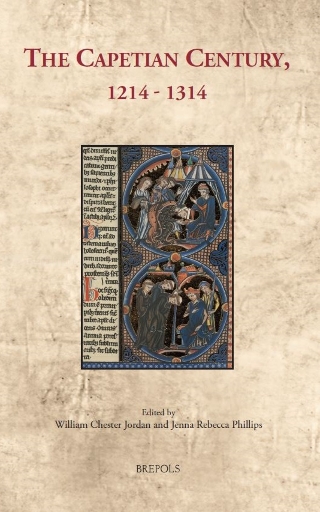
The Capetian Century, 1214 to 1314
show More to view fulltext, buy and share links for:The Capetian Century, 1214 to 1314 show Less to hide fulltext, buy and share links for: The Capetian Century, 1214 to 1314This volume provides a fresh look at the Capetian century (1214-1314), a period that changed the cultural and political fabric and laid the foundation for the modernisation of the medieval West.
The period from the birth of Louis IX to the death of Philip the Fair is remarkable for a series of developments and accomplishments associated with the Capetian kings of France. Innovations in architecture, manuscript illumination, and music all helped shape the cultural fabric of French and European life. Administrative historians emphasize the development of political institutions that have been said to lay foundations of the modern State. ‘Moral reform’, partly in support of the crusading movement, led to various changes in policies toward Jews, prostitutes, heretics, and many other social groups.
This volume brings together essays presented at the Capetian Century Conference held at Princeton University, commemorating two seminal anniversaries bracketing the 'Capetian Century' - the Battle of Bouvines (1214), and the death of Philip the Fair (1314).
-
-
-
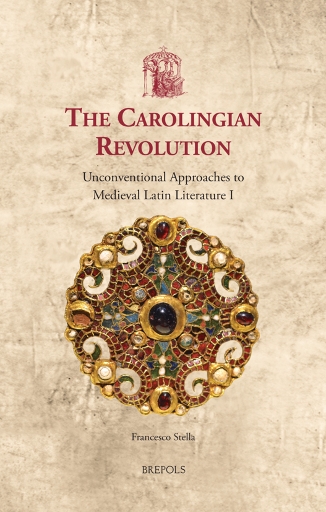
The Carolingian Revolution
Unconventional Approaches to Medieval Latin Literature I
show More to view fulltext, buy and share links for:The Carolingian Revolution show Less to hide fulltext, buy and share links for: The Carolingian RevolutionThis book presents samples of experimental methods for reading medieval Latin texts that have scarcely been adopted, if at all, by mainstream research in the field. It contributes to the discovery of some underestimated aspects of early medieval (especially Carolingian) Latin literature: intertextuality as intercultural relationship (in Biblical epic), intermediality (text-image-sound connections), interdisciplinarity (science, religion, and poetry), hermeneutics (Biblical exegesis as poetry-engine), post-colonial reading (medieval Latin as a second language), socio-literary approaches (monastic epigraphs as witnesses of everyday life, writing as a status symbol of an intellectual class and a whole civilization). It also discusses quantitative methods, which are explored in more detail in a second volume, Digital Philology and Quantitative Criticism of Medieval Literature: Unconventional Approaches to Medieval Latin Literature II): http://www.brepols.net/Pages/ShowProduct.aspx?prod_id=IS-9782503588018-1.
The book thus seeks to encourage scholarly interest in obscure or less familiar elements of the Carolingian literary renewal, interpreted here as more a laboratory of innovations than a revival of traditional patterns.
-
-
-
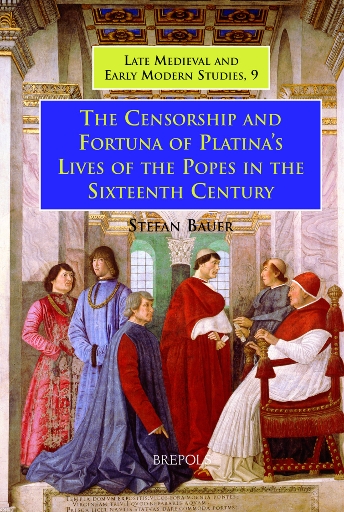
The Censorship and Fortuna of Platina's 'Lives of the Popes' in the Sixteenth Century
show More to view fulltext, buy and share links for:The Censorship and Fortuna of Platina's 'Lives of the Popes' in the Sixteenth Century show Less to hide fulltext, buy and share links for: The Censorship and Fortuna of Platina's 'Lives of the Popes' in the Sixteenth CenturyWhen Bartolomeo Sacchi ('Platina', 1421-1481) wrote his Vitae pontificum (Lives of the Popes) and presented it to Pope Sixtus IV in 1475, he surely could not have imagined how influential it would become over the centuries. His was the first papal history composed as a humanist Latin narrative and, as such, marked a distinct breakthrough in relation to the Liber pontificalis, the standard medieval chronicle of the papacy. Whatever Platina's intentions for the book, it soon came to be regarded as the official history of the Roman pontiffs. After the editio princeps of Venice 1479, updated and extended editions continued to be produced until late in the eighteenth century.
The largely untold story of Platina's Lives of the Popes and its fortuna is the focus of this book. The Lives were particularly popular because of Platina's frank criticisms of papal behaviour which did not live up to his humanist moral values. He reminded the popes that they were mere human beings and urged them not to indulge in luxury and nepotism. Catholics, whether or not they agreed with such indictments, read the Lives eagerly, while Protestants naturally appreciated Platina's fault-finding approach towards the papacy. The role which censorship played in the reception of the Lives was previously unknown. This book examines the censorship process (1587-1592) in detail, including a critical edition of the assessments and corrections by English and Italian censors newly uncovered in the Vatican and in Milan.
-
-
-
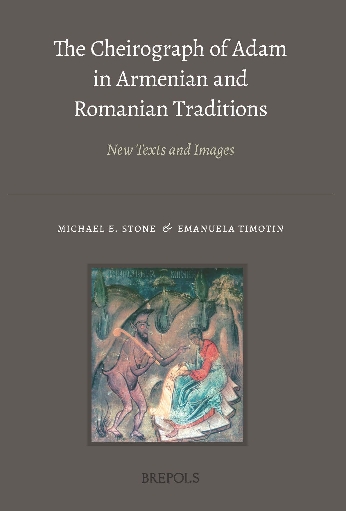
The Cheirograph of Adam in Armenian and Romanian Traditions
New Texts and Images
show More to view fulltext, buy and share links for:The Cheirograph of Adam in Armenian and Romanian Traditions show Less to hide fulltext, buy and share links for: The Cheirograph of Adam in Armenian and Romanian TraditionsThis book explores the legend of Adam’s Contract with Satan that was made after the expulsion from the Garden of Eden.This legend was current in the Eastern Orthodox churches of SE Europe as well as in the Caucasus. Unknown forms of the legend have been found in two traditions, the Romanian and the Armenian, and are investigated here. Notably this legend has found its way into folk stories and sometimes into folk music, showing how widely it was accepted and distributed. This legend also inspired images in both traditions. In Romania the most striking illustrations are to be found in Bukovina province, in frescos on the famous painted churches of that region, as well as in manuscripts. In Armenia features of this story are incorporated into the iconography of the Baptism of Christ in the River Jordan.
-
-
-

The Christian Metaphysics of St Maximus the Confessor
Creation, World-Order, and Redemption
show More to view fulltext, buy and share links for:The Christian Metaphysics of St Maximus the Confessor show Less to hide fulltext, buy and share links for: The Christian Metaphysics of St Maximus the ConfessorThis book offers an investigation into the basic structures of St Maximus the Confessor’s thought in the context of ancient and late antique philosophy. The introduction explains what is meant by the term ‘metaphysics of Maximus’, and discusses possible senses of terms like ‘Christian philosophy’ and ‘Byzantine philosophy’. On the background of a definition of ‘Christian philosophy’, the author devotes two chapters to discuss Maximus’ ideas of knowledge of the created world and of God. The chapters that follow are devoted to the doctrine of creation, the function of the so-called logoi (divine Ideas) in the procession and conversion of the totality of beings in relation to God, and the relation between the logoi and the so-called divine activities. The logoi, eternally comprised in God’s knowledge as the divine thoughts in accordance with which everything is created, are then shown to function as principles of a rather complex order of being: the cosmos instituted as a whole-part system. This whole-part system secures the possible communion between all creatures and facilitates the conversion of everything to the divine source as a unity in plurality deified by God. The last chapter treats of the doctrines of Incarnation and deification in order to clarify the exact sense of deification for all beings. In the final part of the book, the author applies Maximian metaphysics to a major ethical challenge in our days: the environmental crisis, thus proving that late antique philosophy still has relevance today.
-
-
-
The Christian Topography of Early Islamic Jerusalem: The Evidence of Willibald of Eichstätt (700-787 CE)
show More to view fulltext, buy and share links for:The Christian Topography of Early Islamic Jerusalem: The Evidence of Willibald of Eichstätt (700-787 CE) show Less to hide fulltext, buy and share links for: The Christian Topography of Early Islamic Jerusalem: The Evidence of Willibald of Eichstätt (700-787 CE)The Christian Topography of Early Islamic Jerusalem: The Evidence of Willibald of Eichstätt (700-787 CE) is an analysis of Willibald’s description of Jerusalem for the year 724-6, as contained in Hugeburc’s Vita Willibaldi, a text composed in Heidenheim (Germany) in 778. The work makes a fresh examination of the Christian landscape of Early Islamic Jerusalem, while describing various aspects of the Byzantine and Crusader city. Willibald’s account of the Holy City includes the Church of the Holy Sepulchre, the Church of Holy Sion, the pool of Bethesda, the Church of St Mary, the Church of the Agony and the Church of the Ascension. Particular attention is given to the monument of the Miraculous Healing (the legend of the Holy Cross), the portico of Solomon, the Jephonias Monument (the Dormition of Mary) and the Jerusalem circuit.
At the same time, the work explores the religious imagination of Willibald, including his perceptions of the holy sites, his image of Jerusalem and his understanding of the Christian life. Willibald’s image of the city as a far and distant place is supported by his attention to personal hardships and to his interactions with the ‘pagan Saracens’, while embedded within the tales of his oriental travels is his vision of the Christian life - whereas Willibald viewed the earthly life as a laborious journey, the Christian life was one of faithful perseverance.
The work makes a significant contribution to two fields of study: the commemorative topography of Jerusalem and the Anglo-Saxon, or Boniface, mission in Germany.
Rodney Aist is a scholar of Christian pilgrimage, both past and present, with a particular expertise in the city of Jerusalem.
-
-
-
The Christology of Theodore of Tarsus
The Laterculus Malalianus and the Person and Work of Christ
show More to view fulltext, buy and share links for:The Christology of Theodore of Tarsus show Less to hide fulltext, buy and share links for: The Christology of Theodore of TarsusTheodore of Tarsus served as archbishop of Canterbury for twenty-two years until his death in 690, aged eighty-eight. Because the only significant record we had of Theodore was that contained in Bede’s Historia, until recently it was very difficult to say anything about his life before this appointment, and even more difficult to determine anything about his thought. All of that changed in the last half of the twentieth century, when the discovery of some biblical glosses from Canterbury was revealed and the ensuing scholarship uncovered more of Theodore’s work than had previously been known. The Laterculus Malalianus is a text that benefited from treatment in this period. This present work examines the Laterculus for what it has to say about the person and work of Christ, and establishes that Theodore’s main theological inspiration was Irenaeus of Lyons and the concept of recapitulation, even while he cast his thought in language heavily drawn from the Syriac East, and Ephrem the Syrian in particular.
The volume represents a contribution to our understanding of the early medieval theological project in Britain, the transmission of eastern Mediterranean thought in the early medieval West and, ultimately, of the work of Theodore of Tarsus.
James Siemens continues to research theological questions arising from the encounter between the Greek and Semitic East and Latin West through the late antique and early medieval periods. He is an honorary research fellow at Cardiff University, and director of the nascent Theotokos Institute for Catholic Studies.
-
-
-

The Chronicles of Medieval Wales and the March
New Contexts, Studies and Texts
show More to view fulltext, buy and share links for:The Chronicles of Medieval Wales and the March show Less to hide fulltext, buy and share links for: The Chronicles of Medieval Wales and the MarchThe chronicles of medieval Wales are a rich body of source material offering an array of perspectives on historical developments in Wales and beyond. Preserving unique records of events from the fifth to the fifteenth centuries, these chronicles form the essential narrative backbone of all modern accounts of medieval Welsh history. Most celebrated of all are the chronicles belonging to the Annales Cambriae and Brut y Tywysogyon families, which document the tumultuous struggles between the Welsh princes and their Norman and English neighbours for control over Wales.
Building on foundational studies of these chronicles by J. E. Lloyd, Thomas Jones, Kathleen Hughes, and others, this book seeks to enhance understanding of the texts by refining and complicating the ways in which they should be read as deliberate literary and historical productions. The studies in this volume make significant advances in this direction through fresh analyses of well-known texts, as well as through full studies, editions, and translations of five chronicles that had hitherto escaped notice.
-
-
-
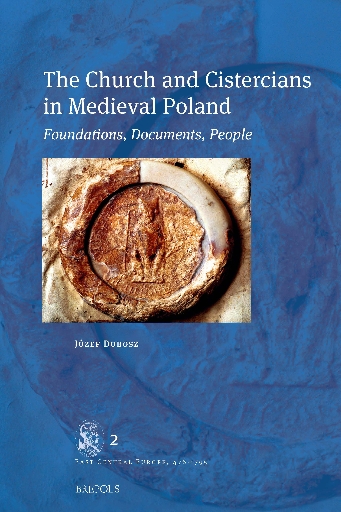
The Church and Cistercians in Medieval Poland
Foundations, Documents, People
show More to view fulltext, buy and share links for:The Church and Cistercians in Medieval Poland show Less to hide fulltext, buy and share links for: The Church and Cistercians in Medieval PolandIn this volume, the research of Józef Dobosz, one of Poland’s leading historians of the Middle Ages, is made accessible in English for the first time. It brings together nineteen studies focused on the role of the Church, the Cistercian Order, and other religious institutions in the history of the Piast realm from which Poland emerged. The introduction offers a broad outline of the first two centuries of the rule of the Piast dynasty after the Baptism of Poland in 966 until the fragmentation of the Piast patrimony during the twelfth century. The subsequent essays examine the circumstances of the foundation of Poland’s leading Cistercian monasteries in Sulejów, Jędrzejów, Wąchock, Owińska, and Łekno. The author analyses the means of their establishment, evaluates the existing sources, and places these within the context of the Piast dynasty’s economic, political, and social policies.
The studies offer an in-depth analysis of the motivations of the leading dynasts, magnates, and prelates in supporting the mission of the Church in Poland and enabling further embedding of Christianity across all strata of the society. The author examines the oldest Polish documents related to Cistercian monasteries and canons regular (in particular foundation charters) including early medieval charter forgeries. The volume’s key conclusions about the impact of Christianity on nascent Poland are based on a detailed examination of medieval charters, the role of scriptoria, identities of significant people of the Church, and the wider historical record.
-
-
-
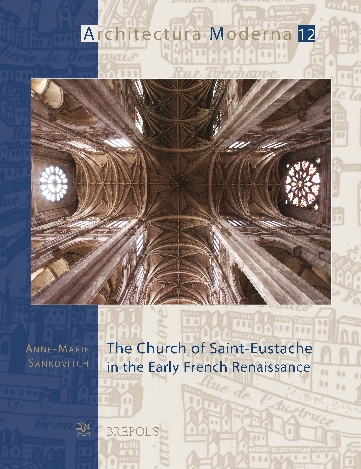
The Church of Saint-Eustache in the Early French Renaissance
show More to view fulltext, buy and share links for:The Church of Saint-Eustache in the Early French Renaissance show Less to hide fulltext, buy and share links for: The Church of Saint-Eustache in the Early French RenaissanceConsidered the most important French Renaissance church, Saint-Eustache in Paris has long remained an enigma. What new circumstances allowed its parishioners, long desirous of a new church, suddenly to begin buiding it 1532? Did Francis I play a role? Was the obscure Jean Delamarre possibly its architect? Could the ideas of the Italian theorist, Serlio, have affected his design? These and other key issues are resolved by the author in a sustained reading of all known evidence. The baffling formal complexity of the church is clarified through lucid analysis that employs hundreds of new photographs executed by the author. The building is studied within the context of sixteenth-century French architecture and its roots in antiquity, the Italian Renaissance, Romanesque and Gothic France, and the Flamboyant Style. Sankovitch’s work will serve as a standard for all those who desire to understand this mysterious building and its times. A bright, clear window revealing an unseen architecture, previously an invisible - or at best murky - episode in the history of art, it is a portal to all future research on the building, and a key to the architectural life of the period.
-
-
-
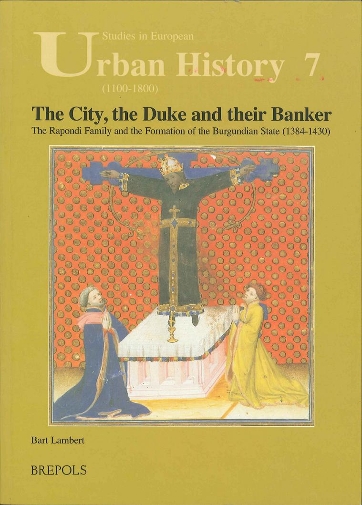
The City, the Duke and their Banker
The Rapondi Family and the Formation of the Burgundian State (1384-1430)
show More to view fulltext, buy and share links for:The City, the Duke and their Banker show Less to hide fulltext, buy and share links for: The City, the Duke and their BankerDuring the second half of the fourteenth and the first half of the fifteenth century, it was particularly hazardous for medieval merchants to invest in government finance. The 'certainty of uncertainty' involved in dealing with princes proved disastrous for innumerable businesses, whether they were modest one-man firms or colossal 'super companies'. Yet, in this same period, the Rapondi, a family active in Bruges but originating from the Italian city of Lucca, achieved a career of more than thirty years in the money-lending business, ending with encomiums of princely praise instead of a bankruptcy. This book explains this remarkable achievement, not with a conventional focus on the individuals who agreed the loans and made up the bills, but by linking their work to the phenomenon that dominated the social and political scene of the Low Countries at the time: the formation of the Burgundian state. In the context of the politics of centralization conducted by the Burgundian dukes and the resistance of the Flemish cities the success story of the Rapondi can be understood. The Duke, the City and their Banker analyses how the firm first engaged in this interaction, how it was able to maintain its position while others failed and how these relations came to an end. While the emphasis of the book lies on the Rapondis' activities in Bruges, the meeting-place of international trade and finance in the fourteenth and fifteenth century, it also offers new insights into other important episodes of this fascinating period, including the Great Western Schism that divided the papacy, the continuing hostilities between England and France and the internal French conflict between Bourguignons and Armagnacs. In doing so, The Duke, the City and their Banker shows how an Italian merchant family was able to shape late medieval economic and political history.
-
-
-
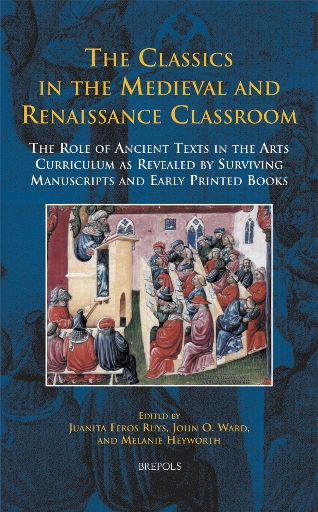
The Classics in the Medieval and Renaissance Classroom
The Role of Ancient Texts in the Arts Curriculum as Revealed by Surviving Manuscripts and Early Printed Books
show More to view fulltext, buy and share links for:The Classics in the Medieval and Renaissance Classroom show Less to hide fulltext, buy and share links for: The Classics in the Medieval and Renaissance ClassroomMedievalists and Renaissance specialists contribute to this compelling volume examining how and why the classics of Greek and Latin culture were taught in various Western European curricula (including in England, Scotland, France,Germany, and Italy) from the tenth to the sixteenth centuries. By analysing some of the commentaries, glosses, and paraphrases of these classics that were deployed in medieval and Renaissance classrooms, and by offering greater insight into premodern pedagogic practice, the chapters here emphasize the ‘pragmatic’ aspects of humanist study. The volume proposes that the classics continued to be studied in the medieval and Renaissance periods not simply for their cultural or ‘ornamental’ value, but also for utilitarian reasons, for ‘life lessons’. Because the volume goes beyond analysing the educational manuals surviving from the premodern period and attempts to elucidate the teaching methodology of the premodern period, it provides a nuanced insight into the formation of the premodern individual. The volume will therefore be of great interest to scholars and students interested in medieval and Renaissance history in general, as well as those interested in the history of educational theory and practice, or in the premodern reception of classical literature.
-
-
-
The Co-production of Judaism, Christianity, and Islam
Artefacts, Rituals, Communities, Narratives, Doctrines, Concepts
show More to view fulltext, buy and share links for:The Co-production of Judaism, Christianity, and Islam show Less to hide fulltext, buy and share links for: The Co-production of Judaism, Christianity, and IslamJudaism, Christianity, and Islam have always formed, re-formed, and transformed themselves in conversation. That is, these religions have come to exist in all their varieties by interacting with, thinking about, and imagining each other. In this sense they are co-produced, linked by a dynamic and ongoing inter-dependence. The fifteen essays collected in this volume explore moments of such religious coproduction from the second to the twenty-first century, from early pilgrimage sites to social media. The case studies range across textual and material cultures, showing how a variety of artefacts, coins, rituals, communities, narratives, theological doctrines, and scholarly concepts, were all co-produced across the three religious traditions. In so doing they present a panorama of possibilities from the past, as well as a taxonomy that can help us think about the future of religious co-production. An introductory essay describes the advantages of approaching the past, present, and future of these religions through the lens of co-production, and reflects on crucial methodological issues related to the understanding of Judaism, Christianity, and Islam as co-produced religions.
-
-
-
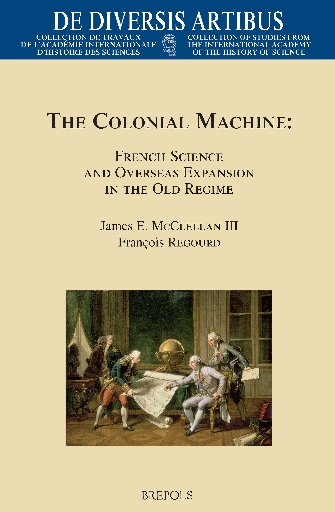
The Colonial Machine
French Science and Overseas Expansion in the Old Regime
show More to view fulltext, buy and share links for:The Colonial Machine show Less to hide fulltext, buy and share links for: The Colonial MachineThe rise of modern science and European colonial and imperial expansion are indisputably two defining elements of modern world history. James E. McClellan III and François Regourd explore these two world-historical forces and their interactions in this comprehensive and in-depth history of the French case in the Old Regime presented here for the first time. The case is key because no other state matched Old-Regime France as a center for organized science and because contemporary France closely rivaled Britain as a colonial power, as well as leading all other nations in commodity production and participating in the slave trade.
Based on extensive archival research and vast primary and secondary literatures and sharply reframing the historiography of the field, this landmark volume traces the development and significance for early-modern history of the Colonial Machine of Old-Regime France, an unparalleled agglomeration of institutions geared to the success of the French colonial enterprise, including the Royal Navy, the Académie Royale des Sciences, the Jardin du Roi, and a host of related specialist institutions working together at home and overseas. Mainly supported by the French state, the Colonial Machine reveals itself through its actions from the time of Colbert and Louis XIV as it grappled with fundamental problems facing contemporary European colonialism: cartography and navigation; medical care of sailors, colonists, and slaves; and applied botany and commodity production.
Historians of globalization and European overseas expansion, of Old-Regime France, and of science in the seventeenth and eighteenth centuries will henceforth take this stimulating volume as a necessary starting point for further reflection and research.
-
-
-

The Commentary Tradition on Aristotle’s ’De generatione et corruptione’. Ancient, Medieval and Early Modern
show More to view fulltext, buy and share links for:The Commentary Tradition on Aristotle’s ’De generatione et corruptione’. Ancient, Medieval and Early Modern show Less to hide fulltext, buy and share links for: The Commentary Tradition on Aristotle’s ’De generatione et corruptione’. Ancient, Medieval and Early ModernIn this book, a dozen distinguished scholars in the field of the history of philosophy and science investigate aspects of the commentary tradition on Aristotle’s De generatione et corruptione, one of the least studied among Aristotle’s treatises in natural philosophy. Many famous thinkers such as Johannes Philoponus, Albert the Great, Thomas Aquinas, John Buridan, Nicole Oresme, Francesco Piccolomini, Jacopo Zabarella, and Galileo Galilei wrote commentaries on it. The distinctive feature of the present book is that it approaches this commentary tradition as a coherent whole, thereby ignoring the usual historiographical distinctions between the Middle Ages, the Renaissance, and the seventeenth century.
-
-
-
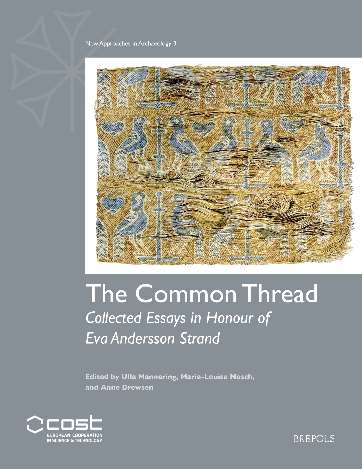
The Common Thread
Collected Essays in Honour of Eva Andersson Strand
show More to view fulltext, buy and share links for:The Common Thread show Less to hide fulltext, buy and share links for: The Common ThreadThe Ancient Egyptians used it for both the living and the dead, the Greeks and Romans used it to signal their status, and it aided the Vikings in reaching the far shores of Europe and Eurasia. Textiles have surrounded us, literally and figuratively for millennia, but this common thread has long been ignored in scholarly research. With the inception of the Centre for Textile Research at the University of Copenhagen in 2005, however, this approach changed fundamentally, and today, every type of research discipline comes together to begin unravelling the stories told by textiles. How do we understand textiles and how do we talk about them? Who produced textiles, where, and for what purposes? How do we conduct research into the origins of materials? How did cultivating flax or raising sheep change the ancient landscape? How have we researched textiles so far? What can we learn from textiles about society, gender, and production? This volume engages with these questions and explores how the fabric of society has changed through researching textiles in all its facets, from archaeology and history to natural sciences. Taking as its starting point the research interests and career of its honorand, Eva Andersson Strand, this meticulously researched volume consists of three parts, covering the tools and techniques that form the basis of all research explores; how craftspeople made use of tools and techniques; and how textiles have been used over millennia to signify identity and status.
-