Brepols
Brepols is an international academic publisher of works in the humanities, with a particular focus in history, archaeology, history of the arts, language and literature, and critical editions of source works.2721 - 2740 of 3194 results
-
-
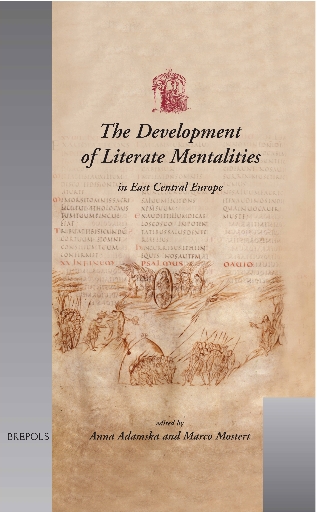
The Development of Literate Mentalities in East Central Europe
show More to view fulltext, buy and share links for:The Development of Literate Mentalities in East Central Europe show Less to hide fulltext, buy and share links for: The Development of Literate Mentalities in East Central EuropeCompared with most of mainland Europe north of the Alps, the introduction of writing in East Central Europe (Bohemia, Poland and Hungary) took place with a considerable delay. Much is known about East Central European uses of writing, although only a fragment of this knowledge is known outside the region. Gathered by historians, palaeographers and codicologists, diplomatists, art historians, literary historians and others, this knowledge has hardly ever been studied in the light of recent discussions on medieval literacy and communication. Work done in the Czech, Polish and Hungarian traditions of scholarship has never been subjected to a comparative analysis. Furthermore, the question of the relation between writing and other forms of communication in the region remains largely unexplored. The volume serves a double purpose. For the first time, a collection of contributions on medieval literacy in East Central Europe is put before the forum of international scholarship. It is also hoped to further discussions of modes of communication, literate behaviour and mentalities among scholars working in the region.
-
-
-
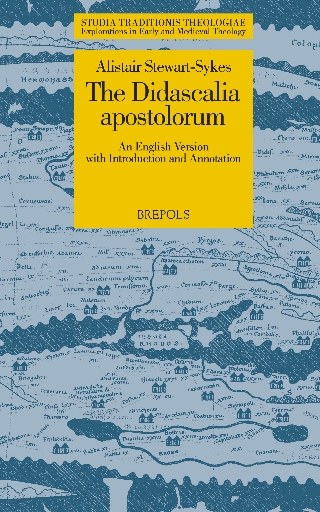
The Didascalia apostolorum: An English version with introduction and annotation
show More to view fulltext, buy and share links for:The Didascalia apostolorum: An English version with introduction and annotation show Less to hide fulltext, buy and share links for: The Didascalia apostolorum: An English version with introduction and annotationThe Didascalia apostolorum is one of the ancient church orders, setting out the duties and responsibilities of laypeople, bishops and widows, regulating the keeping of Pascha and engaging in polemic with Judaism. It is a work of extraordinary interest for the history of the church in Syria, as a document of social and liturgical history and as a document bearing witness to relations between Christians and Jews.
Alistair Stewart-Sykes presents the text in a readable English version which takes full account of the various textual witnesses. Of particular importance is the introduction. The Didascalia is conventionally ascribed to a single hand in third-century Syria, but here an entirely new compositional hypothesis is proposed in which the work is shown to be composite and to include sources of much greater antiquity than the period of final redaction. In the light of the compositional hypothesis there are radically new discussions of ministry (including the ministry of widows), relationships with Judaism, and liturgy (including the penitential process). Beyond this the introduction engages with the social context in which these developments emerged.
The work is suitable for a wide audience. The translation will be useful to undergraduate and graduate students whereas the introduction and commentary will be of interest to scholars in ecclesiastical history, historical liturgy, forming Judaism and Jewish-Christian relations as well as Syriac studies.
The author, Alistair Stewart-Sykes, is well-known in the field having produced the first critical text for over a century of the Apostolic church order and the first full-length commentary on the Apostolic tradition.
-
-
-
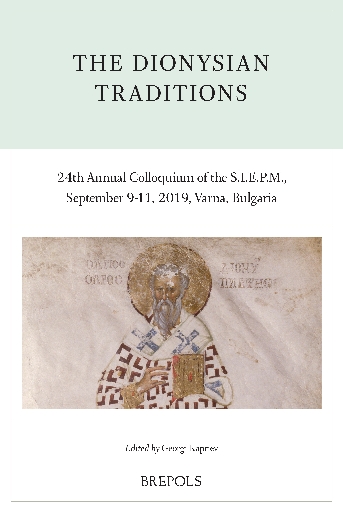
The Dionysian Traditions
24th Annual Colloquium of the S.I.E.P.M., September 9-11, 2019, Varna, Bulgaria
show More to view fulltext, buy and share links for:The Dionysian Traditions show Less to hide fulltext, buy and share links for: The Dionysian TraditionsThe volume contains the contributions of the 24th Annual Colloquium of S.I.E.P.M. "The Dionysian Traditions", which took place in Varna, Bulgaria from September 9 to 11, 2019. The theme of the colloquium is not coincidentally related to the topic of the 9th Annual Colloquium "The Dionysius Reception" (1999 in Sofia, Bulgaria). The aim was to consider the continuity of research and to ensure its new dimensions. The colloquium demonstrated the multifaceted, advanced development of Dionysius research over the past twenty years. The Corpus Dionysiacum exerted an enormous influence on the Christian cultures of the European Middle Ages, which also had and still has an impact on modern times. Focal points of the medieval - Latin and Byzantine - Dionysius traditions are discussed in detail, previously undiscussed topics and perspectives are presented. A large part of the analyses develop a new approach to post-medieval culture and a clearly defined commitment to the current problems of thought and social life. The profoundly analyzed questions and topics convincingly open new horizons for today's science.
-
-
-

The Discoveries of Manuscripts from Late Antiquity
Their Impact on Patristic Studies and the Contemporary World (Conference Proceedings 2nd International Conference on Patristic Studies)
show More to view fulltext, buy and share links for:The Discoveries of Manuscripts from Late Antiquity show Less to hide fulltext, buy and share links for: The Discoveries of Manuscripts from Late AntiquityThis book offers an anthology from the proceedings of the Second International Conference on Patristic Studies, “The Discoveries of Manuscripts from Late Antiquity: Their Impact on Patristic Studies and the Contemporary World”, which took place in San Juan, Argentina, in March 2017. The aim of this event was to analyze and assess 20th- and 21st-century discoveries of manuscripts from Late Antiquity. Indeed, complete libraries of manuscripts, as well as individual documents of great importance for our understanding of historical authors and situations, have come to light after having been buried for millennia. Just some examples are the incredible discoveries of the Nag Hammadi Gnostic library, the Dead Sea Scrolls, Origen of Alexandria’s homilies, and Augustine’s sermons, among others. Rather than being passive documents, these manuscripts pose numerous questions to specialists from a diverse array of fields, demanding new evaluations of a past that was already thought to be understood and judged.
-
-
-
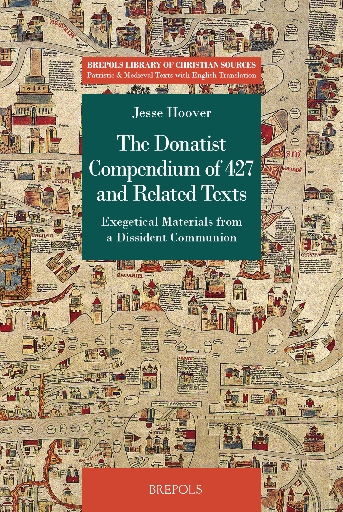
The Donatist Compendium of 427 and Related Texts
Exegetical Materials from a Dissident Communion
show More to view fulltext, buy and share links for:The Donatist Compendium of 427 and Related Texts show Less to hide fulltext, buy and share links for: The Donatist Compendium of 427 and Related TextsThis volume contains the first translation into English of a number of documents associated with the Donatist movement in North Africa, a dissident church which flourished during the fourth and fifth centuries before the Vandal invasion obscures our view of it. Donatists are often remembered for their fanatical opposition to traditores—those who had “handed over” the sacred scriptures during the Diocletianic Persecution—and their belief that those baptized by such people were not part of the true church. The writings contained in this volume add critical nuance to this portrait. At its centerpiece is the Donatist Compendium of 427, a collection of eleven exegetical texts compiled c. 427 CE by an unknown Donatist editor; other translated writings include a chronograph revised on the eve of the Vandal conquest of Carthage known as the Genealogy Book, a set of section-headings for the Major Prophets and the book of Acts, and a Donatist homily on the Epiphany, one of the few sermons by a Donatist preacher that still survives. All of these texts were produced within a Donatist milieu, and taken together, they offer us a unique window into the inner life of the dissident communion as well as valuable insight into the exegetical tools that late antique bishops had at their disposal as they sought to illuminate the biblical text for their congregations.
-
-
-
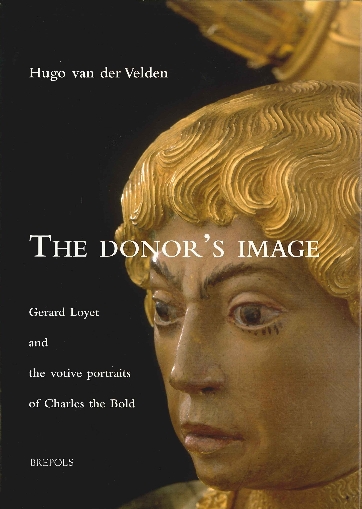
The Donor's Image
Gerard Loyet and the Votive Portraits of Charles the Bold
show More to view fulltext, buy and share links for:The Donor's Image show Less to hide fulltext, buy and share links for: The Donor's ImageThe references to Charles the Bold´s work, which are largely drawn from the accounts of the chambres des comptes at Lille and Brussels, amply illustrate the aesthetic preferences of the Burgundian nobility. All the relevant documents, most of which have not been published before, appear in appendix I. The second part of the book reviews the votive portraits of Charles the Bold. The circumstances surrounding the commission of the Liège statuette - Loyet´s sole surviving work - are discussed in detail, and all documents relating to the statuette are included in appendix II. In the second chapter of part II, the focus is on the statuette´s iconography, which is unique for a votive gift. Charles´s motives are further investigated in the final chapter of part II, which discusses the votive portraits that he donated to other shrines. In the third and final part, the attention shifts to votive gifts, and more specifically to the genre of votive portraits.
-
-
-
The Dormition and Assumption of the Virgin Mary
show More to view fulltext, buy and share links for:The Dormition and Assumption of the Virgin Mary show Less to hide fulltext, buy and share links for: The Dormition and Assumption of the Virgin MaryThis volume includes eight new translations of early Christian narratives about the end of the Virgin Mary’s life, that is, her Dormition and Assumption. Translated from Greek, Latin, Syriac, Ethiopic, Georgian, and Christian Palestinian Aramaic, each of these texts is either translated into a modern language for the first time, or appears in a version that has not previously been published. The texts represent a broad range of the highly diverse early Christian memories of Mary's departure from this world. Likewise, the texts themselves often disclose a range of theological diversity within the early Christian tradition even beyond what scholars have thus far recognized.
-
-
-
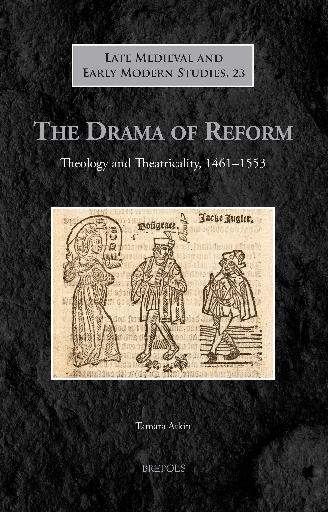
The Drama of Reform
Theology and Theatricality, 1461-1553
show More to view fulltext, buy and share links for:The Drama of Reform show Less to hide fulltext, buy and share links for: The Drama of ReformThe Drama of Reform establishes the impact of late medieval and early modern religious reform on dramaturgy. Taking an interdisciplinary approach, it examines the interactions between theatricality and theology across a range of different plays including the Croxton Play of the Sacrament, Jacke Jugeler, John Bale’s Three Laws, and Lewis Wager’s Life and Repentaunce of Mary Magdalene. Tracing the development of arguments concerning the interpretation of the sacraments, the relationship between priests and players, and the use and abuse of imagery and drama in religious worship, The Drama of Reform draws on a rich variety of contextual materials including liturgical texts, heresy trial accounts, dramatic treatises, polemical tracts, and religious laws.
Focussed on the period between Archbishop Arundel’s Constitutions in the fifteenth century and Archbishop Cranmer’s second Book of Common Prayer in the sixteenth, The Drama of Reform explores the phenomenological similarities between drama and certain religious rites, notably the eucharist, and proposes that religious reform prompted attempts to reform dramaturgy. In presenting this analysis, the author argues that while drama continued to function as dramatic propaganda, efforts to initiate new modes of playing were only partially successful.
-
-
-
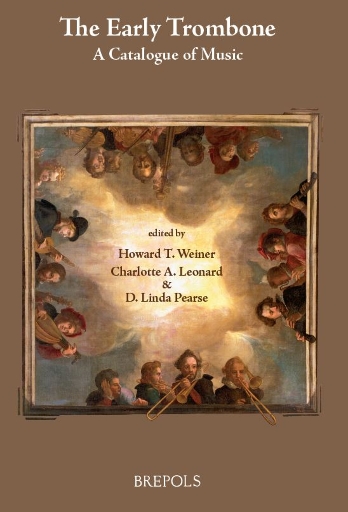
The Early Trombone: A Catalogue of Music
show More to view fulltext, buy and share links for:The Early Trombone: A Catalogue of Music show Less to hide fulltext, buy and share links for: The Early Trombone: A Catalogue of MusicThis catalogue documents nearly 9000 musical works specifying the trombone, from anonymous pieces mentioned in early sixteenth-century writings up to Haydn’s iconic oratorios The Creation and The Seasons on the cusp of the nineteenth century. As such, the catalogue provides a single resource for scholars, trombonists, chamber musicians, and conductors to access instrumental solo and ensemble, as well as choral works specifying trombone from the sixteenth through to the end of the eighteenth century. In compiling this inventory, the authors have personally examined as many of the sources as possible, either the original prints and manuscripts in libraries and archives or copies thereof (microfilm, microfiche, scans, facsimile editions, photocopies, and photos). Relevant text passages from title pages, prefaces, and composer’s performance instructions are given in the original language and in English translation. Annotations discuss attributions, the situation and peculiarities of sources, and relationships to parallel transmissions. Extensive bibliographical information is provided to guide the readers to relevant secondary literature.
The catalogue is divided into three sections: concerted instrumental music (with solo trombone), instrumental music with trombones, and vocal music specifying trombones, with the vocal works representing the largest portion of the repertoire. The compositions range in size from pieces for a single voice with trombone and basso continuo to large-scale sacred and secular polychoral works with multiple trombones.
-
-
-
The Easter Controversy of Late Antiquity and the Early Middle Ages. Its Manuscripts, Texts, and Tables
Proceedings of the 2nd International Conference on the Science of Computus in Ireland and Europe, Galway, 18-20 July, 2008
show More to view fulltext, buy and share links for:The Easter Controversy of Late Antiquity and the Early Middle Ages. Its Manuscripts, Texts, and Tables show Less to hide fulltext, buy and share links for: The Easter Controversy of Late Antiquity and the Early Middle Ages. Its Manuscripts, Texts, and Tables2010 saw the publication of the Proceedings of the 1st International Conference on the Science of Computus in Ireland and Europe, which took place in Galway, 14–16 July, 2006. That first collection, which had the sub-title Computus and its Cultural Context in the Latin West, AD 300–1200, brought together papers by ten of the leading scholars in the field, on subjects ranging from the origins of the Annus Domini to the study of computus in Ireland c. 1100. All those who participated in the Conference were unanimous that a second, follow-up event should be organized, and that duly took place (also in Galway), 18–20 July, 2008. The proceedings of that Conference are published in this current volume. The topics covered in the 2nd Galway Conference ranged from the general – but vitally important – vocabulary of computus (i.e., the technical terminology developed by computists to describe what they were doing) to the origins of the different systems used to calculate the date of Easter in Antiquity and the Early Middle Ages. In addition, there was discussion also of the great debates about Easter, epitomized by the famous Synod of Whitby in AD 664, and the role of well-known individuals in the evolution of computistical knowledge (e.g., Anatolius of Laodicea, the African Augustalis, Sulpicius Severus, Victorius of Aquitaine, Cassiodorus, Dionysius Exiguus, Willibrord, the ninth-century Irish scholar-exile, Dicuil, as well as the late-tenth century Abbo of Fleury). Immo Warntjes is lecturer in Medieval History at the University of Greifswald (Germany). Besides computistics, his main areas of research include the use of languages in Early Medieval Europe, succession to high offices, high and late medieval burial practices, and German, English, and Irish political history and culture. Dáibhí Ó Cróinín lectures in history at NUI, Galway, where he is the Director of The Foundations of Irish Culture project. His research interests are Ireland, Britain and Europe during the Early Middle Ages, computistics, Medieval Latin Palaeography and Irish traditional music and song.
-
-
-
The Emblem Tradition and the Low Countries
Selected Papers of the Leuven International Emblem Conference, 18-23 August, 1996
show More to view fulltext, buy and share links for:The Emblem Tradition and the Low Countries show Less to hide fulltext, buy and share links for: The Emblem Tradition and the Low CountriesAntwerp and Amsterdam were among the most active publishing centres for emblematic forms in Europe during the sixteenth and seventeenth centuries. Nowhere else was the emblematic mode more integrated into the literary and artistic culture than in the Low Countries. The essays are revised versions of papers presented at the Fourth International Emblem Conference held at Leuven in 1996. The table of contents provides an overview of the variety of topics and approaches represented in the volume.
-
-
-
The Emblem and Architecture: Studies in Applied Emblematics from the Sixteenth to the Eighteenth Centuries
show More to view fulltext, buy and share links for:The Emblem and Architecture: Studies in Applied Emblematics from the Sixteenth to the Eighteenth Centuries show Less to hide fulltext, buy and share links for: The Emblem and Architecture: Studies in Applied Emblematics from the Sixteenth to the Eighteenth CenturiesThis publication is a collection of essays on the function and significance of emblematic decoration of buildings in Europe from the sixteenth to the eighteenth century, dealing with general issues involved in architectural emblematics, while a number of the essays are case studies of specific types of building.
The emblematic decoration of buildings, both secular and ecclesiastical, was widespread in Europe from the sixteenth to the nineteenth centuries. The function and significance of such decoration is, however, frequently overlooked. The two introductory essays seek to come to grips with the general issues involved in architectural emblematics. The remaining essays are case studies of specific types of building while the final two consider the relation of architecture to the book. The essays are revised versions of selected papers presented at an international conference on the subject held at the Canadian centre for Architecture in November 1994.
-
-
-
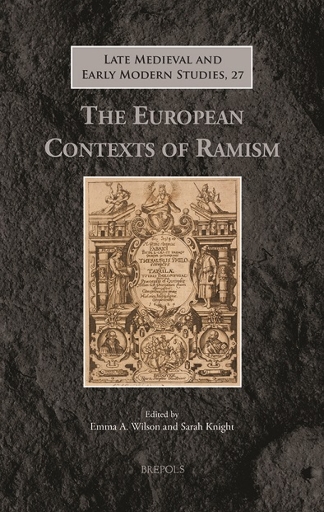
The European Contexts of Ramism
show More to view fulltext, buy and share links for:The European Contexts of Ramism show Less to hide fulltext, buy and share links for: The European Contexts of RamismPierre de la Ramée or Petrus Ramus (1515-1572) has long been a controversial figure in educational reform and innovation, from the moment of his first public academic statements in the 1530s, to his reception among scholars in the twentieth and twenty-first centuries. What is beyond dispute, however, is the vast reach of his influence throughout Europe. Ramus’s ideas were disseminated through copious editions and translations of his own textbooks, and in wave after wave of adaptations and re-imaginings of his ideas that swept across the continent.
This volume embarks on a European tour of Ramism, using a wide range of previously unpublished or untranslated archival evidence from throughout the continent to examine the dissemination of Ramus’s works and his intellectual influence in geographic and in disciplinary terms. The ten chapters explore the spread of Ramism from his home country of France to Protestant strongholds in Germany, Holland, and Britain, and in the Catholic context of the Iberian peninsula. The book also examines Ramism in the less familiar territories (to most Anglophone readers) of Scandinavia and Hungary, and considers the preceding and contemporary Dutch and German educational reform movements from which Ramus borrowed to forge his own distinctive intellectual method.
-
-
-
The Ever-New Tongue – In Tenga Bithnúa
The Text in the Book of Lismore
show More to view fulltext, buy and share links for:The Ever-New Tongue – In Tenga Bithnúa show Less to hide fulltext, buy and share links for: The Ever-New Tongue – In Tenga BithnúaThe Ever-New Tongue (In Tenga Bithnúa) is a medieval Irish account of the mysteries of the universe, remarkable for its exotic background and for the fiery exuberance of its style. This translation, based on the definitive edition of the text, renders this extraordinary work available to a wider readership.
Composed in Ireland in the ninth or tenth century, The Ever-New Tongue purports to reveal the mysteries of the creation, of the cosmos, and of the end of the world, as related by the soul of the apostle Philip speaking in the language of the angels. Drawing on a multitude of sources, both mainstream and heterodox, it reflects the richness of early Irish learning as well as the vitality of its author’s imagination. Two apocryphal texts appear to have inspired its original composition: a lost Egyptian apocalyptic discourse, and one of the segments of the Acts of Philip (a work otherwise unknown in Latin Christendom).
Based on the critical edition of The Ever-New Tongue in the Corpus Christianorum, Series Apocryphorum, this book presents an English translation of the oldest (and most conservative) version of the text, preserved in the Book of Lismore, together with a fully updated introduction.
-
-
-
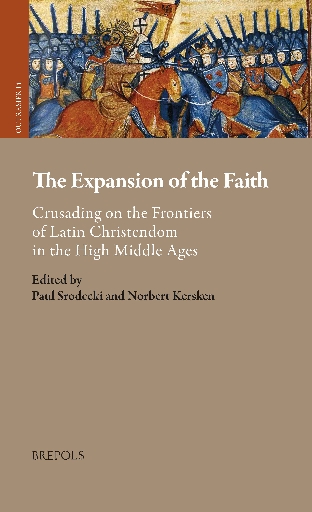
The Expansion of the Faith
Crusading on the Frontiers of Latin Christendom in the High Middle Ages
show More to view fulltext, buy and share links for:The Expansion of the Faith show Less to hide fulltext, buy and share links for: The Expansion of the FaithThis volume offers a comparative approach to the crusade movement on the frontiers of Latin Christendom in the high Middle Ages, bringing a regional focus to research on these peripheral phenomena. It features several key questions: Which military campaigns were propagated as crusades on the peripheries of the Christian West? What efforts were made to gain recognition for them as crusades and what effects did these have? What value did the crusade movement have for societies at the fines christianitatis? What role did the cruciatae have in strengthening pan-Western sense of togetherness and solidarity, and what role did they have for creation of a crusader and frontier identity? The eighteen papers, ranging in scope from the southern and eastern Baltic regions to Iberia, Egypt and the Balkans, provide new insights into the ways in which crusade rhetoric was reflected in the culture and literature of countries involved in crusading beyond the Holy Land.
-
-
-
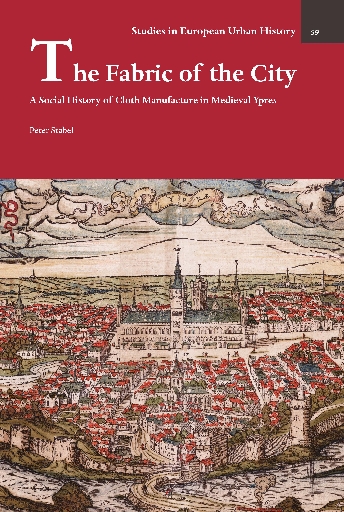
The Fabric of the City
A Social History of Cloth Manufacture in Medieval Ypres
show More to view fulltext, buy and share links for:The Fabric of the City show Less to hide fulltext, buy and share links for: The Fabric of the CityTextile industries were one of the driving forces of the urbanisation process in medieval Northwest Europe, and nowhere was their impact so profound as in Flanders, where almost all larger and smaller cities were involved in manufacturing woollens from the 12th to the 16th century. Ypres, the third city in the county, was perhaps the most important concentration of industrial labour and capital in this period. In their heyday in the 13th and 14th centuries Ypres woollens were exported all over Europe and Ypres entrepreneurs and textile workers were able to adapt in very flexible ways to changes in demand. This book investigates not only what the impact of cloth manufacture was on urban society, it also tries to unravel the social mechanisms of industrial development in late medieval cities. It focuses on social inequalities and on the often difficult relationship between the various stakeholders in the urban cloth industry: merchants, entrepreneurs, guild masters and skilled and unskilled workers. Through the analysis work practices, wage levels, investment strategies, gender issues and political aspirations, it unravels how urban industries in the pre-industrial era shaped social relations in the city, how they moulded the urban fabric.
-
-
-
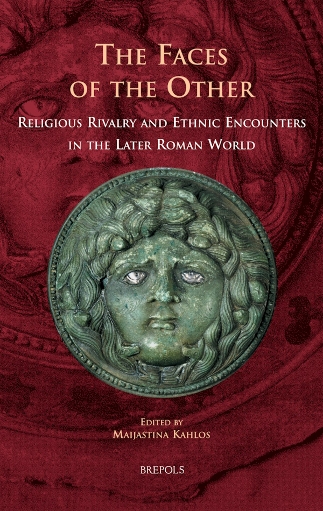
The Faces of the Other
Religious Rivalry and Ethnic Encounters in the Later Roman World
show More to view fulltext, buy and share links for:The Faces of the Other show Less to hide fulltext, buy and share links for: The Faces of the OtherThe foundations of European civilization as we know it today were laid in Late Antiquity and the early Middle Ages. The Faces of the Other: Religious Rivalry and Ethnic Encounters in the Later Roman World traces the roots of the attitudes and argumentation about religious or ethnic otherness in modern western culture. It aims at deepening the historical understanding of attitudes towards otherness as well as cultural and religious conflicts in world history. The Faces of the Other discusses the conceptions, depictions, and attitudes towards the other in Graeco-Roman antiquity. The book focuses on the perception of otherness, whether other peoples or religions, in the Later Roman Empire as understood broadly, from the first until the fifth century CE. These others are ethnic others such as the Persians, Huns, and the Germanic peoples were to Romans, or religious others such as Jews were to Christians or Christians to Jews, Christians to pagans or pagans to Christians, or different cults to the ‘mainstream’ Romans, or different Christian sects to each other.
-
-
-
The Forge of Doctrine. The Academic Year 1330-31 and the Rise of Scotism at the University of Paris
show More to view fulltext, buy and share links for:The Forge of Doctrine. The Academic Year 1330-31 and the Rise of Scotism at the University of Paris show Less to hide fulltext, buy and share links for: The Forge of Doctrine. The Academic Year 1330-31 and the Rise of Scotism at the University of ParisA rare survival provides unmatched access to the the medieval classroom. In the academic year 1330-31, the Franciscan theologian, William of Brienne, lectured on Peter Lombard’s Sentences and disputed with the other theologians at the University of Paris. The original, official notes of these lectures and disputes survives in a manuscript codex at the National Library of the Czech Republic, and they constitute the oldest known original record of an entire university course. An analysis of this manuscript reconstructs the daily reality of the University of Paris in the fourteenth century, delineating the pace and organization of instruction within the school and the debates between the schools. The transcription made during William’s lectures and the later modifications and additions reveal how the major vehicle for Scholastic thought, the written Sentences commentary, relates to fourteenth-century teaching. As a teacher and a scholar, William of Brienne was a dedicated follower of the philosophy and theology of John Duns Scotus (+1308). He constructed Scotist doctrine for his students and defended it from his peers. This book shows concretely how scholastic thinkers made, communicated, and debated ideas at the medieval universities. Appendices document the entire process with critical editions of William’s academic debates (principia), his promotion speech, and a selection of his lectures and sources.
-
-
-
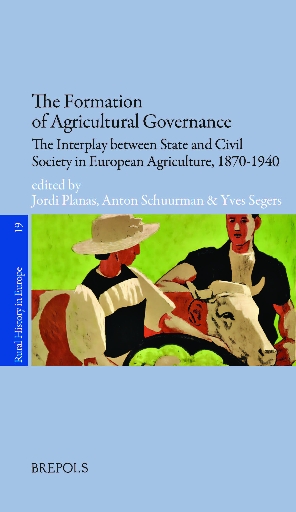
The Formation of Agricultural Governance
The Interplay between State and Civil Society in European Agriculture, 1870-1940
show More to view fulltext, buy and share links for:The Formation of Agricultural Governance show Less to hide fulltext, buy and share links for: The Formation of Agricultural GovernanceThis book unravels how the agricultural sector and the rural world in Europe became more and more organised within capitalism in the years 1870-1940, and this with the aim of tackling the important challenges of the time. The focus is not so much on the myriad of individual farmers’ actions, but on the collective efforts undertaken through the interplay between the state and the agricultural civil society.
A wide variety of actors, from landowners associations, farmers’ unions, cooperatives, scientific institutions and researchers to farmers themselves (or civil society) played a critical role in the process of drafting a policy agenda, developing agricultural policies and were instrumental in implementing them in close relationship with the state. The result was a metamorphosis from mobilisation and representation of agrarian interests to a form of self-government or co-government of the agricultural sector at the national level, which would only reach its highest point after the Second World War.
These issues are explored by established rural historians, covering a period of seven decades (1870-1940). The papers provide a wide geographical perspective, from the north of Europe to the Mediterranean.
-