


Brepols
Brepols is an international academic publisher of works in the humanities, with a particular focus in history, archaeology, history of the arts, language and literature, and critical editions of source works.2761 - 2780 of 3194 results
-
-
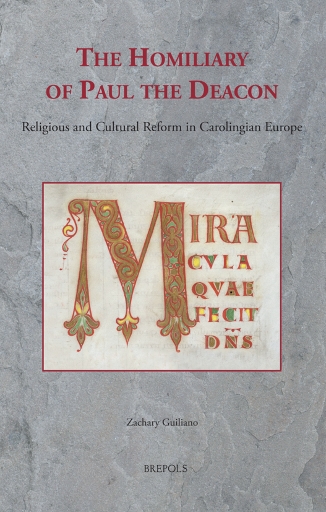
The Homiliary of Paul the Deacon
Religious and Cultural Reform in Carolingian Europe
show More to view fulltext, buy and share links for:The Homiliary of Paul the Deacon show Less to hide fulltext, buy and share links for: The Homiliary of Paul the DeaconAs one of the most widely used products of Charlemagne’s religious and cultural reforms, the homiliary of Paul the Deacon is a unique monument in the history of Western Europe. Completed around AD 797, this collection of patristic homilies and sermons shaped the religious faith and liturgical practices of the churches in Carolingian Europe and those of countless other churches over the course of a millennium of use.
Until now, scholarly study of the homiliary has rested on seven partial witnesses to the collection. This study, however, draws on over 80 newly identified witnesses from the Carolingian period, while providing a brief guide and handlist to hundreds of later manuscripts. It replaces the current scholarly reconstruction of the homiliary, discusses the significance of the collection’s liturgical structure and provisions, and considers the composition of the homiliary in the context of Charlemagne’s reforms and Paul’s patron-client relationships. The study also brings together evidence for the production and use of this text in thirty-three Carolingian monasteries, cathedrals, and churches.
The book then addresses the homiliary’s theological character: the contents of the homiliary reflected a concern for expressing and defending orthodox doctrine at Charlemagne’s court against Trinitarian and Christological heresies, as well as an urgent attention to moral reform in the light of a belief in the imminence of divine judgement. Finally, the study demonstrates the varied uses of Paul’s collection and its historical legacy.
-
-
-

The Idea of the Gothic Cathedral
Interdisciplinary Perspectives on the Meanings of the Medieval Edifice in the Modern Period
show More to view fulltext, buy and share links for:The Idea of the Gothic Cathedral show Less to hide fulltext, buy and share links for: The Idea of the Gothic CathedralCentral to many medieval ritual traditions both sacred and secular, the Gothic cathedral holds a privileged place within the European cultural imagination and experience. Due to the burgeoning historical interest in the medieval past, in connection with the medieval revival in literature, visual arts, and architecture that began in the late seventeenth century and culminated in the nineteenth, the Gothic cathedral took centre stage in numerous ideological discourses. These discourses imposed contemporary political and aesthetic connotations upon the cathedral that were often far removed from its original meaning and ritual use.
This volume presents interdisciplinary perspectives on the resignification of the Gothic cathedral in the post-medieval period. Its contributors, literary scholars and historians of art and architecture, investigate the dynamics of national and cultural movements that turned Gothic cathedrals into symbols of the modern nation-state, highlight the political uses of the edifice in literature and the arts, and underscore the importance of subjectivity in literary and visual representations of Gothic architecture. Contributing to scholarship in historiography, cultural history, intermedial and interdisciplinary studies, as well as traditional disciplines, the volume resonates with wider perspectives, especially relating to the reuse of artefacts to serve particular ideological ends.
-
-
-
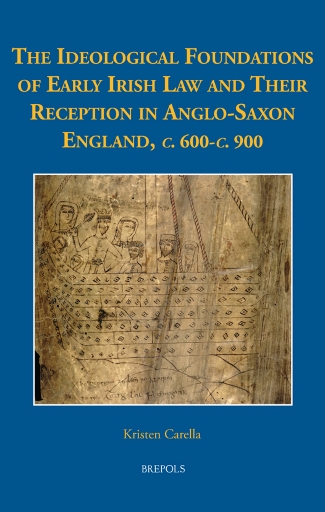
The Ideological Foundations of Early Irish Law and Their Reception in Anglo-Saxon England, c. 600–c. 900
show More to view fulltext, buy and share links for:The Ideological Foundations of Early Irish Law and Their Reception in Anglo-Saxon England, c. 600–c. 900 show Less to hide fulltext, buy and share links for: The Ideological Foundations of Early Irish Law and Their Reception in Anglo-Saxon England, c. 600–c. 900Old Testament Levites who considered the Law of Moses to be the living law: this has long been the established view among many scholars for how early Irish jurists perceived themselves, as well as how they saw the broader theoretical and religious bases of their jurisprudence. In this volume, however, Kristen Carella offers a timely reassessment of scholarly opinion, exploring Irish legal texts within the broader context of both vernacular Irish and Hiberno-Latin literature to argue that early Irish Christian intellectuals in fact saw themselves as gentile converts, subscribing to an orthodox Christian faith that was deeply infused with Pelagian theology.
Certain aspects of Irish legal ideology, particularly Irish views of divine history and pseudo-historical ideas about their own ethnogenesis, moreover, extended out of Ireland and into Anglo-Saxon England; their impact can be seen on lawmakers such as Alcuin, when he helped draft the Anglo-Latin Legatine Capitulary of 786, and King Alfred of Wessex, when he composed the Old English prologue to his law code in the late-ninth century. Through this approach, this volume not only challenges long-held scholarly views on Irish legal ideology and its influences beyond Ireland, but also provides a new paradigm for intellectual relations between early medieval Ireland and England.
-
-
-
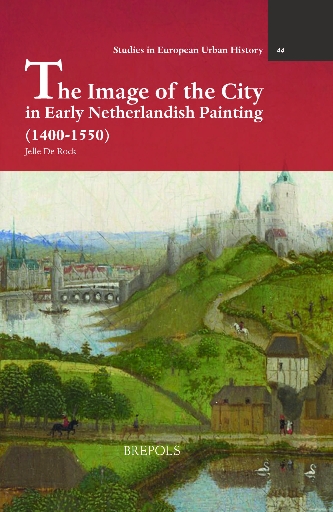
The Image of the City in Early Netherlandish Painting (1400-1550)
show More to view fulltext, buy and share links for:The Image of the City in Early Netherlandish Painting (1400-1550) show Less to hide fulltext, buy and share links for: The Image of the City in Early Netherlandish Painting (1400-1550)Painted cityscapes have always captivated the viewers of medieval works of art. To this day scholars are mesmerised by their capacity to mirror the urban context from which they sprang, combined with their ability to symbolize a more abstract world view, religious idea or social ideal. Especially oil painting, which thrived in the fifteenth-century Low Countries among a heterogeneous elite and the well-off urban middling groups, succeeded as no other medium in capturing the urban landscape in its finest details. In order to gain an insight into how late medieval citizens, clerics and noblemen conceived of urban society and space, this book combines a serial analysis of a large corpus of painted city views with a critical discussion of some well-documented and revealing works of art. Throughout the book a variety of questions are addressed, ranging from the religious conception of the city, the theatrical dimension of urban space, the extent to which Early Netherlandish painting depicted the city as an economic space, how images of city and countryside functioned as identity markers of the donor, and how technical advances in the field of cartography impacted the portrayal of towns in the sixteenth century. In doing so, this study explores the duality of some of the major interpretive schemes that have determined the last few decades of historiography on late medieval Netherlandish culture, oscillating between bourgeois and courtly, realistic and symbolic, profane and religious, and innovative versus traditional.
-
-
-
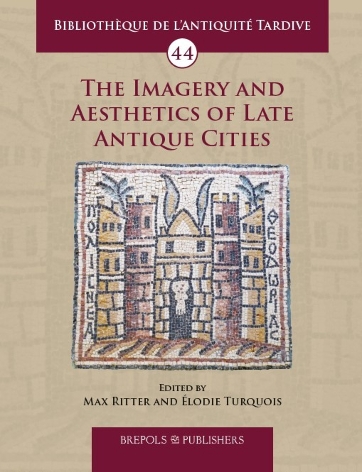
The Imagery and Aesthetics of Late Antique Cities
show More to view fulltext, buy and share links for:The Imagery and Aesthetics of Late Antique Cities show Less to hide fulltext, buy and share links for: The Imagery and Aesthetics of Late Antique CitiesWhile the role of the city in Late Antiquity has often been discussed by archaeologists and historians alike, it is only in recent years that scholarship has begun to offer a more nuanced approach in our understanding to how such cities functioned, stepping away from the traditional paradigm of their decline and fall with the collapse of the Roman Empire. In line with this approach, this deliberately interdisciplinary volume seeks to provide a more multifaceted understanding of urban history by drawing together scholars of literary and material culture to discuss the concepts of imagery and aesthetics of late antique cities.
Gathering together contributions by historians, philologists, archaeologists, literature specialists, and art historians, the volume aims to explore the imagery and aesthetics of cities in Late Antiquity within a strong theoretical framework. The different chapters explore the aesthetics of cityscape representations in literature and art, asking in particular whether literary representations of late antique urban landscapes mirror the urban reality of eclectic ensembles of pre-existing architecture and new buildings, as well as questioning both how the ideal of the city evolved in the imagination of the period and if imperial ideology was reflected in literary depictions of cities.
-
-
-

The Indies and the Medieval West
Thought, Report, Imagination
show More to view fulltext, buy and share links for:The Indies and the Medieval West show Less to hide fulltext, buy and share links for: The Indies and the Medieval WestWinner of The European Society for the Study of English - Book Award 2014 (Cultural Studies in English - Junior scholars)
This volume offers a wide-ranging and interdisciplinary treatment of European representations of the Indies between the twelfth and the fifteenth centuries. Drawing on encyclopaedias, cosmographies and cartography, romance, hagiography, and legend, it traces the influence of classical, late antique, and early medieval ideas on the later medieval geographical imagination, including the imagined and experienced Indies of European travellers. Addressing the evidence of Latin and vernacular manuscripts, the book explores readers’ encounters with the most widely read travellers’ accounts, in particular, those of Marco Polo, Odorico da Pordenone, and Niccolò Conti. Chapters on The Book of Sir John Mandeville, medieval Europe’s most idiosyncratic yet popular work of geography, alongside world maps produced across Europe, point to the ways in which representations of the Indies were inflected by temporal concerns, specifically, their relationship to Latin Christendom’s past, present, and future. The Indies relates the texts, documents, maps, and manuscripts it discusses closely to the changing ideological concerns of their times, notably those of mission and conversion, crusade, conquest, and economics. Nonetheless, the relationships that the work delineates between spatial representations and notions of dominance, whether religious, political, economic, or epistemic, have implications for the post-medieval world.
-
-
-
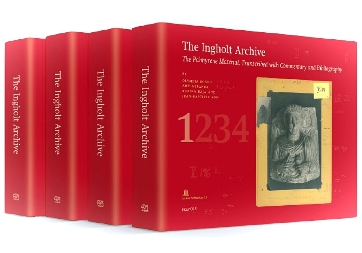
The Ingholt Archive
The Palmyrene Material, Transcribed with Commentary and Bibliography
show More to view fulltext, buy and share links for:The Ingholt Archive show Less to hide fulltext, buy and share links for: The Ingholt ArchiveFor a period of over 50 years, from his first visit to Palmyra in the 1920s until the late 1970s, Danish archaeologist Harald Ingholt carefully collected and curated a detailed archive of Palmyrene sculpture, architecture, and epigraphy. Containing approximately 2000 images, each archive sheet contains handwritten annotations on Palmyrene funerary art, transcribes and translates inscriptions, includes detailed observations on object style and dating, and provides bibliographical information for each sculpture. As such, this archive is a treasure trove of information on Palmyrene sculpture, architecture, and epigraphy. Moreover, Ingholt’s notes go beyond shedding light on the creation of these sculptures, and also provide rich information about their more recent histories: object biographies offer details on provenance, collection history, and excavation photography. In doing so, they offer unique insights into twentieth-century excavation, conservation, and collection practices. Since 1983, Ingholt’s archive has been housed at the Ny Carlsberg Glyptotek in Copenhagen, Denmark, and then, from 2012 onwards, the archive took digital shape within the framework of the Palmyra Portrait Project at Aarhus University. Now available in print for the first time, the Ingholt Archive is here presented in its entirety as a lavishly illustrated four-volume set. The authors have transcribed and commented upon each sheet in the archive, provided new translations of the inscriptions that accompany the sculptures, and compiled an updated bibliography for each item. This unique set is published together with a detailed introduction, thirteen concordances, and a bibliography, making it an invaluable resource for researchers in the field.
-
-
-
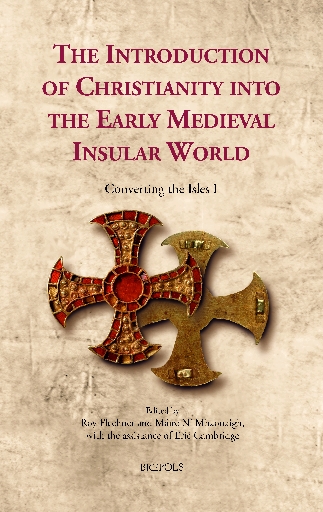
The Introduction of Christianity into the Early Medieval Insular World
Converting the Isles I
show More to view fulltext, buy and share links for:The Introduction of Christianity into the Early Medieval Insular World show Less to hide fulltext, buy and share links for: The Introduction of Christianity into the Early Medieval Insular WorldConversion to Christianity is arguably the most revolutionary social and cultural change that Europe experienced throughout Late Antiquity and the early Middle Ages. Christianisation affected all strata of society and transformed not only religious beliefs and practices, but also the nature of government, the priorities of the economy, the character of kinship, and gender relations. It is against this backdrop that an international array of leading medievalists gathered under the auspices of the Converting the Isles Research Network (funded by the Leverhulme Trust) to investigate social, economic, and cultural aspects of conversion in the early medieval Insular world, covering different parts of Britain, Ireland, Scandinavia, and Iceland.
This is is the first of two volumes showcasing research generated through the ‘Converting the Isles’ Network. This volume focuses on specific aspects of the introduction of Christianity into the early medieval Insular world, including the nature and degree of missionary activity involved, socio-economic stimulants for conversion, as well as the depiction and presentation of a Christian saint. Its companion volume has the transformation of landscape as its main theme. By adopting a broad comparative and crossdisciplinary approach that transcends national boundaries, the material presented here and in volume II offers novel perspectives on conversion that challenge existing historiographical narratives and draw on up-to-date archaeological and written evidence in order to shed light on central issues pertaining to the conversion of the Isles.
-
-
-
The Invention of Middle English
An Anthology of Sources, 1700-1864
show More to view fulltext, buy and share links for:The Invention of Middle English show Less to hide fulltext, buy and share links for: The Invention of Middle EnglishIn accounts of the emergence of medieval studies in the post-medieval period, the growth of the discipline of Middle English has so far not been fully charted. This study provides the principal source materials for the study of the formation of Middle English, most of which are rare and difficult to obtain. It enables the detailed study of the key documents in the growth of Middle English - gathered together for the first time. It will also enable the setting of courses in this field. Each extract is preceded by a full histroical and critical introduction and bibliography; any passages in late Latin and German are translated.
-
-
-
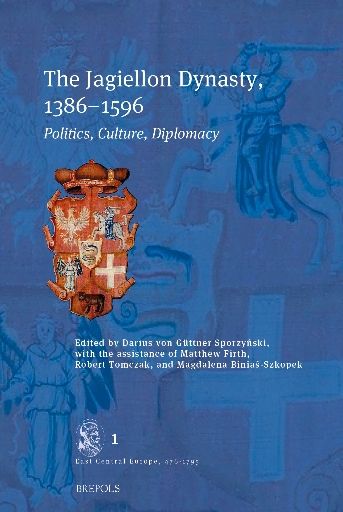
The Jagiellon Dynasty, 1386‑1596
Politics, Culture, Diplomacy
show More to view fulltext, buy and share links for:The Jagiellon Dynasty, 1386‑1596 show Less to hide fulltext, buy and share links for: The Jagiellon Dynasty, 1386‑1596The volume offers a re-examination of the rise of the Jagiellon dynasty in medieval and early modern Central Europe. Originating in Lithuania and extending its dominion to Poland, Hungary, and Bohemia, the Jagiellon dynasty has left an enduring legacy in European history. This collection of studies presents the Jagiellons as rulers with dynamic and negotiated authority. It begins with the dynasty’s origins and its dynastic union with Poland, milestones that have shaped the political and cultural trajectory of the dynasty’s reign. The volume places significant emphasis on the role of royal consorts, thereby broadening traditional gender-focused perspectives. Far from being mere accessories, queens had a considerable influence on governance, economic matters, and diplomacy. The cultural impact of Jagiellon rule is analysed through interactions with humanists and the intellectual milieu of the court. The performative aspects of Jagiellon power, including the use of words, gestures, and even intentional silences, are examined as powerful tools of articulation. Emotional factors that influence governance and intricate dynastic relationships are explored, revealing how political decisions, especially constitutional reforms, are made more rapidly when faced with perceived dynastic vulnerabilities. In Poland, the rise of parliamentary institutions under the earlier Jagiellon monarchs epitomises the concept of negotiated authority, underscoring the growing political role of the nobility. This volume thus provides a multi-faceted and nuanced understanding of the Jagiellon dynasty’s legacy in political, cultural, and gender-related spheres, enhancing understanding of European history.
-
-
-
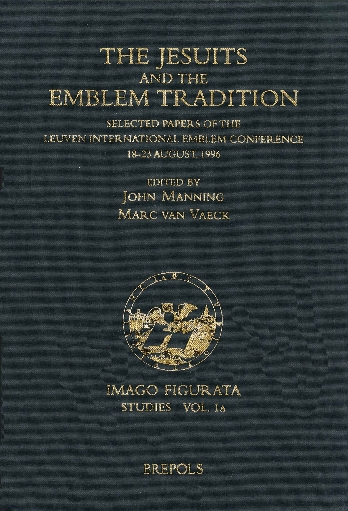
The Jesuits and the Emblem Tradition
Selected Papers of the Leuven International Emblem Conference, 18-23 August, 1996
show More to view fulltext, buy and share links for:The Jesuits and the Emblem Tradition show Less to hide fulltext, buy and share links for: The Jesuits and the Emblem TraditionThe publication incorporated selected papers concerning the emblematic books published by the Jesuits during the sixteenth and seventeenth centuries in the Spanish Netherlands where they were more active than anywhere else.
Jesuits published more emblematic books than any other group during the sixteenth and seventeenth centuries. And they were probably more active in both the print and material culture in the Spanish Netherlands than anywhere else. The essays are revised versions of papers presented at the Fourth International Emblem Conference held at Leuven in 1996. The table of contents provides an overview of the variety of topics and approaches represented in the volume.
-
-
-
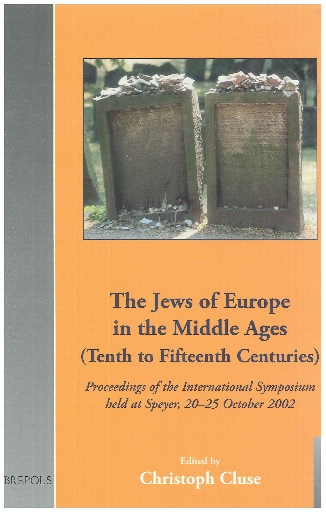
The Jews of Europe in the Middle Ages (Tenth to Fifteenth Centuries)
Proceedings of the International Symposium held at Speyer, 20-25 October 2002
show More to view fulltext, buy and share links for:The Jews of Europe in the Middle Ages (Tenth to Fifteenth Centuries) show Less to hide fulltext, buy and share links for: The Jews of Europe in the Middle Ages (Tenth to Fifteenth Centuries)The Jews of Europe in the Middle Ages presents the proceedings of an international symposium held at Speyer (Germany) in October, 2002. The collection aims at a comprehensive (and comprehensible) overview describing the variety of historical experience for European Jewries from c. 1000 to c. 1500. Leading European historians firmly based in regional, archival research have here been brought together with a number of Israeli and American scholars who concentrate on legal and constitutional aspects of the Jewish community. Historians working on medieval Mediterranean Jewries (Sicily, Spain, Provence, etc.) and those studying the northern communities (England, Northern France, and Ashkenaz) present their findings in a single, one-language collection. Regional overviews are supplemented by studies on cultural, economic, social, and linguistic aspects as well as by portraits of individual (northern) Jewish communities. The collection highlights the similarities and differences among the various European Jewish cultures, demonstrating that these cultures were no less European than they were Jewish. At the same time, the Jewish heritage has deeply influenced medieval and modern European majority cultures. This cultural symbiosis was epitomized in the European Jewish community (kahal, aljama).
-
-
-
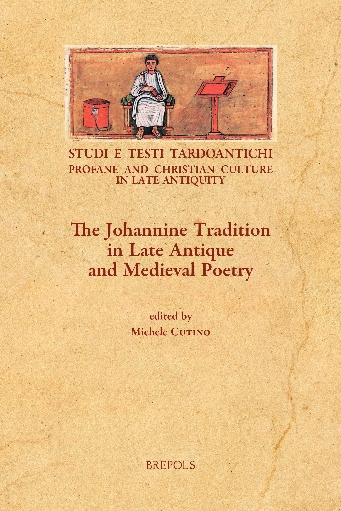
The Johannine Tradition in Late Antique and Medieval Poetry
show More to view fulltext, buy and share links for:The Johannine Tradition in Late Antique and Medieval Poetry show Less to hide fulltext, buy and share links for: The Johannine Tradition in Late Antique and Medieval PoetryThe Johannine Tradition in Late Antique and Medieval Poetry proposes to examine the impact of the Gospel of John, which is fundamental from the point of view of the history of Christian doctrines, on ancient poetic production, with some forays into the Middle Ages. The critical literature on these aspects is particularly abundant, but hitherto an overall view of the presence and importance of the Johannine tradition in the evolution of Christian poetry was lacking. Based on the Strasbourg colloquium that took place on 16-17 September 2021, the present volume aims to fill this gap, with contributions highlighting not an episodic presence of Johannine texts in poetic compositions, but a structuring function in the definition of the poetic choices of the various authors. The focus of attention could therefore only be on the genre of biblical rewritings, which derive their particular significance from their organic attempt to “remake” the biblical text in accordance with very precise cultural objectives and the expectations of a select audience.
-
-
-
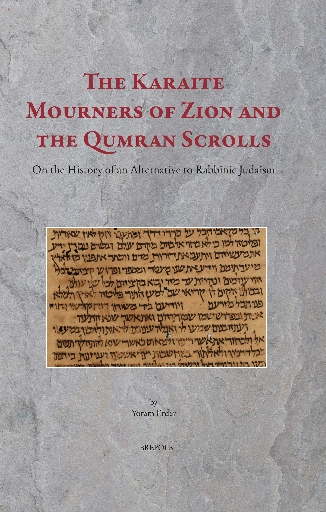
The Karaite Mourners of Zion and the Qumran Scrolls
On the History of an Alternative to Rabbinic Judaism
show More to view fulltext, buy and share links for:The Karaite Mourners of Zion and the Qumran Scrolls show Less to hide fulltext, buy and share links for: The Karaite Mourners of Zion and the Qumran ScrollsThis book is dedicated to studying the Karaite Mourners of Zion - the leading faction within the Karaite movement during its formative period (9th - 11th century). Like all Karaites, the Mourners claimed that the Rabbinic Oral Law was not given by God but is rather the ‘commandment of man’ (Isaiah 29.13). Therefore they called for a return to the Hebrew Bible.
According to the Karaite Mourners, neglecting the Bible caused also the neglect of the Land of Israel. For them the Oral Law was a tool of the Jewish people to strike roots in the exile. Therefore they developed a Messianic doctrine which encouraged the Jewish people not only to return to the Bible, but also to immigrate to the Land of Israel in order to accelerate the redemption.
The Karaite Mourners’ leadership practiced what they preached. From their cradle in the exile of Babylonia and Persia they came to Jerusalem, where they created a community that was called Shoshanim (lilies). This community became the most important community that ever flourished in the history of Karaism. They left behind prolific work, most of it written in Judaeo-Arabic.
Coming to Palestine, and maybe before that, the Karaite Mourners were exposed to some of the Qumran scrolls that were discovered at their time. They did not hesitate to adopt some of the Qumran doctrine and halakha, despite the fact that main Qumran beliefs were not acceptable to the Karaites.
Studying the Qumranic influence on the Karaite Mourners sheds light simultaneously on early Karaism and the Jewish sects of the Second Temple period.
-
-
-
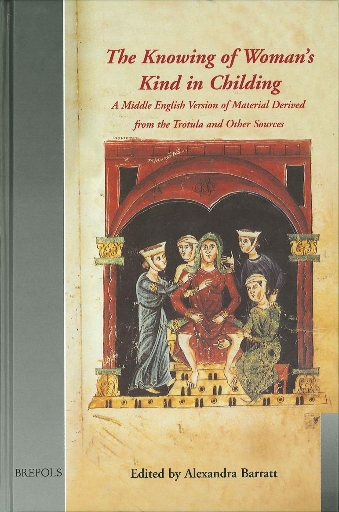
The Knowing of Woman's Kind in Childing
A Middle English Version of Material Derived from the Trotula and other Sources
show More to view fulltext, buy and share links for:The Knowing of Woman's Kind in Childing show Less to hide fulltext, buy and share links for: The Knowing of Woman's Kind in ChildingThis study comprises a critical edition, using all the five extant manuscripts of the most popular of the Middle English gynaecological texts deriving from the Latin Trotula-text. The Knowing of Women's Kind in Childing is a short fifteenth-century prose treatise which claims to be translated from Latin texts (or Latin and French) that derive ultimately from the Greek. It has a unique importance as it was written by a woman, for a female audience, and on the subject of women. The text considers women's physical constitution, what makes them different from men (primarily the possession of a womb) and, in particular, the three types of problem that the womb causes. That it was written for a female audience is made explicit in the Prologue where the writer explains that he has translated this text because literate women are more likely to read English than any other language and can then pass on the information it contains to illiterate women.The text is a translation, no doubt by a man rather than a woman, but one of his ultimate sources was a text attributed to 'Trotula', in the Middle Ages believed to be the name of a midwife or gynaecologist from Salerno, who wrote extensively on women's ailments, childbirth and beauty care. Recent work shows that such a woman, probably named Trota, did exist and that she did write a gynaecological treatise, the Trotula or 'little Trota', which became closely associated with two other texts not by her. All three however became very popular and were widely disseminated under her name. Large sections of The Knowing of Woman's Kind come, via an Old French translation, from a version of one of these texts, Liber de sinthomatibus mulierum.
-
-
-
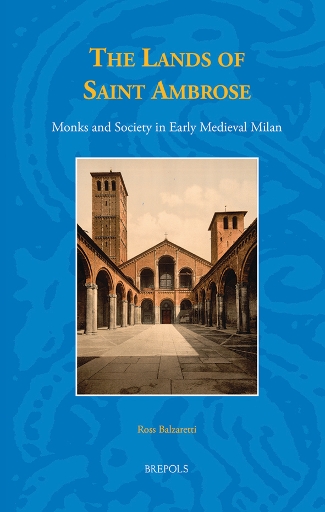
The Lands of Saint Ambrose
Monks and Society in Early Medieval Milan
show More to view fulltext, buy and share links for:The Lands of Saint Ambrose show Less to hide fulltext, buy and share links for: The Lands of Saint AmbroseThis book is a history of Milan in the early medieval period. It investigates the political, social, and economic aspects of the transformation of the Roman world in one of its major centres. Its main theme is the role of monastic communities in this transformation. In the case of Milan a single monastery can be studied in great detail: the Benedictine community founded by Charlemagne, c. 789, next to the basilica in which St Ambrose himself was buried. Surprisingly, the impact which this important Carolingian foundation had upon the existing society of Milan has been underestimated by historians, partly because the history of the monastery has been studied apart from the history of the city.
The book shows how successive generations of monks helped to change the social organisation of the city and much of its hinterland, largely through their substantial dealings in property as recorded in one of the most important surviving collections of early medieval charters. This thesis challenges the views of earlier generations of scholars who downplayed the role of the monastery in the mechanisms of social change, in favour of a ‘new’ mercantile class.
-
-
-
The Language of Byzantine Learned Literature
show More to view fulltext, buy and share links for:The Language of Byzantine Learned Literature show Less to hide fulltext, buy and share links for: The Language of Byzantine Learned LiteratureBuilt on a highly traditional educational system, the language of Byzantine literature was for the most part written in an idiom deeply influenced by ancient Greek texts and grammatical handbooks. The resulting overall archaizing impression of Byzantine Greek is largely why the language of learned literature - as compared with the relatively well researched vernacular literature - has seldom been taken seriously as an object of linguistic study. This volume combines the expertise of linguists and scholars of Byzantine literature to challenge the assumption that learned mediaeval Greek is merely the weary continuation of ancient Greek or, worse still, a poor imitation of it, while proposing that it needs to be treated as a literary idiom in its own right.
The contribution that texts of this kind can offer to sub-fields of Greek historical linguistics is explored using specific examples. Sociolinguistic theory provides a particularly useful framework for a more accurate analysis of the relationship between the vernacular and classicizing varieties of Greek literary language. In addition, the impact of the educational system on the production of texts is examined. In another chapter it is shown that a number of far-reaching assumptions, which originated in the 15th century, about accentuation and the middle voice still tend to colour our understanding of Byzantine, as well as ancient, Greek. Other chapters focusing on particles, the dative and the synthetic perfect reveal that Byzantine authors, while of course influenced by the living spoken language, used their classical linguistic heritage in a creative and innovative way.
-
-
-
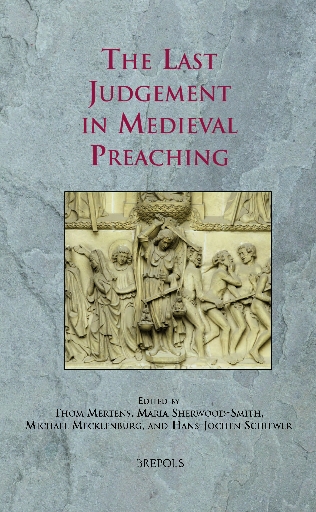
The Last Judgement in Medieval Preaching
show More to view fulltext, buy and share links for:The Last Judgement in Medieval Preaching show Less to hide fulltext, buy and share links for: The Last Judgement in Medieval PreachingIn the Middle Ages, the sermon was a powerful and versatile means of bringing the Word of God to the people. In fact, in the oral culture of that period, it was the primary medium for Christian clergy to convey religious education to lay audiences. Moreover, the sermon played an important role in the liturgy and life of the religious orders. With the growth of lay literacy the sermon collection also developed into a vernacular literary genre of its own.
Two aspects of Christian piety, hopeful expectation on the one hand, and fearful anticipation on the other, were decisive factors for the shaping of religious life and practical pastoral care. Both these aspects were often brought to the fore in sermons on the Last Judgement as part of a recurrent argument against a life too much oriented towards the world. The preachers dwell on both the Particular Judgement occurring immediately after death and the General Judgement over the whole of creation at the end of times.
This volume brings together scholars from several European countries with the purpose to present their research on the theme of the Last Judgement in medieval sermons. The scope of scholars is broadened to incorporate not only specialists in sermon studies, but also historians, theologians, and literary historians to encourage research along new, multi-perspectival lines.
-
-
-
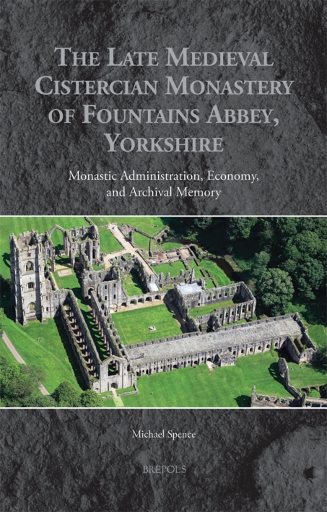
The Late Medieval Cistercian Monastery of Fountains Abbey, Yorkshire
Monastic Administration, Economy, and Archival Memory
show More to view fulltext, buy and share links for:The Late Medieval Cistercian Monastery of Fountains Abbey, Yorkshire show Less to hide fulltext, buy and share links for: The Late Medieval Cistercian Monastery of Fountains Abbey, YorkshireFounded in 1132, Fountains Abbey became the wealthiest English Cistercian monastery - yet relatively little analysis has been made of its surviving records to investigate how its wealth was controlled and sustained. This book deals with this secular aspect of the religious community at Fountains, investigating in particular the way in which prosaic business records were compiled and redacted. It traces the transmission of data from original charters through successive versions of cartularies, and in the process establishes the existence of a previously unknown manuscript. It also reveals how abbots in the fifteenth century interacted with and adapted the records in their care.
In this process, two quite different aspects of monastic life are uncovered. First, it sheds new light on the history of Fountains Abbey through the fourteenth and fifteenth centuries, amongst other things how it responded to the turmoil of the Black Death, and discloses for the first time the allegiance of one abbot to the Lancastrian cause during the Wars of the Roses. Second, it reveals the worldly skills shown by the community of Fountains that were successfully applied to exploit the monastery’s large landholdings across Yorkshire, mainly through wool and agricultural production, but also through fisheries, tanning, mining, and metalworking. The economic success of these activities enabled the abbey to become a prosperous institution which rivalled the wealth of the aristocracy.
-
-
-
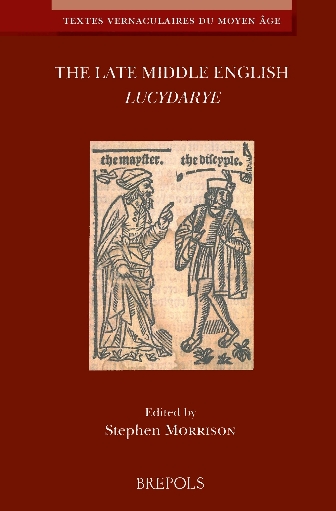
The Late Middle English 'Lucydarye'
show More to view fulltext, buy and share links for:The Late Middle English 'Lucydarye' show Less to hide fulltext, buy and share links for: The Late Middle English 'Lucydarye'The Lucydarye is a late Middle English manual of popular instruction, largely religious in its orientation, though including lengthy discussions of witchcraft, demonology, and meteorological phenomena. There is a strong interest in pastoral instruction. Set in the form of a dialogue between a magister and his discipulus, it is an over-literal translation of a fourteenth-century French text known as the Second Lucidaire, itself a free adaptation of the Latin Elucidarium, traditionally attributed to Honorius Augustodunensis (Honorius of Autun). The translation is the work of one Andrew Chertsey. The Middle English text, edited here for the first time (from a Wynkyn de Worde print), bears striking similarities to other, popular works of an encyclopaedic nature, notably Sydrak and Bokkus and the Pricke of Conscience. Equally, there are many points in common with the sermon literature of the time. The Lucydarye is printed alongside the French source so as to allow the reader both to appreciate points of obscurity in the text and to observe Chertsey's translation technique. A discussion of the relationship between the Lucydarye and the various versions of the Second Lucidaire throws some light on the complicated textual tradition of the French prints.
-