


Brepols
Brepols is an international academic publisher of works in the humanities, with a particular focus in history, archaeology, history of the arts, language and literature, and critical editions of source works.2841 - 2860 of 3194 results
-
-
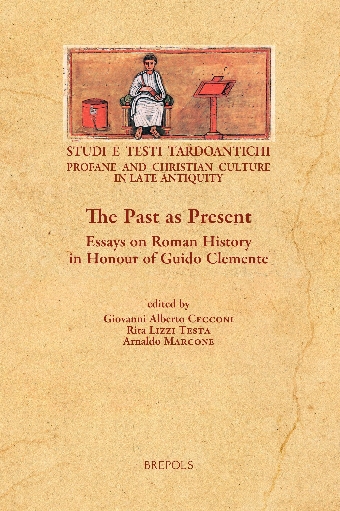
The Past as Present
Essays on Roman History in Honour of Guido Clemente
show More to view fulltext, buy and share links for:The Past as Present show Less to hide fulltext, buy and share links for: The Past as PresentThis volume in honour of Guido Clemente collects essays by nearly 40 established and younger scholars from all over the world, who want to express their gratitude for prof. Clemente's direct or indirect teaching. While the essays included in the volume cover domains ranging from methodology and (the history of) historiography, over archaeology and epigraphy, to politics and religion, they all resort under the main theme of ‘the past as present’. This main theme is inspired by a prominent feature of Guido Clemente's scholarly work: the awareness that from the last centuries of the Roman Republic up until Late Antiquity, a sense of the past ‘as present’ marked the rhythm of everyday life and provided the key to understanding ongoing societal change.
-
-
-
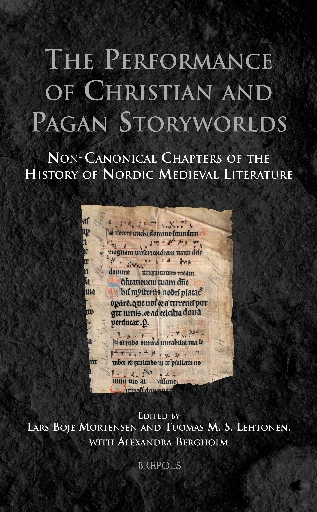
The Performance of Christian and Pagan Storyworlds
Non-Canonical Chapters of the History of Nordic Medieval Literature
show More to view fulltext, buy and share links for:The Performance of Christian and Pagan Storyworlds show Less to hide fulltext, buy and share links for: The Performance of Christian and Pagan StoryworldsThe present collection explores a hitherto understudied body of Nordic medieval literature which, although overlooked in traditional, language-based narratives, was in fact crucial in shaping social and religious identities.
By drawing on the ‘performance turn’ in cultural studies, the volume identifies a number of minor and peripheral literary forms and texts that had a vital connection to ritual and ritualized speech. These neglected traditions therefore offer an alternative insight into Nordic literary life and the sets of cultural expression, or storyworlds, underlying Nordic culture.
The collected studies explore different aspects of verbal performances as a primary vehicle for the Nordic storyworlds, with a preference for the Christian over the pagan traditions. Emphasis is placed on Latin, Old Norse, and Finnish traditions that were retold and reproduced over time. These ‘living’ literary forms highlight the importance of non-canonical texts for the interpretation of contact between the peripheries and centres of Nordic culture. Through the focus on the interaction between Latin and the vernacular, between eastern Baltic and western Latin influences, and between ritual and speech in religious practice, this collection demonstrates the importance of ‘minor’ texts for the re-construction of medieval Nordic culture and history.
-
-
-

The Playful Middle Ages
Meanings of Play and Plays of Meaning: Essays in Memory of Elaine C. Block
show More to view fulltext, buy and share links for:The Playful Middle Ages show Less to hide fulltext, buy and share links for: The Playful Middle AgesLove play or playing dead, wordplay or playing games - the notion of play inhabits all spheres of human activity. This collection of essays brings together international scholars from a range of disciplines to explore aspects of playfulness in the later European Middle Ages. From manuscript to performance and from the domestic to the doctrinal, the exuberance and ambiguity of verbal and visual play is interrogated in order to decode layers of meaning in texts and artefacts. These twelve papers celebrate the work of Elaine C. Block, whose dedicated study of misericords has, through countless articles and books, made the riches of this dizzying iconographic resource easily available to scholars for the first time. Her monumental Corpus on Medieval Misericords volumes will no doubt inform medieval scholars for generations to come, and those included in the present collection are both proud and grateful to be of the first generation to benefit from her work on this body of carvings which challengingly - and playfully - straddles thesometimes invisible line between the sacred and profane.
-
-
-
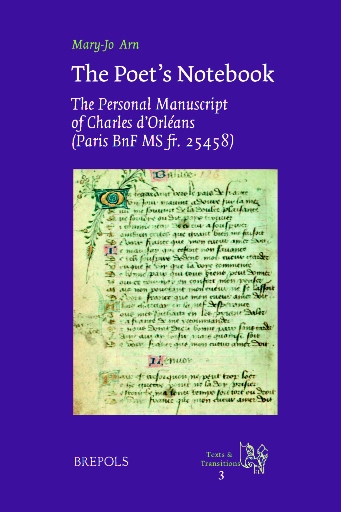
The Poet's Notebook
The Personal Manuscript of Charles d'Orléans (Paris, BnF MS fr. 25458)
show More to view fulltext, buy and share links for:The Poet's Notebook show Less to hide fulltext, buy and share links for: The Poet's NotebookThis study of Charles d'Orléans's personal manuscript of his poetry - the first in nearly a century - paves the way not only for a new edition of the duke's œuvre (by Mary-Jo Arn, John Fox, and R. Barton Palmer) but for a new view of it. Following the first complete modern description of the manuscript, this study reconstructs the history of the manuscript, copying layer by copying layer. Codicological observations supplemented with palaeographical, historical, art-historical, and textual information reveal the approximate sequence of the manuscript’s composition, which in turn allows a re-dating of the manuscript and some of the poems in it. Charles saw lyric form differently than did his predecessors and contemporaries, a view made manifest in the poet’s own numbering of his poems. He mixed his complaintes with ballades and his rondels with chansons, each pair of forms in a numbered series, but never presenting the longer alongside the shorter forms. The analysis of the manuscript’s construction corrects the current physical disorder of the later chansons and rondels, as well as that of the ‘En la forest de longue actente’ series (including the lyric omitted from the standard edition) and re-evaluates the handful of English poems in the manuscript. In the end, we come to understand the relationship between the visual ‘messiness’ of the manuscript and the poet’s strong concept of lyric order. The technical aspects of the study are clarified by many tables and fascimile pages; the interactive cd contains an index of first lines that can be sorted in various ways to reveal a variety of kinds of manuscript relationships.
-
-
-
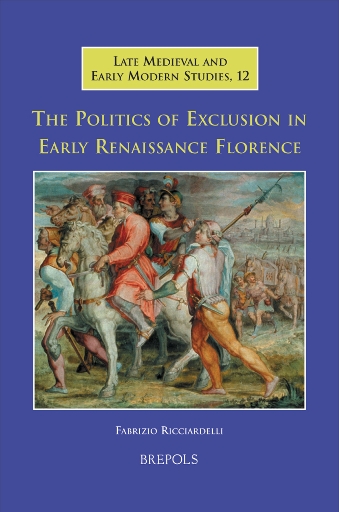
The Politics of Exclusion in Early Renaissance Florence
show More to view fulltext, buy and share links for:The Politics of Exclusion in Early Renaissance Florence show Less to hide fulltext, buy and share links for: The Politics of Exclusion in Early Renaissance FlorenceNo previous work has examined political exclusion in Early Renaissance Florence or its significance for the transition from Florentine popular government to oligarchy. Between the fourteenth and the first half of the fifteenth century, political exclusion became a normal feature of political life, regardless of the type of political regime; it was an essential instrument by which new governments consolidated their control over the city and the countryside in one of the largest and most powerful cities of Early Renaissance Europe. Exclusion from the Republic of Florence–separation from friends and family, business and property, coupled with the degradation of public humiliation–engendered a new outlook on life. In Early Renaissance Florence, excluded citizens across social classes became common outlaws, no different for common criminals prosecuted for heresy, blasphemy, gambling, or sexual deviance. By investigating these practices and attitudes of Early Renaissance Florence, this book shows the dark side of Renaissance republicanism: its fear of political dissent in any form and its means to crush it at all costs. This study of the other side of Renaissance republicanism presents a new and crucial chapter in Renaissance history.
-
-
-
The Politics of Memory and Identity in Carolingian Royal Diplomas
The West Frankish Kingdom (840-987)
show More to view fulltext, buy and share links for:The Politics of Memory and Identity in Carolingian Royal Diplomas show Less to hide fulltext, buy and share links for: The Politics of Memory and Identity in Carolingian Royal DiplomasBased upon a ‘performative’ interpretation of royal charters, The Politics of Memory and Identity offers a new and surprising narrative of West Frankish history from the death of Louis the Pious in 840 to the demise of the Carolingian dynasty in 987. The key is a carefully contextualised analysis of the circumstances in which kings issued charters and an alert examination of the charters’ verbal and visual semiotics. For which monasteries and cathedrals did kings issue diplomas and under what conditions? Who were the patrons who interceded for the recipients of diplomas and what titles were they given? Which kings were named as predecessors and which were omitted? Such clues allow us to recover the meaning of events whose significance was concealed by chroniclers, and to find unsuspected continuities in 150 years of West Frankish politics. They allow us to see a ruthless exercise of power in the use of forgeries and a commitment to political reform in the reform of monasteries. They reveal the long shadow cast by the reign of Charles the Bald in West Frankish history and the importance of a handful of monasteries as ‘sites of memory’. Above all, an intertextual reading of diplomas shows that political leaders in the kingdom made decisions based on policy, where the policy was articulated in terms of lessons drawn from their understanding of the past, and diplomas were the records that conveyed the lessons.
-
-
-

The Poor Caitif
A Modern English Translation with Introductory Essays and Notes
show More to view fulltext, buy and share links for:The Poor Caitif show Less to hide fulltext, buy and share links for: The Poor CaitifThe Pore Caitif is a popular, late-fourteenth-century, carefully crafted compilation of biblical, catechetical, devotional and mystical material drawing on patristic and medieval sources, in Middle English, consisting of a Prologue and a variable number of sections of differing lengths according to each manuscript, assembled probably by a clerical writer for an increasing literate lay readership/audience.The Prologue sets out the reason for writing and its overall structure as an integrated ladder leading the reader to heaven. The text begins with basic catechetical instruction modelled on John Peckham’s Lambeth Constitutions of 1281 before continuing with more affective material, meditating, for example, on the Passion, and concludes with a treatise on virginity, leading the reader from an active to a contemplative way of life.
The Pore Caitif was written about the time the Lollards were starting to propagate their programme of universal vernacular education. The writer believes in the need to educate his readers in the truths necessary for salvation without necessarily subscribing to Lollard positions.
Although referred to in a number of secondary articles and books, and serving as the focus of three doctoral dissertations, an edition of the work was not published until 2019. Penkett's publication is the first Modern English translation based on the 2019 publication and is in a readily accessible format for the modern reader, accompanied by a series of ground-breaking essays.
-
-
-
The Popularization of Philosophy in Medieval Islam, Judaism, and Christianity
show More to view fulltext, buy and share links for:The Popularization of Philosophy in Medieval Islam, Judaism, and Christianity show Less to hide fulltext, buy and share links for: The Popularization of Philosophy in Medieval Islam, Judaism, and ChristianityThis volume explores attempts at the popularization of philosophy and natural science in medieval Islam, Judaism, and Christianity. Medieval philosophers usually wrote their philosophical books for philosophers, so the desire to convey psychological, cosmological, metaphysical, or even physical teachings to the ‘vulgus’ may seem surprising. Yet philosophy was indeed taught to non-philosophers and via a variety of literary genres. Indeed, scholars have argued that philosophy most infl uenced medieval society through popular forms of transmission. Among the questions this volume addresses are the following: Which philosophers or theologians sought to direct philosophical writings to the many? For what purposes did they seek to popularize philosophy? Was the goal to teach philosophical truths? For whom exactly were these popularized texts written? How did they go about teaching philosophy to a wide audience? In what ways did popularized philosophy impact upon society? To what extent were the considerations and problems in the medieval popularization of philosophy the same or different in the various religious traditions of philosophy? How philosophical was the popularized philosophy?
In addressing these questions and others, this pioneering volume is the fi rst of its kind to bring together scholars of medieval Islamic, Jewish, and Christian thought to discuss the popularization of philosophy in these three religious traditions of philosophy.
-
-
-
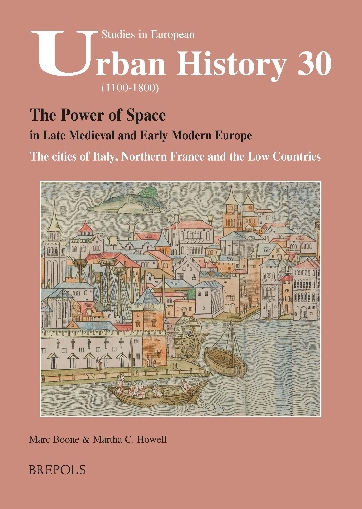
The Power of Space in Late Medieval and Early Modern Europe
The cities of Italy, Northern France and the Low Countries
show More to view fulltext, buy and share links for:The Power of Space in Late Medieval and Early Modern Europe show Less to hide fulltext, buy and share links for: The Power of Space in Late Medieval and Early Modern EuropeThis volume examines the politics of space in the most densely urbanized areas of Europe during the late Middle Ages and Renaissance. It ranges from Italy to the Parisian region and then to the greater Low Countries, home of Europe’s most powerful commercial cities of the period. Hardly inert sites on which political action took place, the spaces these authors investigate conferred power on those who possessed them. At the same time they were themselves transformed by the struggles, thus acquiring new powers that invited future contest. Thus implicitly responding to Georges Lefebvre’s claim that space is “produced”, the authors ask how space was perceived and used in everyday life, giving specific spaces cultural, social, and political coherence (“le perçu”); how it was represented or theorized, thus encoded in symbols, maps and laws (“le conçu”); and how it was lived, in effect the result of the dialectical relation between the perceived and the represented (“le vécu”).
Marc Boone is full professor of medieval social and political history of the (late) Middle Ages at Ghent University. He has been president of the European Association of Urban History and has published mainly in the field of urban history.
Martha C. Howell is Miriam Champion professor of History at Columbia University (New York). She has published on late medieval and early-modern European gender history and social history.
-
-
-
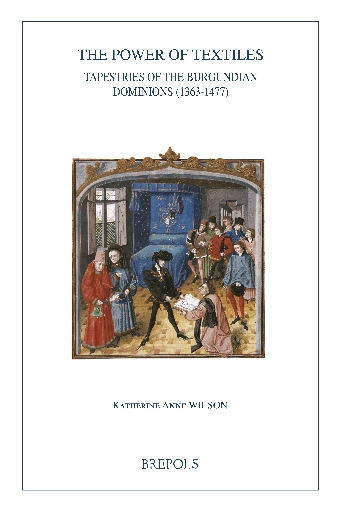
The Power of Textiles
Tapestries of the Burgundian Dominions (1363–1477)
show More to view fulltext, buy and share links for:The Power of Textiles show Less to hide fulltext, buy and share links for: The Power of TextilesTextiles were used as markers of distinction throughout the Middle Ages and their production was of great economic importance to emerging and established polities. This book explores tapestry in one of the greatest textile producing regions, the Burgundian Dominions, c. 1363-1477. It uses documentary evidence to reconstruct and analyse the production, manufacture, and use of tapestry. It begins by identifying the suppliers of tapestry to the dukes of Burgundy and their ability to spin webs between city and court. It proceeds by considering the forms of tapestry and their functions for urban and courtly consumers. It then observes the ways in which tapestry constructed social relations as part of gift-giving strategies. It concludes by exploring what the re-use, repair, and remaking of tapestry reveals about its value to urban and courtly consumers. By taking an object-centred approach through documentary sources, this book emphasises that the particular characteristics of tapestry shaped the strategies of those who supplied it and the ways it performed and constructed social relations. Thus, the book offers a contribution to the historical understanding of textiles as objects that contributed to the projection of social status and the cultural construction of political authority in the Burgundian polity.
-
-
-

The Power of Words in Late Medieval Devotional and Mystical Writing
Essays in Honour of Denis Renevey
show More to view fulltext, buy and share links for:The Power of Words in Late Medieval Devotional and Mystical Writing show Less to hide fulltext, buy and share links for: The Power of Words in Late Medieval Devotional and Mystical WritingThis volume honours Denis Renevey's contribution to late medieval devotional and mystical studies via a series of essays focusing on a topic that has been of central relevance to Denis's research: the power of words. Contributors address the centrality of language to devotional and mystical experience as well as the attitudes towards language fostered by devotional and mystical practices. The essays are arranged in four sections: 'Other Words: Figures and Metaphors: treating the application of the languages of romantic love, medicine, and travel to descriptions of devotional and mystical experience; 'Iconic Words: Images and the Name of Jesus; considering the deployment of words and the Word (Jesus) as powerful images in devotional practice; 'Testing Words: Syntax and Semantics; exploring the ways in which medieval writers stretch the conventions of language to achieve fresh perspectives on devotional and mystical experiences; and 'Beyond Words: The Apophatic and The Senses; offering novel perspectives on a group of texts that address the difficulty of expressing God and visionary experience with words.
The volume's global purpose is to demonstrate the attractions of an explicitly philological approach for scholars studying the Christian tradition.
-
-
-
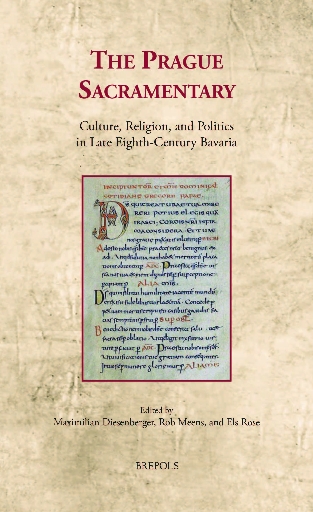
The Prague Sacramentary
Culture, Religion, and Politics in Late Eighth-Century Bavaria
show More to view fulltext, buy and share links for:The Prague Sacramentary show Less to hide fulltext, buy and share links for: The Prague SacramentaryThe Prague Sacramentary is a unique liturgical manuscript which can be very precisely located in a specific social and historical context. It was written in the turbulent period when Charlemagne crossed Bavaria to fight the Avars and when his son Pippin rebelled against him, seeking support among the Bavarian nobility. The manuscript can be linked to specific groups of Bavarian elites that had to come to terms with this explosive political situation. It also elucidates the ways in which Christian culture was expressed and experienced in Bavaria at the end of the eighth century. Although Bavaria may be regarded as a periphery from a Frankish perspective, it was certainly no cultural backwater. Because of its geographical position at the crossroads of Italian, Bavarian, and Frankish culture, Bavaria produced unique and intriguing texts and artefacts.
One such object is analysed here by a team of experts, shedding renewed light on the earthly and heavenly concerns of an early medieval community in a specific region. It includes a discussion of the topics of the formal invocation of saints, vernacular understandings of Latin texts, marriage, politics, and concerns for ritual purity as well as the well-being of the conflict-ridden Carolingian family.
-
-
-
The Pre-Christian Religions of the North: History and Structures
show More to view fulltext, buy and share links for:The Pre-Christian Religions of the North: History and Structures show Less to hide fulltext, buy and share links for: The Pre-Christian Religions of the North: History and StructuresThe product of an international interdisciplinary team, the History and Structures strand of the Pre-Christian Religion of the North series aims to approach the subject by giving equal weight to archaeological and textual sources, taking into consideration recent theories on religion within all the disciplines that are needed in order to gain a comprehensive view of the religious history and world view of pre-Christian Scandinavia from the perspective of the beginning of the twenty-first century. Volume I presents the basic premises of the study and a consideration of the sources: memory and oral tradition, written sources, religious vocabulary, place names and personal names, archaeology, and images. Volume II treats the social, geographical, and historical contexts in which the religion was practiced and through which it can be understood. This volume also includes communication between worlds, primarily through various ritual structures. Volume III explores conceptual frameworks: the cosmos and collective supernatural beings (notions regarding the cosmos and regarding such collective supernatural beings as the norns, valkyries, giants, and dwarfs) and also gods and goddesses (including Þórr, Óðinn, Freyr, Freyja, and many others). Volume IV describes the process of Christianization in the Nordic region and also includes a bibliography and indices for the entire four-volume work.
-
-
-
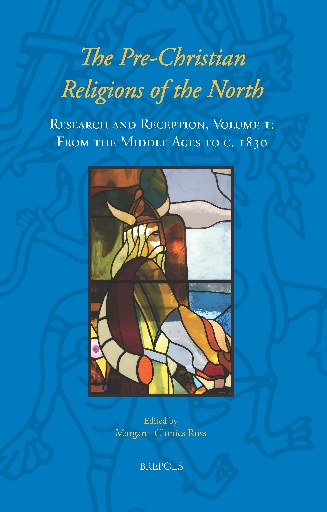
The Pre-Christian Religions of the North: Research and Reception, Volume I: From the Middle Ages to c. 1850
show More to view fulltext, buy and share links for:The Pre-Christian Religions of the North: Research and Reception, Volume I: From the Middle Ages to c. 1850 show Less to hide fulltext, buy and share links for: The Pre-Christian Religions of the North: Research and Reception, Volume I: From the Middle Ages to c. 1850Over more than a thousand years since pre-Christian religions were actively practised, European - and later contemporary - society has developed a fascination with the beliefs of northern Europe before the arrival of Christianity, which have been the subject of a huge range of popular and scholarly theories, interpretations, and uses. Indeed, the pre-Christian religions of the North have exerted a phenomenal influence on modern culture, appearing in everything from the names of days of the week to Hollywood blockbusters. Scholarly treatments have been hardly less varied. Theories - from the Middle Ages until today - have depicted these pre-Christian religious systems as dangerous illusions, the works of Satan, representatives of a lost proto-Indo-European religious culture, a form of ‘natural’ religion, and even as a system non-indigenous in origin, derived from cultures outside Europe.
The Research and Reception strand of the Pre-Christian Religions of the North project establishes a definitive survey of the current and historical uses and interpretations of pre-Christian mythology and religious culture, tracing the many ways in which people both within and outside Scandinavia have understood and been influenced by these religions, from the Christian Middle Ages to contemporary media of all kinds. The present volume (I) traces the reception down to the early nineteenth century, while Volume II takes up the story from c. 1830 down to the present day and the burgeoning of interest across a diversity of new as well as old media.
-
-
-
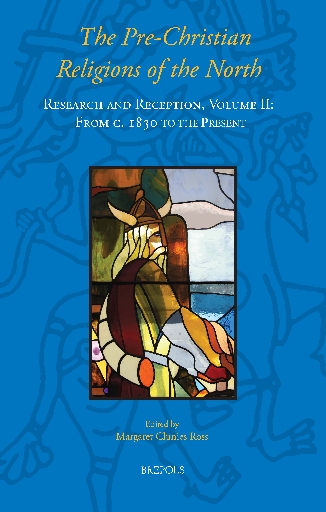
The Pre-Christian Religions of the North: Research and Reception, Volume II: From c. 1830 to the Present
show More to view fulltext, buy and share links for:The Pre-Christian Religions of the North: Research and Reception, Volume II: From c. 1830 to the Present show Less to hide fulltext, buy and share links for: The Pre-Christian Religions of the North: Research and Reception, Volume II: From c. 1830 to the PresentOver more than a thousand years since pre-Christian religions were actively practised, European – and later contemporary – society has developed a fascination with the beliefs of northern Europe before the arrival of Christianity, which have been the subject of a huge range of popular and scholarly theories, interpretations, and uses. Indeed, the pre-Christian religions of the North have exerted a phenomenal influence on modern culture, appearing in everything from the names of days of the week to Hollywood blockbusters. Scholarly treatments have been hardly less varied. Theories – from the Middle Ages until today – have depicted these pre-Christian religious systems as dangerous illusions, the works of Satan, representatives of a lost proto-Indo-European religious culture, a form of 'natural' religion, and even as a system non-indigenous in origin, derived from cultures outside Europe.
The Research and Reception strand of the Pre-Christian Religions of the North project establishes a definitive survey of the current and historical uses and interpretations of pre-Christian mythology and religious culture, tracing the many ways in which people both within and outside Scandinavia have understood and been influenced by these religions, from the Christian Middle Ages to contemporary media of all kinds. The previous volume (i) traced the reception down to the early nineteenth century, while the present volume (ii) takes up the story from c. 1830 down to the present day and the burgeoning of interest across a diversity of new as well as old media.
-
-
-
The Presence of Medieval English Literature
Studies at the Interface of History, Author, and Text in a Selection of Middle English Literary Landmarks
show More to view fulltext, buy and share links for:The Presence of Medieval English Literature show Less to hide fulltext, buy and share links for: The Presence of Medieval English LiteratureThe modern period has read its own contingent values into Middle English literature, and a modern canon of vernacular medieval literary texts has evolved as a result. While this book works with a selection of texts that have achieved such canonical status, it brings to light some of the ways in which they nevertheless resist the flattening domestications and expectations of modern taste. It illustrates how they formerly existed as constituents of a past world richer, stranger, and less familiar than much modern opinion has supposed. Thus the book aims to recuperate lost senses in which the age in which these texts were conceived and written was present within them, as well as ways in which they may have been present to their age. This twin idea of ‘presence’ is the thread that binds a series of chapters on English verse and prose written between the thirteenth and fifteenth centuries together. While they may be read as discrete studies of individual literary land- marks, the chapters also entail an implicit and ramifying demonstration of the short- comings of some modern views of what makes certain currently prized Middle English texts worth reading, and of how the vernacular literature of medieval England is retrospectively to be defined and periodized.
-
-
-
The Pseudo-Bonaventuran Lives of Christ
Exploring the Middle English Tradition
show More to view fulltext, buy and share links for:The Pseudo-Bonaventuran Lives of Christ show Less to hide fulltext, buy and share links for: The Pseudo-Bonaventuran Lives of ChristThis is a collection of pioneering studies by a distinguished transatlantic team of scholars on a neglected yet canonical tradition of medieval English literature. From the fourteenth to the sixteenth centuries and beyond, the remarkable ‘pseudo-Bonaventuran’ tradition, flowing from the Latin Meditationes vitae Christi (and thought, wrongly, to have been composed by St Bonaventure), gave Europe orthodox models for how to represent, know, and follow Jesus Christ. The Meditationes, in a huge variety of Latin and vernacular versions, invite their readers and listeners to imagine themselves present within the Gospel narrative. How to live, what to believe, how to feel, and how to be saved: this eloquent mainstream tradition had an impact on the public and private lives of English people more profound and lasting than any text save the Bible itself. For many, it even did the Bible’s work. The tradition of the Meditationes provides us with a gauge of lived religious sensibility without equal in the English later Middle Ages.
Deriving from the Queen’s Belfast-St Andrews AHRC-funded research project, Geographies of Orthodoxy: Mapping the English Pseudo-Bonaventuran Lives of Christ, c. 1350-1550, this volume questions and revises previous descriptions of the devotional, cultural, and political contexts in which pseudo-Bonaventuran Lives of Christ were produced, circulated, read, and understood. The period spanning the rise and repression of Lollardy, the ostensibly ‘orthodox’ fifeenth century, and the Tudor Reformations will never look quite the same again.
-
-
-
The Pursuit of Happiness in Medieval Jewish and Islamic Thought
Studies Dedicated to Steven Harvey
show More to view fulltext, buy and share links for:The Pursuit of Happiness in Medieval Jewish and Islamic Thought show Less to hide fulltext, buy and share links for: The Pursuit of Happiness in Medieval Jewish and Islamic ThoughtThe articles in this volume explore the teachings on happiness by a range of thinkers from antiquity through Spinoza, most of whom held human happiness to comprise intellectual knowledge of that which is Good in itself, namely God. These thinkers were from Greek pagan, Muslim, Jewish, and Christian backgrounds and wrote their works in Greek, Arabic, Hebrew, and Latin. Still, they shared similar philosophical views of what constitutes the Highest Good, and of the intellectual activities to be undertaken in pursuit of that Good. Yet, they differed, often greatly, in the role they assigned to deeds and practical activities in the pursuit of this happiness. These differences were, at times, not only along religious lines, but also along political and ethical lines. Other differences treated the relationship between the body and intellectual happiness and the various ways in which bodily health and well-being can contribute to intellectual health and true happiness.
-
-
-
The Pursuit of Salvation. Community, Space, and Discipline in Early Medieval Monasticism
with a Critical Edition and Translation of the Regula cuiusdam ad uirgines
show More to view fulltext, buy and share links for:The Pursuit of Salvation. Community, Space, and Discipline in Early Medieval Monasticism show Less to hide fulltext, buy and share links for: The Pursuit of Salvation. Community, Space, and Discipline in Early Medieval MonasticismThe seventh-century Regula cuiusdam ad uirgines (Someone’s Rule for Virgins), which was most likely written by Jonas of Bobbio, the hagiographer of the Irish monk Columbanus, forms an ideal point of departure for writing a new history of the emergence of Western monasticism understood as a history of the individual and collective attempt to pursue eternal salvation.
The book provides a critical edition and translation of the Regula cuiusdam ad uirgines and a roadmap for such a new history revolving around various aspects of monastic discipline, such as the agency of the community, the role of enclosure, authority and obedience, space and boundaries, confession and penance, sleep and silence, excommunication and expulsion.
-
-
-
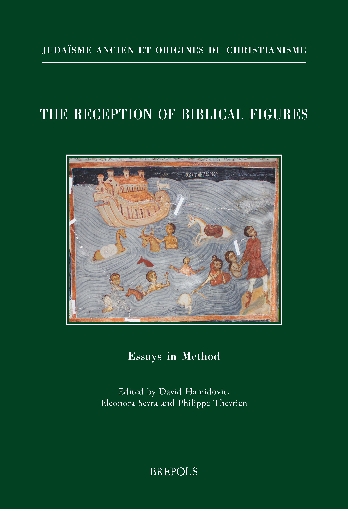
The Reception of Biblical Figures
Essays in Method
show More to view fulltext, buy and share links for:The Reception of Biblical Figures show Less to hide fulltext, buy and share links for: The Reception of Biblical FiguresThis volume explores the reception of biblical figures in Judaism, Christianity and Islam, with a particular focus on Antiquity and incursions in the Middle Ages and modernity. The contributions included here offer a glimpse of the complexity of the mechanics of transmission to which these figures were subjected in extra-biblical texts, either concentrating on one author or corpus in particular, or broadening the scope across time and cultural contexts. The volume intends to shed light on how these biblical figures and their legacies appear as channels of collective memory and identity; how they became tools for authors to achieve specific goals; how they gained new and powerful authority for communities; and how they transcend traditions and cultural boundaries. As a result, the vitality and fluidity of the developments of traditions become clear and prompt caution when using modern categories.
-