


Brepols
Brepols is an international academic publisher of works in the humanities, with a particular focus in history, archaeology, history of the arts, language and literature, and critical editions of source works.3041 - 3060 of 3194 results
-
-
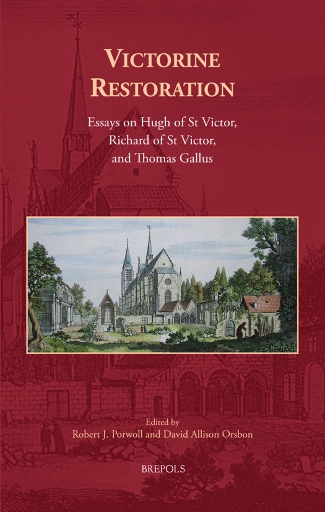
Victorine Restoration
Essays On Hugh Of St Victor, Richard Of St Victor, and Thomas Gallus
show More to view fulltext, buy and share links for:Victorine Restoration show Less to hide fulltext, buy and share links for: Victorine RestorationThe Victorines were scholars and teachers of philosophy, liberal arts, sacred scripture, music, and contemplation at the Abbey of Saint-Victor in Paris. This collection focuses on the three greatest Victorines: Hugh (d. 1141), who established the direction of the school; Richard (d. 1173), who developed Victorine contemplation; and Thomas Gallus (d. 1246), who culminated Victorine contemplative thought and transmitted it to other schools, especially the Franciscans. They offer an innovative revival of the Christian spiritual and intellectual tradition for their reforming pastoral mission in their urban setting and for the Church.
Their contemporaries saw the Victorines as beacons of spiritual love and intellectual richness. Later reformers and thinkers held their writings as touchstones of contemplative love, including, for example, Bonaventure, Thomas Aquinas, Jean Gerson, Thomas à Kempis, the Devotio Moderna, and many others. The writings of the Victorines found broad appeal among later medieval readers, as well as praise among early modern reformers, Protestant and Catholic alike. In recent decades, the Victorines have returned to scholarly attention and renewed appreciation. Scholarly studies, critical editions, and translation projects reveal the treasures of Victorine thought and spirituality.
This volume showcases the findings of recent research and scholarly advances in Victorine studies, offering new readers a status quaestionis of the field. It also features new research by eminent experts in Victorine thought that points out promising directions for future research, thus offering important new findings for established specialists.
-
-
-
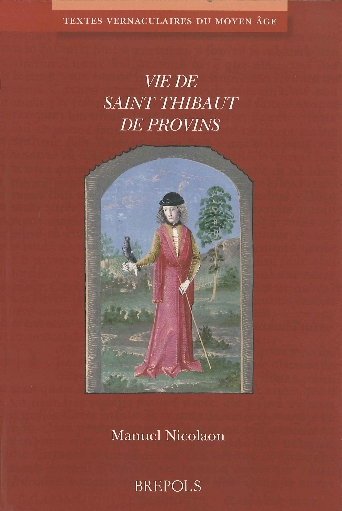
Vie de saint Thibaut de Provins
Edition critique d'après le Ms. Paris, BNF, fr. 17229, fol. 230d-233b (version française inédite en prose)
show More to view fulltext, buy and share links for:Vie de saint Thibaut de Provins show Less to hide fulltext, buy and share links for: Vie de saint Thibaut de ProvinsComment l’histoire si édifiante d’un jeune chevalier champenois du 11ème siècle qui, pour le seul amour de Dieu, délaisse pouvoir, famille et richesses et devient successivement ermite itinérant, pèlerin, prêtre et saint a-t-elle pu être écartée des fameuses compilations de vies de saints en français de la fin du Moyen Age et ainsi finalement tomber dans l’oubli ?
Bien sûr, la Vie de saint Thibaut de Provins n’est pas de ces textes qui mettent en évidence une figure emblématique ou des règles fondatrices de la religion chrétienne ; mais elle est loin cependant d’être une simple légende locale, et son intérêt réside sans aucun doute autant dans le caractère exemplaire de la vie qui est montrée que dans la valeur plus littéraire du récit qui, par le jeu de l’intertextualité, semble progressivement superposer la vie (ou plutôt la mort) de saint Thibaut à celle du Christ.
Accompagnée d’une introduction, d’une traduction, d’un appareil critique, de notes, d’un index, d’un glossaire et, en annexe, des différentes versions connues de la Vie de saint Thibaut, la présente édition souhaite ainsi permettre l’accès tant aux spécialistes de l’édition critique qu’aux amateurs de récits hagiographiques ou plus généralement d’histoire religieuse d’un texte français du 13ème siècle jusqu’alors inédit, dont la brièveté rend l’originalité et l’intérêt littéraire d’autant plus saillants.
-
-
-
Vie de sainte Marie l'Egyptienne
show More to view fulltext, buy and share links for:Vie de sainte Marie l'Egyptienne show Less to hide fulltext, buy and share links for: Vie de sainte Marie l'EgyptienneHildebert de Lavardin, évêque du Mans (1096-1125), puis archevêque de Tours (1125-1133), l’auteur de la Vita beate Marie Egyptiace, dont nous donnons ici la première traduction française, fut l’une des figures littéraires les plus importantes du Moyen Age: pendant plusieurs générations ses vers furent lus avec plaisir dans toute l’Europe occidentale; ses lettres servirent de modèles dans les écoles cathédrales et monastiques, pour leur élégance et leur noble distinction, et ses traités de philosophie morale et de droit canonique devinrent des manuels universellement appréciés.
La légende de Marie l’Égyptienne, compte parmi les figures du Moyen Age les plus connues et les plus vénérées de celles qui illustrent l’influence salutaire de Notre-Dame sur les plus grands pécheurs; elle a contribué pour une part nullement négligeable au développement du culte marial qui prend son essor définitif en Occident partir de l’époque carolingienne. Marie l’Égyptienne n’est pas seulement l’héroïne d’une parabole « évangélique », mais le personnage-clé d’un drame de la plus brûlante actualité : non seulement elle incarne en sa personne l’aspiration du monde féminin à rejoindre le mouvement des nouveaux ermites de l’époque d’Hildebert, mais elle intervient, en sa qualité d’ermite, pour donner des conseils au monde monastique. Le texte prend place dans la grande discussion de l'époque d'Hildebert sur la hiérarchie des vocations monastiques et leurs mérites respectifs, et sur les origines érémitiques du monachisme chrétien.
-
-
-

Vies de saints, légendes de soi
L'écriture hagiographique dominicaine jusqu'au Speculum sanctorale de Bernard Gui († 1331)
show More to view fulltext, buy and share links for:Vies de saints, légendes de soi show Less to hide fulltext, buy and share links for: Vies de saints, légendes de soiEntre 1312/1316 et 1329, le dominicain Bernard Gui rédige une collection de Vies de saints intitulée Speculum sanctorale. Située dans une histoire des légendiers dominicains, cette œuvre montre l’évolution de l’hagiographie de cet ordre. Alors que les hagiographes dominicains du XIIIe siècle répondent à des besoins ponctuels en privilégiant tantôt la sainteté locale tantôt la sainteté universelle, Bernard Gui cherche à faire la synthèse entre ces différentes voies. Il produit alors une somme hagiographique dont la composition minutieuse supporte les enjeux identitaires de la promotion des saints de l’ordre, des cultes locaux et universels.
Agnès Dubreil-Arcin a soutenu sa thèse de doctorat à Toulouse en 2007 et le présent ouvrage en est la version remaniée. Elle est membre du comité d’organisation des colloques d’histoire religieuse médiévale de Fanjeaux.
-
-
-
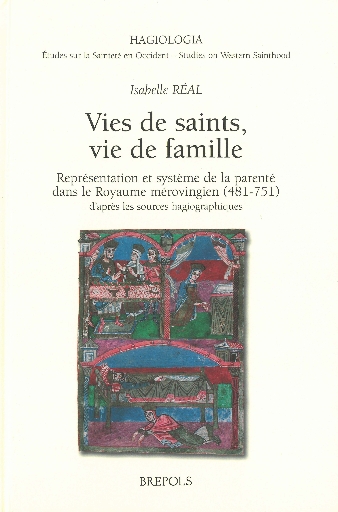
Vies de saints, vie de famille
Représentation et système de la parenté dans le royaume mérovingien (481-751) d'après les sources hagiographiques
-
-
-
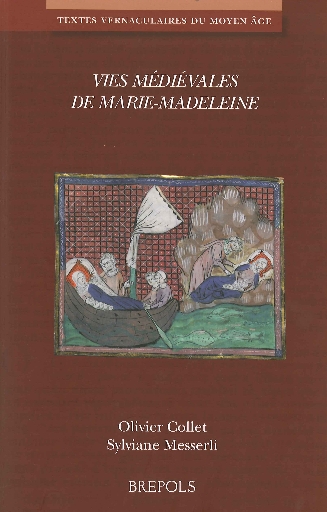
Vies médiévales de Marie-Madeleine
show More to view fulltext, buy and share links for:Vies médiévales de Marie-Madeleine show Less to hide fulltext, buy and share links for: Vies médiévales de Marie-MadeleineMarie-Madeleine a de tout temps nourri l’imaginaire chrétien. Figure de la pécheresse illuminée par la grâce, construite de toutes pièces par la patristique qui réunit en elle les traits de différentes femmes de la Bible, elle connaît au moyen âge un important développement. Le tournant des XIIe et XIIIe siècles lui invente même une vie légendaire et fait d’elle celle qui convertit la Gaule.
L’édition de la trentaine de textes actuellement connus que la tradition médiévale française lui consacre, établie à partir de plus de cent manuscrits, rend compte de la vitalité extraordinaire de la littérature hagiographique entre 1200 et 1500.
La description des exemplaires dans lesquels ces récits sont contenus affine notre compréhension de leurs conditions d’élaboration et de diffusion.
Ce riche matériau permet enfin de mettre à jour les mécanismes de traduction et les procédés d’écriture, puis de réécriture, utilisés par les auteurs. Il invite ainsi tant à l’interprétation littéraire qu’à des observations sur l’évolution de la langue ancienne.
-
-
-

Vigilemus et Oremus
The Theological Significance of ‘Keeping Vigil’ in Rome From the Fourth to the Eighth Centuries
show More to view fulltext, buy and share links for:Vigilemus et Oremus show Less to hide fulltext, buy and share links for: Vigilemus et OremusChristians have observed vigils in both East and West from earliest times. In the broad liturgical tradition of Christianity, the idea of keeping vigil appears to manifest the Church’s eschatological nature. Documentary evidence from the earliest centuries reveals that some Christians kept a night watch at the graves of martyrs and other heroes of the faith as to anticipate that dawn when the rising Sun of Justice would return in fulfilment of his promise. Eventually, vigils appear not just for Easter, Pentecost and saints’ days, but also for Christmas, the dedication of a church building, and on Saturday evening of the uniquely Roman quarterly Ember Weeks.
Liturgical sources of the sixth, seventh, and eighth centuries reveal that such practices became relatively standardized with the assignment of specific Mass texts and scriptural readings, yet we know very little about the precise elements which comprised a vigil liturgy and of their theological significance. At the same time these vigils were so important that they attracted to themselves the celebration of major sacramental liturgies during them. Hence, the Paschal Vigil, which existed for centuries as a vigil liturgy of scriptural readings and prayers gradually became the setting for the annual baptismal celebration. This book examines the nature of Roman vigil liturgies in the early centuries of Christianity to unravel the most primitive structure of keeping vigil and to provide a better understanding of the Paschal Vigil, which Augustine of Hippo affirms as the ‘mother of all vigils.’
-
-
-
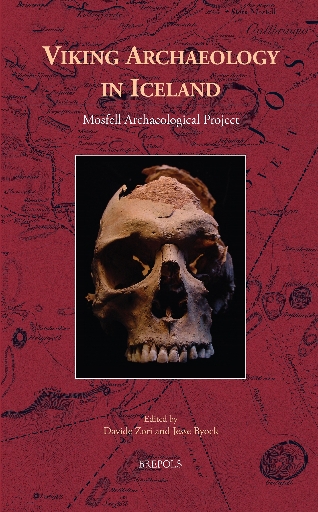
Viking Archaeology in Iceland
Mosfell Archaeological Project
show More to view fulltext, buy and share links for:Viking Archaeology in Iceland show Less to hide fulltext, buy and share links for: Viking Archaeology in IcelandThe Viking North Atlantic differs significantly from the popular image of violent raids and destruction characterizing the Viking Age in Northern Europe. In Iceland, Scandinavian seafarers discovered and settled a large uninhabited island. In order to survive and succeed, they adapted lifestyles and social strategies to a new environment. The result was a new society: the Icelandic Free State.
This volume examines the Viking Age in Iceland through the discoveries and excavations of the Mosfell Archaeological Project (MAP) in Iceland’s Mosfell Valley. Directed by Professor Jesse Byock with Field Director Davide Zori, MAP brings together scholars and researchers from Iceland, Britain, Canada, Denmark, Norway, Sweden, Germany, and the United States. The Project incorporates the disciplines of archaeology, history, saga studies, osteology, zoology, paleobotany, genetics, isotope studies, place-names studies, environmental science, and historical architecture. The decade-long research of MAP has led to the discovery of an exceptionally well-preserved Viking chieftain’s farmstead, including a longhouse, a pagan cremation site, a conversion-era stave church, and a Christian graveyard.
The research results presented here tell the story of how the Mosfell Valley developed from a ninth-century settlement of Norse seafarers into a powerful Icelandic chieftaincy of the Viking Age.
-
-
-

Viking and Medieval Scandinavia
show More to view fulltext, buy and share links for:Viking and Medieval Scandinavia show Less to hide fulltext, buy and share links for: Viking and Medieval ScandinaviaViking and Medieval Scandinavia is a multidisciplinary journal that covers the full range of studies in the field, stretching geographically from Russia to North America and chronologically from the Viking Age to the end of the medieval period.
More information about this journal on Brepols.net
-
-
-
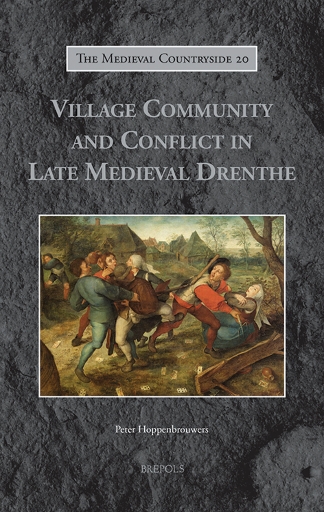
Village Community and Conflict in Late Medieval Drenthe
show More to view fulltext, buy and share links for:Village Community and Conflict in Late Medieval Drenthe show Less to hide fulltext, buy and share links for: Village Community and Conflict in Late Medieval DrentheVillage communities were the heart of the medieval countryside. But how did they operate? This book seeks to find some answers to that question by focusing on late medieval Drenthe, a region situated in a remote corner of the Holy Roman Empire and part of the prince-bishopric of Utrecht. Drenthe was an overwhelmingly localized, rural world. It had no cities, and consisted entirely of small villages. The social and economic importance of traditionally privileged sections of medieval society (clergy and nobility) was limited; free peasant landowners were the dominant social class.
Based on a careful reading of normative sources (Land charters) and thousands of short verdicts given by the so-called ‘Etstoel’ or high court of justice in Drenthe, this book focuses on three types of conflict: conflicts between villages, feud-like violence, and litigations about property. These three types coincide with three levels of involvement: that of village communities as a whole, that of kin groups, and that of households.
The resulting, comprehensive analysis provides a rigorous interrogation of generalized notions of the pre-industrial rural world, offering a snapshot of a typical peasant society in late medieval Europe.
-
-
-
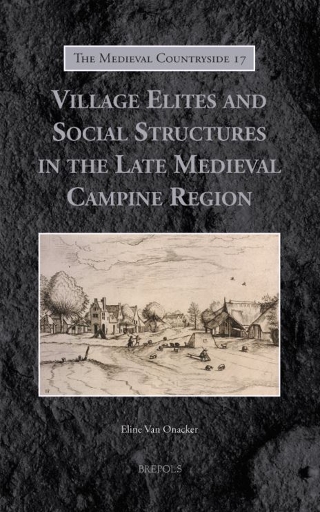
Village Elites and Social Structures in the Late Medieval Campine Region
show More to view fulltext, buy and share links for:Village Elites and Social Structures in the Late Medieval Campine Region show Less to hide fulltext, buy and share links for: Village Elites and Social Structures in the Late Medieval Campine RegionThe economy of the late medieval Low Countries is often portrayed in terms of dynamism and economic growth. However, several regions within this larger entity followed an alternate path of development. One example of this is the Campine (Kempen), a communal peasant region situated to the northeast of the sixteenth-century ‘metropolis’ of Antwerp. By contrast with other regions in the Low Countries, this area was characterised by a remarkable stability.
By focusing on ‘independent’ peasant elites, this study explores the social structures and the characteristics of inequality of this region, showing how these factors led to a different, more stable mode of economic development. Looking past standard societal measurements such as property distribution, this work combines a wide variety of sources to grasp the nuances of inequality in a communal society. It therefore takes into account other economic factors such as control over the commons, and market integration. It also focuses on political and social inequality, shedding light on aspects of inequality in village politics, social life, and poor relief.
Thus, in contrast to dominant depictions of pre-modern societies on the road to capitalism, this book provides a comprehensive portrayal of inequality and elite groups in a communal peasant society.
-
-
-
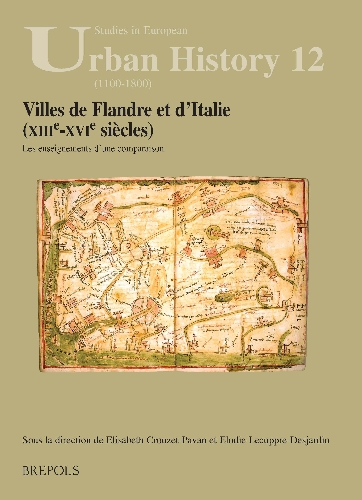
Villes de Flandre et d’Italie (XIIIe-XVIe siècle). Les enseignements d’une comparaison
show More to view fulltext, buy and share links for:Villes de Flandre et d’Italie (XIIIe-XVIe siècle). Les enseignements d’une comparaison show Less to hide fulltext, buy and share links for: Villes de Flandre et d’Italie (XIIIe-XVIe siècle). Les enseignements d’une comparaisonUne comparaison entre les villes de Flandre et d’Italie semble aller de soi tant apparaissent nombreuses, dans les études qui leur sont consacrées, les similitudes et les disparités esquissées. Entre les deux grands espaces urbanisés de l’Europe occidentale, pour qui s’intéresse à l’histoire des villes, le rapprochement paraît s’imposer. Pourtant, bien souvent, la juxtaposition prévaut et la comparaison se limite au seul domaine des convergences de l’histoire économique.
Cinq thèmes ont donc été retenus ici dans un souci de renouvellement et de réorientation des questionnements: la démographie, le fait religieux, les inscriptions et les symboliques du pouvoir, la «fabrique» de la mémoire et la représentation de l’espace. Dans cet ouvrage, est organisée une mise en parallèle qui permet d’identifier les spécificités qui façonnèrent en Italie et au nord de l’Europe les identités urbaines. Sur fond de relations marchandes et d’animation économique, les profils des communautés se précisent alors et la rare gageure d’une véritable histoire comparative est ainsi proposée au lecteur.
-
-
-
Vincent de Beauvais et le Grand Miroir du monde
show More to view fulltext, buy and share links for:Vincent de Beauvais et le Grand Miroir du monde show Less to hide fulltext, buy and share links for: Vincent de Beauvais et le Grand Miroir du mondeLe Grand Miroir du monde, Speculum maius, est la «Grande Encyclopedie» du Moyen Age. Ce livre présente les étapes de son élaboration comme outil du studium, par Frère Vincent de Beauvais, lecteur dominicain au service de son Ordre, et par ailleurs familier du roi Louis IX. Il caractérise la documentation mise en œuvre et son évolution. Conçu d'abord en deux parties, clans un esprit proche de la pensée victorine, ( vers 1244), l'ouvrage fut ensuite remis en avancées de la nouvelle science, tributaire d'Aristote et d'al-Farabi (vers 1260). L'influence naturaliste d'Albert le Grand faisant suite á celle, exégétique, de Hugues de Saint-Cher, le Speculum maius devient ainsi une œuvre en trois parties, Speculum naturale, consacre á l'histoire naturelle selon l'ordre des six jours de la création; Speculum doctrinale, inachevé, exposant toutes les branches du savoir (trivium propédeutique, sciences pratiques, sciences mécaniques, sciences théoriques); Speculum historiale, deroulant les facta et gesta de l'humanité (histoire proprement dite, histoire littéraire et hagiographie) jusqu'au Jugement dernier, selon la vision augustinienne de l'histoire.
Des documents traduits, dont !'important prologue, Libellus apologeticus, illustrent la méthode de composition et le contenu de l'œuvre, la mettent en relation avec d'autres ecrits paralleles du XIIIe siècle et témoignent de son succès au cours des siécles.
-
-
-
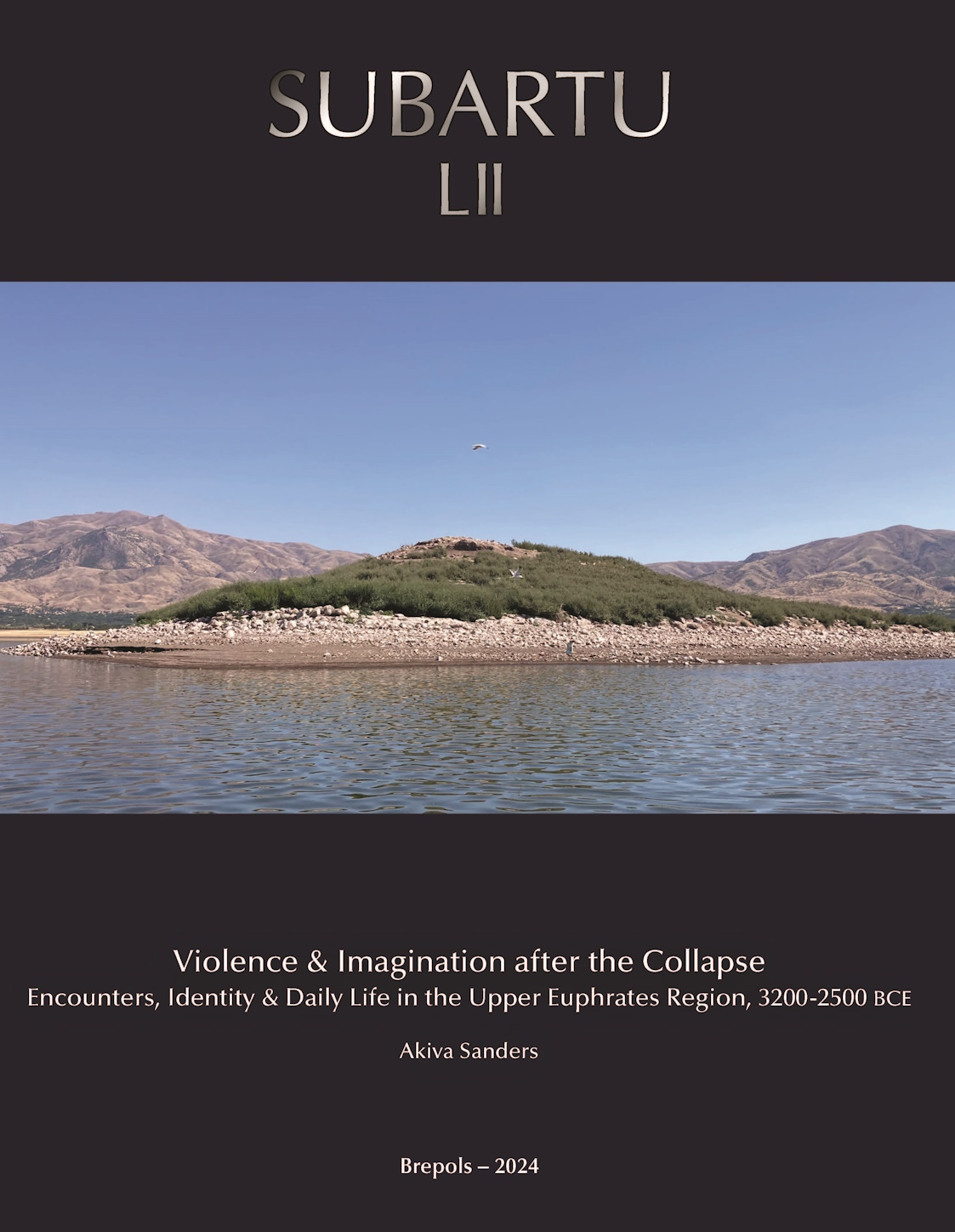
Violence and Imagination after the Collapse
Encounters, Identity and Daily Life in the Upper Euphrates Region, 3200-2500 BCE
show More to view fulltext, buy and share links for:Violence and Imagination after the Collapse show Less to hide fulltext, buy and share links for: Violence and Imagination after the CollapseIn the late fourth millennium BCE, the villages, temples, and palace of the Upper Euphrates region stood between two social worlds: the comparatively hierarchical, centrally organized Mesopotamian social tradition to the south and the comparatively egalitarian, decentralized Kura-Araxes social tradition to the north. Over the next seven centuries, this positioning and the interactions it sparked fed into reactions among the region’s inhabitants that ranged from cataclysmic violence to a flowering of innovation in visual culture and social arrangements. These events had a wide array of short-term and long-term impacts, some limited to a single house or settlement, and some, like the innovation of the Warrior Tomb template, that transformed societies across West Asia. With an eye towards detail, a theoretical approach emphasizing personal motivation, and multiple scales of analysis, this book organizes previously unpublished data from six sites in the region, Arslantepe, Ta kun Mevkii, Pulur, Nor untepe, Tepecik, and Korucutepe, dating to this dramatic and transformative period.
-
-
-
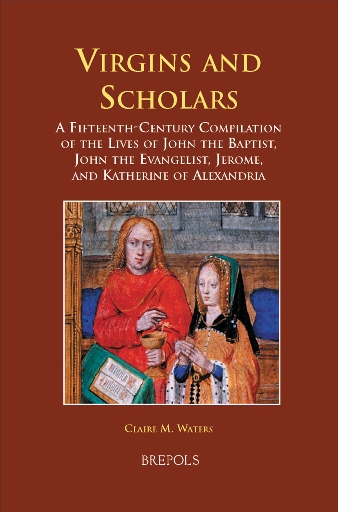
Virgins and Scholars
A Fifteenth-Century Compilation of the Lives of John the Baptist, John the Evangelist, Jerome, and Katherine of Alexandria
show More to view fulltext, buy and share links for:Virgins and Scholars show Less to hide fulltext, buy and share links for: Virgins and ScholarsThis collection of prose vitae of four virgins and scholars - Saints John the Baptist, John the Evangelist, Jerome, and Katherine of Alexandria - was almost certainly copied, and the texts very likely composed, at Syon Abbey or Sheen Charterhouse in the mid-fifteenth century. The lives cover a wide range of hagiographic modes, from hagiographic romance to affective, devotional appreciation to doctrinal treatise in narrative form. From the life of Jerome, composed by a monk for his aristocratic spiritual daughter, to the life of Katherine, reputedly translated for Henry V, to those of John the Baptist and John the Evangelist, which set their subjects in a recognizably Birgittine context, they show the interaction of men and women, lay and monastic, in the production of devotional literature. The diversity of their approaches and sources, moreover, shows the links between English dynastic politics and continental religious literature and spiritual traditions. As examples of translation practices, of monastic politics, and of religious instruction, these lives provide a window onto the devotional culture and literary worlds of fifteenth-century Europe.
-
-
-
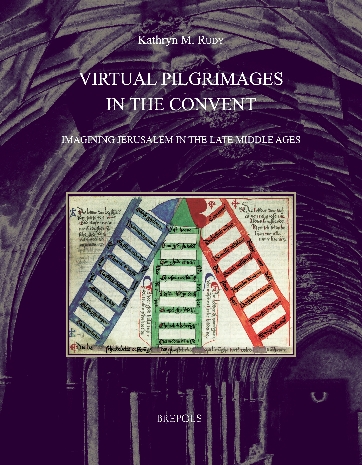
Virtual Pilgrimages in the Convent
Imagining Jerusalem in the Late Middle Ages
show More to view fulltext, buy and share links for:Virtual Pilgrimages in the Convent show Less to hide fulltext, buy and share links for: Virtual Pilgrimages in the Convent‘Walking in Christ’s footsteps’ was a devotional ideal in the late Middle Ages. However, few nuns and religious women had the freedom or the funding to take the journey in the flesh. Instead they invented and adjusted devotional exercises to visit the sites virtually. These exercises, largely based on real pilgrims’ accounts, made use of images and objects that helped the beholder to imagine walking alongside Christ during his torturous march to Calvary. Some provided scripts whereby votaries could animate paintings and sculptures. Others required the nun to imagine her convent as a miniature model of Jerusalem. This volume is grounded in more than a dozen texts from manuscripts written by medieval nuns and religious women, which appear here transcribed and translated for the first time, and a multiplicity of (occasionally three-dimensional) images. They attest to the ubiquity and variety of virtual pilgrimages among religious women and help to reveal the functions of certain late medieval devotional images.
Kathryn M. Rudy, Lecturer at the University of St Andrews, is an authority on Northern European illuminated manuscripts and prints. She has written about indulgences and the functions of images.
-
-
-
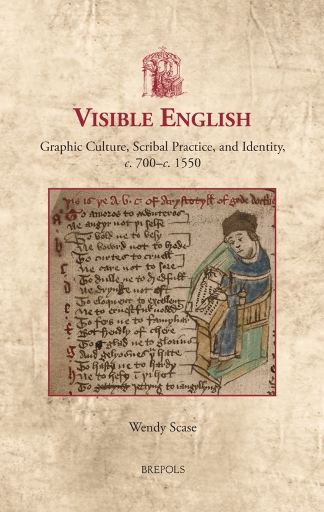
Visible English
Graphic Culture, Scribal Practice, and Identity, c. 700-c. 1550
show More to view fulltext, buy and share links for:Visible English show Less to hide fulltext, buy and share links for: Visible EnglishVisible English recovers for the first time the experience of reading and writing the English language in the medieval period through the perspectives of littera pedagogy, the basis of medieval learning and teaching of literate skills in Latin. Littera is at the heart of the set of theories and practices that constitute the ‘graphic culture’ of the book’s title. The book shows for the first time that littera pedagogy was an ‘us and them’ discourse that functioned as a vehicle for identity formation. Using littera pedagogy as a framework for understanding the medieval English-language corpus from the point of view of the readers and writers who produced it, Visible English offers new insights on experiences of writing and reading English in communities ranging from those first in contact with Latin literacy to those where print was an alternative to manuscript. Discussing a broad range of materials from so-called ‘pen-trials’ and graffiti to key literary manuscripts, Visible English provides new perspectives on the ways that the alphabet was understood, on genres such as alphabet poems, riddles, and scribal signatures, and on the different ways in which scribes copied Old and Middle English texts. It argues that the graphic culture underpinned and transmitted by littera pedagogy provided frameworks for the development and understanding of English-language literacy practices and new ways of experiencing social belonging and difference. To be literate in English, it proposes, was to inhabit identities marked by Anglophone literate practices.
-
-
-
Visions of Medieval History in North America and Europe
Studies on Cultural Identity and Power
show More to view fulltext, buy and share links for:Visions of Medieval History in North America and Europe show Less to hide fulltext, buy and share links for: Visions of Medieval History in North America and EuropeIn this volume, scholars from North America and Europe explore the intersection of medieval identity with ethnicity, religion, power, law, inheritance, texts, and memory. They offer new historiographical interventions into questions of identity, but also of ethnonyms, conflict studies, the feudal revolution, gender and kinship studies, and local history. Employing interdisciplinary approaches and textual hermeneutics, the authors represent an international scholarly community characterized by intellectual restlessness, historiographical experimentation, and defiance of convention.
-
-
-
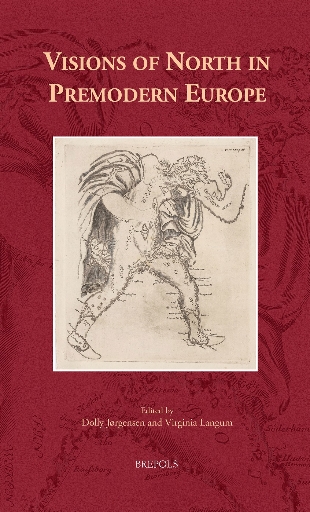
Visions of North in Premodern Europe
show More to view fulltext, buy and share links for:Visions of North in Premodern Europe show Less to hide fulltext, buy and share links for: Visions of North in Premodern EuropeThe North has long attracted attention, not simply as a circumpolar geographical location, but also as an ideological space, a place that is ‘made’ through the understanding, imagination, and interactions of both insiders and outsiders. The envisioning of the North brings it into being, and it is from this starting point that this volume explores how the North was perceived from ancient times up to the early modern period, questioning who, where, and what was defined as North over the course of two millennia.
Covering historical periods as diverse as Ancient Greece to eighteenth-century France, and drawing on a variety of disciplines including cultural history, literary studies, art history, environmental history, and the history of science, the contributions gathered here combine to shed light on one key question: how was the North constructed as a place and a people? Material such as sagas, the ethnographic work of Olaus Magnus, religious writing, maps, medical texts, and illustrations are drawn on throughout the volume, offering important insights into how these key sources continued to be used over time. Selected texts have been compiled into a useful appendix that will be of considerable value to scholars.
-
-
-
Visions of Unity after the Visigoths
Early Iberian Latin Chronicles and the Mediterranean World
show More to view fulltext, buy and share links for:Visions of Unity after the Visigoths show Less to hide fulltext, buy and share links for: Visions of Unity after the VisigothsThis study focuses on post-Visigothic Latin chronicles as testimonies of an intense search for models of stability and social cohesion on the Iberian Peninsula. As the principal source of Iberian political thought between the eighth and mid-thirteenth centuries, these texts have long been regarded from the perspective of modern-day national boundaries of a political entity called Spain. From the post-national perspective of Mediterranean studies, which considers Iberian centres of power in cultural contact with the broader world, post-Visigothic Iberian chronicle writing is seen as a cultural practice that seeks to reconcile the imperative of unity and stability with the reality of diversity and social change.
The book examines, firstly, the Andalusi Christian narrative of Visigothic political demise, which originated in Iberian dhimmī communities between the mid-eighth and mid-ninth centuries. Second, it explores the narrative of sovereignty, developed in Asturias-León from the late ninth century onwards. Finally, it examines the historiographical manipulation of both of these traditions in Rodrigo Jiménez de Rada’s Historia de rebus Hispanie (1243).
The ongoing contact between Iberian Latin textual communities and the broader Mediterranean is interpreted as central to both the development of Iberian historical mythology and its historiographical renovation.
-