Brepols
Brepols is an international academic publisher of works in the humanities, with a particular focus in history, archaeology, history of the arts, language and literature, and critical editions of source works.21 - 40 of 3194 results
-
-
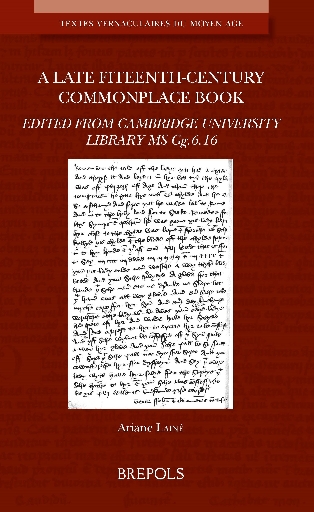
A Late Fiteenth-Century Commonplace Book
Edited from Cambridge University Library Ms Gg. 6.16
show More to view fulltext, buy and share links for:A Late Fiteenth-Century Commonplace Book show Less to hide fulltext, buy and share links for: A Late Fiteenth-Century Commonplace BookThis edition presents the full text of a personal collection of temporale Middle-English sermons, compiled by a parish priest for his own use (preserved in Cambridge University Library MS Cg.6.16). It also includes the notes and fragments of sermons or exempla found at the beginning of the manuscript with a purpose of giving insight into the way a parish priest would compile materials. This manuscript has attracted attention because it perserves versions of these sermons' early stages. The current edition is therefore complementary to editions of later versions of the same sermons. The introduction provides a discussion of these sermons' textual history and the circumstances in which they were possibly preached. Explanatory notes, a glossary, and indexes complete the edition.
-
-
-
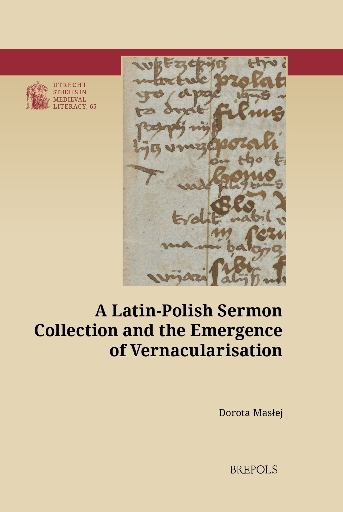
A Latin-Polish Sermon Collection and the Emergence of Vernacularisation
show More to view fulltext, buy and share links for:A Latin-Polish Sermon Collection and the Emergence of Vernacularisation show Less to hide fulltext, buy and share links for: A Latin-Polish Sermon Collection and the Emergence of VernacularisationThis monograph offers an analysis of the so-called Kazania augustiańskie (‘The Augustinian sermons’), a unique manuscript which represents a very early phase in the vernacularisation of medieval Polish textual culture, when vernacular or bilingual texts started to manifest their independent development. The relationships between Latin and the Polish vernacular in this text, surviving in a contemporary manuscript, sheds light on the ways in which Latin determined the development of written Polish in the textual genre of the sermon. The detailed and multifaceted analysis of the linguistic features of the Kazania augustiańskie contributes to the continuing discussion in medieval studies on the emergence of the earliest texts in the vernacular languages and on the preconditions and dynamics of vernacularisation.
At a first glance this book may appear to be the tale of a single manuscript, told solely from the point of view of a historian of language. However, it also explores both the birth of a particular medieval text and, more generally, the growing ability to compose vernacular texts. This capacity, which developed over the medieval period, was based on Latin models; over the centuries it contributed to vernacular texts becoming a fundamental component of European culture.
-
-
-
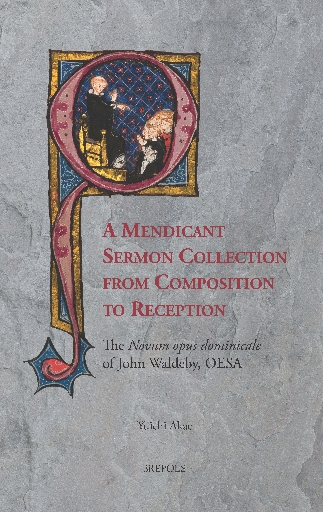
A Mendicant Sermon Collection from Composition to Reception
The 'Novum opus dominicale' of John Waldeby, OESA
show More to view fulltext, buy and share links for:A Mendicant Sermon Collection from Composition to Reception show Less to hide fulltext, buy and share links for: A Mendicant Sermon Collection from Composition to ReceptionThis study analyzes in detail the Novum opus dominicale of John Waldeby, a member of the convent of the Augustinian friars in York. This unedited collection of some sixty sermons for Sundays and major feasts is extant in two manuscripts in the Bodleian Library (Oxford), MSS Laud misc. 77 and Bodley 687. The present study places the work and the preacher within the wider context of mendicant preaching as mass communication in the Middle Ages. In doing so, it focuses on the educational environment which encompasses conventual education and preaching to the laity, and on the library in which this model sermon collection was compiled and used, identifying the role and meticulous design of the mendicant library collection. Through a detailed examination of sermon form in conjunction with Robert of Basevorn’s Forma praedicandi, it tries to disentangle the intricate considerations involved in the processes of sermon composition and reveals the strategies of interpretation and communication in the use of exempla and imagery in preaching. It investigates the careful organization of Waldeby’s work as a cycle of sermons for an entire year. In this way, it makes possible a deeper understanding of a wide range of complex issues from composition to reception through the prism of this important fourteenth-century sermon collection.
-
-
-
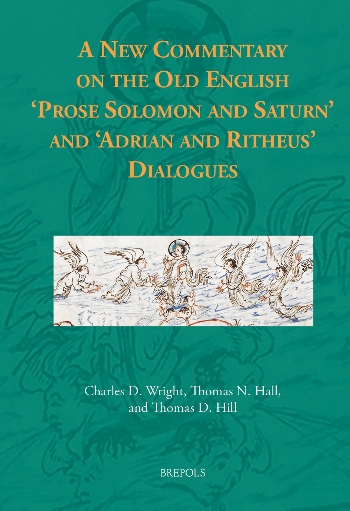
A New Commentary on the Old English ‘Prose Solomon and Saturn’ and ‘Adrian and Ritheus’ Dialogues
show More to view fulltext, buy and share links for:A New Commentary on the Old English ‘Prose Solomon and Saturn’ and ‘Adrian and Ritheus’ Dialogues show Less to hide fulltext, buy and share links for: A New Commentary on the Old English ‘Prose Solomon and Saturn’ and ‘Adrian and Ritheus’ DialoguesWho was not born, was buried in his mother’s womb, and was baptized after death? Who first spoke with a dog? Why don’t stones bear fruit? Who first said the word ‘God’? Why is the sea salty? Who built the first monastery? Who was the first doctor? How many species of fish are there? What is the heaviest thing to bear on earth? What creatures are sometimes male and sometimes female? The Old English dialogues The Prose Solomon and Saturn and Adrian and Ritheus, critically edited in 1982 by J. E. Cross and Thomas D. Hill, provide the answers to a trove of curious medieval ‘wisdom questions’ such as these, drawing on a remarkable range of biblical, apocryphal, patristic, and encyclopaedic lore.
This volume (which reprints the texts and translations of the two dialogues from Cross and Hill’s edition) both updates and massively supplements the commentary by Cross and Hill, contributing extensive new sources and analogues (many from unpublished medieval Latin question-and-answer texts) and comprehensively reviews the secondary scholarship on the ancient and medieval texts and traditions that inform these Old English sapiential dialogues. It also provides an extended survey of the late antique and early medieval genres of ‘curiosity’ and ‘wisdom’ dialogues and florilegia, including their dissemination and influence as well as their social and educational functions.
-
-
-
A Platonic Pythagoras. Platonism and Pythagoreanism in the Imperial Age
show More to view fulltext, buy and share links for:A Platonic Pythagoras. Platonism and Pythagoreanism in the Imperial Age show Less to hide fulltext, buy and share links for: A Platonic Pythagoras. Platonism and Pythagoreanism in the Imperial AgeCarlos Lévy, La question de la dyade chez Philon d’Alexandrie - Francesca Calabi, Filone di Alessandria e Ecfanto. Un confronto possible - Daniel Babut, L’unité de l’Académie selon Plutarque. Notes en marge d’un débat ancien et toujours actuel - Pierluigi Donini, Tra Academia e pitagorismo. Il platonismo nel De genio Socratis di Plutarco - Christoph Helmig, The Relationship Between Forms and Numbers in Nicomachus’ Introduction to Arithmetic - Dominic O’Meara, Hearing the Harmony of the Spheres in Late Antiquity - Elena Gritti, Insegnamento pitagorico e metodo dialettico in Proclo - Alessandro Linguiti, Prospettiva pitagorica e prospettiva platonica nella filosofia della natura di Proclo - Carlos Steel, Proclus on Divine Figures. An Essay on Pythagorean-Platonic Theology
-
-
-
A Primordio urbis
Un itinerario per gli studi liviani
show More to view fulltext, buy and share links for:A Primordio urbis show Less to hide fulltext, buy and share links for: A Primordio urbisDa duemila anni gli Ab Urbe condita libri di Tito Livio (Padova 59 a.C. - 17 d.C.) non cessano di porre a lettori e studiosi di tutto il mondo enormi e affascinanti interrogativi. L'ambizioso progetto dello storico, narrare tutta la storia di Roma dalla sua fondazione all'età contemporanea, ha dato origine a un'opera immensa per estensione e complessità. Le Storie di Livio si fondano su un potente intreccio di istanze letterarie, storiografiche e ideologiche, che ne fa una delle opere più influenti della latinità. I contributi raccolti nel volume, provenienti da svariati ambiti del sapere umanistico, si confrontano con l'opera di Livio in una prospettiva multidisciplinare, integrando competenze, suggestioni e punti di vista. A studi di carattere filologico-letterario si affiancano così approfondimenti storici, giuridici, archeologici e storico-artistici, con particolare attenzione alla fortuna dell'opera liviana in età medievale e moderna.
-
-
-
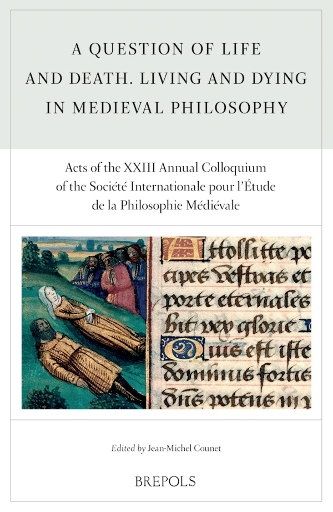
A Question of Life and Death. Living and Dying in Medieval Philosophy
Acts of the XXIII Annual Colloquium of the Société Internationale pour l’Étude de la Philosophie Médiévale, Leuven, 11–12 October 2018
show More to view fulltext, buy and share links for:A Question of Life and Death. Living and Dying in Medieval Philosophy show Less to hide fulltext, buy and share links for: A Question of Life and Death. Living and Dying in Medieval PhilosophyLiving and dying are essential concepts in Aristotelian natural philosophy and psychology. It is then no surprise that when the libri naturales were translated into Latin from the twelfth century onwards, this gave birth to an extensive interpretative tradition in the Latin West in which life and death as conceived by Aristotle were theorized and reflected upon, for example in the numerous commentaries of the De Anima but also of the Parva Naturalia. Yet the medieval inquiry into living and dying is not limited to natural philosophy nor the Aristotelian tradition but can also be found in ethics, metaphysics, theology, medicine and others domains. Many topics are addressed in the volume: radical moisture and the possibility of increasing lifespan, suicide, essence of life, contrast between life of the body and life of the soul, future life, and so on. The volume is also a hommage to Pieter De Leemans, an eminent specialist of the Latin translations of Aristotle’s books on natural philosophy, who was the intitiator of this scientific project.
-
-
-

A Radical Turn? Re-appropriation, Fragmentation, and Variety in the Post-Classical World (3rd-8th c.)
show More to view fulltext, buy and share links for:A Radical Turn? Re-appropriation, Fragmentation, and Variety in the Post-Classical World (3rd-8th c.) show Less to hide fulltext, buy and share links for: A Radical Turn? Re-appropriation, Fragmentation, and Variety in the Post-Classical World (3rd-8th c.)This thematic issue draws on the papers presented at the conference “Radical Turn? Subversions, Conversions, and Mutations in the Postclassical World (3rd-8th c.)” that took place last autumn in Brno, Czech Republic. Its aim is to contribute to the rehabilitation of the period of “Late Antiquity”, which has often been neglected in scholarly circles as a mere transitional period between the classical past and the medieval future. Individual papers reflect on the cultural production of this period from the perspectives of different disciplines (art history, classical philology, archaeology, and history), offering new insights on various aspects of late antique.
-
-
-
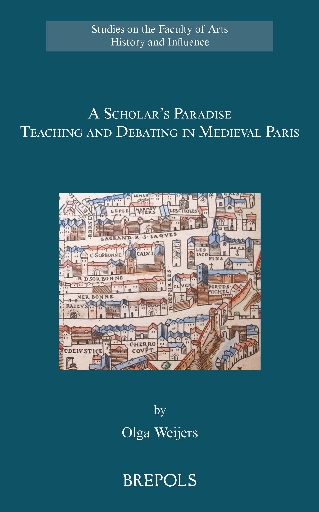
A Scholar's Paradise
Teaching and Debating in Medieval Paris
show More to view fulltext, buy and share links for:A Scholar's Paradise show Less to hide fulltext, buy and share links for: A Scholar's ParadiseThis volume offers the general reader a synthesis of academic life in Paris during the first centuries of its existence. These early years were a period of excitement, discovery and intellectual freedom. Perhaps never again would a community of scholars engage in teaching and debate in such an astonishingly new and fresh world, with people, texts and ideas multiplying rapidly and surrounded by an equally rapidly developing city. From the perspective of the twenty-first century, it seems an enviable period, a time when optimism and eager research still went hand in hand with the idea that the whole of existence might be encompassed by the human mind.
Here, Olga Weijers offers a comprehensive re-working of her 1995 publication (Le maniement du savoir. Pratiques intellectuelles à l’époque des premières universités), which has been re-organized, extended to include less technical subjects, updated and translated into English.
-
-
-
A Sociophilological Study of Late Latin
show More to view fulltext, buy and share links for:A Sociophilological Study of Late Latin show Less to hide fulltext, buy and share links for: A Sociophilological Study of Late LatinSociophilology combines traditional detailed philological expertise with the broader insights of modern sociolinguistics. Late Latin is the native language, both spoken and written, of the former Roman Empire in the Early Middle Ages, sometimes also regarded as being 'Early Romance'. By the thirteenth century Late Latin had split conceptually, from being a single complex living language, into several different living Romance languages, as well as the 'dead' language we now call 'Medieval Latin'. The complex aspects of these developments have been central to Roger Wright's research for many years; this sociophilological study of Late Latin places many texts, authors, scribes and linguistic developments in a coherent historical, intellectual and educational context. The book is presented in six sections, with four chapters in each: Late Latin, Medieval Latin and Romance; Texts and Language in Late Antiquity; The Ninth Century; Italy and Spain in the Tenth and Eleventh Centuries; Twelfth- and Thirteenth-Century Spain; Sociophilology and Historical Linguistics; followed by a Conclusion, a lengthy bibliography, and an index. The whole presents a vitally important intrinsic component of a thousand years of European cultural history, seen from unusually wide historical and linguistic perspectives.
-
-
-
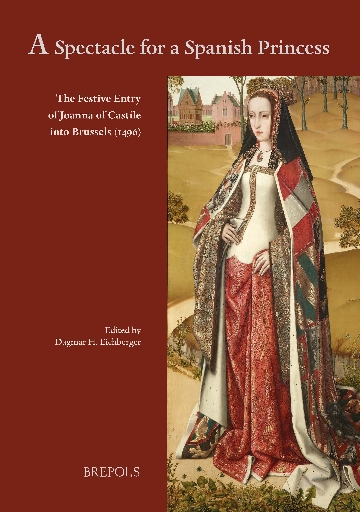
A Spectacle for a Spanish Princess
The Festive Entry of Joanna of Castile into Brussels (1496)
show More to view fulltext, buy and share links for:A Spectacle for a Spanish Princess show Less to hide fulltext, buy and share links for: A Spectacle for a Spanish PrincessOn the evening of 9 December 1496, Princess Joanna, Infanta of Castile, reaches the outskirts of Brussels where a procession of secular and ecclesiastical dignitaries welcomes her. After having been married to Philip the Fair in Lier, Joanna travelled to Brussels by herself. Equipped with torches and processional crosses, the citizens accompany her all the way to the heart of the city, the large market square with its magnificent town hall. The Berlin manuscript 78 D5 is the first illustrated report of an entry concentrating on one single lady. The manuscript is a treasure to all those interested in urban culture of the Early Modern period. The author of the festival booklet compares the well-lit city with the splendours of Troy and Carthage. Twenty-eight stage sets, or Tableaux Vivants, and an elaborate procession mirror the costly intellectual program presented to the sixteen-year-old princess. The carefully planned theatrical productions underscore themes of marriage, female virtues and the politics of war and peace. The program includes entertainments, soundscapes, and pyrotechnic amusements. The Latin texts are made available in English translation. The entire manuscript, with its sixty-three folios, is reproduced in colour. Eleven leading scholars present their new findings on this spectacular entry from an interdisciplinary approach.
-
-
-
A Supplement to Morton W. Bloomfield et al., 'Incipits of Latin Works on the Virtues and Vices, 1100-1500 A.D.'
show More to view fulltext, buy and share links for:A Supplement to Morton W. Bloomfield et al., 'Incipits of Latin Works on the Virtues and Vices, 1100-1500 A.D.' show Less to hide fulltext, buy and share links for: A Supplement to Morton W. Bloomfield et al., 'Incipits of Latin Works on the Virtues and Vices, 1100-1500 A.D.'This volume advances the utility of Morton W. Bloomfield et al., Incipits of Latin Works on the Virtues and Vices, 1100-1500 A.D. (1979) by correcting, supplementing, adding to, or deleting information in this commonly-used reference guide to medieval Latin manuscripts of an ethical or pastoral character. Careful attention is paid to updating the identification of texts and their authorship and references to critical editions of works on the vices and virtues. Many new manuscript witnesses and over 500 new texts are added to those found in the earlier catalogue and a number of short texts on vices and virtues are edited here for the first time.
Richard Newhauser, Arizona State University-Tempe, is the author of Sin: Essays on the Moral Tradition in the Western Middle Ages (2007) and editor of The Seven Deadly Sins: From Communities to Individuals (2005) and In the Garden of Evil: The Vices and Culture in the Middle Ages (2005).
István Bejczy is the author of The Cardinal Virtues in the Middle Ages: A Study in Western Moral Thought from the Fourth to the Fourteenth Centuries (forthcoming) and editor of several volumes of articles on medieval virtue ethics.
-
-
-
A catalogue of works pertaining to the explanation of the creed in Carolingian manuscripts
show More to view fulltext, buy and share links for:A catalogue of works pertaining to the explanation of the creed in Carolingian manuscripts show Less to hide fulltext, buy and share links for: A catalogue of works pertaining to the explanation of the creed in Carolingian manuscriptsThe catalogue identifies works used to explain the creed in Carolingian collection volumes compiled for the instruction of the clergy. It includes both edited and unedited works and some recently edited in a companion volume to this one, Explanationes Symboli aeui Carolini (CC CM, 254). The catalogue shows that the teaching of the creedal faith was assembled from snippets of, or whole, patristic works, homilies, personal professions of faith, and works of many other genres. In the past, we have had little concept of the range of works known to those responsible for teaching the faith at the parish and missionary level of the Carolingian world. In this catalogue crucial attention is paid to the contents of the manuscripts as a whole in which the creed explanation is found and how these collection volumes may have functioned. It is hoped that the manuscript descriptions will be of benefit to students and specialists working on other kinds of texts for the education of the clergy.
Dr Susan Keefe is Associate Professor of Church History at Duke Divinity School, Durham, NC.
-
-
-
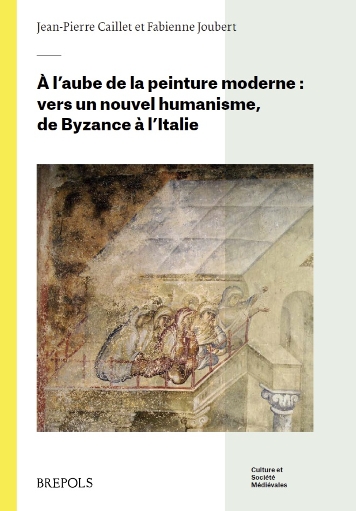
A l'aube de la peinture moderne
Vers un nouvel humanisme, de Byzance à l'Italie
show More to view fulltext, buy and share links for:A l'aube de la peinture moderne show Less to hide fulltext, buy and share links for: A l'aube de la peinture moderneIl s’agit de revisiter ici une phase cruciale de l’histoire de la peinture dans une optique bien spécifique. On se démarque en effet d’une vision ayant crédité de manière trop exclusive l’Italie des environs de 1300 d’une « révolution » ouvrant la voie à la modernité. En revenant sur ce qui a préludé à cela dans la Péninsule même, et surtout en accordant une égale attention à ce qui a simultanément – ou antérieurement, à maints égards – été produit dans le monde byzantin, on tend à un radical rééquilibrage de la perspective. C’est alors dans sa véritable dimension que se perçoit l’évolution artistique de l’époque, en lien étroit avec un contexte politico-religieux tout à fait particulier : celui d’une installation des Latins à Constantinople et dans plusieurs territoires de l’Empire d’Orient, et d’un projet de réunion des obédiences catholique et orthodoxe ; avec, dans ce cadre, une décisive action des nouveaux Ordres Mendiants vite implantés dans tout le monde méditerranéen et développant une prédication réellement accessible au plus grand nombre, étayée – chez les Franciscains au premier chef – par une imagerie traduisant la geste du Christ et des saints sur le mode le plus crédible, incorporant précisément les avancées déjà opérées à cette fin dans la zone orientale.
Après un panorama historiographique faisant le point sur les positions plus ou moins anciennes et leur impact jusqu’à nos jours, on aborde en premier lieu ce qu’il en a été des conceptions et fonctions dévolues à l’image, trop volontiers considérées comme différentes d’un milieu à l’autre. Puis on affronte le champ de l’iconographie en propre, avec les accents spécifiques qui y sont portés. Ensuite vient l’examen des divers aspects formels (et des moyens techniques mis en œuvre) ; examen non moins capital puisque ce sont le naturalisme et l’expressivité de la figure, ainsi que son insertion dans un espace tridimensionnel, qui visent à une communication plus efficace avec le fidèle ; cela par la forte sollicitation de ses sens, pour sa profonde imprégnation de ce qui s’offre à sa vue. On peut, dans cette démarche, reconnaître une authentique humanisation de la foi. Et il s’avérait donc essentiel de souligner que, dans cette mutation où l’image s’est trouvée investie d’un rôle majeur, la contribution de la chrétienté byzantine a été aussi déterminante que celle de l’Italie.
-
-
-
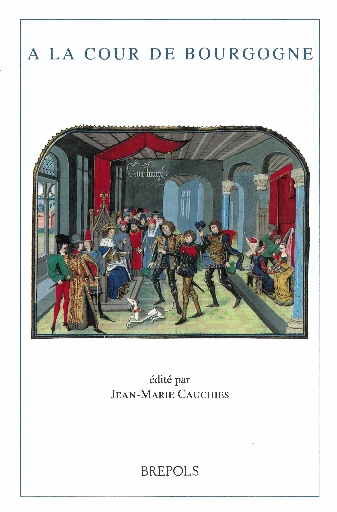
A la cour de Bourgogne. Le duc, son entourage, son train
show More to view fulltext, buy and share links for:A la cour de Bourgogne. Le duc, son entourage, son train show Less to hide fulltext, buy and share links for: A la cour de Bourgogne. Le duc, son entourage, son trainLa recherche historique manifeste de nos jours une curiosité renouvelée pour le vaste champ des pouvoirs. Au-delà d'une perspective proprement politique, on cherche aujourd'hui à cerner tout ce qui inspire, conforte, justifie ou met en question ces pouvoirs. Si l'autorité s'incarne dans un prince, celui-ci fût-il censé l'exercer pleinement et cultiver ainsi son prestige, elle n'est et ne peut toutefois jamais être l'apanage d'un solitaire.
Autour du gouvernant gravitent des familiers, conseillers, officiers, auxiliaires, serviteurs, personnel de décision ou de simple exécution, chacun selon ses tâches et ses capacités.. Les services domestiques côtoient les figures de proue de la cour et des conseils. Fêtes et deuils les rassemblent dans des célébrations où l'image du maître prend toujours sa place. Des uns, on requiert l'obéissance et le dévouement; des autres, on exige la compétence. Dans ces milieux, on lit et on produit, et cela aussi contribue à forger et à entretenir l'image. Et puis le prince et les siens ne se cloîtrent pas: il est des circonstances où les contacts directs avec les gouvernés contribuent à mieux éclairer aux yeux de la rue ce qu'est et ce que veut montrer d'elle l'autorité, parée de ses atours.
Le présent volume a pour objectif d'illustrer la manière dont, sous ces divers angles, les pouvoirs étaient pensés et vécus chez les princes de Bourgogne.
-
-
-
AL. Rivista di studi di Anthologia Latina
Journal of Philology applied to Late Latin Poetry
show More to view fulltext, buy and share links for:AL. Rivista di studi di Anthologia Latina show Less to hide fulltext, buy and share links for: AL. Rivista di studi di Anthologia LatinaAL. Rivista di studi di Anthologia Latina is a thematic journal dedicated to the philological study of late Latin texts, primarily poetic works. Since its inaugural issue in 2010, the journal has aimed to fill a significant gap in the panorama of scientific publications in this field, offering a platform for philological research on the Latin anthology and the neighbouring fields of philological and literary research. In addition to articles and notes, the journal includes sections that feature contributions on the manuscript tradition, the fortune of the Anthologia Latina and late Latin literature, as well as book reviews.
More information about this journal on Brepols.net
-
-
-
Abbatiat et abbés dans l’ordre de Prémontré
show More to view fulltext, buy and share links for:Abbatiat et abbés dans l’ordre de Prémontré show Less to hide fulltext, buy and share links for: Abbatiat et abbés dans l’ordre de PrémontréLe présent volume rassemble une vingtaine de communications données lors du 25e colloque du Centre d’Études et de Recherches Prémontrées, tenu à l’abbaye de Tongerlo (Belgique). La thématique de cette rencontre était double: d’une part examiner, au long de l’histoire d’un ordre religieux ancien (xii e-xxi e siècles) le fonctionnement du régime abbatial, avec ses évolutions spirituelles, juridiques, sociales, liées aux transformations du monde où les communautés se meuvent. D’autre part, proposer comme une galerie de portraits d’abbés, significatifs des diverses époques de l’histoire norbertine. Cette douzaine de figures permet de réfléchir encore à la nature de la fonction, à la manière dont les abbés eux-mêmes conçoivent et investissent leur rôle.
Dans cette passionnante enquête sur un matériau vivant et diversifié, la quantité et la qualité des sources varient aussi: tandis que l’époque médiévale contient beaucoup d’inconnues (les «listes abbatiales» elles-mêmes sont peu assurées, à haute époque), la période moderne et contemporaine fait apparaître des champs de recherche tout à fait inexplorés: il manque encore non seulement une prosopographie générale, mais aussi une étude approfondie des cursus honorum, des modes et pratiques d’élections, des rapports souvent conflictuels entre le pouvoir central, le pouvoir local, et la «base».
La complexité du pouvoir abbatial (spirituel, pastoral, économique, politique) se dessine à travers ces études, et cet ouvrage se veut autant un état de la question qu’une invitation à de nouvelles recherches dans un domaine peu exploré de l’histoire monastique ou canoniale.
-