


Giornale Italiano di Filologia
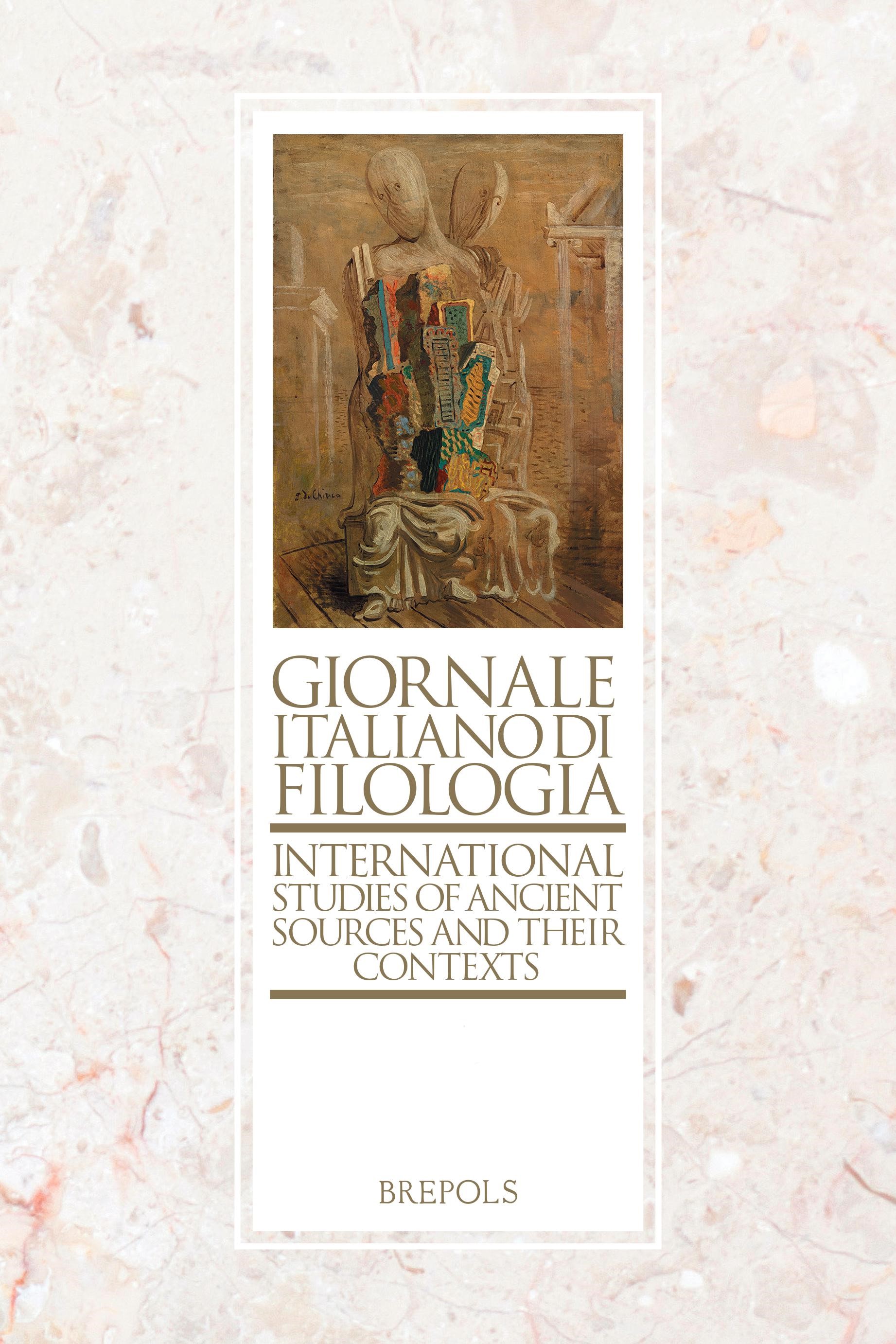
Volume 76, Issue 1, 2024

-
-
¿Pericles en Gettysburg: un caso de influencia Tucididea?
show More to view fulltext, buy and share links for:¿Pericles en Gettysburg: un caso de influencia Tucididea? show Less to hide fulltext, buy and share links for: ¿Pericles en Gettysburg: un caso de influencia Tucididea?AbstractLa ‘Gettysburg Address’ (GA) de Lincoln en recuerdo de los caídos en la batalla de Gettysburg es uno de los discursos más aclamados de la oratoria estadounidense. Por importancia cultural, se la ha comparado con la oración fúnebre de Pericles en el segundo libro de las ‘Historias’ de Tucídides, pues ambos discursos han marcado la imagen de sus respectivos sistemas políticos, esto es, la democracia ateniense y la república federal estadounidense. Algunos críticos han sostenido incluso que la oración fúnebre de Pericles debe considerarse la fuente de inspiración de la GA. A fin de comprobar esta hipótesis, este artículo evalúa la factibilidad de dicha relación intertextual a través de la comparación del dato textual y de la consideración de la disponibilidad material del texto tucidídeo en época de Lincoln. A tal propósito, se ha situado primero la GA dentro del evento para el que fue pensada. A continuación, se han analizado los parecidos y las diferencias temático- estructurales entre ambos discursos. En fin, se ha interpretado su significado desde una clave ‘dionisíaca’, es decir, desde una actitud crítica, aunque partidaria, del patriotismo. Este artículo concluye que, dada la circulación del texto tucidídeo y vistas las conexiones temáticoestructurales, los parecidos entre el discurso fúnebre de Pericles y la GA de Lincoln no alcanzan a establecer una relación de dependencia, sino que señalan exclusivamente una pertenencia común al subgénero oratorio de la oración fúnebre. A falta de ulteriores pruebas, se invita a realizar un ejercicio de ‘material philology’ sobre las obras de Lincoln con el objetivo de esclarecer su conocimiento ‘real’ de la literatura griega, visto que los parecidos léxicos, estructurales y temáticos, por sí solos, no logran demostrar un contacto directo entre él y Tucídides.
AbstractLincoln’s «Gettysburg Address» (GA) to the fallen at the Battle of Gettysburg is one of the most celebrated speeches in American oratory. In terms of cultural significance, it has been compared to the funeral oration of Pericles in the second book of Thucydides’ ‘Histories’, for both speeches have shaped the image of their respective political systems, namely the Athenian democracy and the American federal republic. Some scholars have even claimed that Pericles’ funeral oration was the source of inspiration for the GA. To test this hypothesis, this article assesses the feasibility of such an intertextual relation by comparing the textual data and examining the material availability of the Thucydidean text in Lincoln’s time. To this end, I have first situated the GA within the event for which it was intended. Next, I have analyzed the thematic-structural similarities and differences between the two speeches. Finally, I have interpreted their meaning from a ‘Dionysian’ perspective, that is to say, from a critical, albeit positive, attitude towards patriotism. I conclude that, considering the circulation of the Thucydidean text and their thematic- structural connections, the similarities between Pericles’ funeral oration and Lincoln’s GA are not sufficient to establish a relation of dependence, but only point to their common belonging to the oratorical subgenre of the funeral oration. In the absence of further evidence, an exercise in ‘material philology’ on Lincoln’s works is encouraged to clarify his ‘real’ knowledge of Greek literature, since the lexical, structural, and thematic similarities alone do not prove a direct contact between him and Thucydides.
-

-
-
D’Annunzio ‘giovane elegiaco’ nella traduzione di Tibullo, I 1
show More to view fulltext, buy and share links for:D’Annunzio ‘giovane elegiaco’ nella traduzione di Tibullo, I 1 show Less to hide fulltext, buy and share links for: D’Annunzio ‘giovane elegiaco’ nella traduzione di Tibullo, I 1By: Luca ChapelleAbstractTra il 1879 e il 1880 il sedicenne Gabriele D’Annunzio componeva i testi della sua prima raccolta poetica, Primo vere; fin dalla prima bozza editoriale, quella del 1879, essa contava quattro traduzioni oraziane in versi, ma i volgarizzamenti poetici erano destinati a divenire ventitré nell’edizione definitiva del 1880: ben sedici liriche oraziane, due carmi catulliani, quattro inni omerici e la prima elegia di Tibullo, il testo in assoluto più esteso di tutta la raccolta d’esordio e tra i pochi in distici elegiaci. Oltre ad aspetti formali e tematici non proprio in linea con le scelte antologiche della raccolta di poesie e traduzioni (e anche rispetto alle successive raccolte giovanili), ciò che rende curiosa la scelta non di aver voluto tradurre questo testo, ma di averlo inserito nell’opera è il fatto che negli stessi anni della sua composizione il giovane poeta traduttore dedicava saggi scolastici al suo prediletto Orazio lasciandosi sfuggire una critica stilistica poco lusinghiera proprio nei confronti di Tibullo.
AbstractBetween 1879 and 1880 Gabriele D’Annunzio, then aged sixteen, was writing the poems of his first collection, Primo vere; the first editorial draft written in 1879 included four poetic translations from Horace, but the translations became twenty-three in the 1880 final edition: sixteen from Horace, two from Catullus, four Homeric hymns, and the first elegy of Tibullus – the longest text in the collection and one of the few in elegiac couplets. In addition to formal and thematic aspects not exactly in line with the anthological choices of this collection (nor of the other early ones by D’Annunzio), the choice of this text is particularly noteworthy because, in the same years, the young poet and translator, in some essays dedicated to his favourite poet, Horace, wrote an unflattering stylistic remark on Tibullus.
-

Volumes & issues
-
Volume 76 (2024)
-
Volume 75 (2023)
-
Volume 74 (2022)
-
Volume 73 (2021)
-
Volume 72 (2020)
-
Volume 71 (2019)
-
Volume 70 (2018)
-
Volume 69 (2017)
-
Volume 68 (2016)
-
Volume 67 (2015)
-
Volume 66 (2014)
-
Volume 65 (2013)
-
Volume 3 (2012)
-
Volume 2 (2011)
-
Volume 1 (2010)
-
Volume 61 (2009)
-
Volume 60 (2008)
-
Volume 59 (2007)
-
Volume 58 (2006)
-
Volume 57 (2005)
Most Read This Month


