


Architectural Crossroads
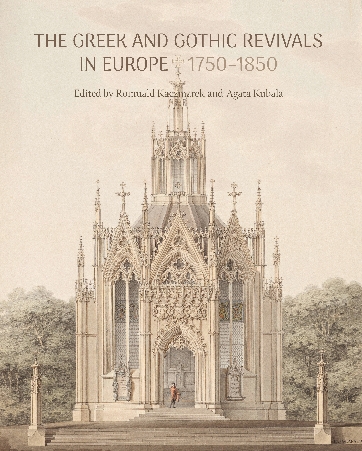
The Greek and Gothic Revivals in Europe 1750–1850
This book combines the Greek and Gothic Revival phenomena in the period between 1750 and 1850 showing the common cultural background of these artistic trends referring to the past. It presents examples from almost all over Europe. In addition to the introductory text problematizing the idea there are studies of more detailed issues - topographic shots presenting the aforementioned phenomena within artistic regions presentations of projects undertaken by outstanding personalities of the era as well as analyses of individual assumptions or works.

Touring Belgium
A Nation’s Patrimony in Print (1830–1920)
Touring Belgium presents a wide range of printed media – from travel guides and collected letters to albums from picture postcards to bibliographies and war-time propaganda – to explore how the print culture developing in the wake of travel and tourism helped to establish a national architectural heritage. Covering material from the period of Belgian independence through the aftermath of World War I eight historians of art and architecture each situate one main publication against a dazzling background of nineteenth and early twentieth-century cultural discourses revolutions in image reproduction and emerging heritage management.
Reproductions in the middle part of the book present the core publications as material objects. These printed artifacts bring into view a nascent heritage that ranges from gothic town halls and dead cities to modern factories and railroad infrastructure; often there is little distinction between what threatens or enshrines the national patrimony. Writers like Schnaase and Hugo museum conservators like Schayes and Kervyn de Lettenhove symbolist painters like Hannotiau innovative lithographers like Simonau and publishers like Géruzet or the Touring-club de Belgique all bring their concerns to bear on what they see as Belgian heritage. Their preoccupations with patrimony help to craft Belgium as a nation with a history at the crossroads of Europe – historic architecture becomes a reality embedded in the territory as much as an imagery fabricated in print.
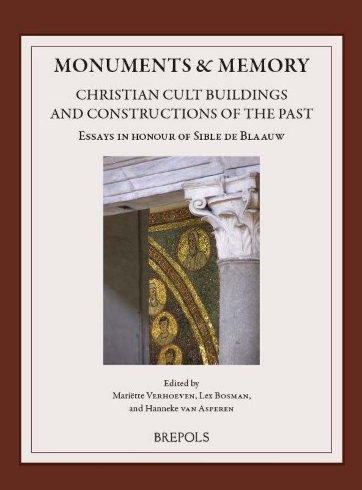
Monuments & Memory: Christian Cult Buildings and Constructions of the Past
Essays in honour of Sible de Blaauw
This volume honours Sible de Blaauw on the occasion of his retirement from Radboud University. It is above all a tribute to an influential and respected voice in the field of early Christian art and architecture. Thirty-one authors have sought to provide their own unique answer to the question of how Christian cult buildings have played a role in cultural memory in different periods and in various geographical and cultural contexts. From its very onset this publication was envisioned as a parallel to De Blaauw’s own research interests: Rome and its monuments early Christianity Christian religious heritage liturgy and architecture continuity of tradition and memory. The contributions have been arranged according to three sections: Monuments - Places - Decoration & Liturgical Furnishing. Every essay addresses the memorial potential of Christian buildings of their location or of the accoutrement whether or not still in situ. Not surprisingly Rome re-appears frequently in all sections with Rome’s churches receiving special attention. Together the essays cover a period from Late Antiquity to modern times from Helena to Gerhard Richter from late antique poets to a Ravennesque mosaic in the 1930s. Thus this volume assumes the diachronic nature that characterizes De Blaauw’s own scholarship. The leitmotifs of Christian cult and material and immaterial constructions of the past tie together the sections as well as the book as a whole. Nevertheless the main binding element between the essays is their authors’ fondness and appreciation of Sible de Blaauw.