


ARATTA
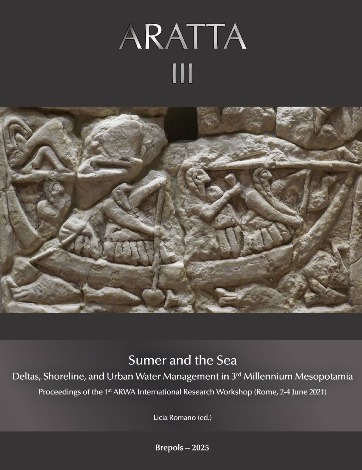
Sumer and the Sea
Deltas, Shoreline, and Urban Water Management in 3rd Millennium Mesopotamia. Proceedings of the 1st ARWA International Research Workshop (Rome, 2–4 June 2021)
From the Chalcolithic onwards the culture and society of Sumer flourished along the banks of the Tigris and Euphrates Rivers with communities living close to the ancient shoreline in an environment that was closely linked to the exploitation of fluvial systems the sea and the unique marshlands of the area. This volume gathers together research first presented as part of a workshop entitled Sumer and the Sea: Deltas Shoreline and Urban Water Management in 3rd Millennium Mesopotamia to explore the interaction between Sumerians and their water-dominated environment. The chapters gathered here offer updates on methodologies and the most recent research from the field to provide new understanding and fresh insights into how the Sumerians adapted to the world in which they lived.
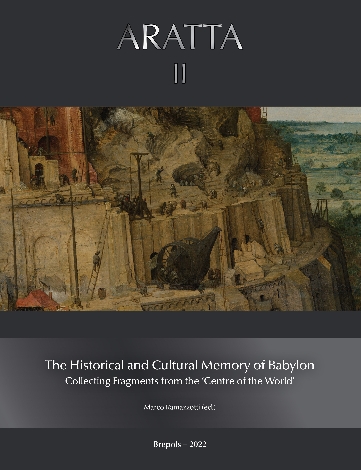
The Historical and Cultural Memory of the Babylonian World
Collecting Fragments from the 'Centre of the World'
In the study of the ancient world Babylon can be considered as the most impressive representation historically archaeologically and in literature of urbanism in the Near East. This first example of an urban centre and its cultural heritage - both tangible and intangible - provides a focal point for discussions of historical and cultural memory in the region. The eleven contributions gathered here draw together multidisciplinary research into Babylonian culture exploring the epistemic foundations contacts resilience and cultural transmission of the city and its milieu from ancient times up until the modern day. Through this approach this volume is able to support conversations concerning the historical and cultural memory of Babylon and promote a dialogue that cuts across and unites both cultures and academic disciplines.
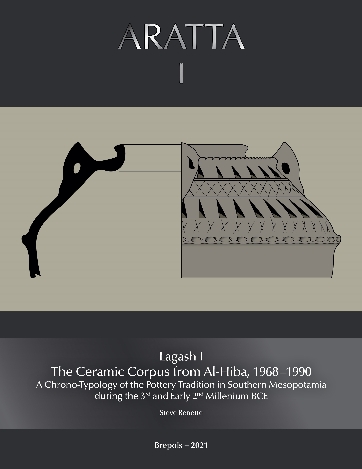
Lagash I — The Ceramic Corpus from al-Hiba, 1968–1990
A Chrono-Typology of the Pottery Tradition in Southern Mesopotamia during the Third and Early Second Millennium bce
Between 1968 and 1990 Donald P. Hansen and Vaughn E. Crawford directed six seasons of excavations at al-Hiba the ancient Sumerian city-state Lagash. Overseen by Edward L. Ochsenschlager the team documented one of the largest ceramic datasets from a southern Mesopotamian site spanning the entire third and the early second millennium bce. With the availability of digital tools and relational database technology the Al-Hiba Publication Project led by Holly Pittman at the Penn Museum can now analyze these results in preparation of final publication. As a case-study in the difficulties of working with legacy data the publication project also assesses how the original recording methodology structures and limits the interpretation of these datasets. This first volume of the Lagash publications presents the ceramic corpus organized in a chrono-typology that traces the development of the pottery tradition through the Early Dynastic Akkadian Ur III and Isin-Larsa periods. Often confirming well-established trends in general Mesopotamian ceramic development this dataset from the south-eastern part of the Mesopotamian alluvium also introduces an underappreciated degree of regional variation.