


Archive Archaeology
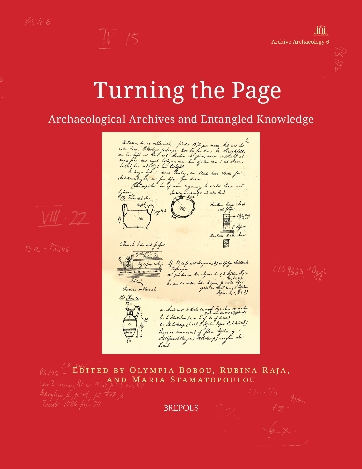
Turning the Page
Archaeological Archives and Entangled Knowledge
Throughout the nineteenth and for much of the twentieth century archives were considered to be containers of knowledge holding material that was deemed to be objective and unbiased. In more recent years however as scholars have begun to engage more with archival material this perception has changed and archives have increasingly been recognized as sites of contention holding curated historical documents — a re-evaluation that in turn has led to a new understanding of the role and significance of both archives and archiving practices as well as to revived interest in their contents.
Taking renewed scholarly interest in archives as its starting point this volume highlights the importance of archival material both as a source of study and as a way of unleashing hitherto ‘lost’ knowledge. The chapters gathered here present previously unpublished material for the first time as well as offer new insights into archival and curatorial practices. Through this approach the authors not only reveal unknown aspects and histories of both past and ongoing excavations but also shed light on the creation processes of an archive an element that is typically lost by the time the material is designated as an archive by those who study it. The result is a volume that can shape best archival practices and approaches for the future.
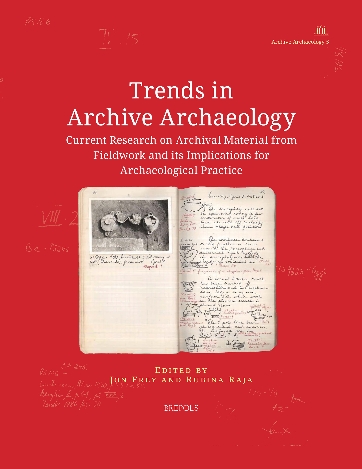
Trends in Archive Archaeology
Current Research on Archival Material from Fieldwork and its Implications for Archaeological Practice
Archive archaeology has in recent years become increasingly acknowledged as an important component of archaeological research. However the vast amounts of empirical data contained in such archives — among them fieldwork diaries working notebooks finds sheets and photographs — together with a sense that the field is often skewed towards ‘one’s own data’ have made it difficult to develop a clear methodological approach that fits all eventualities. The result is that archive archaeology is still not always recognized for what it can bring to the discipline of archaeology as a field of study that focuses on the contexts within which humanity developed.
This volume draws together contributions from scholars who work with archives in a variety of capacities: as fieldwork directors of decades-long excavations; as archivists interested in the history of collections; as specialists focusing on certain object groups or regions; and as researchers broadly interested in what archival material brings to the table in terms of new knowledge about archaeological situations. In showcasing contributions of work in progress the chapters published here bring to the fore knowledge about archives that has long been overlooked and examine how archival archaeology should be shaped in the future so that it can become more firmly integrated within archaeological practice.
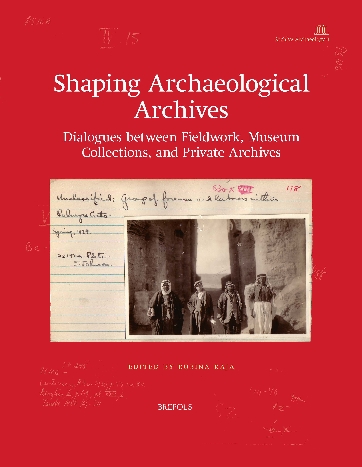
Shaping Archaeological Archives
Dialogues between Fieldwork, Museum Collections, and Private Archives
Archaeology as a discipline has undergone significant changes over the past decades in particular concerning best practices for how to handle the vast quantities of data that the discipline generates. Much of this data has often ended up in physical - or more recently digital - archives and been left untouched for years despite containing critical information. But as many recent research projects explore how best to unleash the potential of these archives through publication digitization and improved accessibility attention is now turning to the best practices that should underpin this trend.
In this volume scholars turn their attention to how best to work with and shape archaeological archives and what this means for the field as a whole. The majority of case studies here explore archaeological sites in the eastern Mediterranean and the Middle East some of which are conflict zones today. However the contributions also showcase more broadly the depth of research on archaeological archives as a whole and offer reflections upon the relationship between archaeological practices and archival forms. In so doing the volume is able to offer a unique dialogue on best practices for the dissemination and synthetization of knowledge from archives more generally whether physical or digital.
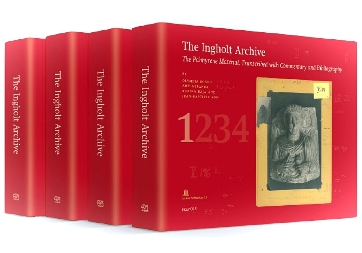
The Ingholt Archive
The Palmyrene Material, Transcribed with Commentary and Bibliography
For a period of over 50 years from his first visit to Palmyra in the 1920s until the late 1970s Danish archaeologist Harald Ingholt carefully collected and curated a detailed archive of Palmyrene sculpture architecture and epigraphy. Containing approximately 2000 images each archive sheet contains handwritten annotations on Palmyrene funerary art transcribes and translates inscriptions includes detailed observations on object style and dating and provides bibliographical information for each sculpture. As such this archive is a treasure trove of information on Palmyrene sculpture architecture and epigraphy. Moreover Ingholt’s notes go beyond shedding light on the creation of these sculptures and also provide rich information about their more recent histories: object biographies offer details on provenance collection history and excavation photography. In doing so they offer unique insights into twentieth-century excavation conservation and collection practices. Since 1983 Ingholt’s archive has been housed at the Ny Carlsberg Glyptotek in Copenhagen Denmark and then from 2012 onwards the archive took digital shape within the framework of the Palmyra Portrait Project at Aarhus University. Now available in print for the first time the Ingholt Archive is here presented in its entirety as a lavishly illustrated four-volume set. The authors have transcribed and commented upon each sheet in the archive provided new translations of the inscriptions that accompany the sculptures and compiled an updated bibliography for each item. This unique set is published together with a detailed introduction thirteen concordances and a bibliography making it an invaluable resource for researchers in the field.
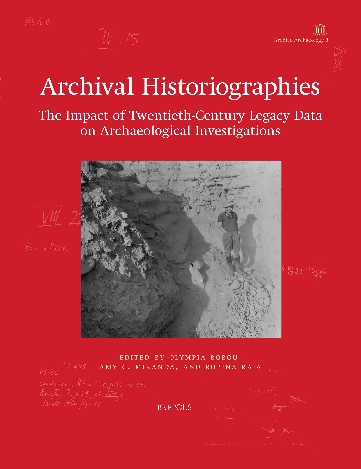
Archival Historiographies
The Impact of Twentieth-Century Legacy Data on Archaeological Investigations
Archives held in institutions around the world hold a wealth of material but traditionally the fields of Classical and ancient Near Eastern archaeology have been slow to make use of such legacy data in their investigations. In recent years however this trend has begun to change and scholars increasingly recognize the importance of archival material to their research. Drawing directly on these trends this volume offers the first in-depth analysis of what it means to engage in archive archaeology and how it can influence understandings of both the ancient world and the recent past. Excavation historiographies and the formation of archaeological archives in the twentieth century are investigated in locations from across the Eastern Mediterranean and the Middle East with current understanding of sites such as Dura Europos or Palmyra being fundamentally reassessed in the light of the archival material. Crucially the volume contributions gathered here look to the future as well as to the past: archives are acknowledged as essential to cultural heritage preservation and restitution initiatives and chapters explore best practices as well as presenting some of the manifold potentials of archive and legacy data to future research.
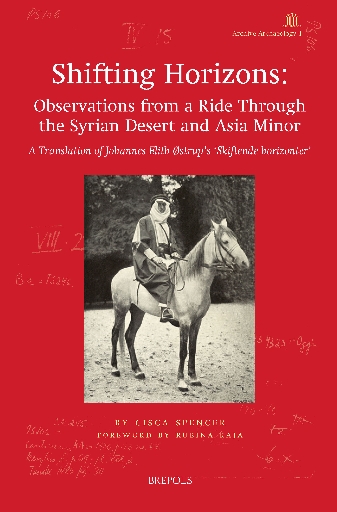
Shifting Horizons
Observations from a Ride through the Syrian Desert and Asia Minor
Johannes Elith Østrup (1867-1938) son of a Danish farmer philologist of Turkish and Semitic languages and later Vice Chancellor of Copenhagen University spent 1891-1893 travelling by horse around Syria Lebanon and Anatolia. Unlike most European travellers his language skills allowed him to chat with locals in cafés stay in people’s homes and travel with the Bedouin. A curious young man Østrup travelled with eyes ears and mind open to the unknown and recorded his journey in this lively travelogue Skiftende horizonter (1894). His writing offers a vivid account of his time in the region and dwells with equal interest on both the region’s broader political ethnic and religious struggles and the day-to-day concerns of those who lived there.
Now for the first time this text is available to English-speaking readers thanks to this translation by Cisca Spencer Østrup’s great granddaughter and a former Australian diplomat. With a foreword by Rubina Raja Professor of Classical Archaeology at Aarhus University together with Østrup’s own photographs and new maps this volume captures all the charm and enthusiasm of the original in bringing this nineteenth-century travelogue to a modern readership.