


Acta Scandinavica
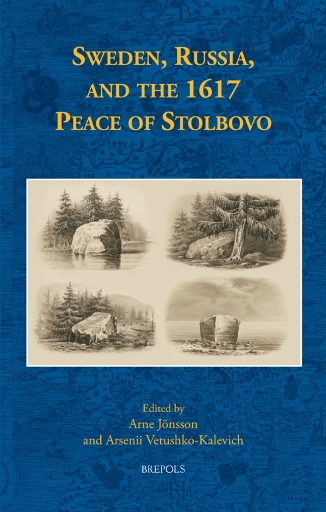
Sweden, Russia, and the 1617 Peace of Stolbovo
In 1617 after seven years of war between Sweden and Russia and talks facilitated by English and Dutch diplomats the peace treaty of Stolbovo was signed. This important but little-studied document was to form the basis for relationships between Sweden and Russia for the next one hundred years before it was replaced by the Peace of Nystad in 1721 and it had a huge influence on the lives of the people who lived in the region.
This wide-ranging volume draws together contributions by scholars from Britain Sweden Germany Estonia Russia and Finland to offer new insights into and analysis of this peace treaty and its impact on the wider region during the seventeenth century. Covering disciplines including political and economic history church history and Slavonic and Classical philology the chapters gathered here shed new light on and provide a new understanding of the Early Modern period in the Baltic Sea area.
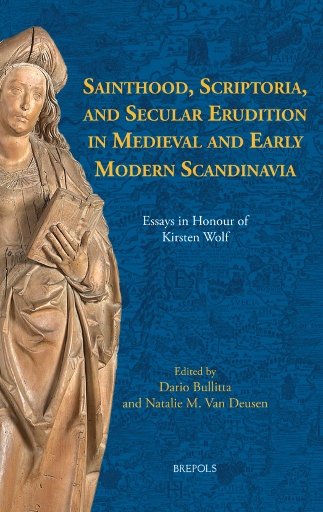
Sainthood, Scriptoria, and Secular Erudition in Medieval and Early Modern Scandinavia
Essays in Honour of Kirsten Wolf
While medieval Iceland has long been celebrated and studied for its rich tradition of vernacular literature in recent years attention has increasingly been paid to other areas of Old Norse-Icelandic scholarship in particular the production of hagiographical and religious literature. At the same time a similar renaissance has arisen in other fields in particular Old Norse-Icelandic paleography philology and manuscript studies thanks to the development of the so-called ‘new philology’ and its impact on our understanding of manuscripts. Central to these developments has been the scholarship of Kristen Wolf one of the foremost authorities in the fields of Old Norse-Icelandic hagiography biblical literature paleography codicology textual criticism and lexicography who is the honorand of this volume.
Taking Prof. Wolf’s own research interests as its inspiration this volume takes an unprecedented interdisciplinary approach to the theme of Sainthood Scriptoria and Secular Erudition in Medieval and Early Modern Scandinavia in order both to celebrate Wolf’s profound career and to illustrate the many ways in which these seemingly different fields overlap and converse with each other in important and productive ways. From sculpture to sagas and from skaldic verse to textual editions and the translation of hitherto unpublished works the contributions gathered here offer new and important insights into our knowledge of medieval and early modern Scandinavian literature history and culture.
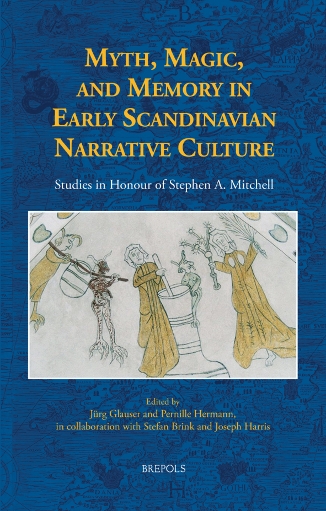
Myth, Magic, and Memory in Early Scandinavian Narrative Culture
Studies in Honour of Stephen A. Mitchell
Myth magic and memory have together formed important and often intertwined elements to recent studies in the narrative culture of Viking-Age and Medieval Scandinavica. Analytical approaches to myth (prominent in the fields of history of religion archaeology language and literature and central to studies of visual cultures up to modern times) magic (drawing on a wealth of Norse folkloric and supernatural material that derives from pre-modern times and continues to impact on recent practices of performance and ritual) and memory (the concept of how we remember and actively construe the past) together combine to shed light on how people perceived the world around them.
Taking the intersection between these diverse fields as its starting point this volume draws together contributions from across a variety of disciplines to offer new insights into the importance of myth magic and memory in pre-modern Scandinavia. Covering a range of related topics from supernatural beings to the importance of mythology in later national historiographies the chapters gathered here are written to honour the work of Stephen A. Mitchell professor of Scandinavian Studies and Folklore at Harvard University whose research has heavily influenced this multi-faceted field.
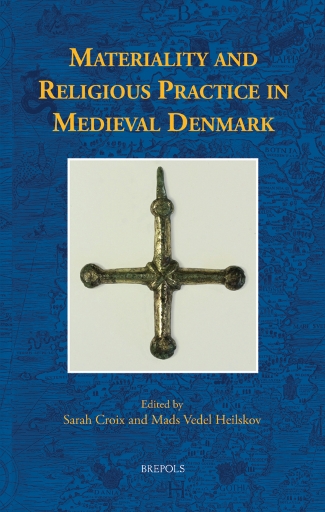
Materiality and Religious Practice in Medieval Denmark
From bread and wine to holy water and from oils and incense to the relics of saints the material objects of religion stood at the heart of medieval Christian practice bridging the gap between the profane and the divine. While theoretical debates around the importance of physicality and materiality have animated scholarship in recent years however little attention has been paid to finding solid empirical evidence upon which to base such discussions.
Taking medieval Denmark as its case study this volume draws on a wide range of different fields to explore and investigate material objects spaces and bodies that were employed to make the sacred tangible in the religious experience and practice of medieval people. The contributions gathered here explore subjects as diverse as saints’ relics sculptures liturgical vessels and implements items used for personal devotion gospel books and the materiality of Christian burials to explore the significance of objects that moved the souls bodies hearts and minds of the faithful. In doing so they also open new insights into religion and belief in medieval Denmark.
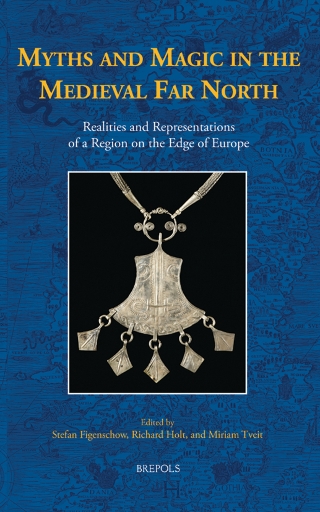
Myths and Magic in the Medieval Far North
Realities and Representations of a Region on the Edge of Europe
The history of the Far North is tinged by dark fantasies. A remote location harsh climate a boundless and often mountainous wasteland complex ethnic composition and strange ways of life: all contributed to how the edge of Europe was misunderstood by outsiders. Since ancient times the North has been considered as a place that exuded evil: it was the end of the world the abode of monsters and supernatural beings of magicians and sorcerers. It was Europe’s last bastion of recalcitrant paganism. Many weird tales of the North even came from within the region itself and when newly literate Scandinavians began to re-work their oral traditions into written form after 1100 AD these myths of their past underlay newer legends and stories serving to support the development to Christian national monarchies.
The essays in this volume engage closely with these stories questioning how and why such traditions developed and exploring their meaning. Through this approach the volume also examines how historiographical traditions were shaped by authors pursuing agendas of nation-building and Christianization at the same time that myths surrounding and originating among the multi-ethnic populations of the Far North continued to dominate the perception of the region and its people and to define their place in Norwegian medieval history.
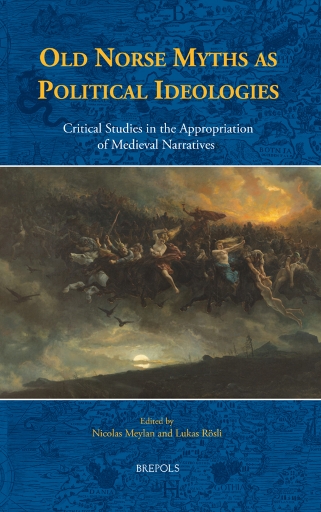
Old Norse Myths as Political Ideologies
Critical Studies in the Appropriation of Medieval Narratives
The mythology of the Norse world has long been a source of fascination from the first written texts of thirteenth-century Iceland up to the modern period. Most studies however have focused on the content of the narratives themselves rather than the broader political contexts in which these myths have been explored. This volume offers a timely corrective to this broader trend by offering one of the first in-depth examinations of the political uses of Norse mythology within specific historical contexts. Tracing the changing interests and usages of Norse myths from the medieval period via the nineteenth century and the importance of ancient Norse beliefs to both the Romantic and völkisch movements up to the co-option of mythology and symbolism by political groups across the twentieth and early twenty-first centuries the papers gathered here offer new and critical insights into the changing nature of historiography and the political agendas that Old Norse myths are made to serve as well as shedding new light on the way in which ‘myths’ are conceptualized.
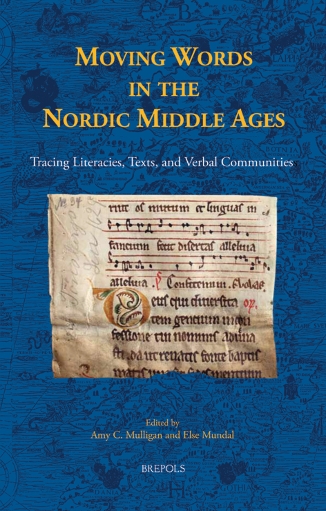
Moving Words in the Nordic Middle Ages.
Tracing Literacies, Texts, and Verbal Communities
The culmination of over a decade’s research on verbal culture in the pre- and post-Conversion medieval North at Bergen’s Centre for Medieval Studies this volume traces the movement of words and texts temporally geographically and intellectually across different media and genres. The contributions gathered here begin with a reassessment of how the unique verbal cultures of Scandinavia and Iceland can be understood in a broader European context and then move on to explore foundational Nordic Latin histories and vernacular sagas. Key case studies are put forward to highlight the importance of institutional and individual writing communities epistolary and list-making cultures and the production of manuscripts as well as runic inscriptions. Finally the oral-written continuum is examined with a focus on important works such as Íslendingabók and Landnámabók Old-Norse Icelandic translated romances and the development of prosimetra. Together these essays form a state-of-the-art volume that offers new and vital insights into the role of literacy in the Norse-speaking world.
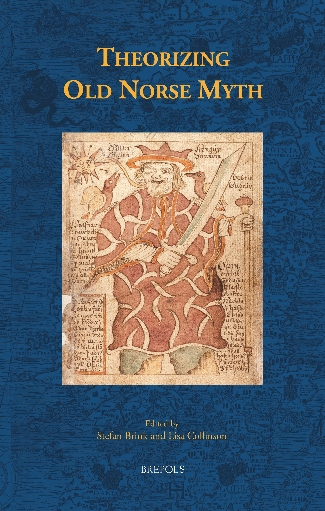
Theorizing Old Norse Myth
This collection explores the theoretical and methodological foundations through which we understand Old Norse myths and the mythological world and the medieval sources in which we find expressions of these. Some contributions take a broad comparative perspective; some address specific details of Old Norse myths and mythology; and some devote their attention to questions concerning either individual gods and deities or more topographical and spatial matters (such as conceptions of pagan cult sites). The elements discussed provide an introductory and general overview of scholarly enquiry into myth and ritual as well as an attempt to define myth and theory for Old Norse scholarship. The articles also offer a rehabilitation of the comparative method alongside a discussion of the concept of ‘cultural memory’ and of the cognitive functions that myths may have performed in early Scandinavian society. Particular subjects of interest include analyses of the enigmatic god Heimdallr as well as the more well-known Óðinn the deities the female ásynjur and the ‘elves’ or álfar. Text-based discussions are set alongside recent archaeological discoveries of cult buildings and cult sites in Scandinavia together with a discussion of the most enigmatic site of all: Uppsala in Sweden. The key themes discussed throughout this volume are brought together in the concluding chapter in a comprehensive summary that sheds new light on current scholarly perspectives.
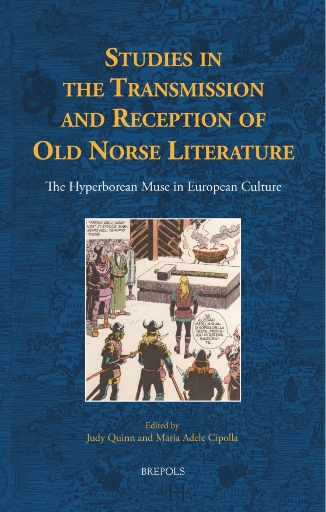
Studies in the Transmission and Reception of Old Norse Literature
The Hyperborean Muse in European Culture
The compelling world of the Vikings and their descendants preserved in the sagas poetry and mythology of medieval Iceland has been an important source of inspiration to artists and writers across Europe as well as to scholars devoted to editing and interpreting the manuscript texts. A variety of creative ventures have been born of the processes of imagining this distant ‘hyperborean’ world. The essays in this volume by scholars from Italy Sweden Denmark Norway Germany and the UK examine the scholarly and artistic reception of a variety of Old Norse texts from the beginnings of the manuscript tradition in twelfth-century Iceland to contemporary poetry crime fiction and graphic novels produced in Britain Ireland Italy and Iceland. The influence of Old Norse literature is further explored in the context of Shakespeare’s plays eighteenth-century Italian opera the Romantic movement in Sweden and Denmark and the so-called ‘nordic renaissance’ of the late nineteenth century (including the works of August Strindberg and William Morris) as well as in some of the political movements of twentieth-century northern Europe. Interest in Old Norse literature is charted as it spread beyond intellectual centres in Europe and out to a wider reading and viewing public. The influence of the ‘hyperborean muse’ is evident throughout this book as the idea of early Nordic culture has been refashioned to reflect contemporary notions and ideals.
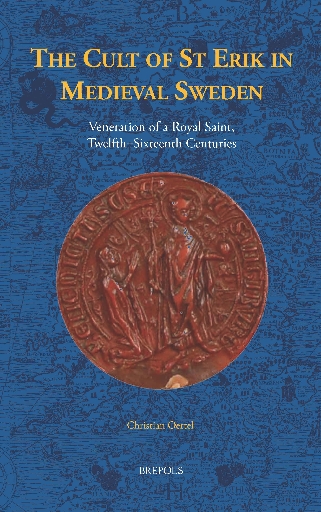
The Cult of St Erik in Medieval Sweden
Veneration of a Royal Saint, Twelfth–Sixteenth Centuries
In this first comprehensive monograph on St Erik the author follows the cult of the Swedish royal saint from its obscure beginnings in the twelfth century up to its climax in the time of the Kalmar Union (1397-1523). The focus of the book lies on the interaction of the cult with different groups within medieval Swedish society and these group’s attempts to utilize the prestige of the saint to further their political aims. From the middle of the thirteenth century the cult was particularly connected to the archbishopric of Uppsala and the royal dynasty of Bjalbo. During the fifteenth century the Swedish royal saint symbolized (together with St Olaf of Norway and St Knut of Denmark) the three kingdoms of the Kalmar Union. At the same time his prestige was successfully employed in the propaganda of King Karl Knutsson (Bonde) and the three Sture-riksförestandare to legitimate their anti-Union politics. In order to gain a broader perspective the author uses a wide variety of sources. These include a number of texts which contain information about the cult of the saint (legend miracle collection offices sermons chronicles charters). In addition different sorts of depictions showing St Erik on wall paintings altarpieces seals and coins are used in order to give a comprehensive account of the multifaceted veneration of this saint.
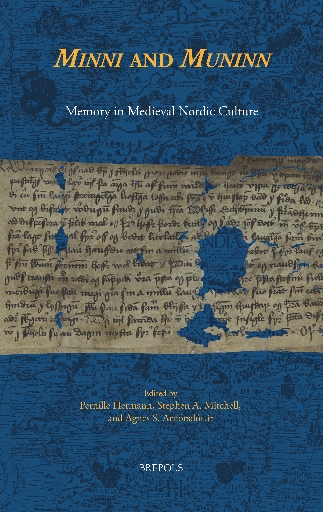
Minni and Muninn
Memory in Medieval Nordic Culture
In recent years various branches of memory studies have provided useful tools of analysis that offer new ways of understanding medieval cultures. The articles in this collection draw on these new theoretical tools for studying - and conceptualizing - memory in order to reassess the function of memory in medieval Nordic culture. Despite its interdisciplinary and comparative basis the volume remains very much an empirical study of memory and memory-dependent issues as these took form in the Nordic world.
In addition the articles deal with a variety of theoretical concepts and areas of investigation which are of relevance when dealing with memory studies in general such as transmission and media preservation and storage forgetting and erasure and authenticity and falsity. The articles cover a wide range of medieval texts such as saga myth poetry law historiography learned literature and other forms of verbal expression such as runic inscriptions.
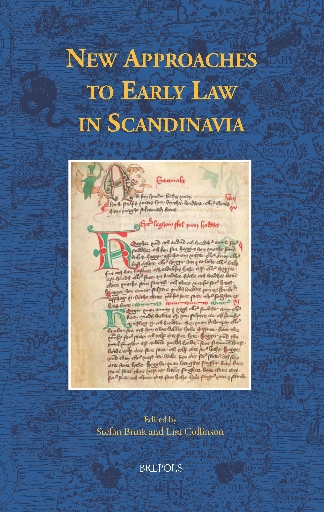
New Approaches to Early Law in Scandinavia
During recent years there has been a revival of interest in the early laws of Scandinavia. In this volume several aspects of this field are presented and discussed. The collection begins by exploring the introduction and development of the næfnd in medieval Denmark a kind of ‘jury’ which replaced the ordeal. The focus then moves to Sweden and Norway with an analysis of the Hälsingelagen and a comparison of the kristindómsbálkr (‘Ecclesiastical Law Section’) of the town law of Trondheim (Niðaróss Bjarkeyjarréttr) with the provincial law of medieval Trøndelag Frostuþingslög. A further article explores how violence and homicide involving laymen and clerics was handled in late medieval Norway drawing on the recent discovery of register protocols of the Penitentiary at the Papal Curia. The documentary aspects of law are examined through an analysis of the Äldre and Yngre Västgötalagen from existing manuscripts in an attempt to discover the source of the initiative to write the laws down. A further study explores several words for ‘outlawry’ in Old Scandinavian languages.
This volume also provides a general theory of legal culture to show how the introduction of three new elements into Norwegian legal culture (norm-producing large-scale lawmaking; conflict-resolving juries; equity as idea of justice) led to a major change in legal culture in medieval Norway. Finally the book looks at the development of penal law in Denmark in the Middle Ages attempting to explain that development in the light of both domestic conditions and foreign influence especially from Sweden and Germany.
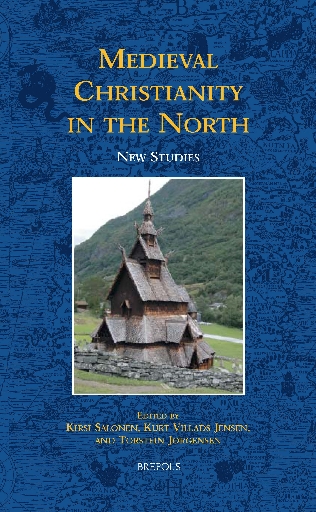
Medieval Christianity in the North
New Studies
All those barbarious peoples who in far-distant islands frequent the ice-bound Ocean living as they do like beasts - who could call them Christians?
Pope Urban II 1095
Such condescending impressions about the peoples living at the ‘end of the world’ have been adapted by Scandinavian historians who until recently have stressed the isolation and the otherness of the North and ignored the many similarities to the ‘culturally more developed’ Europe. This collection of articles by Nordic scholars is truly interdisciplinary covering philology history archaeology theology and other approaches. It is divided into two parts the first of which addresses conversion from a broad perspective while the second is devoted to the consolidation of Christianity and ecclesiastical structures. The book investigates from a fresh viewpoint important aspects of Nordic Christianity in the Middle Ages and discusses to what extent ideas and institutions were adapted to local circumstances. It includes a variety of topics such as the remnants of paganism medieval saints’ cults law and church to religious warfare and the use of beer in cult and memory.
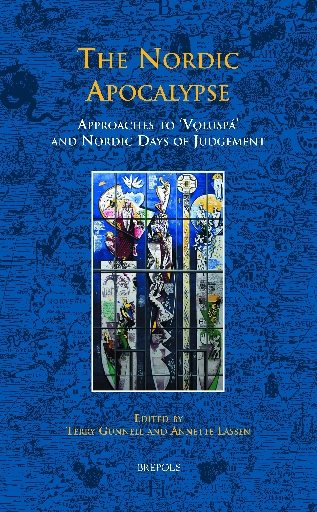
The Nordic Apocalypse
Approaches to Vǫluspá and Nordic Days of Judgement
This book with roots in a conference held in Iceland in May 2008 contains a series of articles reflecting modern approaches to the text context and performance of the Old Norse poem Vǫluspá perhaps the best known and most discussed of all the Eddic poems. Rather than attempting to cover Eddic or Skaldic poetry as a genre the main aim of this book is to present an overview of the ‘state of the art’ with regard to one particular Eddic poem. It focuses especially on the poem’s possible context within the apocalyptic tradition of Northern Europe in the early medieval period. The approaches of the articles range from placing the poem within the pre-Christian oral tradition to placing it within the written and liturgical context of Christianity. Two other chapters offer a possible context for the poem by examining the nature and background of the early medieval image of the Apocalypse known to have been on display in the Cathedral of Hólar in northern Iceland. While the approaches are focused on one specific poem they are nonetheless applicable to many other Eddic works.