


Arizona Studies in the Middle Ages and the Renaissance
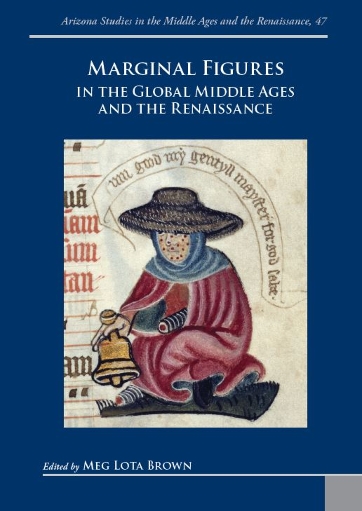
Marginal Figures in the Global Middle Ages and the Renaissance
The essays in this collection explore the motives and methods of marginalization throughout pre-modern Europe Japan the Ottoman Empire and areas that are now Mexico Iran Peru Syria and Costa Rica. The authors offer a rich variety of perspectives on precarity and privilege resistance and hybridity they unpack the intersections of power tradition and difference and they examine the relationship of marginality to both violence and creativity not only in the global Middle Ages and Renaissance but also in our present moment. While deepening readers’ understanding of our antecedents the collection illuminates the contemporary urgency of being 'ethically awake to the needs sufferings sorrows and dignity of others around the globe'.
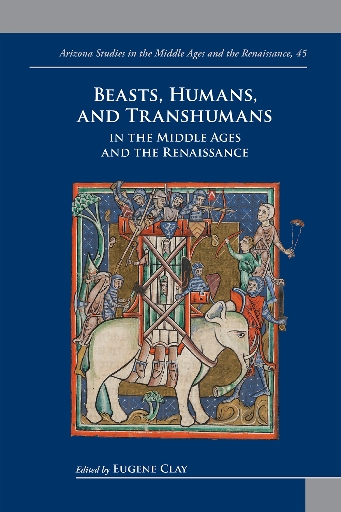
Beasts, Humans, and Transhumans in the Middle Ages and the Renaissance
From shape-shifting Merlin to the homunculi of Paracelsus the nine fascinating essays of this collection explore the contested boundaries between human and non-human animals between the body and the spirit and between the demonic and the divine. Drawing on recent work in animal studies posthumanism and transhumanism these innovative articles show how contemporary debates about the nature and future of humanity have deep roots in the myths literature philosophy and art of the Middle Ages and the Renaissance. The authors of these essays demonstrate how classical stories of monsters and metamorphoses offered philosophers artists and poets a rich source for reflection on marriage resurrection and the passions of love. The ambiguous and shifting distinctions between human animal demon and angel have long been contentious. Beasts can elevate humanity: for Renaissance courtiers horsemanship defined nobility. But animals are also associated with the demonic and medieval illuminators portrayed Satan with bestial features. Divided into three sections that examine metamorphoses human-animal relations and the demonic and monstrous this volume raises intriguing questions about the ways humans have understood their kinship with animals nature and the supernatural.
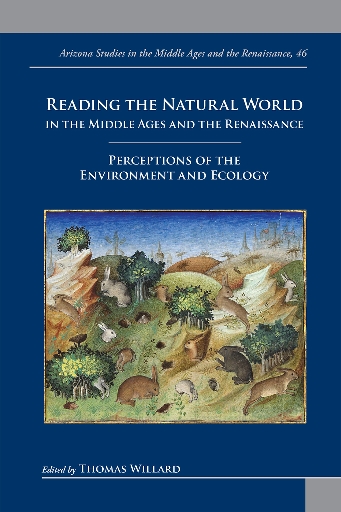
Reading the Natural World in the Middle Ages and the Renaissance
Perceptions of the Environment and Ecology
The environment - together with ecology and other aspects of the way people see their world - has become a major focus of pre-modern studies. The thirteen contributions in this volume discuss topics across the millennium in Europe from the late 600s to the early 1600s. They introduce applications to older texts art works and ideas made possible by relatively new fields of discourse such as animal studies ecotheology and Material Engagement Theory. From studies of medieval land charters and epics to the canticles sung in churches the encyclopedic natural histories compiled for the learned the hunting parks described and illustrated for the aristocracy chronicles from the New World classical paintings from the Old World and the plays of Shakespeare the authors engage with the human responses to nature in times when it touched their lives more intimately than it does for people today even though this contact raised concerns that are still very much alive today.
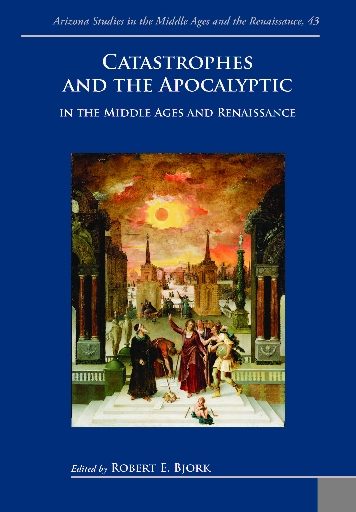
Catastrophes and the Apocalyptic in the Middle Ages and the Renaissance
In the twenty-first century insurance companies still refer to 'acts of God' for any accident or event not influenced by human beings: hurricanes floods hail tsunamis wildfires earthquakes tornados lightning strikes even falling trees. The remote origin of this concept can be traced to the Hebrew Bible. During the Second Temple period of Judaism a new literary form developed called 'apocalyptic' as a mediated revelation of heavenly secrets to a human sage concerning messages that could be cosmological speculative historical teleological or moral. The best-known development of this type of literature however came to fruition in the New Testament and is of course the Book of Revelation attributed to the apostle John and which figures prominently in the Middle Ages and Renaissance.
This collection of essays the result of the 2014 ACMRS Conference treats the topic of catastrophes and their connection to apocalyptic mentalities and rhetoric in the Middle Ages and the Renaissance (with particular reference to reception of the Book of Revelation) both in Europe and in the Muslim world. The twelve authors contributing to this volume use terms that are simultaneously helpful and ambiguous for a whole range of phenomena and appraisal.
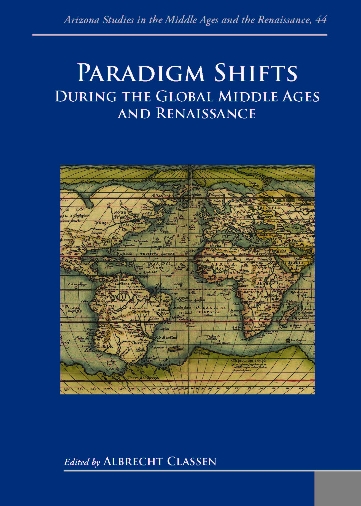
Paradigm Shifts During the Global Middle Ages and Renaissance
For a long time we have naively talked about the Middle Ages the Renaissance and other periods but at closer analysis all those terms prove to be constructed models to help us understand in rough terms profound changes that affected human conditions throughout time. As the contributions to the present volume indicate paradigm shifts have occurred regularly and constituted some of the critical developments in human existence. The notion of paradigm shift as first developed by Thomas Kuhn is here considerably expanded to address also literary religious scientific and cultural-historical phenomena to deal with contrasting conceptions of various parts of the world (China versus Europe) conflicts between genders economic changes pertaining to women's roles social and political criticism models of how to explain our existence ideological positions and epistemological approaches. The study of paradigm shifts makes it possible to grasp fundamental movements both horizontally (the present world in global terms) and vertically (from the past to the present) exposing thereby central forces leading to shifts in power structures and in the mental-historical world-views. Focusing on paradigm-shifts allows us to gain deep insight into conflicting discourses throughout time and to illuminate the struggle between dominant and competing models explaining or determining reality.
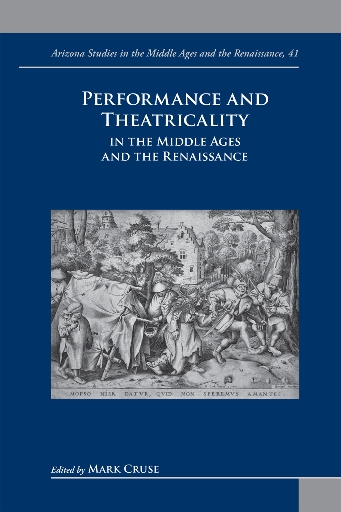
Performance and Theatricality in the Middle Ages and the Renaissance
This volume is a contribution to the cross-cultural study of theater and performance in the Middle Ages and the Renaissance. The studies gathered here examine material from Austria England France Germany Italy the Netherlands Russia and Spain from the thirteenth to the eighteenth century. Underlying all of these essays is the understanding that performance shapes reality - that in all of the cultural contexts included here performance opened a space in which patrons rulers writers painters spectators and readers could see themselves or their societies differently and thereby could assume different identities or construct alternative communities. Addressing confession and private devotion urban theater and pageantry royal legitimacy and religious debate and a wide range of genres and media this volume offers a panoramic mosaic of theater’s world-making role in medieval and early modern European societies.
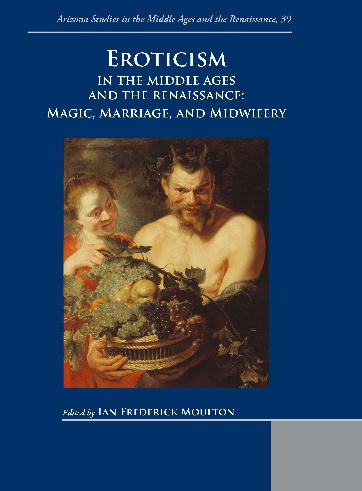
Eroticism in the Middle Ages and the Renaissance
Magic, Marriage, and Midwifery
Magic rings; seductive she-devils; satyrs bound and whipped on stage; a woman sexually coerced in the confessional; a boy caught masturbating over a midwifery manual; a marriage of true minds between two men; a prince led to repentance at the sight of a naked girl prepared to give her life for his. These varied manifestations of medieval and early modern sexuality - each at the center of one of the essays in this volume - suggest the ubiquity and diversity of eroticism in the period. The erotic is the stuff of legend but also of daily life. It is inextricable from relations of power and subordination and is plays a fundamental role in the heirarchical social structures of the period. The erotic is also very much a part of the spiritual realm often in morally ambiguous ways. The seven essays collected in this volume explore the role the erotic played in early modern notions of happiness or fulfillment in clerical life in Jewish legend heretical magic and Christian marriage in poetry on the public stage and in medical manuals.
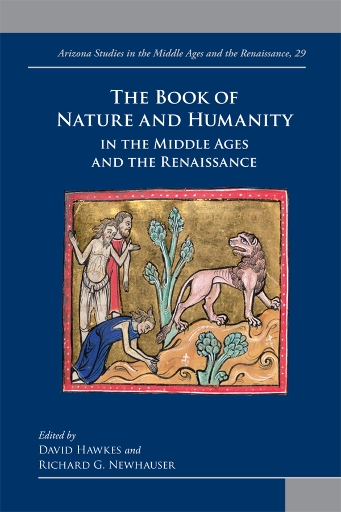
The Book of Nature and Humanity in the Middle Ages and the Renaissance
Some modern commentators welcome the alleged approach of the “post-human” era as a liberation from the constraints of essentialist identity. Others lament it as a harbinger of the death of the soul. But both groups will find it instructive to consider that the nature of humanity has always been a contested topic. The chapters collected here suggest that the emergence of the modern idea of the human was at least as fraught a process as its putative demise.
David Hawkes and Richard G. Newhauser have selected a wide array of contributions for this volume. Renowned scholars from several disciplines have produced a series of fascinating essays which concentrate on the relation between humanity and nature as it was understood in the Middle Ages and the Renaissance. The issues they examine range from poaching to flatulence from Aztec animal symbolism to Jesus’s grandmother from tulips to the Trinity.
Some chapters examine a wide variety of popular texts from the bloody legend of Robert the Devil to the sinister magic of the Anglo-Saxon “wen charm” from Lutheran Books of Nature to Emperor Maximillian’s wedding. The result is a book that raises intriguing implications for the modern struggle over the meaning of mankind.

Poverty and Prosperity in the Middle Ages and Renaissance
In this interdisciplinary and cross-cultural volume edited by Dr. Cynthia Kosso and Dr. Anne Scott medieval and Early Modern historians and literary scholars unearth define and re-define the nature of poverty and prosperity. Through the exploration of texts religious and spiritual behavior statistics class and gender issues philosophical concepts and figurative language the authors investigate poverty and wealth in Middle Ages and Early Modern era. As the introduction to the volume states “It stands to reason that the multitude of ways in which we represent and have discussed wealth or its absence; the myriad conditions that make us either rich or poor prosperous or impoverished; and the ways in which we have maintained the better condition or have ameliorated the worse have captured our imaginations and intellect as they continue to do today.” These essays provide a nuanced examination of the conceptualization and material representation of two terms that help define and shape our very existence today. Drs. Kosso and Scott are the editors of Fear and its Representations in the Middle Ages and Renaissance (2002) and The Nature and Function of Water Baths Bathing and Hygiene from Antiquity through the Renaissance (2009).
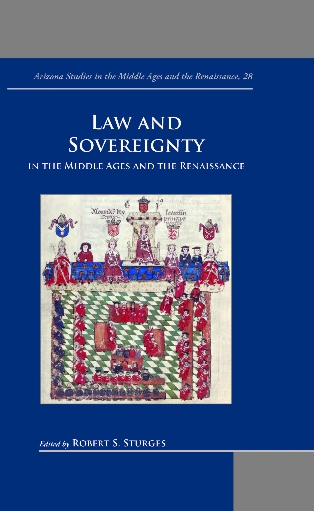
Law and Sovereignty in the Middle Ages and the Renaissance
Sovereignty law and the relationship between them are now among the most compelling topics in history philosophy literature and art. Some argue that the state’s power over the individual has never been more complete while for others such factors as globalization and the internet are subverting traditional political forms. This book exposes the roots of these arguments in the Middle Ages and Renaissance. The thirteen contributions investigate theories fictions contestations and applications of sovereignty and law from the Anglo-Saxon period to the seventeenth century and from England across western Europe to Germany France Italy and Spain. Particular topics include: Habsburg sovereignty Romance traditions in Arthurian literature the duomo in Milan the political theories of Juan de Mariana and of Richard Hooker Geoffrey Chaucer’s legal problems the accession of James I medieval Jewish women Elizabethan diplomacy Anglo-Saxon political subjectivity and medieval French farce. Together these contributions constitute a valuable overview of the history of medieval and Renaissance law and sovereignty in several disciplines. They will appeal not only to political historians but also to all those interested in the histories of art literature religion and culture.
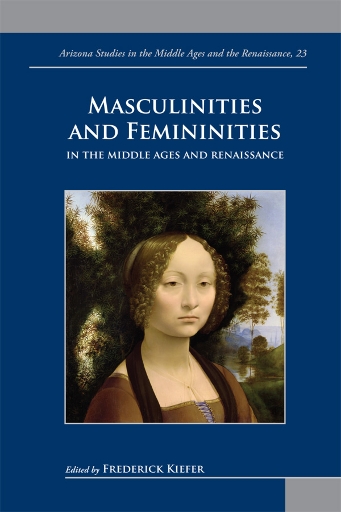
Masculinities and Femininities in the Middle Ages and Renaissance
Gender issues have been a persistent topic of investigation in European culture for more than a millennium. Today perhaps no topic is of more immediate interest to students and scholars than sexual identity. If earlier eras imagined the categories of male and female as fixed our own age has come to believe that notions of gender are to a considerable extent constructed by society and thus necessarily unstable. Using current understandings of sexuality the contributors to this collection examine afresh such diverse works as Augustine’s Confessions the Old English Beowulf the French Richard Coer de Lyon German mæren Chrétien’s Yvain writings by Wyclif and other Lollards the poetry of Aemelia Lanyer and an Italian portrait by Leonardo da Vinci. As the authors of this collection demonstrate these thinkers persistently challenged the status quo questioning assumptions felt as facts. In turn they demonstrate how the medieval and Renaissance writers who are the subject of these essays helped prepare the way for understanding masculinity and femininity as masculinities and femininities.
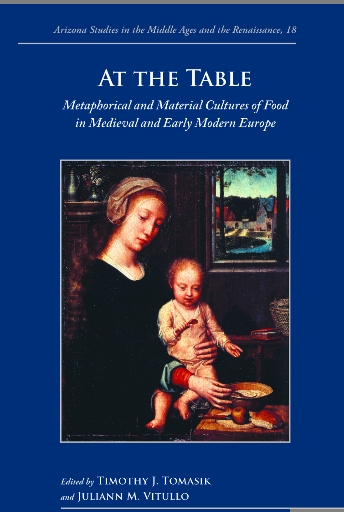
At the Table
Metaphorical and Material Cultures of Food in Medieval and Early Modern Europe
This volume surveys recent studies of the metaphorical and material facets of food in medieval and early modern Europe. Ranging from literary historical and political analyses to archaeological and botanical ones this collection explores food as a nexus of pre-modern European culture. Food and feasting are understood not simply as the consumption of material goods but also as the figurative and symbolic representations of culture. To understand the myriad ways in which discourses about food and feasting are mobilized during this period is to better understand the fundamental role food and feasting played in the development of Europeans’ habitual patterns of behavior and of thought.
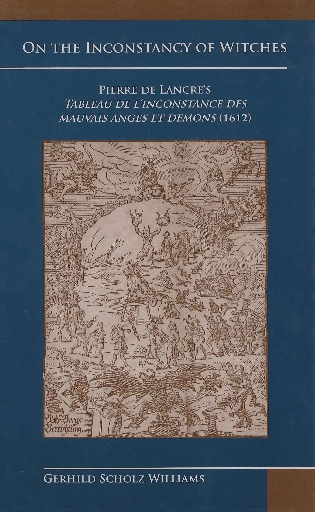
On the Inconstancy of Witches
Pierre de Lancre's Tableau de l'inconstance des mauvais anges et demons (1612)
The demonology Tableau de l’inconstance des mauvais anges et demons (1612) is an important text in the early modern European witch persecutions (sixteenth and seventeenth centuries). It is a report of the author’s four-month stay in the Labourd (Basque) region of France situated in the extreme southwest corner bordering Spain and Navarre. De Lancre was there as part of a commission empowered to cleanse the region of witches. This narrative is based on his own experiences and trial records now lost. This text contains one of the most detailed accounts of the witches’ Sabbath that survives. An ethnologist before his time de Lancre gives an expert and meticulous account of the Basque people their lives their culture and their alleged easy commerce with Satan and 'bad angels'. The text was translated into German in a truncated version in 1630 but has never until now been rendered into English.
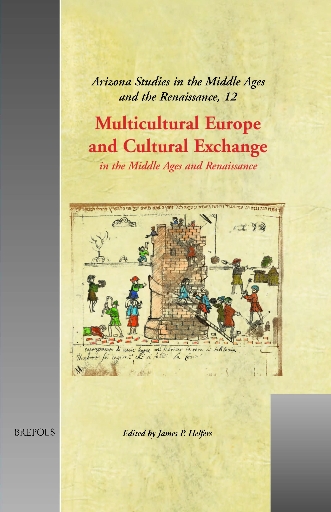
Multicultural Europe and Cultural Exchange
in the Middle Ages and Renaissance
Contemporary criticism focuses on contested issues at the borders and in the interstices of cultures. Medieval and Early Modern European culture previously conceived as monolithic is now being reconceived as heterogeneous a site of tensions contest accommodation and subversion. The essays in this volume describe a Europe that is multicultural in fact and trace the exchanges between cultural groups subcultures and dominant cultures and between individuals and the cultures that they inhabit.
The critical works in this volume are drawn from a variety of disciplines: art history literary studies history and historiography and cultural studies. A number are interdisciplinary examining topics of cultural studies as diverse as fashion rhetorical self-fashioning and the history of architecture all in the context of their surrounding contexts. A special strength of this volume is the visual impact of its three illustrated articles. These essays will appeal to all who see the importance of reconceiving European history in terms of contemporary multicultural perspectives as well as to those who are specially interested in medieval architecture the history of fashion French and English Renaissance literature Hebraic studies and medieval and Renaissance Mediterranean history.
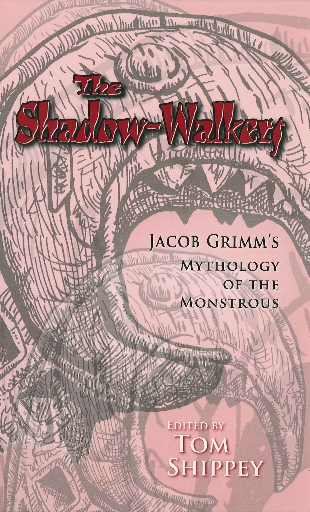
The Shadow-Walkers
Jacob Grimm's Mythology of the Monstrous
Elves and dwarves trolls and giants talking dragons valkyries and werewolves: all these are familiar in modern movies and commercial fantasy. But where did the concepts come from? Who invented them? Almost two centuries ago Jacob Grimm assembled what was known about such creatures in his work on 'Teutonic Mythology' which brought together ancient texts such as Beowulf and the Elder Edda with the material found in Grimm's own famous collection of fairy-tales. This collection of essays now updates Grimm adding much material not known in his time and also challenges his monolithic interpretations pointing out the diversity of cultural traditions as well as the continuity of ancient myth.
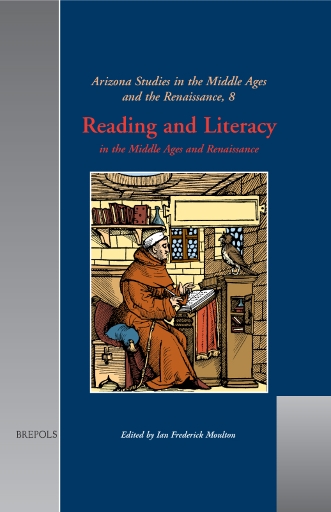
Reading and Literacy
in the Middle Ages and Renaissance
It is not surprising that the development of the internet and related electronic technologies has coincided with an academic interest in the history of reading. Using and transmitting texts in new ways scholars have become increasingly aware of the precise ways in which manuscripts and printed books transmitted texts to early modern readers. This volume collects nine essays on reading and literacy in Europe from the fourteenth to the seventeenth centuries. Topics include: the function of marginalia in vernacular medieval manuscripts; the trope of reading in the fourteenth century; the definition of literacy in early modern England; marginalia and reading practices in early modern Italy; revision of medieval texts in the Renaissance; the prevalence of translated French poetry in sixteenth-century England; the use of poems as props in the plays of Shakespeare; the private reading of the playscripts of masques; and early-modern women’s reading practices. These essays demonstrate the energy and excitement of the rapidly developing field of the history of reading. They will appeal to those interested in European cultural history the transition from manuscript to print culture the history of literacy and the history of the book.
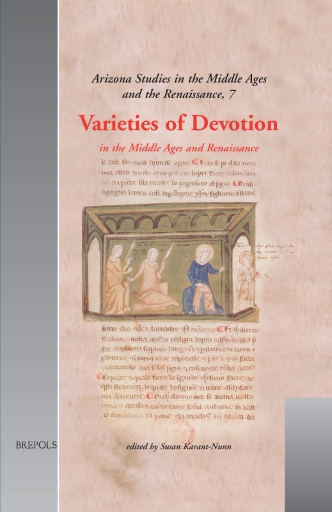
Varieties of Devotion in the Middle Ages and Renaissance
In the modern world interest in religious devotion is as great as ever. This volume brings together the research of ten scholars into the diverse ways that Europeans expressed their quest for God over more than a millennium from the formative centuries of Christianity up to the seventeenth century. Topics include women transvestite saints Monophysite wall-paintings Anglo-Saxon sainthood and painful martyrdom Carmelite self-redefinition the confident authorship of Gautier de Coinci and Matfre Ermengaud competition between the bishop and a wandering preacher for popular favor in Le Mans the contemplative philanthropies of the Poor Clares Chester Nativity-cycle actors’ masculinity Jean Gerson’s warm relations with his siblings and George Herbert’s Eucharistic feeling. The authors’ profound familiarity with primary sources as well as the influence of current theory makes these essays vibrant and timely.
Fear and its Representations
in the Middle Ages and Renaissance
Fear is a topic that appeals to a wide audience and is particularly of interest today. In the modern world we fear war and terrorism economic recession and environmental degradation: these fears make up a great portion of the fabric of our daily lives. This is a volume of essays on fear and its representations in the Middle Ages and Renaissance. In it the authors raise and try to answer questions about the ways in which individuals families and nations five-hundred one-thousand or even fifteen-hundred years ago approached the idea of fear.
The interdisciplinary nature of this volume and its editors (an historian of late antiquity and professor of literature of the Middle Ages) motivates an analysis of fear from a multitude of perspectives and within a host of secular and religious literature historical treatises scholastic works art and political accounts. The volume covers several main topics: Defining the Nature of Fear; Fear and Religion; Fear in Politics and Cultural Identity; Fear as a Literary and Dramatic Device; The Fears of Courtly Lovers Knights and Poets; Fear and the Mystic.
Through its breadth depth and interdisciplinary focus the present volume makes a full contribution to the study of fear in medieval and Renaissance culture for historians art historians students of language and philosophy and anyone interested in how people in the past have experienced fear.
Material Culture and Cultural Materialisms
The phrase ‘cultural materialism’ names an approach to cultural analysis that interrogates the socio-economic conditions within which artefacts are produced as well as their participation in other ideological and material fields of culture. Disciplines that have traditionally studied cultural artefacts like literature and painting have increasingly focused on the material production and ideological operation of objects once thought of in idealized or purely aesthetic terms. By the same token historians - whose work of necessity has always tended to deal with the material traces of culture - have increasingly been willing to consider the social and ideological importance of art. The increasing popularity of this cultural studies approach to the past has in turn spurred investigation into other kinds of materiality. Recent historical and literary scholarship for example has become increasingly aware of the ways in which the lived materiality of the human body informs a range of cultural discources.
Peace and Negotiation: Strategies for Coexistence in the Middle Ages and the Renaissance
Peace was far from a pale static concept - a simple lack of violence - in the Middle Ages and Renaissance. Rather it was at times constructed as a rich and complex positive and dynamic ideal. The thirteen articles in this volume cover a broad range of disciplines times and geographical areas and explore strategies that were used in the past to resolve conflict and attain peace. They examine events texts and images that date from the fifth through the sixteenth centuries and their authors focus not only on Western Europe but also on Scandinavia the Caucausus and Egypt. This volume rests on the assumption that peace covers a spectrum of situations that connects the personal and the political. Therefore the papers presented here examine not only how nations negotiated peace but also how individuals did. Similarly although several essays spotlight those in the seat of power others explore the situation of those lower on the social hierarchy. Our views about peace and conflict as this collection makes clear are shaped in part by the mentalités of the past. Although some peacemaking strategies may be unacceptable to us today - forced marriages and conversions for example - we can learn from other strategies how to transcend or modify various modes of antagonistic thinking.