


Borders, Boundaries, Landscapes

Redefining Ancient Epirus
Ancient Epirus ‘the Mainland’ of the Odyssey has meant different things at different times. Covering a region that today spans parts of south Albania and north-west Greece Epirus was an important crossroad in antiquity a meeting place of different peoples and cultures. Yet while the history of the region is well-known thanks to a combination of historical studies and major Greek myths its archaeology has remained relatively little studied. Now derived from a larger project based at Oxford University entitled ‘Beyond the Borders’ this volume for the first time offers a reliable and up-to-date account of the archaeology of Epirus.
The contributions gathered here written by some of the most influential international scholars currently involved in archaeological research in Epirus aim to offer a balanced synthesis of the different cultural and historical phenomena at play in the region. Chapters span the Archaic period to Roman Imperial times and starting from the material record touch upon a wide range of subjects: landscape studies urbanization fortifications and defence ritual sanctuaries burial practices relationships between mother cities and colonies and borders and borderlands. Through this approach the volume effectively moves Epirus from the border to the centre of the map of current archaeo-historical research as well as offering a starting point for further historical investigations in the field.

Power in Numbers
State Formation and Christianization on the Eastern Edge of Europe
Around the turn of the first millennium the political and religious landscape of Central Europe began to change dramatically. As the decentralized pagan societies along its borders became Christian the polity that later became the Holy Roman Empire began to expand significantly according to the principles of the Imperium Christianum — an idea that first originated with Charlemagne but that was consciously revived by Emperor Otto I and his predecessors as a way of extending power and authority into the Empire’s newly converted eastern fringes. This acculturation was effective and societies began to actively adopt the new ideology and social order on their own initiative.
Drawing on material first presented at conferences held in the Department of Archaeology at Charles University Prague this volume draws together researchers working on different yet connected events along the Empire’s eastern frontier and the often-overlooked part of society who nevertheless participated in these events in particular commoners and the rural population. The papers gathered here cover affairs of the early state and church networks of archaeological and historical heritage and archaeological historical and digital investigations to offer a blend of both synthetic archaeological and historical overviews and more focused geographical and thematic case studies that explore the role of Christianization in the centralization processes that occurred at the edge of the Ottonian-Salian world. The result is a forward-looking volume that seeks to explore new approaches to historical narratives in particular by emphasizing the importance of archaeological material in examining early state formation and religious change. Moreover it is the first synthetic study to directly compare the north-east and south-east peripheries of the later Holy Roman Empire making it possible to shed new light on these lands at the periphery of Western Christendom.
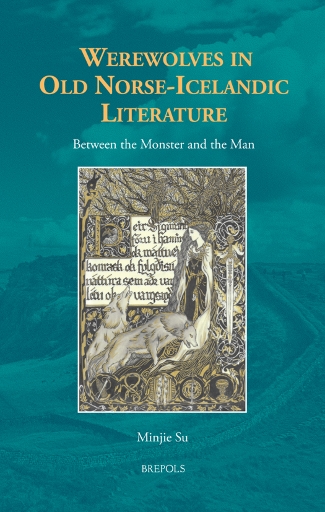
Werewolves in Old Norse-Icelandic Literature
Between the Monster and the Man
At the heart of any story of metamorphosis lies the issue of identity and the tales of the werwulf (lit. ‘man-wolf’) are just as much about the wolf as about the man. What are the constituents of the human in general? What symbolic significance do they hold? How do they differ for different types of human? How would it affect the individual if one or more of these elements were to be subtracted?
Focusing on a group of Old Norse-Icelandic werewolf narratives many of which have hitherto been little studied this insightful book sets out to answer these questions by exploring how these texts understood and conceptualized what it means to be human. At the heart of this investigation are five factors key to the werewolf existence - skin clothing food landscape and purpose - and these are innovatively examined through a cross-disciplinary approach that carefully teases apart the interaction between two polarizations: the external and social and the interior and psychological. Through this approach the volume presents a comprehensive new look at the werewolf not only as a supernatural creature and a literary motif but also as a metaphor that bears on the relationship between human and non-human between Self and Other and that is able to situate the Old-Norse texts into a broader intellectual discourse that extends beyond medieval Iceland and Norway.

Supernatural Encounters in Old Norse Literature and Tradition
The Icelandic sagas have long been famous for their alleged realism and within this conventional view references to the supernatural have often been treated as anomalies. Yet as this volume demonstrates such elements were in fact an important part of Old Norse literature and tradition and their study can provide new and intriguing insights into the world-view of the medieval Icelanders.
By providing an extensive and interdisciplinary treatment of the supernatural within sagas the eleven chapters presented here seek to explore the literary and folkloric interface between the natural and the supernatural through a study of previously neglected texts (such as Bergbúa þáttr Selkollu þáttr and Illuga saga Gríðarfóstra) as well as examining genres that are sometimes overlooked (including fornaldarsögur and byskupa sögur) law codes and learned translations. Contributors including Ármann Jakobsson Margaret Cormack Jan Ragnar Hagland and Bengt af Klintberg explore how the supernatural was depicted within saga literature and how it should be understood as well as questioning the origins of such material and investigating the parallels between saga motifs and broader folkloric beliefs. In doing so this volume also raises important questions about the established boundaries between different saga genres and challenges the way these texts have traditionally been approached.

Landscape and Myth in North-Western Europe
This volume explores the intersection of landscape and myth in the context of northwestern Atlantic Europe. From the landscapes of literature to the landscape as a lived environment and from myths about supernatural beings to tales about the mythical roots of kingship the contributions gathered here each develop their own take on the meanings behind ‘landscape’ and ‘myth’ and thus provide a broad cross-section of how these widely discussed concepts might be understood.
Arising from papers delivered at the conference Landscape and Myth in North-Western Europe held in Munich in April 2016 the volume draws together a wide selection of material ranging from texts and toponyms to maps and archaeological data and it uses this diversity in method and material to explore the meaning of these terms in medieval Ireland Wales and Iceland. In doing so it provides a broadly inclusive and yet carefully focused discussion of the inescapable and productive intertwining of landscape and myth.