


Brepols Collected Essays in European Culture
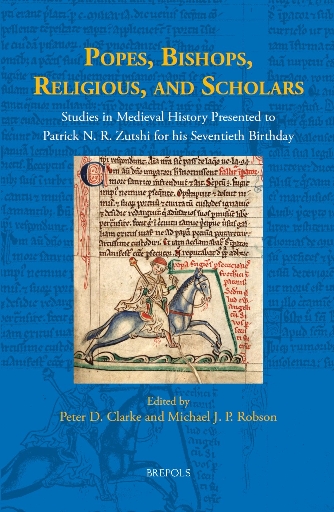
Popes, Bishops, Religious, and Scholars
Studies in Medieval History Presented to Patrick N. R. Zutshi for his Seventieth Birthday
Patrick Zutshi is a leading authority on the later medieval Western Church and papacy and internationally recognised as an expert in papal diplomatic and the Avignon Curia. This volume brings together essays by over twenty of Patrick’s colleagues and friends all distinguished scholars in medieval history to celebrate his 70th birthday. The volume reflects both Patrick’s wide scholarly interests ranging from the administration of the papal curia to intellectual and legal history and the mendicant orders and his extensive network of colleagues and collaborators in different countries including Germany Italy Ireland Switzerland Finland Australia USA and UK. This collection of essays also engages with important themes in later medieval history of wide interest to university students their teachers and other researchers in the field comprising: Mendicants and the Religious Life; University and Intellectual History; Bishops and Secular Clergy; and the Papal Curia between Avignon and Rome. All the essays draw on original research reflecting Patrick’s own research and editing of manuscript and archival sources.
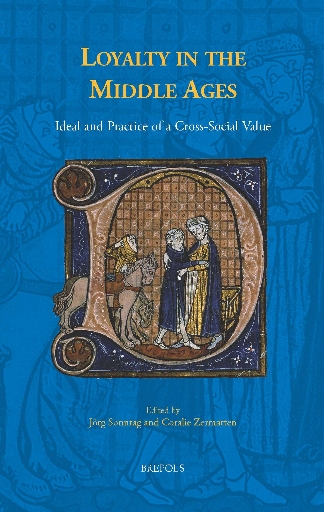
Loyalty in the Middle Ages
Ideal and Practice of a Cross-Social Value
Although ‘loyalty’ is in itself a relatively modern term as a phenomenon it has long been recognised as a fundamental element of social relationships. The essays collected in this volume address the concept of loyalty as it was understood in the Middle Ages exploring the theme of loyalty from three separate angles — the ties between individuals (such as marriage or feudal ties) the ties between individuals and groups (for example the role of the individual in their wider family) and the ties between institutions and groups (such as monastic orders or guilds) — and questioning how when and why the phenomenon of loyalty first developed.
This volume which draws together contributions from leading historians explores how loyalty was manifested both in public and in private in the medieval world. Covering topics as diverse as religious orders royal courts and funeral customs the essays collected here explore the interplay between loyalty and love friendship obedience and justice and question how the value of loyalty functioned both in theory and in practice across a range of social spaces. Together these articles offer a unique new perspective on medieval society and provide a framework that also promises to be fruitful for future research.
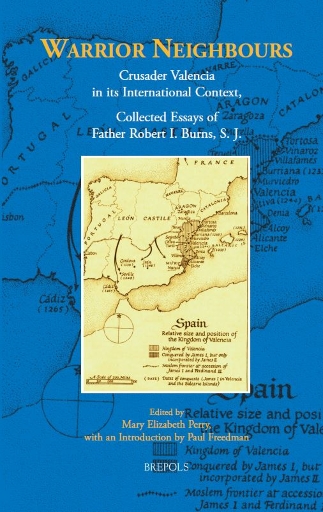
Warrior Neighbours
Crusader Valencia in its International Context, Collected Essays of Father Robert I. Burns, S. J.
This volume presents the impressive corpus of studies by Robert I. Burns SJ on the topic that he has spent a half-century exploring in meticulous detail: the Crusader Kingdom of Valencia. These studies focus on one of Europe’s greatest medieval monarchs James the Conqueror of Aragon-Catalonia who made an enduring contribution to Western civilization.
James I ‘the Conqueror’ conquered Mediterranean Spain from Islam during fifty crusading years (1225-1276). Not only did he contend with ‘infidel’ powers around him he frequently vied with warring Christian neighbours. This book presents a rich depiction of King James’s warrior neighbours Muslim and Christian from the king who was his greatest ally and greatest rival Alfonso X the Learned (1212-1284) to the redoubtable and resourceful al-Azraq a Muslim adventurer rebel and leader of one of the most formidable Islamic countercrusades in Spain. These studies illuminate such themes as cultural conflict and interchange border tensions and frontier relations medieval warfare and crusading piracy brigandage and reprisals grievance management medieval queenship and papal relations the role of Jews in a pluri-ethnic kingdom Mudejars and Moriscos and the warrior heroes of Islam. King James presided over a society more complex than any in Christendom and these studies unlock the details of this stunning achievement.
Robert I. Burns SJ Ph.D. (Johns Hopkins University) Doc. es Sc. Hist. (Fribourg University Switzerland) was Professor Emeritus of History at UCLA and Director of the Institute of Medieval Mediterranean Spain. He was an elected Fellow of the Medieval Academy of America and of the Hispanic Society of America and a Guggenheim Fellow. His distinctions include the Haskins gold medal of the Medieval Academy of America seven national book awards eight honorary doctorates and the Order of the Cross of St George.
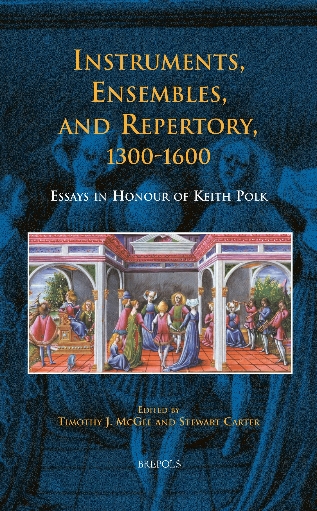
Instruments, Ensembles, and Repertory, 1300-1600
Essays in Honour of Keith Polk
Over the past 45 years Keith Polk has been one of the major scholars in the history of musical instruments and their repertories during the period 1300 - 1600. His publications have been extremely helpful in elucidating the development of the instruments the repertory they performed and the role played by instruments and instrumentalists in late medieval and Renaissance society. This collection of twelve essays on medieval and Renaissance music performance topics adds to the areas in which Keith Polk has made significant contributions namely instruments ensembles and repertory. The scope of the individual essays varies in terms of geographical and temporal focus with some involving an issue that was common to all areas of Europe while others are specifically aimed at a single instrument ensemble composition country city or occasion. Most of the essays are historical in nature centring on how music was performed in particular circumstances although some are quite practical and explain performance techniques involving voices and instruments. What unites the twelve essays is that they all shed new light on musical performance in Europe during the late Middle Ages and Renaissance. The writers chosen for this volume are all highly respected scholars whose writings are always of the highest calibre. Taken as a whole the essays in this volume make an excellent contribution to the field of music history.
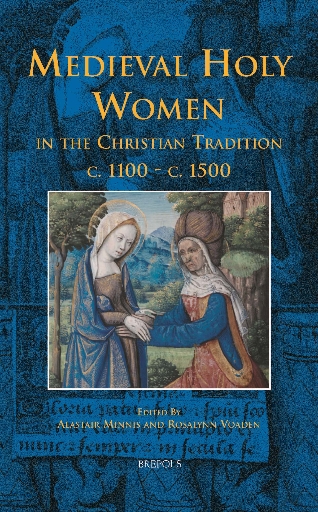
Medieval Holy Women in the Christian Tradition c.1100-c.1500
Medieval Holy Women in the Christian Tradition offers the first wide-ranging study of the remarkable women who contributed to the efflorescence of female piety and visionary experience in Europe between 1100 and 1500. This volume offers essays by prominent scholars in the field which extend the boundaries of our previous knowledge and understanding of medieval holy women. While some essays provide new perspectives on the familiar names of the unofficial canon of mulieres sanctae many others bring into the spotlight women less familiar now but influential in their own time and richly deserving of scholarly attention. The five general essays establish a context for understanding the issues affecting female religious witness in the later Middle Ages. The geographical arrangement of the volume allows the reader to develop an awareness of the particular cultural and religious forces in seven different regions and to recognize how these influenced the writing and reception of the holy women of that area. Seventeen major figures have essays devoted exclusively to each of them; in addition the survey chapters on each region introduce the reader to many more. The extensive bibliographies which follow each chapter encourage further reading and study.
Alastair Minnis was Director of the Centre for Medieval Studies and Head of the Department of English at the University of York and is currently Douglas Tracy Smith Professor of English at Yale University. A Fellow of the Medieval Academy of America and of the English Association he is the author of six monographs and the editor or co-editor of fifteen further volumes.
Rosalynn Voaden (D.Phil. University of York UK) is the author of God’s Words Women’s Voices and is the editor or co-editor of several volumes in the field. She was a Research Fellow at St Anne’s College Oxford and is currently Associate Professor of English at Arizona State University.