


Contextualizing the Sacred
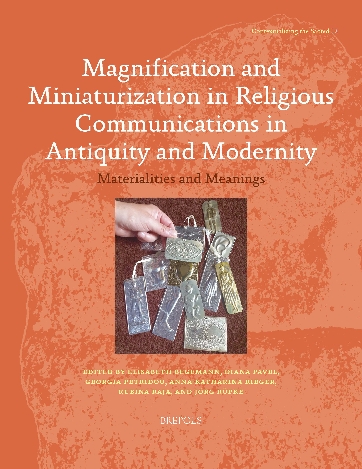
Magnification and Miniaturization in Religious Communication in Antiquity and Modernity
Materialities and Meanings
Human agents might not be the measure of all things. Nonetheless human bodies and their bodily dimensions often are with size impacting on the ways in which we conceive of interact with and relate to the world around us. The scaling up or down of features - magnification and miniaturization - is particularly evident in the creation of anthropogenic items intended for use in religious ritual and here sizing can be employed as a deliberate strategy to encourage shock and awe admiration and deterrence among spectators.
Taking as its starting point the concept of ‘materialities and meanings’ this volume explores how human perceptions and understanding of magnified and miniaturized forms and structures are shaped and changed both synchronically and diachronically by our understanding of the human body and its size and the impact that this has in our relationship with the wider world in the context of ritual practices. The chapters collected here consider a range of questions from a discussion on the essentials of magnification or miniaturization to an exploration of the impact of such strategies on humans and their wider socio-political ramifications. Together these chapters contribute to a unique discussion that offers new insights into ‘materialities and meanings’ the creation of items for ritual and the ways in which they influence human perception and understanding.
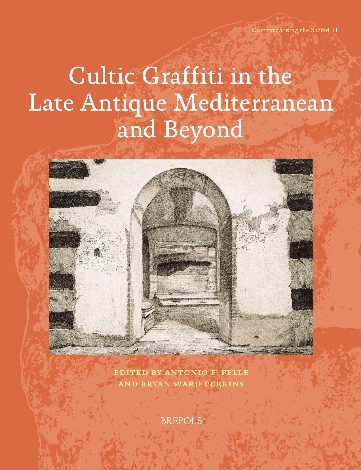
Cultic Graffiti in the Late Antique Mediterranean and Beyond
Graffiti scratched or drawn on the walls of religious shrines provide unique unmediated evidence of how ordinary men and women many of them pilgrims invoked and sought the help of God and the saints in Late Antiquity. The papers in this volume document and discuss cultic graffiti across the entire late antique Mediterranean and into Nubia and Arabia. The principal focus is the Christian world but there are also papers that look back to pre-Christian practice and into the world of early Islam. Presenting evidence that is often unfamiliar this is an important volume for anyone interested in the History and Archaeology of Late Antiquity. In examining cultic practice we are almost always compelled to view the actions of devotees through texts written by the ecclesiastical elite often with a clear hagiographical agenda in mind - cultic graffiti are evidence produced by the protagonists themsleves.