


Cursor Mundi
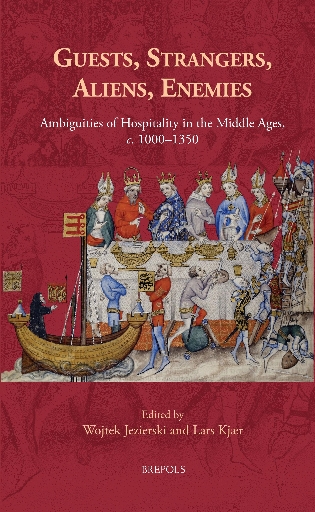
Guests, Strangers, Aliens, Enemies
Ambiguities of Hospitality in the Middle Ages, c. 1000–1350
Many of our oldest and best-loved stories are about killing guests and betraying hosts. Hospitality is celebrated in medieval texts and in medieval studies as a way of binding individuals together and strengthening social cohesion but both the practice and narration of hospitality was shot through with ambiguity and ambivalence.
This volume shifts the scholarly gaze from the high table — where kings queens and honoured guests are graciously served by skilled servants — to the shadowy corners of the hall the places where gossip and complaint are exchanged where outlaws hide under the guise of hospitality where hostages and troublesome strangers are benched where the light from the hall-fire reflects on drawn blades: prompting difficult reflections on the processes of extraction and predation that provided the material foundations for the feast.
The chapters in Guests Strangers Aliens Enemies range from Silk Road caravanserais in Armenia and crusader relations in the Latin East through ambassadorial and papal receptions in the Mediterranean treatment of merchants and the poor in Scandinavia elite feasts in Latin Europe to hosting of outlaws and hostages in Eurasia. The authors explore ambiguities of hospitality in the Middle Ages through a wide range of sources and methodological approaches.
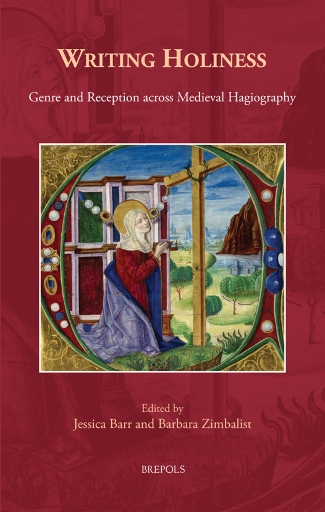
Writing Holiness
Genre and Reception across Medieval Hagiography
Writing Holiness contributes to exciting new critical conversations in the study of medieval hagiography in Western Christianity. Recent years have seen innovative approaches to the literatures of sanctity through emergent theoretical discourses such as disability studies and trans theory. At the same time traditional methodologies such as manuscript studies and reception history continue to generate new perspectives on the production circulation and reception of the sacred textual canon.
Through ten unique contributions that draw from both new and established theories and methodologies this volume charts the development movement and reception of Christian hagiographic texts in localities ranging from the Iberian Peninsula to the Scandinavian Archipelago from the early to the late Middle Ages. Each chapter traces hagiographic development over generic temporal cultural and linguistic boundaries and considers the broader contours of the sacred imaginary that come into view as a result of such critically intersectional inquiry.
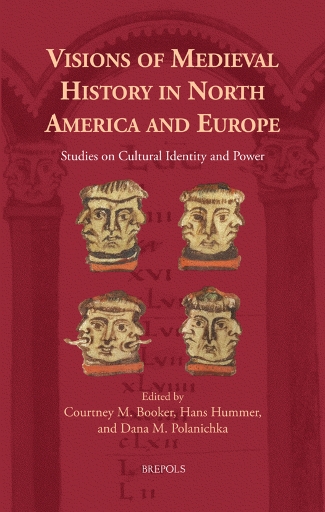
Visions of Medieval History in North America and Europe
Studies on Cultural Identity and Power
In this volume scholars from North America and Europe explore the intersection of medieval identity with ethnicity religion power law inheritance texts and memory. They offer new historiographical interventions into questions of identity but also of ethnonyms conflict studies the feudal revolution gender and kinship studies and local history. Employing interdisciplinary approaches and textual hermeneutics the authors represent an international scholarly community characterized by intellectual restlessness historiographical experimentation and defiance of convention.
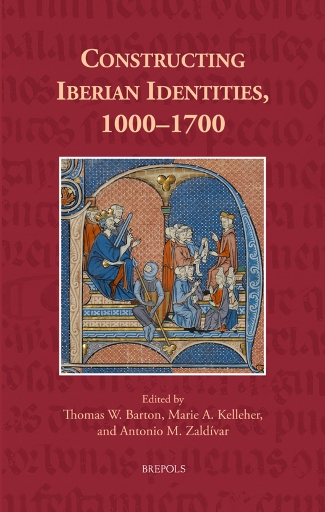
Constructing Iberian Identities, 1000–1700
Over the past several decades scholars of medieval and early modern Iberia have transformed the study of the region into one of the most vibrant areas of research today. This volume brings together twelve essays from a diverse group of international historians who explore the formation of the multiple and overlapping identities both individual and collective that made up the Iberian peninsula during the eleventh through seventeenth centuries. Individually the contributions in this volume engage with the notion of identity in varied ways including the formation of collective identities at the level of the late medieval city the use of writing and political discourse to construct or promote common political or socio-cultural identities the role of encounters with states and cultures beyond the peninsula in identity formation and the ongoing debates surrounding the peninsula’s characteristic ethno-religious pluralism.Collectively these essays challenge the traditional dividing line between the medieval and early modern periods providing a broader framework for approaching Iberia’s fragmented yet interconnected internal dynamics while simultaneously reflecting on the implications of Iberia’s positioning within the broader Mediterranean and Atlantic worlds.
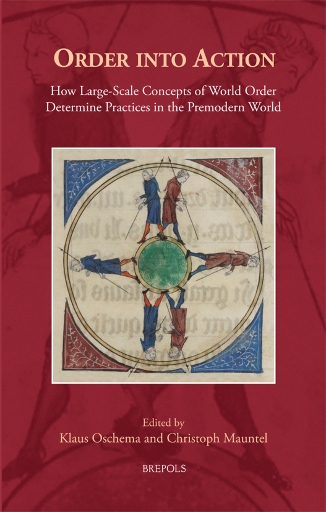
Order into Action
How Large-Scale Concepts of World-Order determine Practices in the Premodern World
The construction (and application) of models that order complex phenomena such as ‘the world’ is not a ‘neutral’ activity: theoretical models and ideas help us to perceive and categorize the information conveyed by experience and tradition alike; in turn they also influence the behaviour and actions of individuals and groups.
Collecting a global series of case studies on premodern societies this volume proposes new research into premodern models of world-order and their effects. With its focus on the period between c. 1300 and 1600 it seeks to open up fresh perspectives for premodern Global History and the analysis of phenomena of transcultural contact and exchange.
Focussing on religious political and geographical ideas and models the contributions explore whether and how large-scale concepts influenced or even determined concrete actions. The examples include socio-religious concepts (Christianity terra paganorum dār al-harb) political concepts (empire) and geographical notions. A special section is dedicated to comparative insights into societies in Sub-Saharan Africa Australia and pre-Columbian America. Taken together the contributions underline the importance and effects of historically shaped cultural traits in the long term.
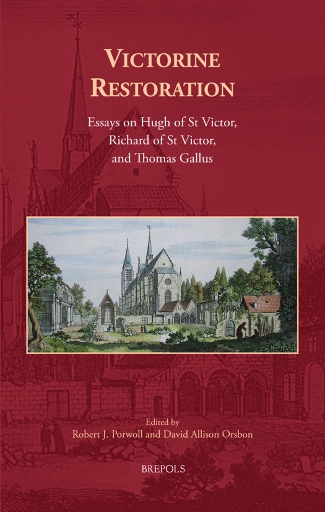
Victorine Restoration
Essays On Hugh Of St Victor, Richard Of St Victor, and Thomas Gallus
The Victorines were scholars and teachers of philosophy liberal arts sacred scripture music and contemplation at the Abbey of Saint-Victor in Paris. This collection focuses on the three greatest Victorines: Hugh (d. 1141) who established the direction of the school; Richard (d. 1173) who developed Victorine contemplation; and Thomas Gallus (d. 1246) who culminated Victorine contemplative thought and transmitted it to other schools especially the Franciscans. They offer an innovative revival of the Christian spiritual and intellectual tradition for their reforming pastoral mission in their urban setting and for the Church.
Their contemporaries saw the Victorines as beacons of spiritual love and intellectual richness. Later reformers and thinkers held their writings as touchstones of contemplative love including for example Bonaventure Thomas Aquinas Jean Gerson Thomas à Kempis the Devotio Moderna and many others. The writings of the Victorines found broad appeal among later medieval readers as well as praise among early modern reformers Protestant and Catholic alike. In recent decades the Victorines have returned to scholarly attention and renewed appreciation. Scholarly studies critical editions and translation projects reveal the treasures of Victorine thought and spirituality.
This volume showcases the findings of recent research and scholarly advances in Victorine studies offering new readers a status quaestionis of the field. It also features new research by eminent experts in Victorine thought that points out promising directions for future research thus offering important new findings for established specialists.
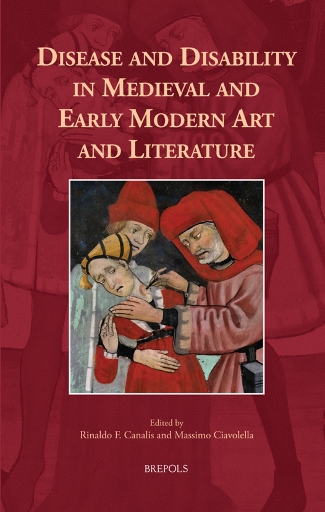
Disease and Disability in Medieval and Early Modern Art and Literature
Humanity has always shown a keen interest in the pathological ranging from a morbid fascination with ‘monsters’ and deformities to a genuine compassion for the ill and suffering. Medieval and early modern people were no exception expressing their emotional response to disease in both literary works and to a somewhat lesser extent in the plastic arts. Consequently it becomes necessary to ask what motivated writers and artists to choose an illness or a disability and its physical and social consequences as subjects of aesthetic or intellectual expression. Were these works the result of an intrusion in their intent to faithfully reproduce nature or do they reflect an intentional contrast against the pre-modern portrayal of spiritual ideals and later through the influence of the classics the rediscovered importance and beauty of the human body?
The essays contained in this volume address these questions albeit not always directly but rather through an analysis of the societal reactions to the threats and challenges that essentially unopposed disease and physical impairment presented. They cover a wide range of responses variable of course according to the period under scrutiny its technological moment and the usually fruitless attempts at treatment.
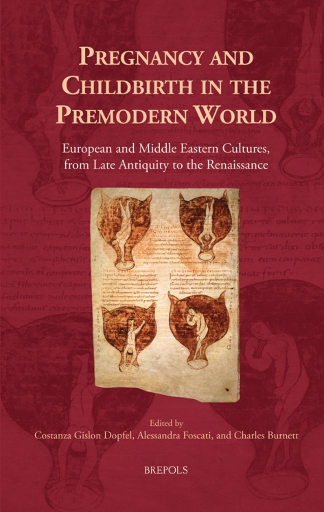
Pregnancy and Childbirth in the Premodern World
European and Middle Eastern Cultures, from Late Antiquity to the Renaissance
This volume of contributions from international scholars offers a cross-cultural and multi-period analysis of pregnancy and childbirth traditions in Western and Middle Eastern cultures. The studies focus on the ideas practices and visual representations surrounding pregnancy and birth-giving from Late Antiquity to the Renaissance and offer the reader the possibility of observing the perception representation and theoretic paradigm of these events in a wide range of cultural contexts. The collection fits within multiple traditions of specialized scholarship yet its scope suggests a geographically global approach and a new multicultural methodology that encompasses a wide range of practices historical periods and topics. On one hand it participates in the well-established medical historical and iconographic discourse on childbirth and family that has enticed much interest over the last two decades; on the other its unique thematic structure includes cultures and periods previously ignored in similar collections of essays. The articles span from Northern Europe to the Mediterranean the Middle East and India and connect the experience of childbirth to the exchanges of knowledge religious beliefs and social practices. With its variety of topics and specializations the volume encourages a global comparative approach to the cultural narrative surrounding the activities and attitudes connected to conception and birth paying particular attention to material culture religion history and iconography as well as to the exchange and dispersion of medical knowledge.
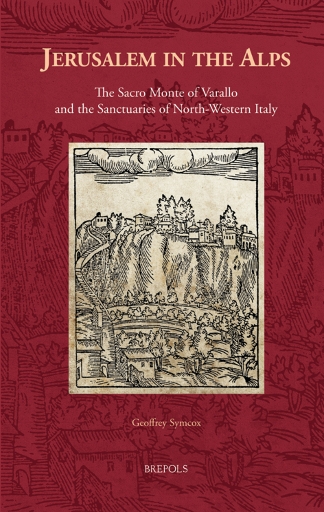
Jerusalem in the Alps
The Sacro Monte of Varallo and the Sanctuaries of North-Western Italy
The Sacro Monte (Holy Mountain) at Varallo is a sanctuary in the Italian Alps west of Milan. It was founded in the late fifteenth century by a Franciscan friar with the support of the town’s leading families. He designed it as a schematic replica of Jerusalem to enable the faithful to make a virtual pilgrimage to the Holy City if they could not undertake the perilous journey to visit it physically. The Sacro Monte consists of a sequence of chapels containing tableaux of life-size painted terra-cotta figures with fresco backgrounds recounting the life and Passion of Christ. A century later in the era of the Counter-Reformation a ‘second wave’ of Sacri Monti was constructed in the north-western Alps modelled on Varallo but dedicated to other devotional themes like the Rosary or the life of St Francis. All these sanctuaries like Varallo were the result of local initiatives initiated by the clergy and the leaders of the communities where they were situated. Like Varallo they were the work of artists and craftsmen from the alpine valleys or from nearby Lombardy. Long dismissed as folk art unworthy of serious critical attention the Sacri Monti are now recognised as monuments of unique artistic significance. In 2003 UNESCO listed nine of them in its register of World Heritage Sites. This book studies their development as the products of the religious sensibilities and the social economic and political conditions of the mountain communities that created them.
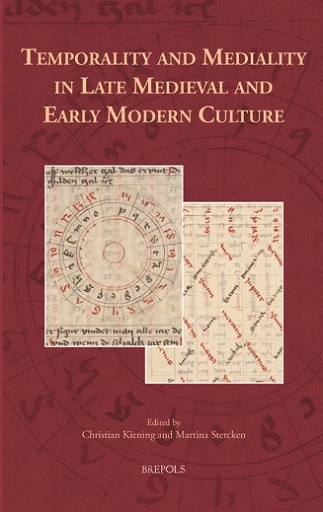
Temporality and Mediality in Late Medieval and Early Modern Culture
This interdisciplinary volume explores the ways in which time is staged at the threshold between the Middle Ages and the early modern period. Proceeding from the reality that all cultural forms are inherently and inescapably temporal it seeks to discover the significance of time in mediations and communications of all kinds.
By showing how time is displayed in diverse cultural strategies and situations the essays of this volume show how time is intrinsic to the very concept of tradition. In exploring a variety of medial forms and communicative practices they also reveal that while the beginning of the age of printing (around 1500) may mark a fundamental change in terms of reproduction and circulation artefacts and other historical traditions continue to employ earlier systems and practices relating time and space.
The volume features articles by leading researchers in their respective fields including studies on mosaics as a medium reflecting space and time; the triptych’s potential as a time machine; winged altarpieces mediating eternity; texts and images of the passion of Christ permeating past present and future; dimensions of time embedded in maps; a compendium of world knowledge organized by forms of time and temporality; the figuration of prophecy in times of crisis; the portrayal of time in architecture.
The volume thus provides a new approach to media and mediality from the perspective of cultural history.
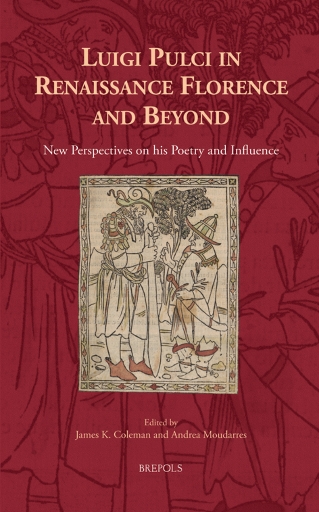
Luigi Pulci in Renaissance Florence and Beyond
New Perspectives on his Poetry and Influence
Luigi Pulci’s rollicking ribald account of the exploits of the paladin Orlando and his giant friend Morgante has never failed to provoke strong reactions in its readers. Pulci’s irreverent satirical wit made his Morgante an instant bestseller following its initial publication but also drew the ire of powerful enemies like the Dominican friar Girolamo Savonarola who called for copies to be burned in the ‘bonfires of vanities’ organized by his followers in Florence. The Morgante is the most important immediate precursor to the Orlando innamorato and the Orlando furioso yet relatively little critical attention has been devoted to Pulci’s work compared to that of his successors Boiardo and Ariosto.
This volume – the first collection of critical essays dedicated to Pulci – offers a comprehensive reassessment of Pulci’s work and legacy shedding new light on the cultural and literary traditions that Pulci draws from and subverts the social and political forces that shaped Pulci’s work and the breadth of Pulci’s influence from the Renaissance to the present day.
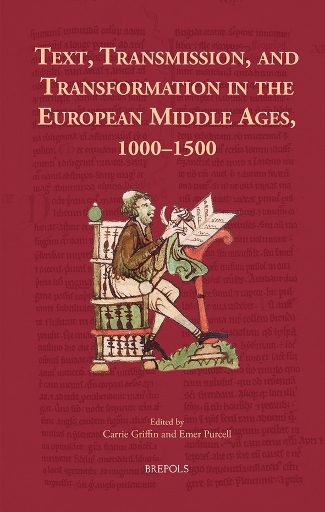
Text, Transmission, and Transformation in the European Middle Ages, 1000–1500
These essays are concerned primarily with the different ways in which European writers translators and readers engaged with texts and concepts and with the movement and exchange of those texts and ideas across boundaries and geographical spaces. It brings together new research on Anglophone and Latinate writings as well as on other vernaculars among them Old Norse Anglo-Saxon Medieval Irish Welsh Arabic Middle Dutch Middle German French and Italian including texts and ideas that are experienced in aural and oral contexts such as in music and song. Texts are examined not in isolation but in direct relation and as responses to wider European culture; several of the contributions theorize the translation of works for example those relating to spiritual instruction and prayer into other languages and new contexts.
The essayists share a common concern then with the transmission and translation of texts examining what happens to material when it moves into contexts other than the one in which it was produced; the influence that scribes translators and readers have on textual materiality and also on reception; and the intermingling different textual traditions and genres. Thus they foreground the variety and mobility of textual cultures of the Middle Ages in Europe both locally and nationally and speak to the profound connections and synergies between peoples and nations traceable in the movement and interpretation of texts versions and ideas. Together the essays reconstruct an outward-looking networked and engaged Europe in which people used texts in order to communicate discover and explore as well as to record and preserve.
Water in Medieval Intellectual Culture
Case Studies from Twelfth-Century Monasticism
This volume provides a new contribution to the understanding of twelfth-century monasticism and medieval intellectual culture by exploring the relationship between water and the composition of thought. It provides a fresh insight into twelfth-century monastic philosophies by studying the use of water as an abstract entity in medieval thought to frame and discuss topics such as spirituality the natural order knowledge visualization and metaphysics in various high medieval texts including Godfrey of Saint-Victor’s Fons Philosophiae Peter of Celle’s letter corpus and the Description of Clairvaux.
Through case studies of water in poetry landscape narrative and epistolary communication this work traces the role of water as a uniquely medieval instrument of thought. Theoretical chapters of this book use water to explore the shaping of the medieval metaphor. Further case studies examine the differing and complex uses of water as a metaphor in various monastic texts. Focussing on the changeable power and material properties of water this volume assesses the significance and deployment of environmental imagery in the composition narration and recollection of organized thought within the twelfth-century monastic community.
Visions of North in Premodern Europe
The North has long attracted attention not simply as a circumpolar geographical location but also as an ideological space a place that is ‘made’ through the understanding imagination and interactions of both insiders and outsiders. The envisioning of the North brings it into being and it is from this starting point that this volume explores how the North was perceived from ancient times up to the early modern period questioning who where and what was defined as North over the course of two millennia.
Covering historical periods as diverse as Ancient Greece to eighteenth-century France and drawing on a variety of disciplines including cultural history literary studies art history environmental history and the history of science the contributions gathered here combine to shed light on one key question: how was the North constructed as a place and a people? Material such as sagas the ethnographic work of Olaus Magnus religious writing maps medical texts and illustrations are drawn on throughout the volume offering important insights into how these key sources continued to be used over time. Selected texts have been compiled into a useful appendix that will be of considerable value to scholars.
Mythical Ancestry in World Cultures, 1400-1800
From Europe to the Ottoman Empire from Mesoamerica to the Mughal dynasty rulers and peoples in the early modern period put deities and culture heroes in their family trees. The essays in this collection investigate the issues of ancestry descent kinship and kingship that are revealed by this worldwide practice. The authors explore the meaning and role of 'myth' in different global cultures and how the social role of myth defined identity through genealogical discourse. What did people understand by 'mythical' and how did they think of themselves as related to their mythical past? How seriously were these various claims of mythical descent taken? And how did claims function within the different power relations of societies around the globe? Up to now the predominant Eurocentric perspective in early modern studies has encouraged a focus on Renaissance Greco-Roman mythology and its role in literature and art. This volume however breaks new ground through its unique exploration of the way in which the genealogical use of 'myth' was shared by world cultures.
Writing History in Medieval Poland
Bishop Vincentius of Cracow and the 'Chronica Polonorum'
This volume presents an in-depth analysis of the Chronica Polonorum one of the greatest works of the twelfth-century renaissance which profoundly influenced history writing in Central Europe. The Chronica Polonorum was written by Poland’s first native historian Vincentius of Cracow. Educated in Paris and Bologna he was the first canonically elected bishop of Cracow and a participant of the Fourth Lateran Council. The eyewitness accounts given in the Chronica Polonorum offer insights into the development of twelfth-century Poland the ambitions of its dynasty the country’s integration into Christendom and the interaction between the Polish and Western elites. Vincentius’s work is considered a masterpiece in literary erudition grounded in classical training. The historical evidence it presents illuminates the socio-cultural interaction between Poland and the West during the period. Vincentius’s chronicle demonstrates the strong enduring influence of the history law and traditions of ancient Rome in twelfth-century Europe.
This book deals with several subjects which have increasingly gained in prominence in English-language scholarship in recent years such as the development of political culture the diffusion and growth of ideas the Christianization of the peripheral regions of Europe and the interaction between cultural political and economic changes. In analysing the work of Vincentius and the Polish historiography of the Chronica Polonorum this volume provides important insights into the development of the so-called peripheral regions of twelfth-century Europe and Poland’s engagement in the twelfth-century renaissance.
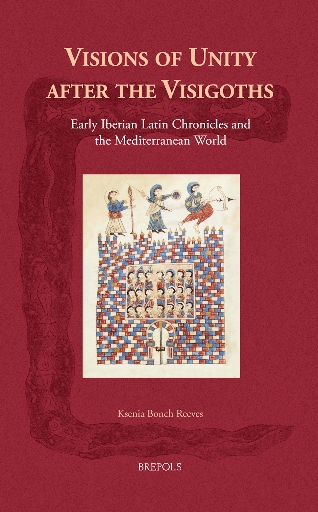
Visions of Unity after the Visigoths
Early Iberian Latin Chronicles and the Mediterranean World
This study focuses on post-Visigothic Latin chronicles as testimonies of an intense search for models of stability and social cohesion on the Iberian Peninsula. As the principal source of Iberian political thought between the eighth and mid-thirteenth centuries these texts have long been regarded from the perspective of modern-day national boundaries of a political entity called Spain. From the post-national perspective of Mediterranean studies which considers Iberian centres of power in cultural contact with the broader world post-Visigothic Iberian chronicle writing is seen as a cultural practice that seeks to reconcile the imperative of unity and stability with the reality of diversity and social change.
The book examines firstly the Andalusi Christian narrative of Visigothic political demise which originated in Iberian dhimmī communities between the mid-eighth and mid-ninth centuries. Second it explores the narrative of sovereignty developed in Asturias-León from the late ninth century onwards. Finally it examines the historiographical manipulation of both of these traditions in Rodrigo Jiménez de Rada’s Historia de rebus Hispanie (1243).
The ongoing contact between Iberian Latin textual communities and the broader Mediterranean is interpreted as central to both the development of Iberian historical mythology and its historiographical renovation.
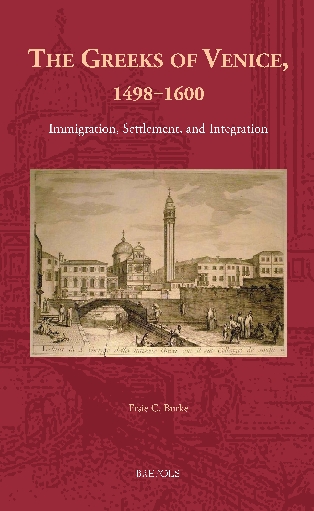
The Greeks of Venice, 1498–1600
Immigration, Settlement, and Integration
People have always immigrated in search of better working and living conditions to escape persecution reconnect with family or simply for the experience. This volume traces the history of Venice’s Greek population during the formative years between 1498 and 1600 when thousands left their homelands for Venice. It describes how Greeks established new communal and social networks and follows their transition from outsiders to insiders (though not quite Venetians) through an approach that offers a comparative perspective between the ‘native’ and the immigrant. It places Greeks within the context of multi-cultural multi-ethnic and multi-lingual Venice. Personal stories are interwoven throughout for a more intimate account of how people lived worked prayed and formed new social networks. These accounts have been drawn from a variety of sources collected from the Venetian state archives the archives of the Venetian church and documentation held by the Hellenic Institute of Venice. Notarial documents petitions government and church records registries of marriages and deaths and census data form part of the collected material discussed here. Above all this study aims to reconstruct the lives of the largest ethnic and Christian minority in early modern Venice and to trace the journey of all immigrants from foreigner to local.
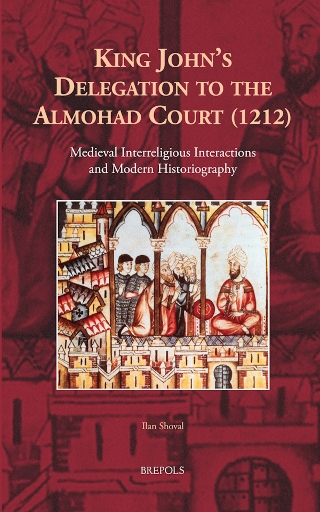
King John's Delegation to the Almohad Court (1212)
Medieval Interreligious Interactions and Modern Historiography
Is Matthew Paris’s story of an English diplomatic delegation sent by King John to the caliph of Morocco in the summer of 1212 nothing more than fiction or does it report actual historical events? Did King John really offer to subjugate his kingdom to the Muslim caliph and did he consider converting to Islam? Was one of John’s diplomats genuinely a converted Jew with whom the Muslim ruler conversed about theological issues? And how may a new reading of this medieval chronicle in its appropriate historical context contribute to our understanding of the professionalization of diplomatic practice the emergence of European bureaucratic kingship Christian–Muslim political interaction interreligious polemic and conversion? In this book these questions are explored as part of the first full-scale study of Matthew Paris’s report. The volume proposes an entirely new interpretation of the text and portrays a multifaceted and inherently complex picture of the interactions between Christians Muslims and Jews around 1200 that draws on law politics statecraft history culture and religion. This study also prompts a re-evaluation of the delegation story as a ‘test case’ for John’s measures during his reign. Matthew’s text is examined in its historical context of Christian–Muslim encounters on the frontier in order to advance our understanding of a crucial era of political and diplomatic transformation.
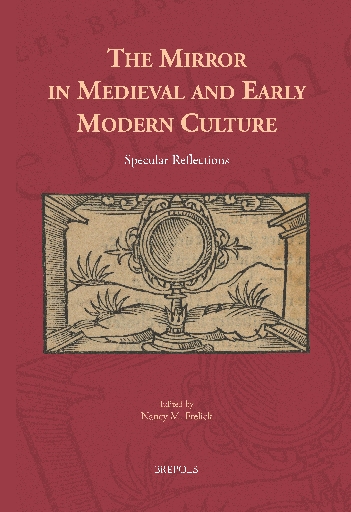
The Mirror in Medieval and Early Modern Culture
Specular Reflections
Mirrors have always fascinated humankind. They collapse ordinary distinctions making visible what is normally invisible and promising access to hidden realities. Yet these liminal objects also point to the limitations of human perception knowledge and wisdom. In this interdisciplinary volume specialists in medieval and early modern science cultural and political history as well as art history philosophy and literature come together to explore the intersections between material and metaphysical mirrors in Europe and the Islamic world. During the time periods studied here various technologies were transforming the looking glass as an optical device scientific instrument and aesthetic object making it clearer and more readily available though it remained a rare and precious commodity. While technical innovations spawned new discoveries and ways of seeing belief systems were slower to change as expressed in the natural sciences mystical writings literature and visual culture. Mirror metaphors based on analogies established in the ancient world still retained significant power and authority perhaps especially when related to Aristotelian science the medieval speculum tradition religious iconography secular imagery Renaissance Neoplatonism or spectacular Baroque engineering artistry and self-fashioning. Mirror effects created through myths metaphors rhetorical strategies or other devices could invite self-contemplation and evoke abstract or paradoxical concepts. Whether faithful or deforming specular reflections often turn out to be ambivalent and contradictory: sometimes sources of illusion sometimes reflections of divine truth mirrors compel us to question the very nature of representation.