


Diaspora
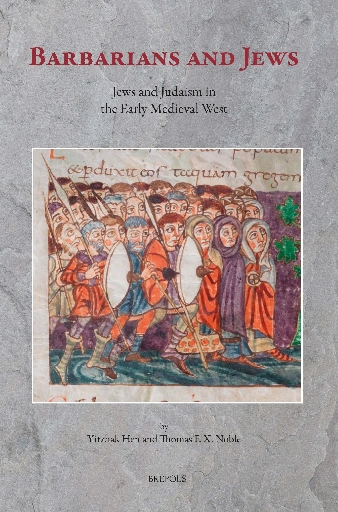
Barbarian and Jews
Jews and Judaism in the Early Medieval West
The essays in this volume attempt to re-evaluate understand and explain various aspects of Jewish history within the broader historical context of the post-Roman Barbarian world. They address a wide variety of topics sources and geographies and together they provide a nuanced and more balanced history of the Jews in the early medieval West. Although written independently of one another by some of the most prominent historians of Late Antiquity and the early Middle Ages the various essays collected here reveal a remarkable tension between the ‘imaginary’ (or ‘hermeneutical’) Jew and the ‘real’ one. As this volume demonstrates Augustine’s positive theological understanding of Jews and Judaism was often overshadowed by anti-Jewish sentiments and consequently anti-Jewish invective remained the drive wheel of Christian theology especially in the context of debates and polemics among the Christians themselves.
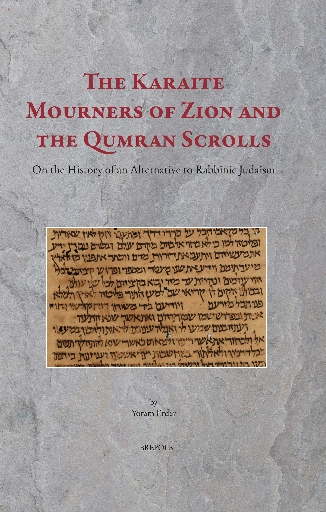
The Karaite Mourners of Zion and the Qumran Scrolls
On the History of an Alternative to Rabbinic Judaism
This book is dedicated to studying the Karaite Mourners of Zion - the leading faction within the Karaite movement during its formative period (9th - 11th century). Like all Karaites the Mourners claimed that the Rabbinic Oral Law was not given by God but is rather the ‘commandment of man’ (Isaiah 29.13). Therefore they called for a return to the Hebrew Bible.
According to the Karaite Mourners neglecting the Bible caused also the neglect of the Land of Israel. For them the Oral Law was a tool of the Jewish people to strike roots in the exile. Therefore they developed a Messianic doctrine which encouraged the Jewish people not only to return to the Bible but also to immigrate to the Land of Israel in order to accelerate the redemption.
The Karaite Mourners’ leadership practiced what they preached. From their cradle in the exile of Babylonia and Persia they came to Jerusalem where they created a community that was called Shoshanim (lilies). This community became the most important community that ever flourished in the history of Karaism. They left behind prolific work most of it written in Judaeo-Arabic.
Coming to Palestine and maybe before that the Karaite Mourners were exposed to some of the Qumran scrolls that were discovered at their time. They did not hesitate to adopt some of the Qumran doctrine and halakha despite the fact that main Qumran beliefs were not acceptable to the Karaites.
Studying the Qumranic influence on the Karaite Mourners sheds light simultaneously on early Karaism and the Jewish sects of the Second Temple period.
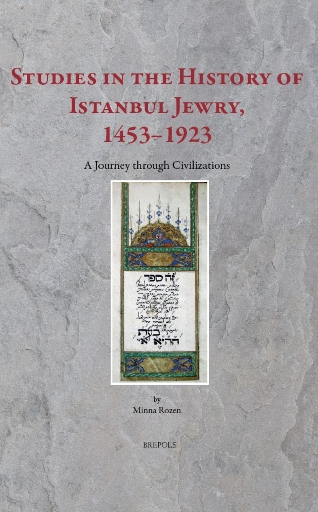
Studies in the History of Istanbul Jewry, 1453-1923
A Journey through Civilizations
This book presents ten chapters on the history of the Jewish community of Istanbul from the Ottoman conquest of Constantinople (1453) to the establishment of the Turkish Republic (1923). While delving into specific subjects such as the Romaniot presence in the city the Karaite society family life throughout the generations material culture and its meaning social life urban history economic life and relations with the Ottoman regime a common thread binds all of them. Each of the chapters individually and together constitutes a journey between different cultures and religions. The history of Istanbul’s Jews carries the imprint of Greek Orthodoxy and Catholicism as well as Islam. It moves in cycles between the Byzantine and Ottoman realms between Catholic Europe and the Muslim Ottoman Empire and finally between the Ottoman Jewish culture and a modern Europe in the throes of secularization. Over fifty images are included to illustrate the multi-cultural aspect of the history presented here.
The essays in this volume present high quality scholarship but equally they provide a fascinating insight to general readers with an interest in Constantinople-Istanbul-Qosta as well as readers interested in Jewish urban history the transmission of culture and multiculturalism.
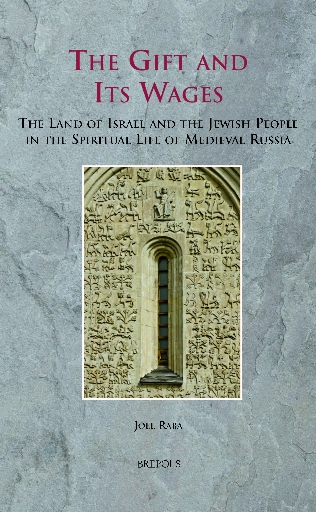
The Gift and Its Wages
The Land of Israel and the Jewish People in the Spiritual Life of Medieval Russia
Respect for the Old Testament and its heritage was an integral feature of Russian medieval culture and played a major role in determining Old Russia’s value system and its attitude toward past and contemporary events. Jerusalem and the Holy Land were ideals and the Chosen People and Old Testament heroes were role models and standards for both the past and the present. Yet in its ongoing effort to be recognized as the ‘New Chosen People’ within the family of nations Old Russia rejected ‘the Other’ that is the descendants of the ‘Old Chosen People’. The almost total absence of Jews in Russia throughout the ancient period along with the central role played by Jewish tradition in the development of its culture are a contradiction. This book presents the story of this dichotomy during the Old Russian millennium from its inception to the late seventeenth century. The material is organized chronologically beginning with the creation of the Kievan state in the far reaches of the Khazar polity in the ninth century and ending with the great transformation the reforms of Peter the Great. This is preceded by a survey of two sources that shaped the image of the land and people of Israel in the erudite world of ancient Russia: a description of the Holy Land by Abbot Daniel in the early twelfth century and the ancient Slavic translation of Josephus’s Wars of the Jews.