


Disputatio
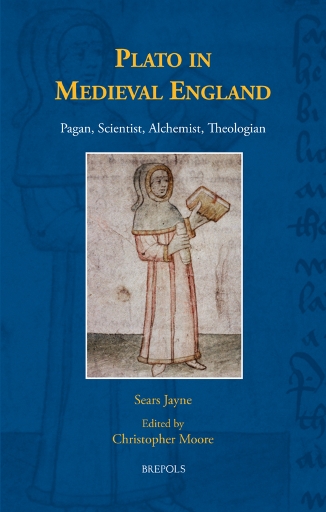
Plato in Medieval England
Pagan, Scientist, Alchemist, Theologian
From the time of the Roman Republic continental Europeans traveling to England brought knowledge of Greek and Roman intellectual culture in the form of books of every genre. But until 1111 CE the island contained not a single Platonic dialogue. And for the next two centuries it had only a partial Latin translation of the Timaeus. A Latin Phaedo eventually appeared in 1340 and the Meno in 1423. But this hardly limited the number of ideas people had about Plato. He was a proto-Christian a sage a scholar of the cosmos and a healer. And he had an elaborate oeuvre that did exist in England works of astrology numerology medicine and science including Cado Calf Circle Herbal Question Alchemy and Book of Prophecies of a Greek King. This book tells the story of Plato in Medieval England from a name with too few works to a sage with too many. Based on a complete survey of all extant manuscripts publications and library records until the fifteenth century it traces with extraordinary precision the movement of opinions and information about Plato from Europe to England and then into its various monasteries schools and universities. This erudite and illuminating sociology of knowledge provides novel insight into the dubious English career of our best-known philosopher. This is intellectual history and reception studies at its most surprising.

Marsilius of Padua
Between History, Politics, and Philosophy
Marsilius of Padua (c. 1275–c. 1342) was one of the most influential and controversial political thinkers of the Middle Ages. He is best known for his seminal text Defensor Pacis (1324) in which he attacks the papal theory of plenitude of power and defends an idea of political community based on the strict separation of political and religious authority. Marsilius’ work lies at the crossroads of different disciplines ranging from political philosophy to civil and canon law to medicine. Indeed he presents an original synthesis of several contemporary themes and traditions such as Aristotelianism Augustinianism the debate on Franciscan property the communal tradition of the Italian city-states ecclesiology medicine and astrology.
This edited volume analyses the life and thought of Marsilius of Padua in his own context and beyond. Gathering many of the leading experts in Marsilian studies across different national and linguistic traditions working today this volume has two main goals. First it aims to bring together experts who come from distinct fields in order to investigate the many branches of knowledge present in Defensor Pacis without losing sight of Marsilius as a comprehensive theorist. Second the volume aims to shed new light on one of the most neglected aspects in Marsilian studies: the Marsilian influence i.e. his impact in the early modern period during the Renaissance the Reformation and the Counter-Reformation up to twentieth century.
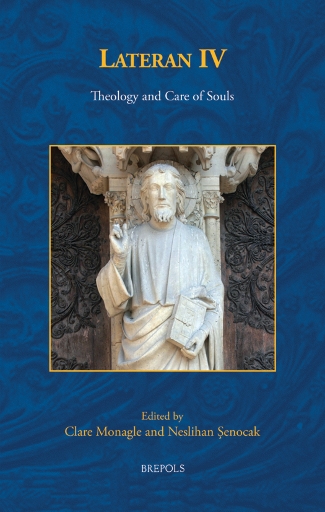
Lateran IV
Theology and Care of Souls
The Fourth Lateran Council of 1215 was a foundational event in the history of Western Christendom. Lead by the reformist Pope Innocent III the Council ushered in a new era of papal policy in governance the implications of which would be felt throughout the continent. To some Lateran IV represents the flourishing of the medieval papacy as the institution sought to improve pastoral care across Europe as well as to define theological orthodoxy. For others Lateran IV constitutes the founding moment of the so-called ‘persecuting society’ the moment at which the Papacy articulated its identity via the category of heresy. Lateran IV: Theology and Care of Souls assesses the pastoral and theological legacies of the Council. The volume brings together scholars of high theology as well as those whose work engages with the practices of clerical governance in the thirteenth century. Lateran IV: Theology and Care of Souls maps the key intellectual theological and pastoral concerns of Lateran IV especially revealing the influence of the medieval theologians connected to the universities on the decrees of the Council.
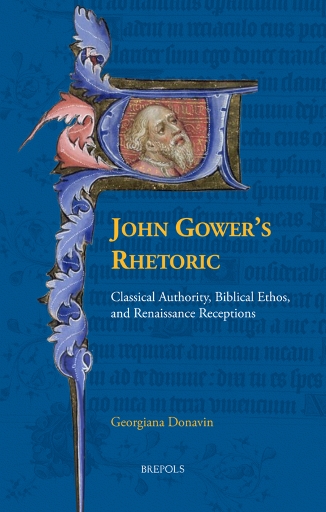
John Gower’s Rhetoric
Classical Authority, Biblical Ethos, and Renaissance Receptions
This is the first book-length study in decades to offer in-depth readings of a variety of late medieval poems across Gower’s trilingual corpus. Identifying Gower’s rhetorical cornerstones in Aristotelian pathos the theology of the Word and the execution of a plain style it provides fresh interpretations of poems in Latin French and Middle English that arise from an enhanced understanding of Gower’s literary methods. It explores the classical and medieval rhetorical traditions that informed Gower’s craft the biblical personae through which the poet achieved his rhetorical aims and the Renaissance publishers and authors who valued and imitated his strategies for composition. Gower adapted his rhetorical theory from the principles of Aristotelian texts Augustinian theology exemplars of Ciceronian style and the dictates of various artes poetriae; from the latter John of Garland’s Parisiana Poetria is especially important for outlining practices of Marian rhetoric. Modelling virtuous female speakers on the Virgin and prophetic narrators on John the Baptist and John the Evangelist Gower gave extra-scriptural voice to members of the extended Holy Family and in so doing achieved unimpeachable expressions inside classically informed structures of discourse. The epistolary structure proceeding from Ciceronian rhetoric and the artes dictaminis is one among Gower’s favoured rhetorical forms for projecting singular voices. His straightforward reiterative style in Middle English and his virginal speakers compelled Renaissance publisher Thomas Berthelette and celebrated authors Ben Jonson and William Shakespeare to praise Gower’s rhetoric in prefaces and imitate it on the stage.
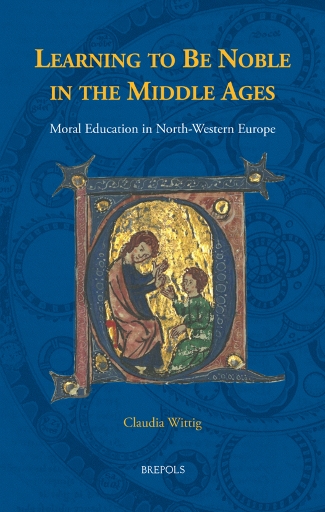
Learning to Be Noble in the Middle Ages
Moral Education in North-Western Europe
This book explores for the first time the moral education of the Western European nobility in the high Middle Ages. The medieval nobility created and utilized values and ideals such as chivalry and courtliness to legitimize their exalted position in society and these values were largely the same across Europe. Noble codes of conduct communicated these ideals in everyday interactions and symbolic acts at court that formed the basis of European courtly society. This book asks how noble men and women were taught about morality and good conduct and how the values of their society were disseminated. While a major part of moral education took place in person this period also produced a growing corpus of writing on the subject in both Latin and the vernacular languages addressing audiences that encompassed the lay elites from kings to the knightly class men as well as women. Participation in this teaching became a distinguishing feature of the nobility who actively promoted their moral superiority through their self-fashioning as they evolved into a social class. This book brings together analyses of several major European didactic texts and miscellanies examining the way nobles learned about norms and values. Investigating the didactic writings of the Middle Ages helps us to better understand the role of moral education in the formation of class gender and social identities and its long-term contribution to a shared European aristocratic culture.
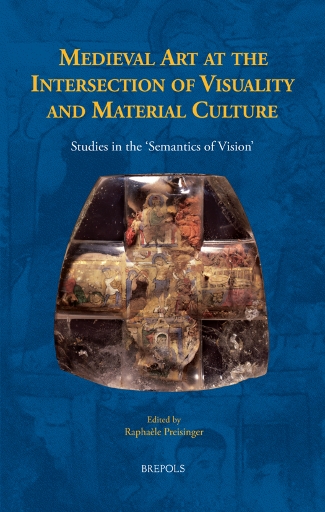
Medieval Art at the Intersection of Visuality and Material Culture
Studies in the ‘Semantics of Vision’
Over the last two decades the historiography of medieval art has been defined by two seemingly contradictory trends: a focus on questions of visuality and more recently an emphasis on materiality. The latter which has encouraged multi-sensorial approaches to medieval art has come to be perceived as a counterpoint to the study of visuality as defined in ocularcentric terms.
Bringing together specialists from different areas of art history this book grapples with this dialectic and poses new avenues for reconciling these two opposing tendencies. The essays in this volume demonstrate the necessity of returning to questions of visuality taking into account the insights gained from the ‘material turn’. They highlight conceptions of vision that attribute a haptic quality to the act of seeing and draw on bodily perception to shed new light on visuality in the Middle Ages.
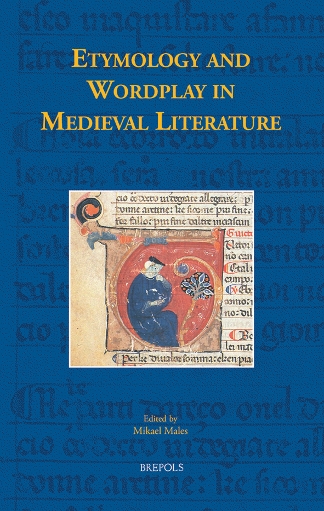
Etymology and Wordplay in Medieval Literature
In modern scholarship etymology and wordplay are rarely studied in tandem. In the Middle Ages however they were intrinsically related and both feature prominently in medieval literature. Their functions are often at variance with the expectations of the modern reader in particular when wordplay is used to arrive at crucial answers or to convey theological insights. The studies in this book therefore carry important implications for our understanding of the reception of medieval texts. The authors show how etymology and wordplay in the Middle Ages often served as an impetus for meditation and as a route to truth but that they could also be put to more mundane uses such as the bolstering of national pride. In a narrative context the functions of etymology and wordplay could range from underlining the sexual bravado of the protagonist to being the key indicator of whether the hero would live or die.
This book presents case studies of the uses of etymology and wordplay in a number of medieval literatures (Latin Old French Middle High German Italian Old Irish Old English Old Norse Slavic). By moving beyond the strictly etymological discourse into different parts of medieval literature the functions of these devices are highlighted in various contexts. Their significance ranges from the bawdy to the sublime from the open-ended to the specific. Classical and medieval developments of etymology and wordplay are described in a background chapter.
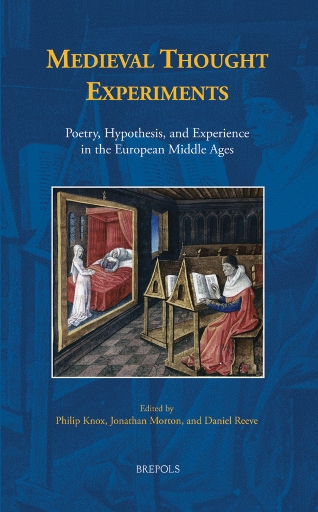
Medieval Thought Experiments
Poetry, Hypothesis, and Experience in the European Middle Ages
Throughout the Middle Ages fictional frameworks could be used as imaginative spaces in which to test or play with ideas without asserting their truth. The aim of this volume is to consider how intellectual problems were approached - if not necessarily resolved - through the kinds of hypothetical enquiry found in poetry and in other texts that employ fictional or imaginative strategies. Scholars working across the spectrum of medieval languages and academic disciplines consider why a writer might choose a fictional or hypothetical frame to discuss theoretical questions how a work’s truth content is affected and shaped by its fictive nature or what kinds of affective or intellectual work its reading demands. By reading literary philosophical and spiritual texts from England France and Italy alongside each other this collection offers a new interdisciplinary approach to the history of medieval thought.
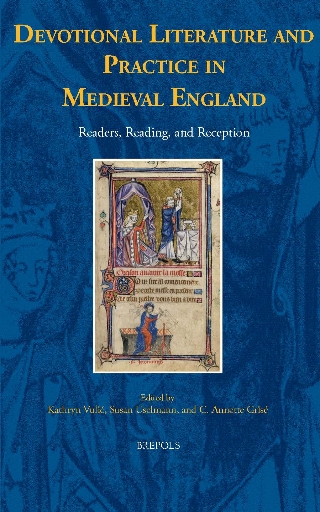
Devotional Literature and Practice in Medieval England
Readers, Reading, and Reception
This volume recognises that religious writings care deeply about how devotional reading takes place providing models for improving reading as a way of improving one’s ability to worship. The abundant evidence from medieval England suggests a deep interest among devotional writers in documenting teaching and circumscribing devotional reading given the importance of careful reading practices for salvation. This volume therefore draws together a wide range of interests in and approaches to studying the reading and reception of devotional texts in medieval England from representations of readers and reading in devotional texts to literary production and reception of devotional texts and images to manuscripts and early books as devotional objects to individual readers and patrons of devotional texts.
Prefaced by a substantial introduction by the editors - setting the community in its wider religious and cultural environment and against the backdrop of broad historiographical trends - this volume brings together substantial essays based on original research by new and leading scholars in the field of medieval English studies. This collection (and indeed many of the individual articles) brings into dialogue a number of traditional disciplinary approaches - early and late medieval English literary studies gender studies manuscript studies and religious studies. It strives to reflect trends in current scholarship of breaking down disciplinary boundaries and exploring the relationships between and among not only analytical and critical perspectives but also the kinds of evidence examined.
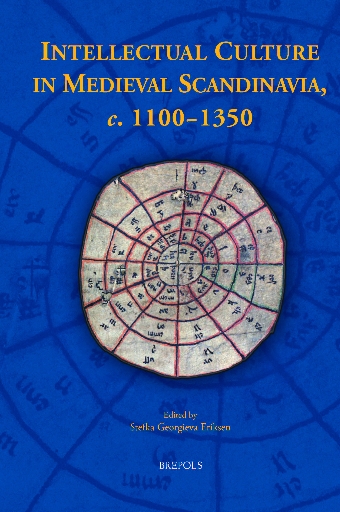
Intellectual Culture in Medieval Scandinavia, c. 1100–1350
This book investigates the nature of intellectual activity in the Middle Ages from the perspective of medieval Scandinavia by discussing how a multimodal and multilingual Scandinavian culture emerged through the dynamic interchange of foreign and local impulses in the minds of creative intellectuals. By deploying cognitive theory this volume conceptualizes intellectual culture as the result of the individual’s cognition which incorporates physical perceptions of the world memory and creation rationality emotionality and spirituality and decision making. In doing so it elucidates the diversity of social roles that could be assumed by people engaged in the activity of thinking. Attention is paid in particular to the key intellectual activities of negotiating secular and religious authority and identity; to thinking and learning through verbal and visual means; and to ruminating on worldly existence and heavenly salvation. These processes are explored in a series of essays that focus on various visual and textual artefacts among them Church art and sculptures manuscript fragments and texts of both different languages (Latin and Old Norse) and genres (sagas poetry and grammatical treatises laws liturgical explanations and theological texts). The variety of intellectual and ideational processes connected to the textual and material culture of medieval Scandinavia forms the focal point of this study. As a result this book actively seeks to transcend the traditional cultural dichotomies of written versus oral material Latin versus vernacular lay versus secular or European versus Nordic by foregrounding the cognitive and creative agency of intellectuals in medieval Scandinavia.
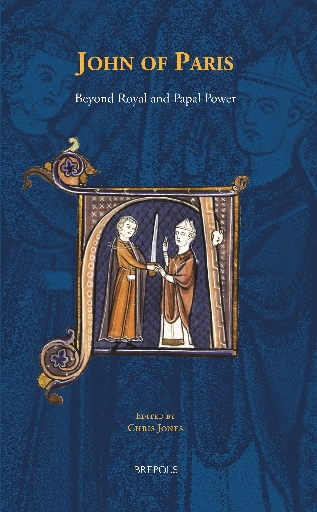
John of Paris
Beyond Royal and Papal Power
The Dominican scholar John of Paris was one of the most controversial members of the University of Paris in the later Middle Ages. The author of over twenty works he is best known today for On Royal and Papal Power a tract traditionally linked to the explosive confrontation that took place between the French king Philip IV and Pope Boniface VIII in the early years of the fourteenth century. Although his role as a royal apologist has been questioned in recent years John’s tract is often considered the first great defence of the independence of nation-states in the face of the claims to universal authority made by popes and emperors.
Bringing together a team of international scholars with a wide range of expertise this volume offers the first collection of essays in any language to be dedicated to an exploration of John’s thought. It re-examines his view of the relationship between Church and state and his conception of political organization. It considers the role played by John’s background as a member of the Dominican order in shaping his ideas and breaks new ground in exploring the relationship between his various works the origins of his thought its development and its legacy.
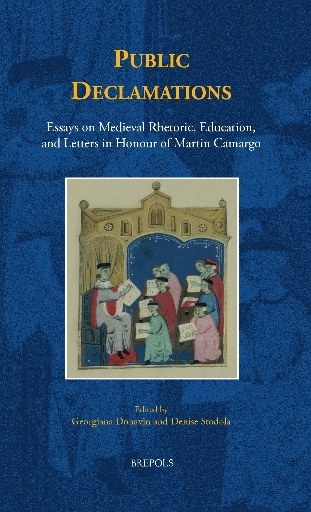
Public Declamations
Essays on Medieval Rhetoric, Education, and Letters in Honor of Martin Camargo
Martin Camargo Professor of English Medieval Studies and Classics at the University of Illinois at Urbana-Champaign is a beloved teacher mentor colleague and the scholar whose work this collection celebrates. With interests in defining ‘medieval rhetoric’ understanding the history of both literary and bureaucratic epistles explaining the revival of rhetorical studies in fourteenth-century England editing texts for teaching the trivium and excavating performance pedagogies in medieval language classrooms Carmago has paved the way for scholars in many fields including educational and institutional history; literature language and manuscript studies; and rhetoric in the Middle Ages.
This book pays tribute to his own ground-breaking research by presenting original and inventive new work in many of these fields. Authored by established scholars and innovative new researchers alike the essays contained in this volume give significant scope to didactic medieval commentaries theories of medieval rhetoric and language literary epistles and the ars dictaminis and poetry of various genres including romances and riddles as well as to the classroom practices that all of these investigations infer. In keeping with Camargo’s generosity in sharing resources the authors hope that their essays in turn will provide encouragement and suggestions for further work.
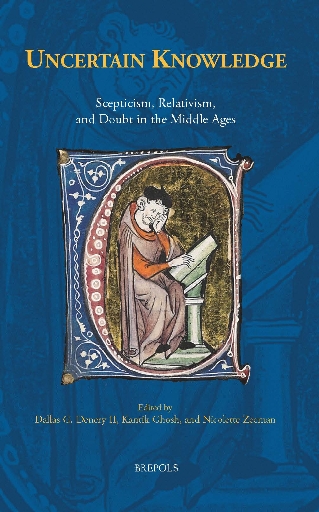
Uncertain Knowledge
Scepticism, Relativism, and Doubt in the Middle Ages
What are the forms in which later medieval thinkers articulate epistemological scepticism relativism and doubt? Is it possible to voice different forms of uncertainty in different institutional contexts and languages? Bringing together specialists in philosophy theology history and literature this book undertakes an interdisciplinary investigation of some of the ways in which the problem of knowledge was explored in the Middle Ages. This is a topic of central intellectual importance and has large cultural consequences. The Middle Ages are often still treated by non-medievalists as a time of naive epistemological self-confidence and we hope that ultimately this revisionist project will have impact beyond medieval studies illustrating the extent to which this was a period in which many thinkers were intrigued by and comfortable with uncertainty.
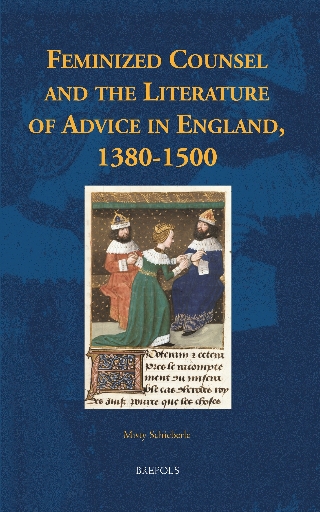
Feminized Counsel and the Literature of Advice in England, 1380-1500
The term ‘feminized counsel’ denotes the advice associated with and spoken by women characters. This book demonstrates that rather than classify women’s voices as an opposite against which to define masculine authority late medieval vernacular poets embraced the feminine as a representation of their subordination to kings patrons and authorities. The works studied include Gower’s Confessio Amantis Chaucer’s Legend of Good Women and Melibee and English translations of Christine de Pizan’s Epistre Othea. To advise readers these texts draw on the politicized genre of mirrors for princes. Whereas Latin mirrors such as the Secretum secretorum and Giles of Rome’s De regimine principum represented women as inferior weak and detrimental to masculine authority these vernacular texts break traditional expectations and portray women as essential and authoritative political counsellors.
By considering Latin and French sources historical models of queens’ intercessions and literary models of authoritative female personifications this study explores the woman counsellor as a literary topos that enabled poets to criticize advise and influence powerful readers. Feminized Counsel elucidates the manner in which vernacular poets concerned with issues of counsel mercy and power identified with fictional women’s struggles to develop authority in the political sphere. These women counsellors become enabling models that paradoxically generate authority for poets who also lack access to traditionally recognized forms of intellectual or literary authority.
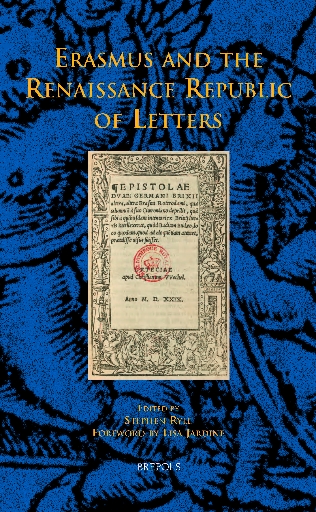
Erasmus and the Renaissance Republic of Letters
This volume contains a selection from among the papers delivered at a conference held to mark the centenary of a watershed event in early modern studies: the appearance of Volume I of P. S. Allen’s edition of Erasmus’s letters. Erasmus scholarship has been a growing field since the late twentieth century owing to the enormous volume and vast intellectual range of his oeuvre and to the reprinting of his works from the 1960s onwards while Allen’s edition has proved the basis for research for scholars of almost every aspect of Renaissance humanism and the Reformation.
The conference aimed to investigate as many aspects as possible of Erasmus’s literary educational rhetorical and theological activities and of their influence on the emerging Europe of the early modern era. The essays collected here present a wide-ranging overview of the current state of Erasmus scholarship including a survey of the discoveries of letters to and from Erasmus unknown to Allen the printing for the first time since 1529 of the opening section of an important letter to him from Germain de Brie an account of the crucial role played by Ulrich von Hutten in the publication of the dialogue Iulius exclusus e coelis and several studies of the influence of Erasmian thought on early modern political and theological controversies. With its broad coverage of the current field the volume will prove indispensable to Erasmus scholars.
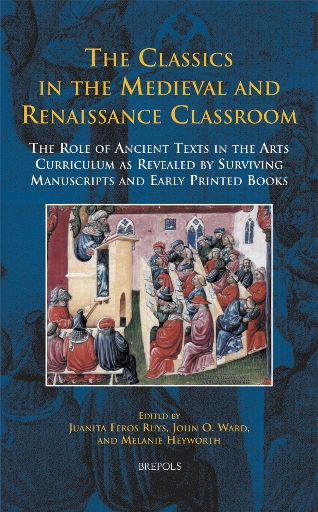
The Classics in the Medieval and Renaissance Classroom
The Role of Ancient Texts in the Arts Curriculum as Revealed by Surviving Manuscripts and Early Printed Books
Medievalists and Renaissance specialists contribute to this compelling volume examining how and why the classics of Greek and Latin culture were taught in various Western European curricula (including in England Scotland FranceGermany and Italy) from the tenth to the sixteenth centuries. By analysing some of the commentaries glosses and paraphrases of these classics that were deployed in medieval and Renaissance classrooms and by offering greater insight into premodern pedagogic practice the chapters here emphasize the ‘pragmatic’ aspects of humanist study. The volume proposes that the classics continued to be studied in the medieval and Renaissance periods not simply for their cultural or ‘ornamental’ value but also for utilitarian reasons for ‘life lessons’. Because the volume goes beyond analysing the educational manuals surviving from the premodern period and attempts to elucidate the teaching methodology of the premodern period it provides a nuanced insight into the formation of the premodern individual. The volume will therefore be of great interest to scholars and students interested in medieval and Renaissance history in general as well as those interested in the history of educational theory and practice or in the premodern reception of classical literature.
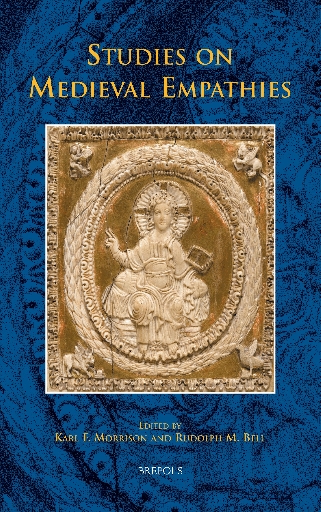
Studies on Medieval Empathies
Empathy is a deep feeling or intuition for kinship transcending self-preoccupied individuality. This book is about empathy in the Middle Ages before it had a name.The authors begin by tracing the origins of empathy in pre-Christian Antiquity and early Christianity especially in mysteries of divine justice by which the good often suffered and the wicked prospered and as with surgical healing compassion was manifested by inflicting pain. The authors also explore many facets of empathy’s development in the Latin West criss-crossing the artificial borders of academic departments to reveal interlocking connections that give emotional power to images whether verbal pictorial or performative. In a powerful multi-disciplinary collaboration they identify conditions and limits of empathy and areas in which the dynamic between insiders and outsiders forced subversive explorations of what it meant to be human.
The doctrine of Christ as mediator of divine love dominated medieval thought about empathy as a human instinct. Taken together like magnetic poles two pictures in this book represent that mediation in action. The cover illustration a mid-ninth-century ivory plaque from Carolingian Gaul depicts Christ the Divine Word Love incarnate glorified enthroned and adored by angels as creator judge and teacher. The second Plate 1 from the same period and region represents the act that sealed the mediation of divine love to humanity: Christ the man tortured and dying for love.
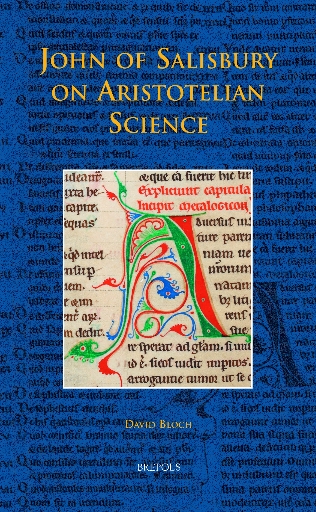
John of Salisbury on Aristotelian Science
This is the first substantial treatment of John of Salisbury’s views on Aristotelian science. In his great work on logic and education John of Salisbury proposes an Aristotelian foundation for education research and science. Theories and methods of science and scholarship were central topics in twelfth-century discourse and John is apparently the first to propose use of the entire Organon the texts of which were to become very influential and important in the thirteenth century. However his precise knowledge and understanding of Aristotle has never been thoroughly examined. The present book challenges the view that John read understood and used the entire Organon. It pays particular attention to the Metalogicon but it draws upon a variety of other sources as well in arguing that John did not in fact study the Ars nova with any care and that he probably never read the most important text the Posterior Analytics in its entirety. The conclusions of the book have important consequences not only for our conception of John of Salisbury but also for our views and understanding of twelfth-century Aristotelianism and science in general.
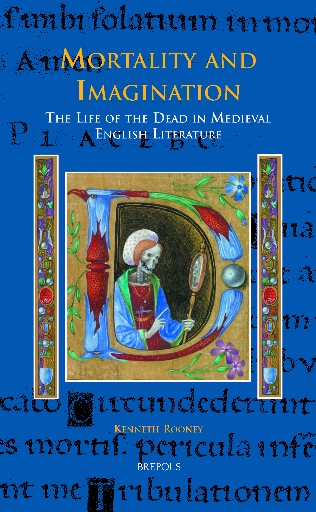
Mortality and Imagination
The Life of the Dead in Medieval English Literature
There have been many books on the medieval culture of death but this book is the first devoted to the use and representation of the dead in English medieval writing. Mortality and Imagination is a history of the literary ‘life’ of the dead - in their narrative aesthetic and ideological formulation - a theme which up to now has been explored only fragmentarily available only in studies of particular genres. Kenneth Rooney’s book explores a wider range of texts and genres than has been attempted before and reads the vernacular representation of the dead against the impact of one of the most intriguing cultural phenomena of the Middle Ages - the macabre - a rhetorical and artistic idiom designed to evoke the dead at their most horrifying. Tracing the models for the representation of the dead available to English writers the author offers fresh readings of texts both familiar and neglected including sermons tale collections romances drama lyrics and other genres in the period c.1100-1550. This book is a stimulating appraisal of the impact in medieval insular contexts of an international idea of great longevity and significance and makes an important contribution to the study of death belief and society in pre-modern Europe.
Dr Kenneth Rooney is lecturer in medieval and renaissance literature in the School of English University College Cork Ireland. He has published widely on Middle English poetry and medieval romance.
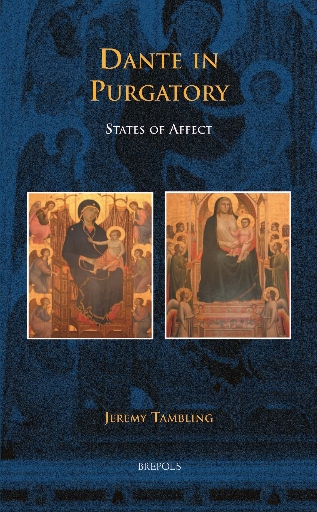
Dante in Purgatory
States of Affect
This volume provides an advanced survey of Dante studies and offers a new detailed and accessible reading of his Purgatorio making this very rich text freshly available to an English-speaking readership. Through analysis of a variety of emotional states across Dante’s three major works - the Purgatorio Inferno and Paradiso and in his minor works such as the Rime and the Convivio - Dante in Purgatory: States of Affect contends that emotions are historically constructed at different moments. The book also demonstrates that while Dante presents some emotions as defined and distinct he depicts others as blends of several states of feeling as emotions which are in process or metamorphosis. In particular the author examines the seven cardinal vices (‘seven deadly sins’) amid a wider discussion of states of affect. He argues that the emotional states associated with these vices are different from contemporary conceptions of affective states. He compels us to acknowledge that there is a history of both the emotional states themselves and the methods with which we describe them. Above all his study shows that there is a history of emotions which is part of the history of a European acquisition of a subjective sense of the self. To historicize emotion thus requires that the ‘human’ becomes increasingly defined as the subject is ascribed further interior qualities which must be named. Dante in Purgatory is thus relevant not only to readers of Dante but also to any reader interested in thinking about emotion and affectual states and how these can be described and how they can be conceptualized.