


Disciplina Monastica
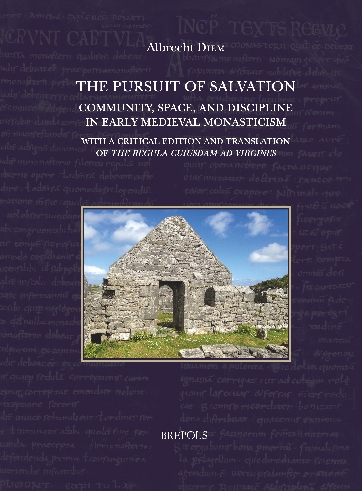
The Pursuit of Salvation. Community, Space, and Discipline in Early Medieval Monasticism
with a Critical Edition and Translation of the Regula cuiusdam ad uirgines
The seventh-century Regula cuiusdam ad uirgines (Someone’s Rule for Virgins) which was most likely written by Jonas of Bobbio the hagiographer of the Irish monk Columbanus forms an ideal point of departure for writing a new history of the emergence of Western monasticism understood as a history of the individual and collective attempt to pursue eternal salvation.
The book provides a critical edition and translation of the Regula cuiusdam ad uirgines and a roadmap for such a new history revolving around various aspects of monastic discipline such as the agency of the community the role of enclosure authority and obedience space and boundaries confession and penance sleep and silence excommunication and expulsion.
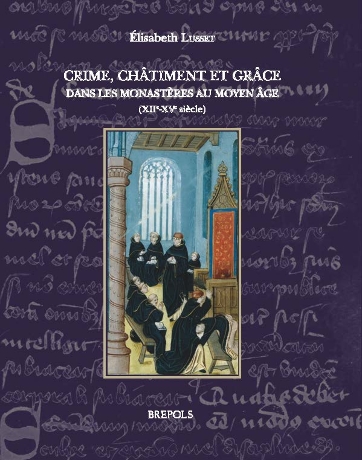
Crime, châtiment et grâce dans les monastères au Moyen Âge (XIIe-XVe siècle)
Ce livre analyse les crimes commis à l’intérieur des monastères médiévaux (violences homicides ou encore vols) et la manière dont les religieux criminels étaient corrigés tant par les abbés les évêques les chapitres généraux des ordres religieux que par les organes de la curie romaine. Il compare à l’échelle de l’Europe les établissements de moines chanoines réguliers et moniales qu’ils appartiennent à un ordre (Cluny Cîteaux Prémontré Grande Chartreuse) ou à une nébuleuse moins définie sur le plan juridique (abbayes et prieurés de moines bénédictins ou de chanoines réguliers). En explorant le fonctionnement de la justice claustrale les peines prescrites ainsi que les mécanismes de réconciliation des criminels l’ouvrage éclaire sous un angle nouveau les processus de construction institutionnelle et de réforme des ordres religieux entre les XII e et XV e siècles.
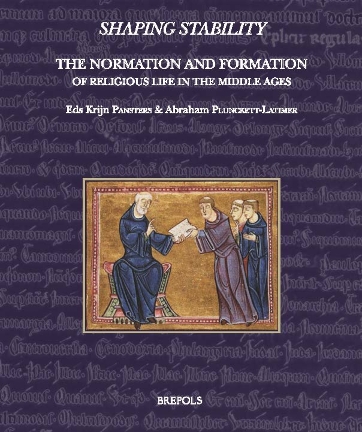
Shaping Stability
The Normation and Formation of Religious Life in the Middle Ages
This volume examines the efforts of medieval religious communities and orders to bring stability to the dynamic complexity of organized religious life. By focusing on legislative structures and normative documents (rules customaries constitutions) the authors address not only such matters as the meaning of these texts and the motivations behind them but also the evolving conditions of their production and use the internal politics of institutional change and the reality of “precept not practice.” These papers thus present spiritual principles and social practices in their historical and functional contexts confront normative programs with formative processes and explain distinctive modes and models of life within the broader landscape of medieval organized religion..
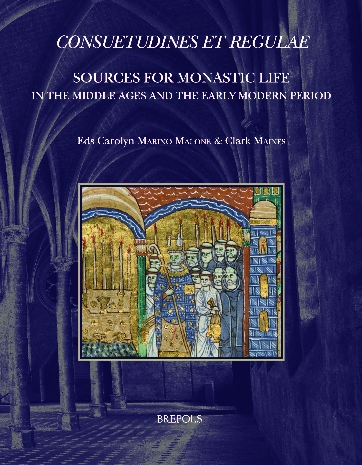
Consuetudines et Regulae
Sources for Monastic Life in the Middle Ages and the Early Modern Period
This volume addresses the nature and quality of the lives of monks and canons in Western Europe during the middle ages and the early modern period. Building on the collaborative spirit of recent work on medieval religion it includes studies by historians of the religious orders liturgy and ritual as well as archaeologists and architectural historians. Several studies combine the interpretation of texts most particularly customaries and rules with the analysis of architecture. The volume sheds new and exciting light on monastic daily life in all its dimensions from the liturgical and the quotidian to the spatial and architectural.
Carolyn Marino Malone is Professor of Art History at the University of Southern California in Los Angeles (USA). She specializes in French Romanesque and English Gothic architecture and sculpture. Her most recent book is Saint-Bénigne de Dijon en l’an mil “totius Galliae basilicis mirabiliorem”: Interprétation politique liturgique et théologique Disciplina monastica 5 (Turnhout 2009).
Clark Maines is Professor of Art History and Archaeology and Kenan Professor of the Humanities at Wesleyan University in Middletown Connecticut (USA). He specializes in the study of monasticism from architecture in its structural and ritual dimensions to technology and monastic domains. His most recent book co-written with Sheila Bonde is Saint-Jean-des-Vignes in Soissons Approaches to its Architecture Archaeology and History Bibliotheca Victorina XV (Turnhout 2003).

The Death Ritual at Cluny in the Central Middle Ages
Le rituel de la mort à Cluny au Moyen Âge central
This volume presents a complete reconstruction of the ritual response to terminal illness and death at the monastic community of Cluny at the height of its development in the later eleventh and early twelfth centuries. Based on the best manuscript of the customary of Bernard the only account of the abbey's customs written at and for Cluny itself the reconstruction contains not just Bernard's Latin description of the ritual process but also the full texts of the prayers and chants that accompanied it gathered in the absence of surviving ritual books from Cluny itself from contemporary sources with clear ties to the Cluniac customs. Facing-page English and French translations make the results available to readers with little or no facility in Latin. The author places the Cluniac death ritual in the context of religious responses to death dying and the care of the dead in medieval Latin Christianity as a whole. He also explicates the origins development and meaning of the Cluniac death ritual's myriad elements as they were spoken sung and performed within the sacred spaces of the monastic complex-cloister chapter house infirmary church and cemetery.
Frederick S. Paxton is Brigida Pacchiani Ardenghi Professor of History at Connecticut College in New London CT USA. He is the author of Christianizing Death: The Making of a Ritual Process in Early Medieval Europe (1990) Anchoress and Abbess in Ninth-Century Saxony: the Lives of Liutbirga of Wendhausen and Hathumoda of Gandersheim (2009) and numerous articles and essays on sickness death dying and the dead in medieval Europe.
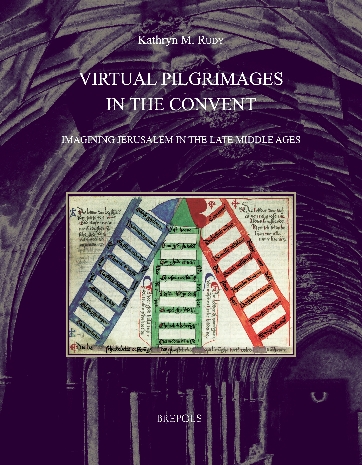
Virtual Pilgrimages in the Convent
Imagining Jerusalem in the Late Middle Ages
‘Walking in Christ’s footsteps’ was a devotional ideal in the late Middle Ages. However few nuns and religious women had the freedom or the funding to take the journey in the flesh. Instead they invented and adjusted devotional exercises to visit the sites virtually. These exercises largely based on real pilgrims’ accounts made use of images and objects that helped the beholder to imagine walking alongside Christ during his torturous march to Calvary. Some provided scripts whereby votaries could animate paintings and sculptures. Others required the nun to imagine her convent as a miniature model of Jerusalem. This volume is grounded in more than a dozen texts from manuscripts written by medieval nuns and religious women which appear here transcribed and translated for the first time and a multiplicity of (occasionally three-dimensional) images. They attest to the ubiquity and variety of virtual pilgrimages among religious women and help to reveal the functions of certain late medieval devotional images.
Kathryn M. Rudy Lecturer at the University of St Andrews is an authority on Northern European illuminated manuscripts and prints. She has written about indulgences and the functions of images.
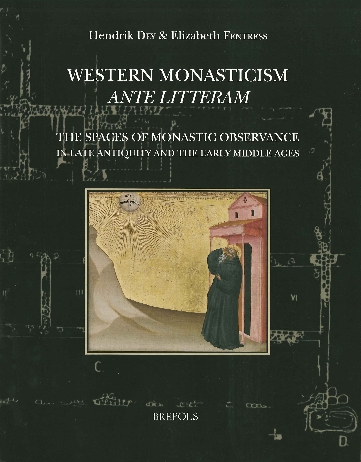
Western Monasticism ante litteram
The Spaces of Monastic Observance in Late Antiquity and the Early Middle Ages
Space has always played a crucial part in defining the place that monks and nuns occupy in the world. Even during the first centuries of the monastic phenomenon when the possible varieties of monastic practice were nearly infinite there was a common thread in the need to differentiate the monk from the rest: whatever else they were supposed to be monks were beings apart unique in some sense separate from the mainstream. The physical contours of monastic topographies natural and constructed are thus fundamental to an understanding of how early monks went about defining the parameters of their everyday lives their modes of religious observance and their interactions with the larger world around them. The group of eminent historians and archaeologists present at the American Academy in Rome in March 2007 for the conference ‘Western monasticism ante litteram. The spaces of early monastic observance’ whose contributions comprise the bulk of this volume have sought to reconsider the theory the practice and above all the spaces of early monasticism in the West in the hope of creating a more complete picture of that seminal period from the fourth century until the ninth when notions of what it meant to be a monk were as numerous as they were varied and (often) conflicting.
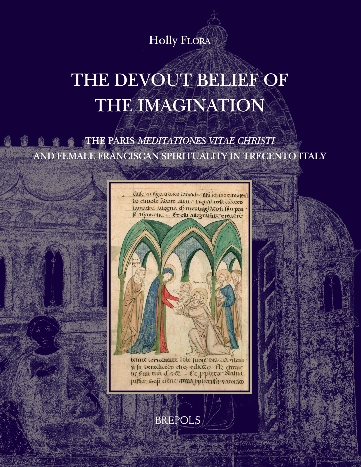
'The Devout Belief of the Imagination'
The Paris 'Meditationes Vitae Christi' and Female Franciscan Spirituality in Trecento Italy
This volume examines the late medieval devotional text Meditationes Vitae Christi through an analysis of its most important manuscript known by its present location and catalogue number as Paris Bibliothèque Nationale Ms. ital. 115. As Flora argues Ms. ital. 115 the oldest and most extensively illustrated copy of the Meditationes was originally made in or near Pisa c. 1350 and tailored very specifically for a group of Franciscan nuns. Flora suggests the manuscript’s probable uses in practices of performative devotion and affective response and the relationship between its imagery and other works of art made for religious women shedding new light on the history of female monasticism in medieval Italy.
Holly Flora is Assistant Professor of Art History at Tulane University and is the author of Cimabue and Early Italian Devotional Painting (The Frick Collection 2006) as well as studies on illustrated manuscripts and devotional art in late medieval Italy.

Saint-Bénigne de Dijon en l'an mil, 'totius Galliae basilicis mirabilior'
Interprétation politique, liturgique et théologique
Dans son histoire du monde écrite vers 1030 Raoul Glaber dépeint l’église préromane de Saint Bénigne de Dijon comme “plus admirable que les basiliques de toute la Gaule” (totius Galliae basilicis mirabiliorem). Commencée autour de 1001 et consacrée en 1016 (l’église) et 1018 (la rotonde) cette abbatiale bénédictine dont seule la crypte de la rotonde subsiste relevait des traditions architecturales romaine carolingienne et ottonienne. Elle fut construite à un moment-clé de l’histoire politique de la France et de la Bourgogne et peut être interprétée en fonction de l’idéologie de ses bâtisseurs l’abbé Guillaume et l’évêque Brun de Langres. Il faut également la lire comme un cadre exceptionnellement bien conçu pour la dévotion monastique et la liturgie de Cluny telle qu’interprétée par Guillaume. Cet ouvrage se veut une interprétation visuelle politique liturgique et théologique de cette église étonnante de l’an mil.
Carolyn Marino Malone est professeur dans le département d’Histoire de l’art University of Southern California Los Angeles (USA). Elle est spécialiste d’architecture romane française et gothique anglaise. Son dernier livre s’intitule Façade as Spectacle: Ritual and Ideology at Wells Cathedral Studies in Medieval and Reformation Traditions vol. 102 (Leiden-Boston 2004).
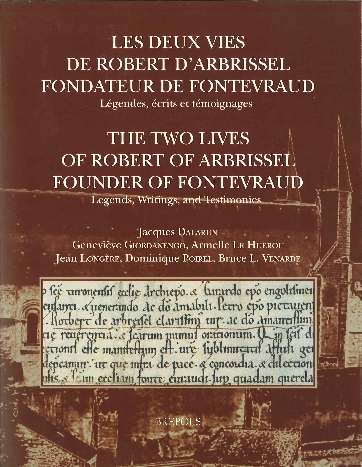
Les deux vies de Robert d'Arbrissel, fondateur de Fontevraud. Légendes, écrits et témoignages
The Two Lives of Robert of Arbrissel, Founder of Fontevraud. Legends, Writings, and Testimonies
The multifaceted Robert of Arbrissel (ca. 1045-1116) is best remembered as the founder of Fontevraud a monastery of men and women under the direction of an abbess. A restless nonconformist Robert was both famous and infamous in his own lifetime and has been a subject of debate ever since. In this book an international team of scholars - Jacques Dalarun Geneviève Giordanengo Armelle Le Huërou Jean Longère Dominique Poirel and Bruce L. Venarde - present all known medieval sources concerning Robert of Arbrissel. The authors have created critical editions of materials including hagiography correspondence statutes charters and various short texts in verse and prose illustrating Robert’s life and memory. To facilitate broad access to these materials the entire dossier is translated into French and English. The authors’ purpose then is not to offer the last word on Robert of Arbrissel but to make available in one volume the materials that will promote further research and new interpretations of this controversial medieval Christian.
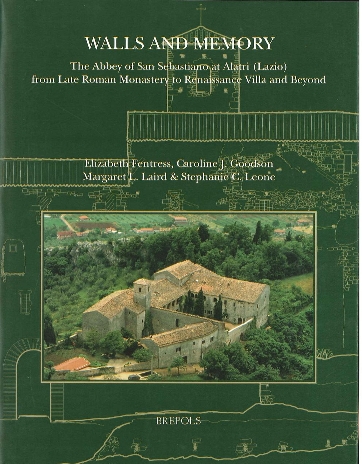
Walls and Memory: The Abbey of San Sebastiano at Alatri (Lazio), from Late Roman Monastery to Renaissance Villa and Beyond
The abbey of San Sebastiano which lies not far from the town of Alatri in Southern Lazio preserves within its walls almost fifteen hundred years of history. This history is unusually bound to a number of important figures from Saint Benedict to Pope Nicholas V and his circle of humanists. For the past four years a small team has been investigating the extant structures of the abbey analyzing the stratigraphy of the standing walls and tracing the various building phases. The study has produced some startling discoveries: the plan and preserved walls of one of the oldest monasteries in Europe and one of the earliest Renaissance villas. The book gives an account of the architecture and the history of the building showing how each phase relates to the last both structurally and thematically.
The project was initiated at the American Academy in Rome where Elizabeth Fentress was Andrew Mellon Professor and Caroline Goodson Margaret L. Laird and Stephanie C. Leone were Fellows. Margaret Laird and Stephanie Leone are now assistant professors at the University of Washington Seattle and at Boston College. Other contributors include Caroline Bruzelius Professor of the History of Art at Duke University Antonio Manfredi Vatican Library Serena Romano Professor of the History of Art at the University of Lausanne Marco Rossi director of the Museum of Alatri and Ingrid Rowland Andrew Mellon Professor at the American Academy in Rome.
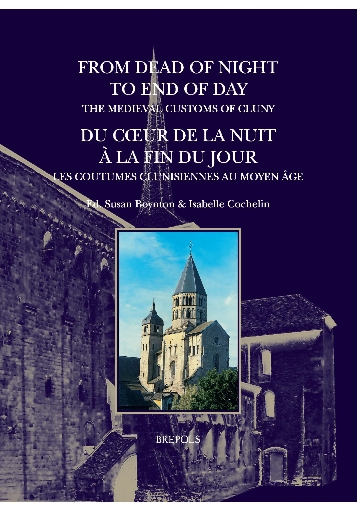
From Dead of Night to End of Day: The Medieval Customs of Cluny
Du coeur de la nuit à la fin du jour: les coutumes clunisiennes au Moyen Age
At the heart of the various articles in this book are four customaries compiled over the course of nearly a hundred years beginning at the end of the tenth century that describe daily life and liturgy at the abbey of Cluny. Two principal objectives motivated the creation of the present volume of essays: first to bring out the unequaled richness of these monastic customaries for scholars primarily medievalists in all disciplines; and second to facilitate the use of these sources which can be challenging at first sight. Drawing upon the multiple disciplines needed to account for the full range of information presented by the customaries the editors have brought together varied and complementary approaches to these multifaceted documents. Among the principal themes common to the studies in this volume are the genesis and transmission of the customaries the relationship between texts and practice and the evidence they offer for the function of monastic spaces as well as for the ritualization of communal life.
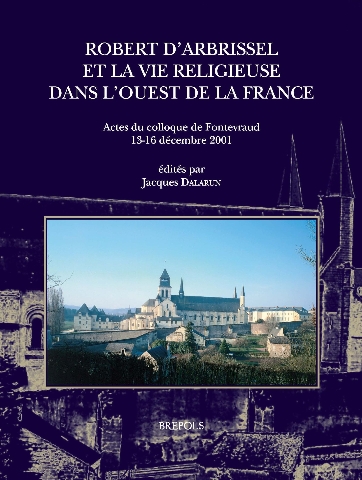
Robert d’Arbrissel et la vie religieuse dans l’Ouest de la France
Actes du Colloque de Fontevraud, 13-16 décembre 2001
Fontevraud: 1101-2001. Fontevraud: à la fois monastère et congrégation communauté mixte où par la singulière volonté du fondateur les hommes en ce temps féodal étaient soumis au pouvoir des femmes. Célébrer le neuvième centenaire de la fondation de Robert d’Arbrissel s’imposait; ce qui fut fait du 13 au 16 décembre 2001 dans l’enceinte même de la somptueuse abbaye ligérienne.
Le présent volume témoigne de ces denses journées d’étude; il intègre aussi des contributions supplémentaires pour gagner encore en richesse et en cohérence. Volontairement déroutant il nous entraîne d’abord bien loin du Val de Loire dans les solitudes boisées des Apennins où le ressourcement monastique surgi du haut Moyen Âge inaugure ce Moyen Âge que nous disons central. Les organisateurs scientifiques de la rencontre n’ont en effet pas souhaité la focaliser d’emblée sur l’originalité de Fontevraud et les étranges comportements de son fondateur. Ils ont au contraire voulu donner à lire l’accident de 1101 dans le vaste élan qui ouvre une ère nouvelle pour la Chrétienté et pour notre monde en ce qu’il en procède: cette réforme de l’Église qu’on dit «grégorienne» qui repense en fait toute l’architecture ecclésiale et sociale des plus hauts aux plus infimes pouvoirs des institutions aux individus et du sacré au profane.