


Early European Research
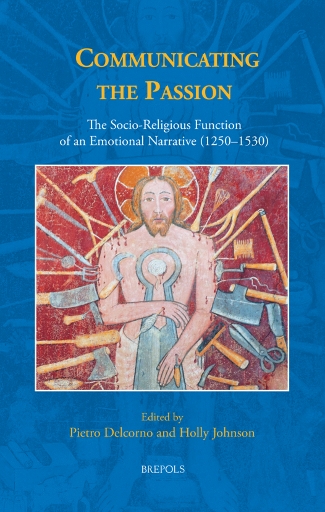
Communicating the Passion
The Socio-Religious Function of an Emotional Narrative (1250–1530)
This volume investigates the vivid and emotionally intense commemoration of the Passion of Christ as a key element in late medieval religious culture. Its goal is to shed light on how the Passion was communicated and on its socio-religious function in late medieval Europe. By adopting a multidisciplinary approach the volume analyses the different media involved in this cultural process (sermons devotional texts lively performances statues images) the multiple forms and languages in which the Passion was presented to the faithful and how they were expected to respond to it. Key questions concern the strategies used to present the Passion; the interaction between texts images and sounds in different media; the dissemination of theological ideas in the public space; the fashioning of an affective response in the audience; and the presence or absence of anti-Jewish commonplaces.
By exploring the interplay among a wide range of sources this volume highlights the pervasive role of the Passion in late medieval society and in the life of the people of the time.
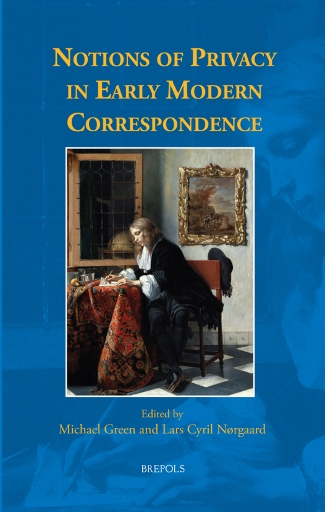
Notions of Privacy in Early Modern Correspondence
Our modern notions of privacy have their roots in the early modern period. When studying this historical background one of the most important sources is correspondence. Letters sent from one person to another reflect specific situations ideas thoughts emotions and experiences. Contextualizing an epistolary exchange provides information about the world and values of past individuals.
This volume presents essays that deal with a variety of early modern correspondence. The letters analysed written in French Dutch German and English speak to very different contexts and cultural codes. While each of the letters in question has its own unique story to tell all contributions come together by focusing on notions of privacy. From the intimacy that unfolds in educational exchanges to specific letter-writers and their strategic use of the private this volume offers ground-breaking insights that will be relevant to many different researchers and their respective fields: the history of science the history of Christianity the history of travel writing and education gender studies and the history of diplomacy. In addition the contributions also tackle the issue of publishing letters in the early modern period both as a cultural phenomenon and as a material praxis.
Together the essays show how ‘privacy’ was an ambiguous term in the early modern period; the letter as literary genre and a means of communication demonstrates how privacy was perceived both as valuable and as a potential threat.

Rhetoric, Persuasion, and Teaching the Emotions in the Early Modern English Sermon, 1600–1642
The early seventeenth-century English sermon was the bestselling print genre of its time and church preaching was more widely attended than any play. Jennifer Clement argues here that a major aim of these sermons was to teach people how to feel the right emotions — or as preachers would have said at the time the passions or affections — to lead a good Christian life. In the process preachers took a primarily rhetorical approach to the emotions; that is they used their sermons to define emotions and to encourage their listeners and readers actively to cultivate and shape their emotions in line with Scripture.
This study offers an overview of five key emotions — love fear anger grief and joy – in the sermons of key preachers such as John Donne Richard Sibbes Joseph Hall Launcelot Andrewes and others. It shows how these preachers engaged with contemporary treatises on the emotions as well as treatises on preaching to highlight the importance of the rhetorical as opposed to the humoral approach to understanding the emotions in a religious context. In addition Clement reads sermons next to early seventeenth-century religious poetry by writers such as Donne George Herbert Amelia Lanyer and Henry Vaughan to show how the emotional concerns of the sermons also appear in the poetry reverberating beyond the pulpit.
Bringing together rhetorical theory sermon studies and the history of the emotions Clement shows how the early seventeenth-century English sermon needs to inform our thinking about literature and its engagement with emotion in this period.
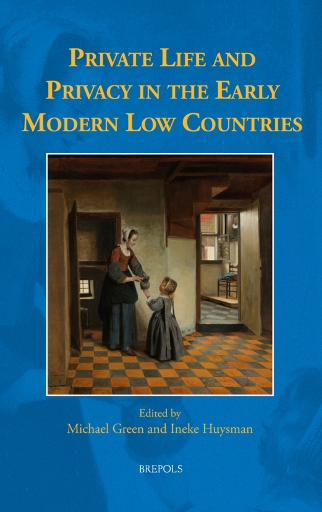
Private Life and Privacy in the Early Modern Low Countries
This volume investigates the origins of one of the most important notions of contemporary society: privacy. Based on case studies from the early modern Low Countries privacy is tackled from various historical perspectives: social and cultural history and the history of art and architecture.The Dutch Republic is well known for its financial success which went hand in hand with the development of a distinguished bourgeois culture and religious toleration. The accumulation of wealth among the urban population led to changes in various spheres from daily life to art. Privacy as a concept started to develop in this period. Indeed new ideas about housing with the invention of corridors separate rooms that could be locked and the separation of the ‘common’ and the ‘private’ space all illustrate the growing importance of privacy in this geographical area. This volume traces perspectives on early modern privacy and private life based on primary sources in several domains: letters diaries and poems; genre painting in art; communal life as illustrated by the Jewish community; and finally the homes of the Dutch elite.The essays in this volume make a key contribution to the emergence of early modern privacy studies as a research field and to the ongoing discussion of privacy in the Low Countries. Equally these case studies can serve as models for the analysis of privacy in other European contexts.
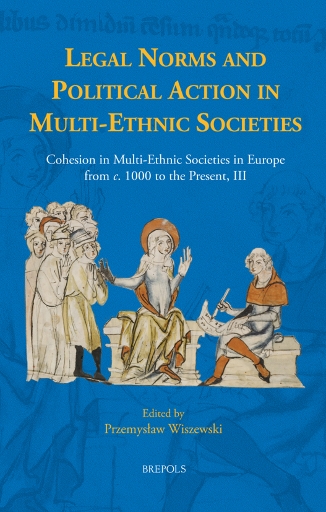
Legal Norms and Political Action in Multi-Ethnic Societies
Cohesion in Multi-Ethnic Societies in Europe from c. 1000 to the Present, III
The three-volume project Cohesion in Multi-Ethnic Societies in Europe from c.1000 to the Present explores and seeks to find solutions to a crucial problem facing contemporary Europe: in what circumstances can different ethnic groups co-operate for the common good? They apparently did so in the past combining to form political societies medieval and early modern duchies kingdoms and empires. But did they maintain their ethnic traditions in this process? Did they pass on elements of their cultural memory when they were not in a dominant position in a given polity?
The first volume in the project explored ethnic cohesion as evidenced by narratives about the past while volume two analysed communal events and activities. This third volume focuses on how relations between ethnic groups were influenced by political activities and related legal norms. Both cooperation and conflict between ethnic communities find their expression in political activities although they usually have a significant cultural and economic background as well. This book examines the causes of political cooperation between ethnic groups despite the risk of conflict and the methods of stabilizing this cooperation through the enactment of law.
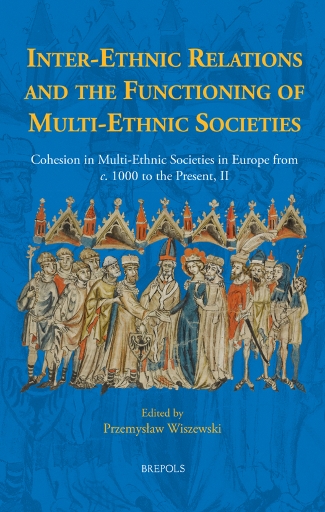
Inter-Ethnic Relations and the Functioning of Multi-Ethnic Societies
Cohesion in Multi-Ethnic Societies in Europe from c. 1000 to the Present, II
The three-volume project Cohesion in Multi-Ethnic Societies in Europe from c.1000 to the Present explores and seeks to find solutions to a crucial problem facing contemporary Europe: in what circumstances can different ethnic groups co-operate for the common good? They apparently did so in the past combining to form political societies medieval and early modern duchies kingdoms and empires. But did they maintain their ethnic traditions in this process? Did they pass on elements of their cultural memory when they were not in a dominant position in a given polity?
The first volume of the project explored written sources about the past to show how communities shaped their collective memories in order to ensure the smooth functioning of multi-ethnic political communities. This second volume looks beyond texts and focuses on activities and events that were designed to build a sense of community within a political community made up of different ethnic groups. The coexistence of different ethnic groups is considered not through the prism of theoretical analyses by intellectual elites but by following community members’ responses to current events as recorded in the sources.
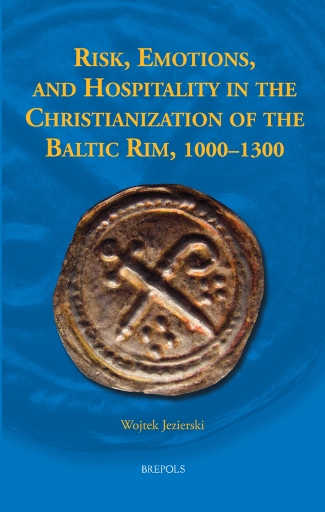
Risk, Emotions, and Hospitality in the Christianization of the Baltic Rim, 1000–1300
What anxieties did medieval missionaries and crusaders face and what role did the sense of risk play in their community-building? To what extent did crusaders and Christian colonists empathize with the local populations they set out to conquer? Who were the hosts and who were the guests during the confrontations with the pagan societies on the Baltic Rim? And how were the uncertainties of the conversion process addressed in concrete encounters and in the accounts of Christian authors?
This book explores emotional bonding as well as practices and discourses of hospitality as uncertain means of evangelization interaction and socialization across cultural divides on the Baltic Rim c. 1000-1300. It focuses on interactions between local populations and missionary communities as well as crusader frontier societies. By applying tools of historical anthropology to the study of host-guest relations spaces of hospitality emotional communities and empathy on the fronts of Christianization this book offers fresh insights and approaches to the manner in which missionaries and crusaders reflexively engaged with the groups targeted by Christianization in terms of practice ethics and identity.
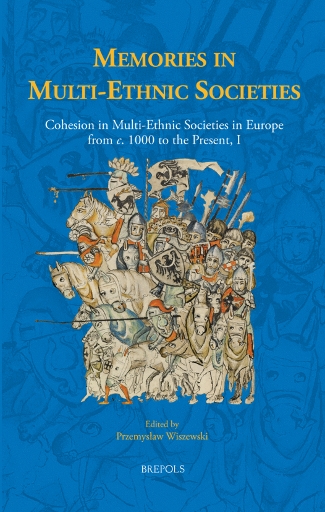
Memories in Multi-Ethnic Societies
Cohesion in Multi-Ethnic Societies in Europe from c. 1000 to the Present, I
The three-volume project Cohesion in Multi-Ethnic Societies in Europe from c. 1000 to the Present explores and seeks to find solutions to a crucial problem facing contemporary Europe: in what circumstances can different ethnic groups co-operate for the common good? They apparently did so in the past combining to form political societies medieval and early modern duchies kingdoms and empires. But did they maintain their ethnic traditions in this process? Did they pass on elements of their cultural memory when they were not in a dominant position in a given polity?
This first volume of the project focuses on the cohesive function of memory tradition and identity politics in multi-ethnic societies. Featuring chapters written by authors from Southern Central and Eastern Europe it presents sixteen case studies of the co-habitation or co-operation of different ethnic groups from the so-called ‘peripheries’ of medieval and early modern Europe that resulted in peaceful acculturation or the birth of a new identity on the basis of multi-ethnic political society. The volume suggests that ethnic identities were consciously accepted as one among various forms of identity that were possessed by social groups: they were rarely absolutized and members of these groups preferred pragmatic approaches in their relations with other ethnicities.
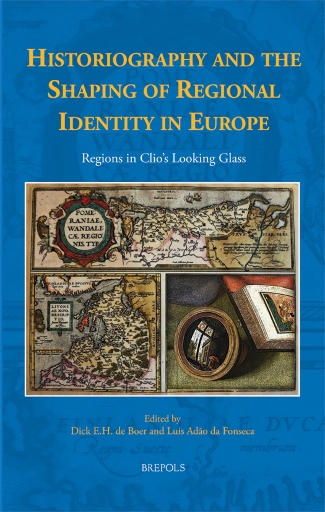
Historiography and the Shaping of Regional Identity in Europe
Regions in Clio’s Looking Glass
Over the centuries historiography - in many different forms - became an important vehicle by which to create articulate and express the existence awareness and characteristics of Europe’s regions. Be it the histories of noble families that were important stakeholders in a region urban histories describing the developing urban networks through which regions could function dynastic histories emphasizing the relationship between ruler and region or hagiographies describing holy men and women and their veneration as focal points within regions - all of them represented and reflected identities within an understood spatial and or mental sphere. Historiography can therefore help us to understand the way in which regions were seen from within and from without and to understand the patterns and dynamics of regional cohesion. Moreover it sheds light on the dialectic between nation and region and on the relationship between the regional sphere and the wider (inter)national sphere.
The authors of this volume look at individual European regions from different points of view using historiography as a lens. They analyse the ways in which history as a construct has played a role in establishing regional identity providing examples of the ways in which recording interpreting and recounting the history of regions through the ages has been instrumental in shaping these regions. The first section of the volume explores regional identity in medieval and early modern historiography; the second shows how in the age of the invention and triumph of the European nation-state (the long nineteenth century) historiography of a new kind was applied for a deliberate creation of regional identity or at least reflected the need for a historical confirmation of identities.
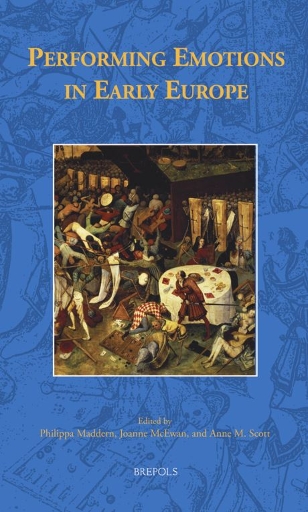
Performing Emotions in Early Europe
Drawing on a range of interdisciplinary approaches and innovative methodologies this collection contributes ground-breaking new scholarship in the burgeoning field of emotions studies by examining how medieval and early modern Europeans communicated and ‘performed’ their emotions. Rejecting the notion that emotions are ‘essential’ or ‘natural’ this volume seeks to pay particular attention to cultural understandings of emotion by examining how they were expressed and conveyed in a wide range of historical situations. The contributors investigate the performance and reception of pre-modern emotions in a variety of contexts — in literature art and music as well as through various social and religious performances — and in a variety of time periods ranging from the twelfth to the eighteenth centuries. These studies provide both case-studies of particular emotions and emotional negotiations and examinations of how their categorisation interpretation and meaning has changed over time.
The contributors provide new insights into the expression and performance of pre-modern emotions from a wide range of disciplinary fields including historical studies literature art history musicology gender studies religious studies and philosophy. Collectively they theorise the performativity of medieval and early modern emotions and outline a new approach that takes fuller account of the historical specificity and cultural meanings of emotions at particular points in time.
This volume forms a companion to Understanding Emotions in Early Europe edited by Michael Champion and Andrew Lynch (2015); http://www.brepols.net/Pages/ShowProduct.aspx?prod_id=IS-9782503552644-1

Luxury and the Ethics of Greed in Early Modern Italy
This book unravels the complex interaction of the paradigms of luxury and greed which lie at the origins of modern consumption practices. In the Western world the phenomenon of luxury and the ethical dilemmas it raised appeared for the first time since antiquity in early modern Italy. Here luxury emerged as a core idea in the conceptualization of consumption. Simultaneously greed - which manifested in new and unrestrained consumption practices - came under close ethical scrutiny. As the buying power of new classes gained pace these paradigms evolved as they continued both to influence and be influenced by other emerging global cultures through the early modern period.
After defining luxury and greed in their historical contexts the volume’s chapters elucidate new consumptive goods from chocolate to official robes of state; they examine how ideas about and objects of luxury and greed were disseminated through print diplomacy and gift-giving; and they reveal how even the most elite of consumers could fake their luxury objects. A group of international scholars from a range of disciplines thereby provide a new appraisal and vision of luxury and the ethics of greed in early modern Italy.
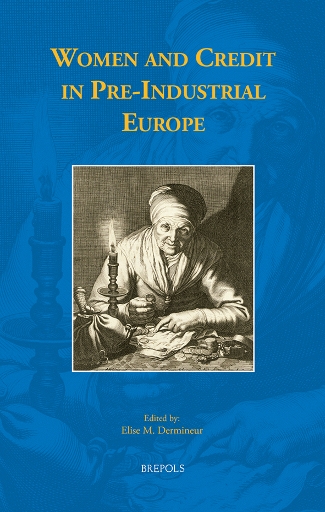
Women and Credit in Pre-Industrial Europe
This collection of essays compares and discusses women’s participation and experiences in credit markets in early modern Europe and highlights the characteristics common mechanisms similarities discrepancies and differences across various regions in Europe in different time periods and at all levels of society. The essays focus on the role of women as creditors and debtors (a topic largely ignored in traditional historiography) but also and above all on the development of their roles across time. Were women able to enter the credit market and if so how and in what proportion? What was then the meaning of their involvement in this market? What did their involvement mean for the community and for their household? Was credit a vector of female emancipation and empowerment? What were the changes that occurred for them in the transition to capitalism? These essays offer a variety of perspectives on women’s roles in the credit markets of early modern Europe in order to outline and answer these questions as well as analysing and exploring the nature of women money credit and debt in a pre-industrial Europe.
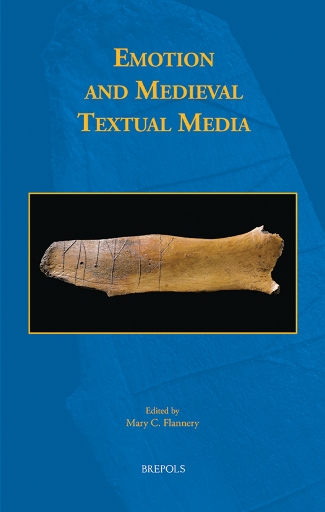
Emotion and Medieval Textual Media
Text is one of the most valuable and plentiful sources of information available to scholars interested in medieval emotion. The medieval world may have vanished centuries ago and its human subjects with it but a wealth of textual traces remains: sermons romances poems plays treatises songs inscriptions graffiti and much more. But how is emotion communicated and shaped by these different textual forms? That is the question at the heart of this collection of essays which aims to open up our sense of what texts can contribute to the history of emotions by considering the variety of ways that texts can function as vehicles - media - for emotion.
The essays in this volume examine how literary and dramatic texts chant manuscript annotations and material inscriptions mediate emotion - how they bring it about communicate it process it and shape it via forms that act on various senses. Ranging between the eighth and fifteenth centuries and comprising contributions from scholars of musicology Old English and Old Norse studies material culture Middle English literature drama and manuscript studies the essays contained in this volume serve as a window onto the complex relationship between emotions and different textual forms.
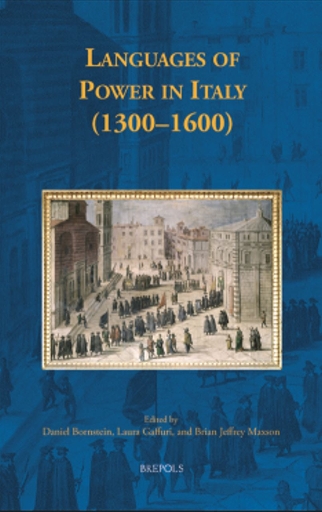
Languages of Power in Italy (1300-1600)
The essays in this collection explore the languages — artistic symbolic and ritual as well as written and spoken — in which power was articulated challenged contested and defended in Italian cities and courts villages and countryside between 1300 and 1600. Topics addressed include court ceremonial gossip and insult the performance of sanctity and public devotions the appropriation and reuse of imagery and the calculated invocation (and sometimes undermining) of authoritative models and figures. The collection balances a broad geographic and chronological range with a tight thematic focus allowing the individual contributions to engage in vigorous and fruitful debate with one another even as they speak to some of the central issues in current scholarship. The authors recognize that every institutional action is in its context a political act and that no institution operates disinterestedly. At the same time they insist on the inadequacy of traditional models whether Marxian or Weberian as the complex realities of the early modern state pose tough problems for any narrative of modernization rationalization and centralization.
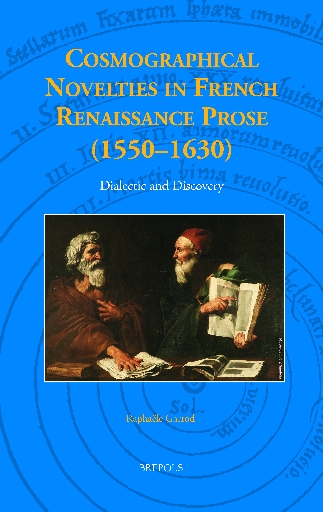
Cosmographical Novelties in French Renaissance Prose (1550–1630)
Dialectic and Discovery
Contemporary historiography holds that it was the practices and technologies underpinning both the Great Voyages and the ‘New Science’ as opposed to traditional book learning which led to the major epistemic breakthroughs of early modernity. This study however returns to the importance of book-learning by exploring how cosmological and cosmographical ‘novelties’ were explained and presented in Renaissance texts and discloses the ways in which the reports presented by sailors astronomers and scientists became not only credible but also deeply disturbing for scholars preachers and educated laymen in sixteenth- and seventeenth-century France.
It is argued here that dialectic - the art of argumentation and reasoning - played a crucial role in articulating and popularizing new learning about the cosmos by providing the argumentative toolkit needed to define discard and authorize novelties. The debates that shaped them were not confined to learned circles; rather they reached a wider audience via early modern vernacular genres such as the essay.
Focusing both on major figures such as Montaigne or Descartes as well as on now-forgotten popularizers such as Belleforest and Binet this book describes the deployment of dialectic as a means of articulating and disseminating but also of containing the disturbance generated by cosmological and cosmographical novelties in Renaissance France whether for the lay reader in Court or Parliament for the parishioner at Church or for the student in the classroom.
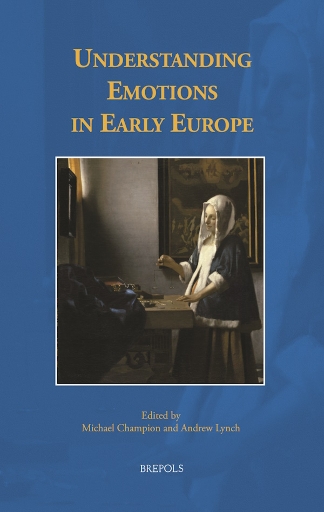
Understanding Emotions in Early Europe
This book investigates how medieval and early modern Europeans constructed understood and articulated emotions. The essays trace concurrent lines of influence that shaped post-Classical understandings of emotions through overlapping philosophical rhetorical and theological discourses. They show the effects of developments in genre and literary aesthetic and cognitive theories on depictions of psychological and embodied emotion in literature. They map the deeply embedded emotive content inherent in rituals formal documents daily conversation communal practice and cultural memory. The contributors focus on the mediation and interpretation of pre-modern emotional experience in cultural structures and institutions - customs laws courts religious foundations - as well as in philosophical literary and aesthetic traditions.
The volume thus represents a conspectus of contemporary interpretative strategies displaying close connections between disciplinary and interdisciplinary critical practices drawn from historical studies literature anthropology and archaeology philosophy and theology cognitive science psychology religious studies and gender studies. The essays stretch from classical and indigenous cultures to the contemporary West embracing numerous national and linguistic groups. They illuminate the complex potential of medieval and early modern emotions in situ analysing their involvement in subjects as diverse as philosophical theories imaginative and scholarly writing concepts of individual and communal identity social and political practices and the manifold business of everyday life.
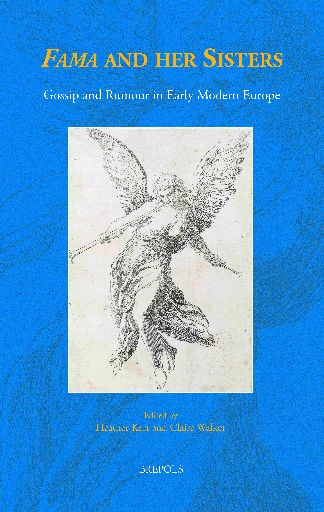
'Fama' and her Sisters
Gossip and Rumour in Early Modern Europe
The essays in this collection demonstrate how Fama and her sisters gossip and rumour were central in private and public discourses about state and society in early modern Europe. In an era when oral scribal visual and print cultures competed to satisfy a growing public demand for ‘news’ gossip and rumour informed people about the actions and morals of their social and political elites and they commonly enabled people who did not usually participate in politics to engage with the public discourses about religion governance and society which shaped their lives and the state. So while gossip and rumour might be scurrilous and entertaining they nonetheless performed a vital political function regulating communal and political behaviour in the upper social echelons as well as in neighbourhoods lower down the social scale where they might constitute a form of popular justice. This timely interdisciplinary study explores how gossip and rumour functioned dualistically at all levels of the early modern state and society either to advance or to defame reputations and thereby shape public opinion.
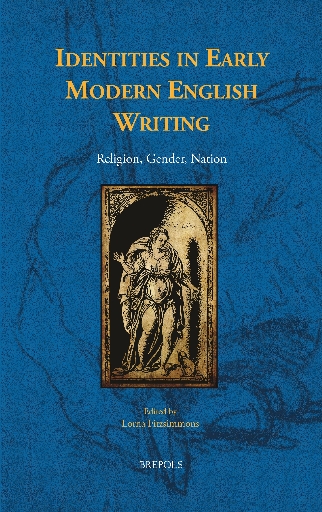
Identities in Early Modern English Writing
Religion, Gender, Nation
This collection of essays explores the representation of human identity in early modern English writing. The book engages with questions of identity conceived in literary religious social and historical contexts. It addresses a number of important topics in early modern studies today: women’s writing motherhood religion travel writing and nationalism. Anne-Marie Strohman examines mother figures in the Old Arcadia and the New. Allyna E. Ward considers discourses of Tudor historiography in Anne Dowriche’s The French Historie. Marion Wynne-Davies discusses the representation of Ireland in the writings of Edmund Spenser and Elizabeth Cary. Ryan Hackenbracht turns to Hobbes’ Hebraism and the Last Judgment in Leviathan. Jayne Elisabeth Archer considers the manuscript remains of Lady Ann Fanshawe. Lisa Hopkins looks at theatrical representations of England’s empire in Europe. Anna Suranyi examines national identity in travel literature. From the intimacy of the mother-daughter relationship to the politics of national conflicts and international relations the book broadens knowledge of the complexities of identity as represented in a selection of significant writings in English from the early modern period. Introduction by Lori Anne Ferrell; afterword by Mary Polito.
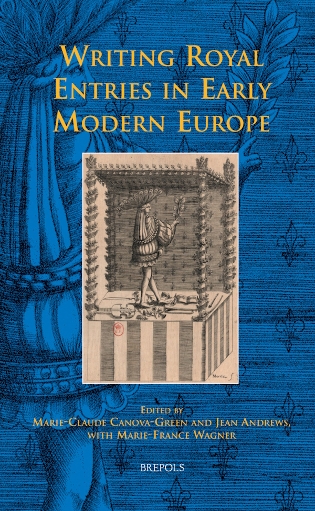
Writing Royal Entries in Early Modern Europe
Royal and ducal entries into major cities were an important aspect of political life in Renaissance and early modern Europe and the New World. The festivities provided an opportunity for the municipal authorities to show off their wealth learning political nous and aspiration while allowing writers painters sculptors architects set-designers scene-painters dancers musicians choreographers and others an unparalleled opportunity to showcase their wares. The essays in this volume cover a range of royal and ducal entries some well documented and well known others less so some barely documented at all. Each essay tackles an aspect of the business of putting together an entry festivity discusses a particular difficulty posed for the contemporary scholar by the extant documentation or offers a consideration of issues central to the development of this type of festivity or the literature associated with it. The entries and royal progresses of members of the Habsburg Medici Valois Bourbon and Tudor dynasties are examined as are the festivities commissioned and mounted by powerful and strategically important cities such as Berlin Antwerp Paris Florence London and Mexico City to welcome these great personages or their marginally less great ducal representatives.
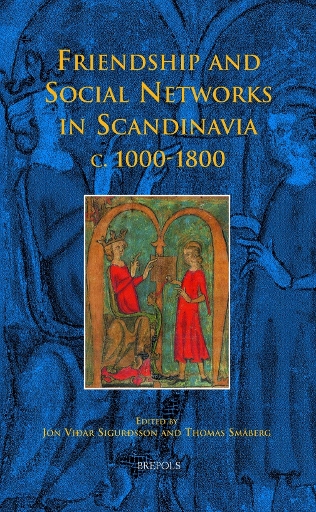
Friendship and Social Networks in Scandinavia, c. 1000-1800
Friendship patron-client relationships and social networks played a fundamental role in Scandinavian society from the Viking Age through to the Industrial Era. Personal ties were essential to Viking chieftains for building their power base and such ties were equally crucial for early modern merchants who used their personal bonds to create trade networks. Furthermore social networks connected medieval men and women to the saints and to God.
The articles in this book emphasize the strong correlation between political developments such as the emergence of the state and the evolution of friendships and social networks. They also highlight radical changes in the importance and contexts of friendship that occurred between the Viking Age and the late eighteenth century. During this period friendships became far more than community-based social relationships but rather tools for the elite in social positioning and wealth acquisition.
This volume highlights the major significance of friendships and patron-client relationships to political and cultural life in medieval early modern and modern society. It covers social networks in Iceland Norway Denmark and Sweden each of which are characterized by different societal features ranging from the free-state republic of early medieval Iceland to the early modern kingdom of Denmark.