


European Festival Studies: 1450-1700
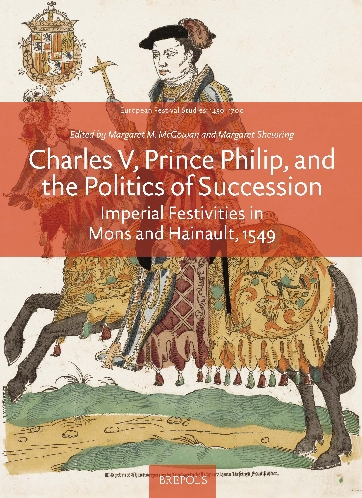
Charles V, Prince Philip, and the Politics of Succession
Imperial Festivities in Mons and Hainault, 1549
This book is based on an international conference held in the capital of Hainault to celebrate the city of Mons as European Capital of Culture (2015). For the first time through a range of interdisciplinary studies the magnificent festivals created to honour Prince Philip of Spain as he journeyed across Europe to receive his sovereignty of the Low Countries are brought to life. The splendour of entries in the cities of Northern Italy (such as Genoa and Milan) was challenged by the civic allegories of triumph displayed throughout the Low Countries in Ghent Antwerp and Amsterdam. Outpacing all that magnificence were the entertainments prepared by Mary of Hungary at Binche: triumphal arches martial feats of arms balls masquerades and castle-stormings entertained Emperor Charles V and his son Prince Philip.The essays in this volume reconstitute the political and social context of these extraordinary celebrations and focus on the purpose and role of festival in the changing political strategies of Charles V. They are illustrated with a total of 36 b&w and 36 colour images.Contributors: Sydney Anglo Francesca Bortoletti Stijn Bussels Tobias Capwell José Eloy Hortal Muñoz Félix Labrador Arroyo Margaret M. McGowan R. L. M. Morris Jessie Park Yves Pauwels M. J. Rodríguez-Salgado Margaret Shewring Hugo Soly Lisa Wiersma.

Court Festivals of the Holy Roman Empire, 1555–1619
Performing German Identity
This study represents a new approach to the analysis of early modern court festivals setting the question of identity at its heart. It explores identity as it was portrayed constructed and upheld through court festivals within the Holy Roman Empire of the German Nation in the period between the Peace of Augsburg in 1555 and the coronation of Friedrich V Elector Palatine as King of Bohemia in 1619. Structured thematically this detailed analysis touches on core themes of early modern European history including state formation princely courts gender religion science and the natural world and cultural encounters. In doing so it draws on and speaks to scholarly literature not only from different historical sub-disciplines but also from sociology and anthropology. Ultimately Morris argues that these court festivals provided a flexible albeit contested rhetoric of identity grounded in the performance of humanist virtue. Through the performed material and literary rhetoric of court festivals the concept of nobility through virtue was reworked refined and given a new vocabulary within the German context. This was inextricably linked with politics in light of the reforms made to the Holy Roman Empire at the end of the fifteenth century the confessional divisions of the sixteenth century and the mounting tensions of the early seventeenth century which were to culminate in the Thirty Years War.
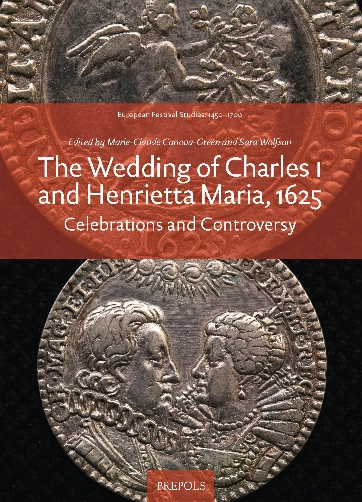
The Wedding of Charles I and Henrietta Maria, 1625
Celebrations and Controversy
On 11 May 1625 Charles I married Henrietta Maria the youngest sister of Louis XIII of France. The match signalled Britain’s firm alignment with France against Habsburg Spain and promised well for future relations between the two countries. However the union between a Protestant king and a Catholic princess was controversial from the start and the marriage celebrations were fraught with tensions. They were further disrupted by the sudden death of James I and an outbreak of the plague which prevented large-scale public celebrations in London. The British weather also played its part. In fact unlike other state occasions the celebrations exposed weaknesses in the display of royal grandeur and national superiority. To a large extent they also failed to hide the tensions in the Stuart-Bourbon alliance. Instead they revealed the conflicting expectations of the two countries each convinced of its own superiority and intent on furthering its own national interests. Less than two years later Britain was effectively in a state of war against France.
In this volume leading scholars from a variety of disciplines explore for the first time the marriage celebrations of 1625 with a view to uncovering the differences and misunderstandings beneath the outward celebration of union and concord. By taking into account the ceremonial political religious and international dimensions of the event the collection paints a rounded portrait of a union that would become personally successful but complicated by the various tensions played out in the marriage celebrations and discussed here.
Contributors: R. Malcolm Smuts Lucinda H. S. Dean J. R. (Ronnie) Mulryne Karen Britland Marie-Claude Canova-Green Erin Griffey Margaret Shewring Sara J. Wolfson Sara Trevisan Kevin Laam Sydney Anglo Margaret M. McGowan John Peacock Gordon Higgott Ella Hawkins .
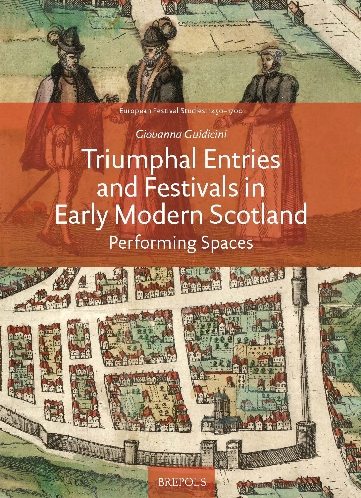
Triumphal Entries and Festivals in Early Modern Scotland
Performing Spaces
This book offers unprecedented insights into the richness of Scottish culture in the early modern period studying triumphal entries — that is processional civic welcomes offered to royal guests — staged in Edinburgh in the period between 1500 and the Wars of the Three Kingdoms. Based on a comprehensive and imaginative analysis of the written and archival sources available for these events it also brings renewed attention to the country’s artistic architectural and literary traditions. The analysis of comparable events staged in England and continental Europe — in France the Italian peninsula and the Low Countries — helps frame Scotland’s distinctiveness within a network of international connections. The book explores how the urban space of early modern Edinburgh was employed with changing fortunes to address potentially explosive power dynamics expressed by civic and royal secular and religious (pre and post Reformation) Scottish and post-1603 pan-British worldviews. Scottish triumphal culture is presented as profoundly embedded in the urban context within which it is set rich in politicised rituals of negotiation and mutual acknowledgement and visually vibrant through temporary structures decorations pageants and costumed performers. This book offers a well-rounded answer to the still relevant question of Scottish identity and how identity and power — individual communal national royal — can be performed through active engagement with civic space.
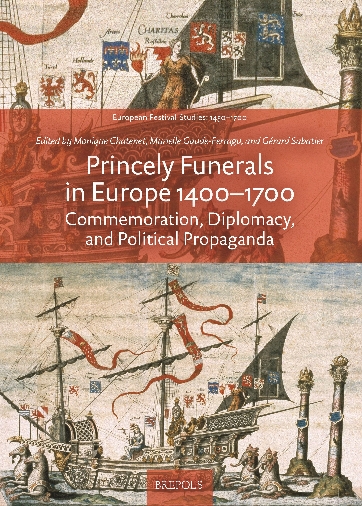
Princely Funerals in Europe 1400–1700
Commemoration, Diplomacy, and Political Propaganda
Funerals were among the most extravagant princely ceremonies in Europe. At the end of the Middle Ages they were grandiose affairs carefully recorded bringing together the emotions of both Court and People. The Renaissance heightened their effect adding surprising elements borrowed from an Antiquity which was largely re-invented. The seventeenth century introduced ephemeral displays elaborately constructed castrum doloris dressed up with lavish facades and interior designs which transformed these sanctuaries into theatrical funeral pyres.
Historians anthropologists and political scientists have long been interested in this subject as can be seen from Ralph Giesey's celebrated work Le Roi est mort. Art historians have been attracted to the surviving decorations of tombs and funerary chapels. Yet historians of spectacle and of its ephemera have hitherto somewhat neglected a topic which is - nonetheless - at the heart of their concerns: with their elaborate settings their costumes and decors princely funerals challenge theatre and opera.
It is within this context that experts from many disciplines attempt to trace the evolution of funeral ceremonies which were much less static than is generally believed; to expose the gifts of the masters of these solemn occasions (and indeed of their predecessors the heralds) who constantly devised subtle ways of capturing the attention of spectators and moving their emotions. These essays have tried to cover not only a wide time spectrum but also to reveal the variety and range of such ceremonies devised in diverse European Courts as well as unravelling the innovations which underlay fashions which had multiple international repercussions.
Featuring contributions by: Monique Chatenet Murielle Gaude-Ferragu Gérard Sabatier Agostino Paracivini_Bagliani Alain Marchandisse Joël Burden Mickaël Boytsov Maria Nadia Covini Eva Pibiri Marie-Madeleine Fontaine Giovanni Ricci Gérard Sabatier Maria Adelaida Allo Manero Naïma Ghermani Birgitte B. Johannsen.
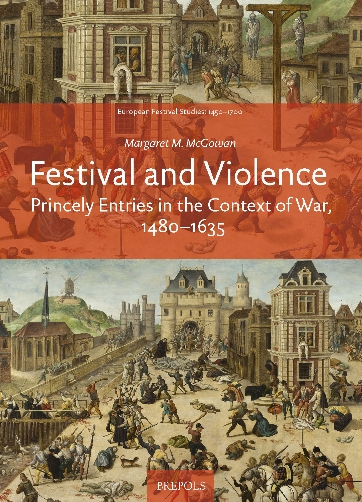
Festival and Violence
Princely Entries in the Context of War, 1480-1635
European Renaissance Festivals are noted for their extravagance for their inherited classical culture and as evidence of how court and civic spectacles could express political religious social and economic aspirations. In this new monograph the accent is firmly on the violent context of Magnificence: it examines how war affected the minds and practice of both artists and princes and shows how victims and their suffering were as prominent in festival as were conquerors and their projections of victory. What emerges here is the dark side represented in princely entries where imperial ambitions are built upon civic devastation and where myths elaborate and expose their ambiguous nature and message. Artists and poets collaborated in bringing victory and violence together: Mantegna and Dürer in triumphal processions; Frans Floris and Rubens on the canvases they created for triumphal arches where mythology was put to work to arouse excitement for deeds of heroism and death while engravers depicted scenes of war and destruction to accommodate contemporary taste.