


Fabulae
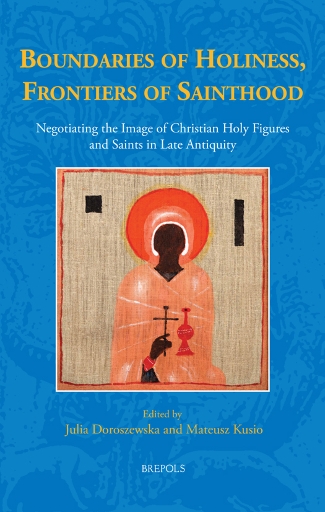
Boundaries of Holiness, Frontiers of Sainthood
Negotiating the Image of Christian Holy Figures and Saints in Late Antiquity
Many excellent studies have been published on the phenomenon of holy (wo)men and saints. As a rule however they focus on successful candidates for holiness who played the roles of charismatic leaders and patrons of social and religious life.
This volume offers a new perspective on ancient and medieval holiness — its main focus is holiness as defined by its peripheries and not by its conceptual centre. The contributors explore stories of men and women whose way to sainthood did not follow typical ‘models’ but who engaged with it from its outskirts. Several essays examine the strategies employed by hagiographical authors to tailor the images of candidates for holiness whose lives provided less obvious examples of moral and/or religious ideals. These include attempts to make saints out of emperors heretics and other unlikely or obscure figures. Other case studies focus on concerns with false holiness or unusual cases of holiness being ascribed prior to a saint’s death. Another concept explored in the volume is space. The spatial boundaries of holiness are discussed in relation to the transmission of relics to the opposition between urban and rural spaces holy sites and even imagined space.
Holiness and sainthood have been crucial concepts for Christianity from its inception. By exploring their ‘marginal’ and ‘peripheral’ aspects the essays in this book offer vital new perspectives on the religious world of Late Antiquity.
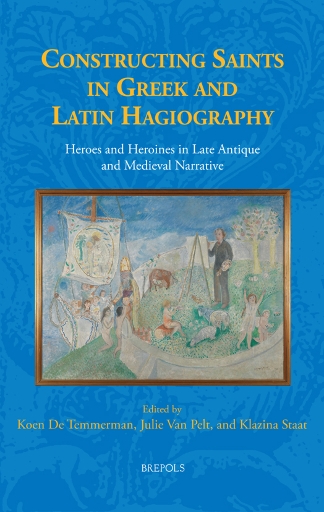
Constructing Saints in Greek and Latin Hagiography
Heroes and Heroines in Late Antique and Medieval Narrative
This book explores representations of saints in a variety of Latin and Greek late antique hagiographical narratives such as saints’ Lives martyr acts miracle collections and edifying tales. The book examines techniques through which the saints featured in such texts are depicted as heroes and heroines i.e. as extraordinary characters exhibiting both exemplary behaviour and a set of specific qualities that distinguish them from others. The book inscribes itself in a growing body of relatively recent scholarship that approaches hagiographical accounts not just as historical sources but also as narrative constructions. As such it contributes to the development of a scholarly rationale which increasingly values imaginative and fictional aspects of hagiography in their own right with the aim of answering broader questions about narrative creativity and ideology. For instance individual chapters examine how hagiographical accounts mobilize and capitalize on earlier literary and rhetorical traditions or narrative models. These questions are specifically addressed to explore the narrative construction of characters. The chapters thereby encourage us to acknowledge that many hagiographers were more skilful than is often accepted.
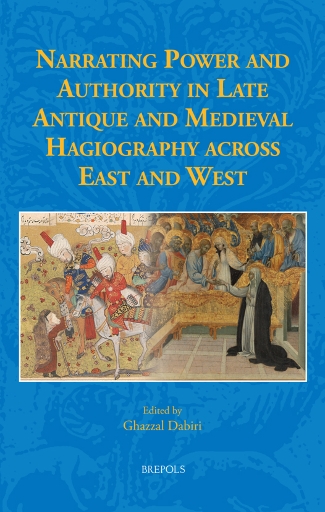
Narrating Power and Authority in Late Antique and Medieval Hagiography from East to West
This collection of essays explores the multifaceted representation of power and authority in a variety of late antique and medieval hagiographical narratives (Lives Martyr Acts oneiric and miraculous accounts). The narratives under analysis written in some of the major languages of the Islamicate world and the Christian East and Christian West - Arabic Armenian Georgian Greek Latin Middle Persian Ottoman Turkish and Persian - prominently feature a diverse range of historical and fictional figures from a wide cross-section of society - from female lay saints in Italy and Zoroastrians in Sasanian and Islamic Iran to apostles and bishops and emperors and caliphs. Each chapter investigates how power and authority were narrated from above (courts/ saints) and below (saints/laity) and by extension navigated in various communities. As each chapter delves into the specific literary and social scene of a particular time place or hagiographer the volume as a whole offers a broad view; it brings to the fore important shared literary and social historical aspects such as the possible itineraries of popular narratives and motifs across Eurasia and commonly held notions in the religio-political thought worlds of hagiographers and their communities. Through close readings and varied analyses this collection contributes to the burgeoning interest in reading hagiography as literature while it offers new perspectives on the social and religious history of late antique and medieval communities.