


Global Perspectives on Medieval and Early Modern Historiography
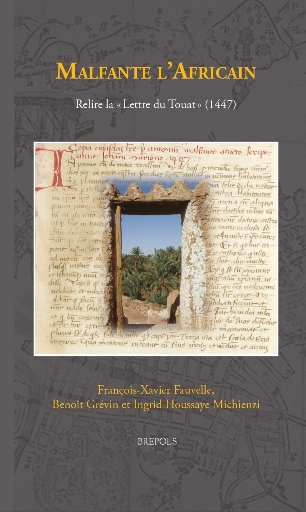
Malfante l’Africain
Relire la « Lettre du Touat » (1447)
En 1447 Antonio Malfante un marchand génois adresse une lettre en latin depuis Tamentit dans l’oasis saharienne du Touat (actuelle Algérie). Il y décrit la région et livre des informations sur le Sahara et l’Afrique subsaharienne. Dans une perspective d’histoire globale ce livre explore tous les aspects d’une source exceptionnelle qui relie trois mondes interconnectés : celui des marchands italiens rayonnant en Méditerranée occidentale ; celui des routes sahariennes du Maghreb à Tombouctou ; celui des royaumes sociétés et cités de l’Afrique subsaharienne. Une approche interdisciplinaire revisite ce texte fameux. L’analyse philologique corrige nombre d’erreurs présentes depuis la première édition-traduction (La Roncière 1919) et présente les interactions linguistiques (latin italien arabe…). La contextualisation dans l’histoire du commerce transcontinental du xve siècle renouvelle la compréhension de la démarche de Malfante et de ses relais africains. L’analyse africaniste de sa description du Sahara et de l’Afrique subsaharienne lève un voile sur le Nord-Ouest de l’Afrique à une époque de raréfaction des sources écrites. Enfin une lecture historiographique du texte met en relief les présupposés colonialistes qui ont accompagné sa découverte. Combinant histoire textuelle commerciale et africaine cette relecture du « voyage de Malfante » présente une histoire globale euro-africaine entre christianisme islam et animisme entre recherche de profit description anthropologique et construction d’une image de l’autre.
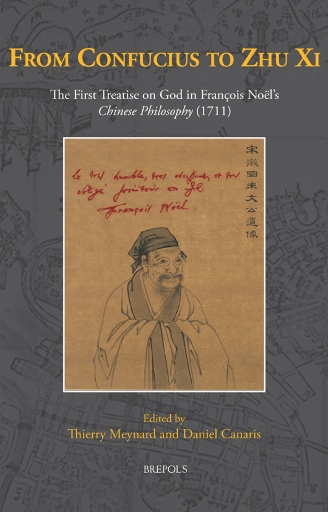
From Confucius to Zhu Xi
The First Treatise on God in François Noël’s Chinese Philosophy (1711)
On 25 September 1710 Pope Clement XI finally promulgated the 1704 decree Cum Deus optimus which condemned the toleration of certain Confucian rituals among Chinese Catholic converts and the use of the Chinese terms tian and Shangdi to refer to the Christian God. This papal decision antagonised the Kangxi Emperor and devastated the Jesuit China mission. Although the Jesuits were prohibited from publicly refuting the decree the Flemish Jesuit François Noël sought to defend the Jesuit position by publishing his voluminous scholarship on the Chinese classics. Among other works in 1711 Noël published two seminal contributions to the history of Sinology: the Sinensis imperii libri classici sex or Libri sex and the Philosophia Sinica a sophisticated treatment of Chinese metaphysics ritual and ethics. While the Libri sex achieved some degree of influence in the Enlightenment through the French translation of the French Jesuit historian Du Halde and the writings of the philosopher Christian Wolff the Philosophia Sinica was actively suppressed by the Superior-General of the Jesuit order. Yet it is in this latter work where the full breadth of Noël’s originality and intellectual contribution can be found. Noël reinterprets the Jesuits’ position through the lens of Neo-Confucianism integrating concepts such as li taiji yin and yang in his reading of Chinese philosophy. With contributions from Sinologists and intellectual historians this book offers the first systematic study of this pioneering work.