


Studies in Medieval and Early Renaissance Art History
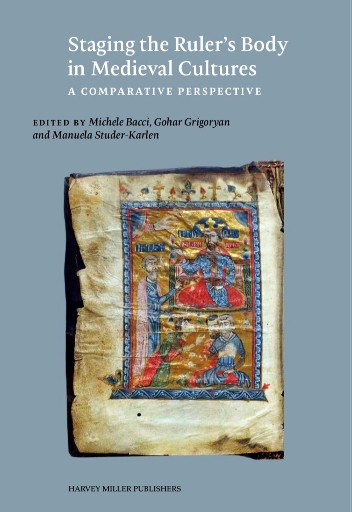
Staging the Ruler’s Body in Medieval Cultures: A Comparative Perspective
This book explores the viewing and sensorial contexts in which the bodies of kings and queens were involved in the premodern societies of Europe Asia and Africa relying on a methodology that aims to overcoming the traditional boundaries between material studies art history political theory and Repräsentationsgeschichte. More specifically it investigates the multiple ways in which the ruler’s physical appearance was apprehended and invested with visual metaphorical and emotional associations as well as the dynamics whereby such mise-en-scène devices either were inspired by or worked as sources of inspiration for textual and pictorial representations of royalty. The outcome is a multifaced analysis of the multiple imaginative and terribly ambiguous ways in which in past societies the notion of a God-driven eternal and transpersonal royal power came to be associated with the material bodies of kings and queens and of the impressive efforts made in different cultures to elude the conundrum of the latter’s weakness transitoriness and individual distinctiveness.
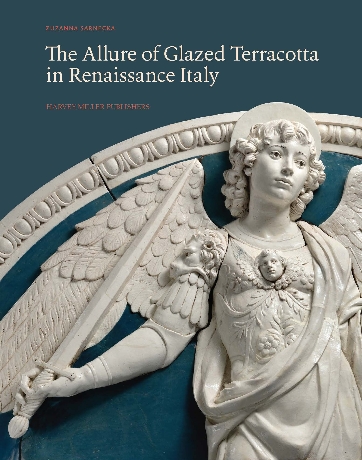
The Allure of Glazed Terracotta in Renaissance Italy
This book explores the role of glazed terracotta sculpture in Renaissance Italy from c. 1450 to the mid-1530s. In its brightness and intense colour glazed terracotta strongly attracted the viewer’s gaze. Its pure and radiant surfaces also had the power to raise the mind and soul of the faithful to contemplation of the divine. The quasi-magical process of firing earthenware coated with tin-based paste promoted initially by imports from the East was seized upon by Luca della Robbia who realised that glazed terracotta was the ideal vehicle for the numinous. He began to create sculptures in the medium in the 1430s and continued to produce them for the rest of his life. After Luca’s death his nephew Andrea della Robbia inherited his workshop in Florence and continued to develop the medium together with his sons. The book considers some of the large-scale altarpieces created by the Della Robbia family in parallel with a number of small-scale figures in glazed terracotta mostly made by unidentified sculptors. The captivating illustrations integrate these two categories of glazed terracotta sculpture into the history of Italian Renaissance art. By focusing on a specific artistic medium which stimulated piety in both ecclesiastical and domestic contexts this book offers new ways of thinking about the religious art of the Italian Renaissance. The links it establishes between lay devotion and the creation of religious images in glazed terracotta invite reassessment of habitual distinctions between private and public art.