


Habsburg Worlds
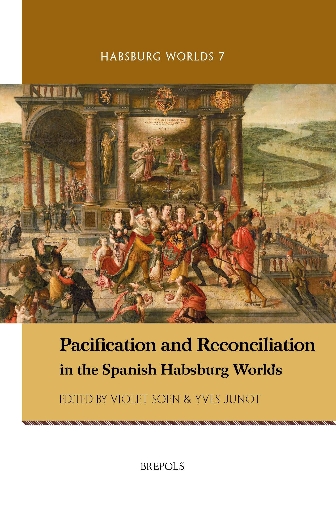
Pacification and Reconciliation in the Spanish Habsburg Worlds
This is the first volume to analyze pacification strategies within the Spanish Monarchy on a global level. It deals with the development and aftermath of the many early modern revolts on the Iberian and Italian Peninsula the Sicilian and Sardinian islands the cities along the North Sea and the Spanish Americas. These comparative studies uncover the different ways in which the Spanish Monarchy dealt with rebellion from cities and constituencies ranging from military responses and repression to offers for negotiation and reconciliation. They also point out common characteristics of these pacification processes such as the promises of pardon the granting of grace and the instruction of peace envoys. The different chapters each accompanied by an edition of sources show how the reconciliation and reincorporation into the Spanish Habsburg orbit proved to be a painstaking process with an unpredictable outcome.
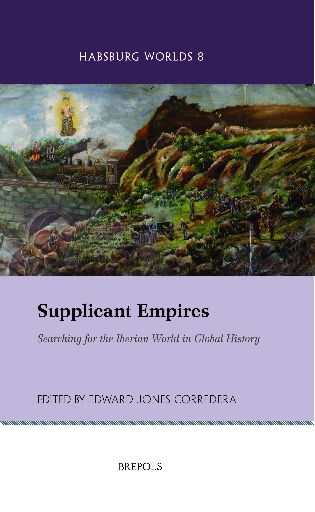
Supplicant Empires
Searching for the Iberian World in Global History
This volume is a collection of reflections from leading senior and junior historians regarding the merits of historical comparativism in the field of Iberian history. The first purpose of the book is to encourage a dialogue between scholars of the Iberian Empires and to foster a reconsider how they see the broader history of the early modern world in light of recent historiography. The second aim of the book is to prompt scholars of other regions in global history to consider the recent literature on the Iberian Empires anew to move beyond the tropes of the Black Legend and narrative of growth splendour and decline and to study those imbrications had connected disparate parts of the world and which the postcolonial turn has unearthed. In a series of articles and interviews contributors were encouraged to consider the role of linguistic divides in the growth of historiographical strands and to speak plainly about the possible siloes that have emerged in the field. Contributors discuss the Atlantic turn corporate cultures the Catholic adoption of Protestant ideals gender and race all while drawing on insights from scholars who work on early modern nuns the material history of sugar and coffee or those who are exploring the uses of the concept of barbarity in borderlands.
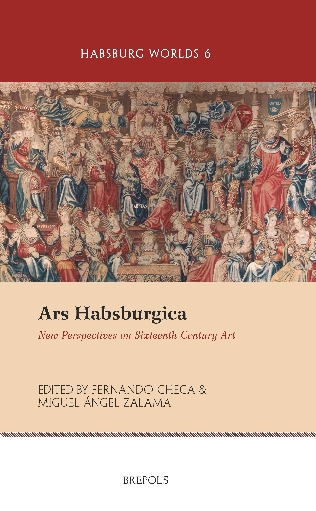
Ars Habsburgica
New Perspectives on Sixteenth-Century Art
Starting from a political reality which is at the same time artistic and cultural the book Ars Hasburgica aims to review the still so common historiographical conception of the Renaissance that conceives this period from a geographically Italocentric artistically classicist and politically centered the idea of "national" arts and schools.
But Renaissance is a more global and complex phenomenon. What this book aims to offer is an idea of the art of that period that considers the role played by the Habsburg dynasty and its various courts in this period trying to verify whether by applying other historiographic models and having the art of the Casa de Austria as a focus traditional ideas can continue to be maintained well into the twenty-first century. We refer to the so-called "Vasari paradigm" on which art history of the sixteenth century has largely been built over the last centuries. It is also intended to structure concepts about the art of the period not so much around nationalist considerations and identities of the arts but to raise these issues throughout ideas such as that of the court as a political artistic and cultural sphere in the wake of the classical studies by Norbert Elias Amedeo Quondam or Carlo Ossola.
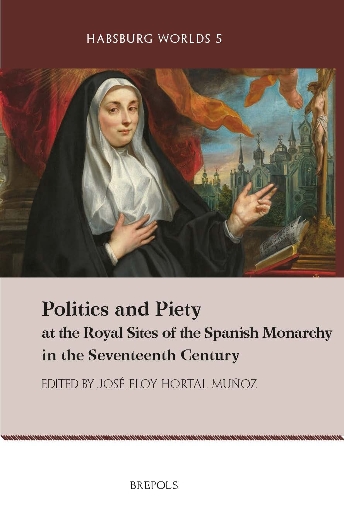
Politics and Piety at the Royal Sites of the Spanish Monarchy in the Seventeenth Century
Institutions under royal control included not only the king’s royal residences and the royal chapels attached to them but also magnificent convent-palaces and individual monasteries belonging to specific religious orders with close affiliations to the Spanish Crown. These Spanish Royal Sites a diverse global network that helped to shape the Spanish Monarchy politically and socially in the seventeenth century extended across the different kingdoms of the Iberian Peninsula and beyond to other territories in Europe America and Asia under Spanish rule. The religious practices that occurred there were an essential aspect of studying the justification of power the pre-eminence of (ecclesiastical and temporal) institutions and in the case of the Spanish Monarchy its relations with the Holy See.
This volume brings together scholars from various humanities disciplines opening up novel avenues of research for studying the organization of royal institutions in the different kingdoms of the Habsburg Spanish Monarchy especially in questions related to religion and royal piety. Particular attention is paid to the under-researched area of Royal Sites in Catalonia Valencia Portugal Sardinia and the Viceroyalty of Peru.
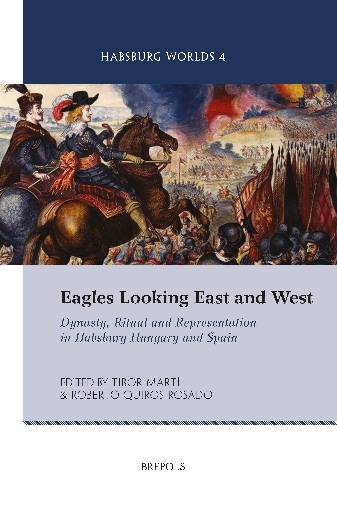
Eagles Looking East and West
Dynasty, Ritual and Representation in Habsburg Hungary and Spain
Symbolised by the ‘double-headed eagle’ looking East and West the Habsburg dynasty constituted a universal power structure in the early modern era. The dynasty’s Spanish and Austrian branches created a code of shared identity one which also encompassed their religious piety and their ability to pitch the Austriacum Imperium against multiple enemies worldwide.
The present volume investigates the construction of the dynasty’s political image in two spheres the Kingdom of Hungary and the Spanish monarchy between the sixteenth and eighteenth centuries. Fifteen Hungarian Czech and Spanish specialists offer comparative perspectives on the Habsburg era during this convulsive period of European history addressing topics including diplomatic links dynastic ritual and representation and the Order of the Golden Fleece. In covering a wide range of themes their contributions aim towards a better understanding of the emergence of new political attitudes in the Western world prior to the Enlightenment.
Contributors to the volume include Cristina Bravo Lozano Václav Bůžek Nóra G. Etényi Alfredo Floristán Imízcoz Rubén González Cuerva Borbála Gulyás Fanni Hende János Kalmár Zsolt Kökényesi Zoltán Korpás Pavel Marek Tibor Monostori and Géza Pálffy.
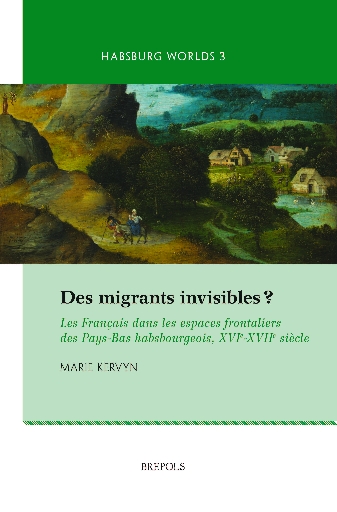
Des migrants invisibles ?
Les Français dans les espaces frontaliers des Pays-Bas habsbourgeois, xvi e-xvii e siècle (Artois, Hainaut, Flandre Wallonne)
During the Modern Period the condition of the French migrant is fragile. He comes from a suspicious community that does not exist in substance that of the "French" and is a part of an evolving category the one of people without "rights". His foreign origin can also be an advantage and he can make it work in his favour. He cannot be defined as being from a State yet his condition is inseparable from the international conjuncture and the construction of evolving modern States. Actually to question the stakes in the reception of the French migrants is an open window to a better understanding of the social and political culture of the Spanish Low Countries. Indeed this work probes the mechanisms of self-definition in border provinces within a catholic global empire the Spanish Monarchy in front of France. The exercise of power and the capacity for action appear there as the result of an equilibrium in which all social actors are negotiating their position. Most of all it is the result of a dialogue fueled by the protagonists of History themselves.
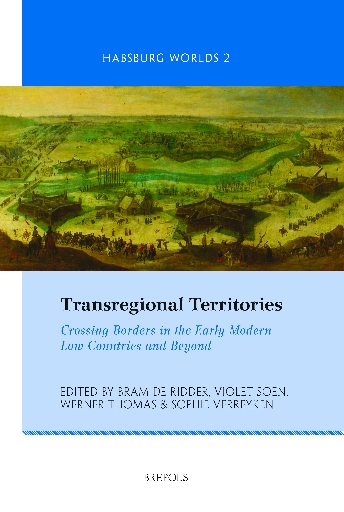
Transregional Territories
Crossing Borders in the Early Modern Low Countries and Beyond
The early modern world was one of movement contact and exchange. Yet this does not mean that it was borderless. On the contrary connection existed only when people moved along and across the separations between polities religions and mentalities. So in order to understand early modern connections one also needs to analyse the boundaries that accompanied them.In Transregional Territories the early modern Low Countries are chosen as a ‘laboratory’ for studying border formation and border management through the lens of transregional history. Eight different cases highlight the impact of boundaries on the actions and strategies of individuals and governments. Crossing borders in early modern times was not merely an act of negating a territorial division but rather a moment of intimate interaction with the separation itself. As such this volume illustrates how borders forced historical actors to adapt their behaviour and how historians can use a transregional vantage point to better understand these changes.The cases are presented by leading border specialists and scholars of the early modern Low Countries: Fernando Chavarría Múgica Victor Enthoven Raingard Esser Yves Junot Marie Kervyn Christel Annemieke Romein and Patricia Subirade.Bram De Ridder Violet Soen Werner Thomas and Sophie Verreyken are all members of the Early Modern History Research Group of the KU Leuven. Together they have published extensively on transregional history and the history of the early modern Low Countries grouped under the label of transregionalhistory.eu.
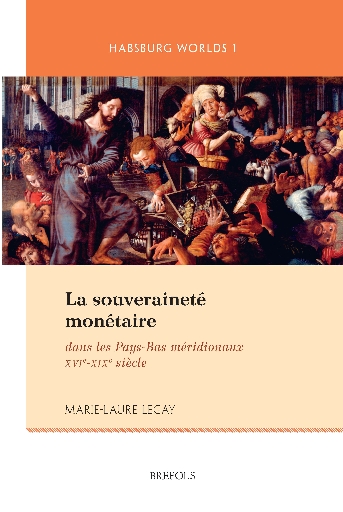
La souveraineté monétaire dans les Pays-Bas méridionaux XVIe-XIXe siècle
L’idée d’un retour à une souveraineté monétaire « nationale » exploite une fibre identitaire qui joue la nation contre l’Europe. Elle relève d’une conception figée de la souveraineté qui serait irréductiblement incarnée par l’Etat. L’histoire montre pourtant que la monnaie ne peut exister en dehors d’un consensus liant l’autorité souveraine aux acteurs du change négociants et banquiers. L’étude des Pays-Bas méridionaux révèle qu’entre le règne de Charles Quint et la création de la banque nationale de Belgique en 1850 rares furent les périodes où les monnaies belges s’imposèrent dans le concert des nations européennes. Il faut attendre la grande réforme de 1749 pour voir fonctionner un système monétaire efficace. Encore l’impératrice Marie-Thérèse dut elle pour y parvenir « se relâcher de ses droits régaux en faveur de ses sujets ». La mise en œuvre d’un régime monétaire suppose une porosité de l’autorité politique qui doit composer sans cesse avec les corps constitués de la société mais aussi avec les autorités voisines et les acteurs du marché des métaux et du marché des changes sur lesquels elle n’a pas la main.