


International Medieval Research
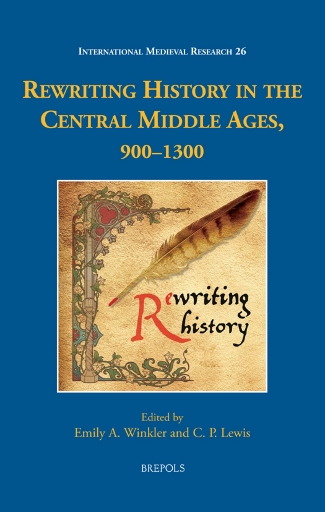
Rewriting History in the Central Middle Ages, 900–1300
In the Middle Ages rewriting history was a distinct activity within the larger sphere of historical writing. Rewriting started with existing historical accounts recasting them into new forms as new stories about the past. Changes in circumstances drove rewriting encouraging historically literate writers and their patrons to examine their histories anew to jettison what no longer made sense or was useful and to supply new material to fill gaps or expand ideas. Writers rewrote not only for the present and future but also for the past. They curated the past and reorganized its intellectual artifacts thereby revealing new facets of old history to future eyes.
Rewriting was a defining characteristic of the central Middle Ages (900-1300) distinct both from earlier traditions of universal history and from later traditions of making continuations which left the narrative core intact. Reimagining the past by rewriting happened across genres in the vernaculars as well as the universal languages of Latin and Greek and across Europe west and east. The chapters in this book explore the reasons and methods for rewriting ranging across the Anglo-Norman realm France and Flanders Christian Iberia Norman Italy and the Mediterranean Byzantium and Georgia and Armenia. Together they show a set of rewriters who made themselves the authorities for their own age.
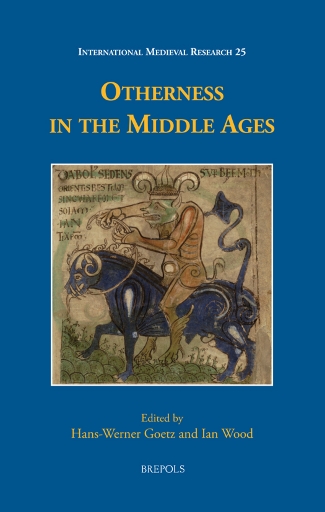
‘Otherness’ in the Middle Ages
Although ‘Otherness’ is an extremely common phenomenon in every society related research is still at its beginnings. ‘Otherness’ in the Middle Ages is a versatile and complex theme that covers a great number of different aspects facets and approaches: from non-human monsters and cultural strangers from remote places up to foreigners from another country or another town; it can refer to ethnic cultural political social sexual or religious ‘Otherness’ inside or outside one’s own community. In any case however ‘Otherness’ is a subjective phenomenon depending on personal views and ascriptions an issue of ‘imagination’ and experience rather than ‘reality’. There is neither one single model of alterity nor is ‘Otherness’ a stable phenomenon but it changes over time and according to the cultural context. All this calls for methodological reflection and needs thorough investigation.
The methodological introduction and the 18 contributions of this volume demonstrate the great diversity of the theme and its different manifestations and perspectives. They tackle the problem from distinct angles and disciplines (history art history archaeology literary history and philology) in a wide chronological and thematic frame using different methodological approaches dealing with different areas (from Northern and Southern Europe to Byzantium and India) perspectives (including law social order the past a sea) and diverse kinds of sources. They examine all kinds of ‘Otherness’ mentioned above highlight demarcation and rejection aversion or acceptance assimilation and integration thus relativizing a strict dichotomy between ‘the Self’ and ‘the Other’ or between inside and outside. This volume is so far the most comprehensive attempt to tackle the huge problem of ‘Otherness’ in the Middle Ages.
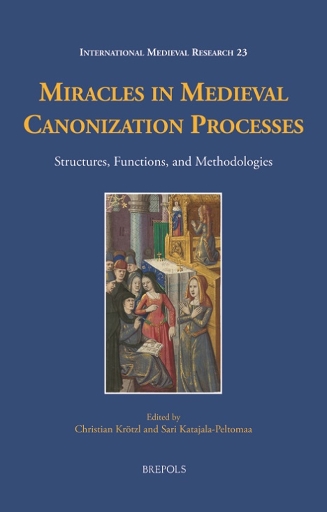
Miracles in Medieval Canonization Processes
Structures, Functions, and Methodologies
When a beneficiary or an eye-witness to a miracle met a scribe at a saint’s shrine or a notary at a canonization hearing it was necessary to establish that the experience was miraculous. Later the same incident may have been re-told by the clergy; this time the narration needed to entertain the audience yet also to contain a didactic message of divine grace. If the case was eventually scrutinized at the papal Curia the narration and deposition had to fulfil the requirements of both theology and canon law in order to be successful. Miracle narrations had many functions and they intersected various levels of medieval society and culture; this affected the structure of a collection and individual narration as well as the chosen rhetoric.
This book offers a comprehensive methodological analysis of the structure and functions of medieval miracle collections and canonization processes as well as working-tools for reading these sources. By analysing typologies of miracles stages of composition as well as rhetorical elements of narrations and depositions the entertaining didactic and judicial aspects of miracle narrations are elucidated while the communal and individual elements are also scrutinized.
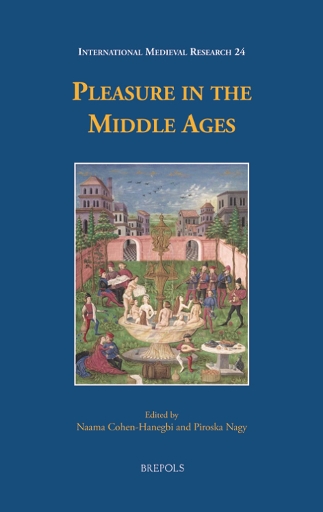
Pleasure in the Middle Ages
This volume explores the diverse manifestations and uses of pleasure in medieval culture. Pleasure is a sensation an affirmation a practice and is at the core of the medieval worldview no less than pain.
Applying a variety of methodological perspectives the essays collected here analyse the role of pleasure in relation to a variety of subjects such as the human body love relationships education food friendship morality devotion and mysticism. They also integrate a wide range of sources including literature (monastic to courtly) medical texts illuminated prayer books iconography and theatrical plays.
Each document each discipline and thus each essay combine to provide a complex and diversified picture of medieval joys and delights - a picture that shows the extent to which pleasure is engrained in the period’s culture. This collection shows how pleasure in the Middle Ages is at once a coveted feeling and a constant moral concern both the object and the outcome of a constant negotiation between earthly and divine imperatives.
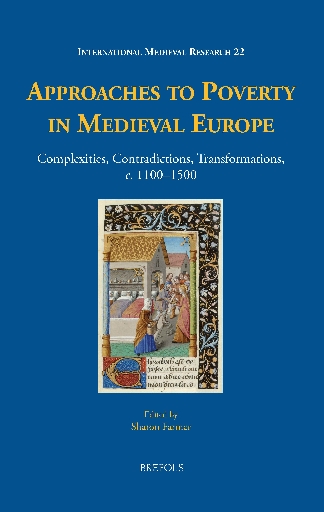
Approaches to Poverty in Medieval Europe
Complexities, Contradictions, Transformations, c. 1100-1500
The essays in this volume re-examine two major medieval turning points in the relationship between rich and poor: the revolution in charity of the twelfth and thirteenth centuries and the era of late medieval crises when the vulnerability of the poor increased dramatically and charitable generosity often declined. Drawing on a variety of sources from England France the Low Countries Italy and Iberia the contributors to this volume add new perspectives on the agency of the poor the influence of gendered forms of devotion parallels in Christian and Jewish representations of the deserving and undeserving poor and the effect of mendicant piety on the status of the involuntary poor. A broader implication of the volume as a whole is that medieval studies of poverty and wealth need to pay more attention to the role of rulers ruling elites and public policy in shaping the experiences of the poor.
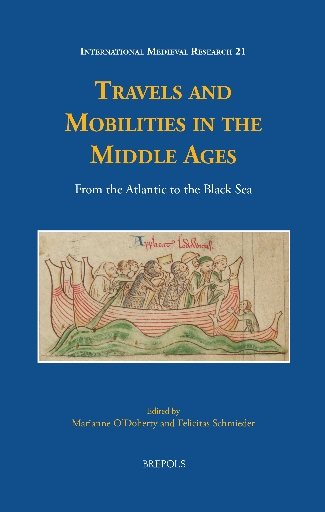
Travels and Mobilities in the Middle Ages
From the Atlantic to the Black Sea
This collection of research which brings together contributions from scholars around the world reflects the range and variety of work that is currently being undertaken in the field of travel and mobility in the European Middle Ages. The essays draw on diverse methodological approaches from the archival and literary to the art historical and archaeological. The collection focuses not just on key medieval modes of travel and mobility but also on themes whose relevance continues to resonate in the modern world. Topics touched upon include religious and diplomatic journeys migration mobility and governance gendered mobilities material culture and mobility mobility and disability travel and status and notions of home and abroad. Broad themes are approached through case studies of individuals families and groups ranging from kings queens and nobles to friars exiles and students. The geographical reach of the collection is particularly broad encompassing travellers from Southern Western Northern Central and Eastern Europe and journeys to destinations as diverse as Scandinavia the Black Sea the Mediterranean and the Indian Ocean. A wide-ranging and detailed introduction situates the collection in its scholarly context.
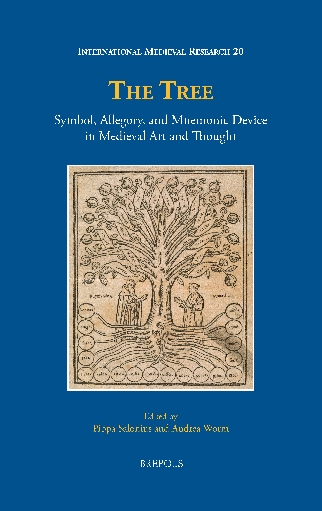
The Tree
Symbol, Allegory, and Mnemonic Device in Medieval Art and Thought
With its vital character - growing flowering extending its roots into the ground and its branches and leaves to the sky - the tree is a polyvalent metaphor a suggestive symbol and an allegorical subject. During the Middle Ages a number of iconographic schemata were based on the image and structure of the tree including the Tree of Jesse and the Tree of Virtues and Vices. From the late eleventh century onwards such formulae were increasingly used as devices for organizing knowledge and representing theoretical concepts. Despite the abstraction inherent in these schemata however the semantic qualities of trees persist in their usage.
The analysis of different manifestations of trees in the Middle Ages is highly instructive for visual intellectual and cultural history. Essays in this volume concentrate on the formative period for arboreal imagery in the medieval West that is the eleventh to fifteenth centuries. Using a range of methodological strategies and examining material from different media ranging from illuminated manuscripts to wall painting stained glass windows and monumental sculpture the articles in this volume show how different arboreal structures were conceived employed and appropriated by their specific contexts how they functioned in their original framework and how they were perceived by their audience.
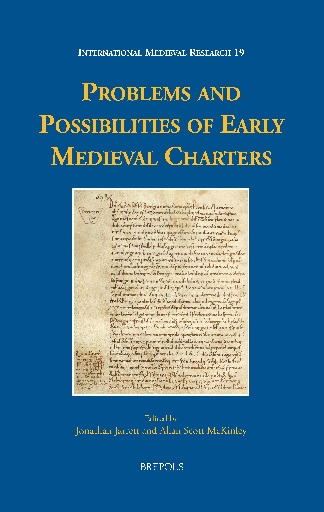
Problems and Possibilities of Early Medieval Charters
Although historical work on the early Middle Ages relies to an enormous extent on the evidence provided by charters and other such documents the paradigms within which such documents are interpreted have changed relatively slowly and unevenly. The critical turn the increasing availability of digital tools and corpora for study and the acceptance among charter specialists that their discipline can inform a wider field all encourage rethinking. From 2006 to 2011 a series of sessions at the Leeds International Medieval Congress addressed this by applying new critiques and technologies to early medieval diplomatic material from all over Europe. This volume collects some of the best of these papers by new and young scholars and adds related work from another session. The subjects range from reinterpretations of Carolingian or Anglo-Saxon political history through the production and use of charters by all ranks of society and their subsequent preservation from Spain to Germany and England to Italy to explorations of new media leading to new kinds of results from such evidence. The result is an array of new perspectives which makes an important contribution to recent reconsiderations of charter studies. It will inform a wide audience from all walks of medieval historical studies.
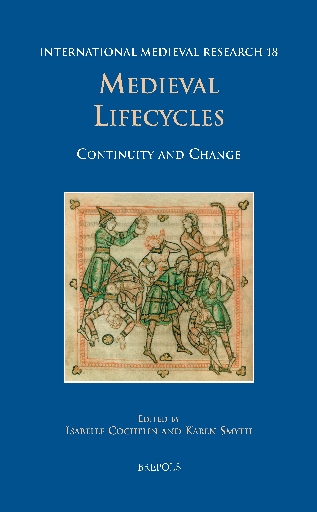
Medieval Life Cycles
Continuity and Change
The essays in this collection present new research into a variety of questions on birth childhood adolescence adulthood middle age and old age ordered in a more or less chronological manner according to the life cycle. The volume exposes attitudes and representations of the life cycle from the Anglo-Saxon period to the end of the Middle Ages as being full of inconsistencies as well as definitive categories and of variation and stasis. This attests to the fact that medieval conceptions and representations of the stages of life and their interrelationships are much more nuanced and less idealized than is usually credited. Medieval conceptual mental artistic cultural and sociological processes are scrutinized using various approaches and methods that cross disciplinary boundaries. What is emphasized across the volume is that there were varying context-dependent rhythms of continuity and change in every stage of life in the medieval period. The volume’s selection of authors is international in scope and represents some of the leading current scholarship in the field.
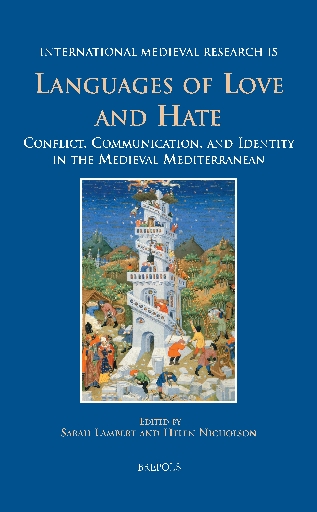
Languages of Love and Hate
Conflict, Communication, and Identity in the Medieval Mediterranean
This book probes the nature of the clash of cultures as a process of identification and classification of the unknown. ‘There is no world of thought that is not a world of language and one sees of the world only what is provided for by language’ (Walter Benjamin 1936). In the medieval Mediterranean cultural groups were frequently labelled fixed and identified by language and these linguistic groupings were consistently in states of conflict and/or exchange. This collection explores various expressions of cultural clash and exchange and examines some of the ways in which language was used to express difference to mark out cultural difference and to further label those cultures – often as alien and inferior but sometimes as different and worthy of respect. This theme unites papers coming from a range of perspectives and engaging with a whole series of cultural interchanges and conflicts. It brings together work on a wide range of peoples – Latins Byzantines Muslims and Jews – commenting on and writing about each other as well as a wide variety of different genres from theology to farce. This volume seeks to offer a broad and wide-ranging approach to understanding the world at the time of the crusades through the words of participants and observers.
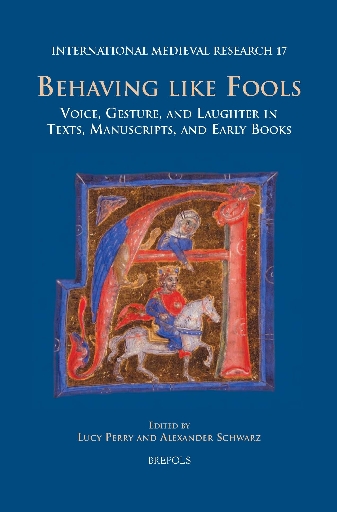
Behaving like Fools
Voice, Gesture, and Laughter in Texts, Manuscripts, and Early Books
The period from 1200 to 1600 was the golden age of fools. From representations of irreverent acts to full-blown insanity fools appeared on the misericords of gothic churches and in the plots of Arthurian narratives before achieving a wider prominence in literature and iconography in the decades around 1500. But how are we to read these figures appropriately? Is it possible to reconstruct the fascination that fools exerted on the medieval and early modern mind? While modern theories give us the analytical tools to explore this subject we are faced with the paradox that by striving to understand fools and foolishness we no longer accept their ways but impose rational categories on them. Together these essays propose one way out of this dilemma. Instead of attempting to define the fool or trying to find the common denominator behind his many masks this volume focuses on the qualities acts and gestures that signify foolishness. By investigating different manifestations of foolery rather than the figure of the fool himself we can begin to understand the proliferation of fools and foolish behaviour in the texts and illustrations of manuscripts and early books.
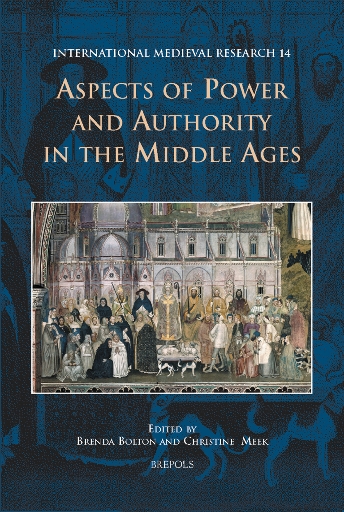
Aspects of Power and Authority in the Middle Ages
Concepts of power and authority and the relationship between them were fundamental to many aspects of medieval society. The essays in this collection present a series of case studies that range widely both chronologically and geographically from Lombard Italy to early modern Iberia and from Anglo-Saxon Norman and later medieval England to twelfth-century France and the lands beyond the Elbe in the conversion period. While some papers deal with traditional royal princely and ecclesiastical authority they do so in new ways. Others examine groups and aspects less obviously connected to power and authority such as the networks of influence centring on royal women or powerful ecclesiastics the power relationships revealed in Anglo-Saxon and Old-Norse literature or the influence that might be exercised by needy crusaders by Jews with the ability to advance loans or by parish priests on the basis of their local connections. An important section discusses the power of the written word whether papal bulls collections of miracle stories or the documents produced in lawsuits. The papers in this volume demonstrate the variety and multiplicity of both power and authority and the many ways by which individuals exercised influence and exerted a claim to be heard and respected.
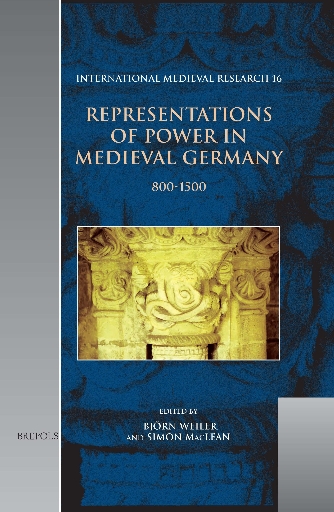
Representations of Power in Medieval Germany
800-1500
This book brings together a group of leading experts on the political history of Germany and the medieval Empire from the Carolingian period to the end of the Middle Ages. Its purpose is to introduce and analyze key concepts in the study of medieval political culture. The representation of power by means of texts buildings and images is a theme which has long interested historians. However recent debates and methodological insights have fundamentally altered the way this subject is perceived opening it up to perspectives unnoticed by its pioneers in the middle of the twentieth century. By taking account of these debates and insights this volume explores a series of fundamental questions. How was power defined in a medieval context? How was it claimed legitimized and disputed? What were the moral parameters against which its exercise was judged? How did different spheres of political power interact? What roles were played by texts images and rituals in the maintenance of and challenges to the political order? The contributors bring varied and original approaches to these and other questions illuminating the complex power relationships which determined the changing political history of medieval Germany.
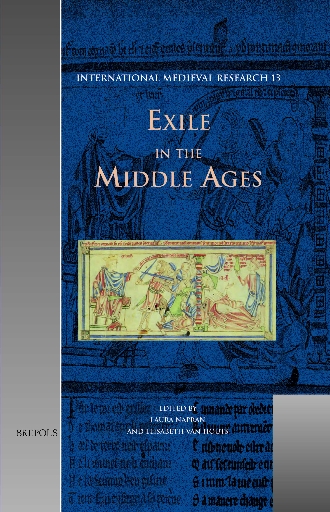
Exile in the Middle Ages
Selected Proceedings from the International Medieval Congress, University of Leeds, 8-11 July 2002
Exile in the Middle Ages took many different forms. As a literary theme it has received much scholarly attention in the Latin Greek and vernacular traditions. The historical and legal phenomenon of exile is relatively unexplored territory. In the secular world it usually meant banishment of a person by a higher authority for political reasons resulting in the exile leaving home for a shorter or longer period. Sometimes an exile did not wait to be expelled but left of his or her own accord. Leaving home to go on pilgrimage or in the case of women to marry could be experienced as a form of exile. In the ecclesiastical sphere two forms of exile stand out. Monasticism was often seen as a form of spiritual (permanent) exile from the secular world. Excommunication was a punishment exercised by the Church authorities in order to eject persons (often only temporarily) from the community of Christians. Banishment as a form of social punishment is therefore the central theme of this volume on Exile in the Middle Ages. The book covers the period of the central Middle Ages from ca. 900 to ca. 1300 in Western Europe though some chapters have a wider remit. The genesis of the volume was a series of presentations delivered at the Leeds International Medieval Congress in 2002 which was devoted to the theme of Exile.
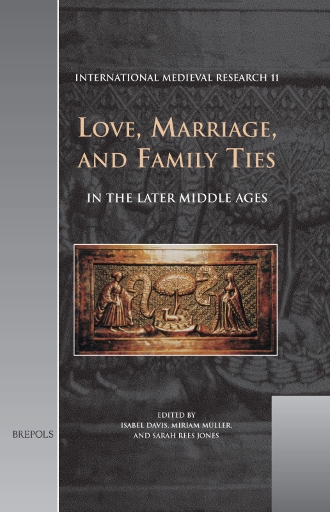
Love, Marriage, and Family Ties in the Later Middle Ages
This volume addresses the current fashion for research on the family and domesticity in the past. It draws together work from various disciplines - historical art-historical and literary - with their very different source materials and from a broad geographical area including some countries - such as Croatia and Poland - which are not usually considered in standard textbooks on the medieval family. This volume considers the various affective relationships within and around the family and the manner in which those relationships were regulated and ritualized in more public arenas. Despite their disparate approaches and geographical spread these essays share many thematic concerns; the ideologies which structured gender roles inheritance rights incest law and the ethics of domestic violence for example are all considered here. This collection originates from the Leeds IMC in 2001 when the special strand was entitled ‘Domus and Familia’ and attracted huge participation. This book aims to reflect that richness and variety whilst contributing to an expanding area of historical enquiry.
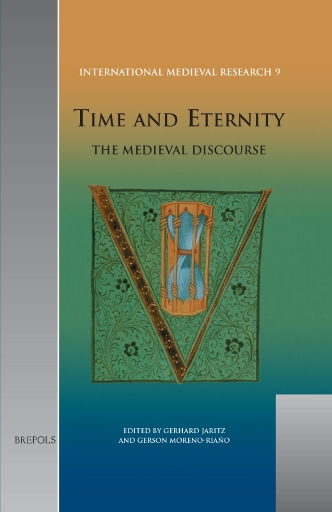
Time and Eternity
The Medieval Discourse
This volume is composed of selected papers from the main strand ‘Time and Eternity’ at the seventh International Medieval Congress held in July 2000. It attests to the fact that the medieval experience of time and eternity was rich and complex and that its investigation is open to various approaches and methods. Time and (the possibility or impossibility of) its beginning and its end were frontiers to be explored and to be understood.
To make the reader more familiar with the field of study the volume begins with Wesley Stevens’s plenary address ‘A Present Sense of Things Past: Quid est enim tempus?’ a stimulating introduction not only with regard to some of the basic problems in conceptualizing the nature of time but also to the dating of historical events and the use of calendars for that purpose.
Following Stevens’s essay the volume is organised into seven broader themes covering a variety of questions and trying to offer new insights into the medieval perception and constructions of time. They deal with the computation of time and the use of calendars; Jewish concepts of time and redemption; Christian philosophies of eternity and time; monastic and clerical conceptions; literary representations; time and art; and apocalyptic expectations. The volume’s selection of authors is international in scope and represents some of the leading current scholarship in the field. It proves that we still ‘thirst to know the power and the nature of time’ (St Augustine).
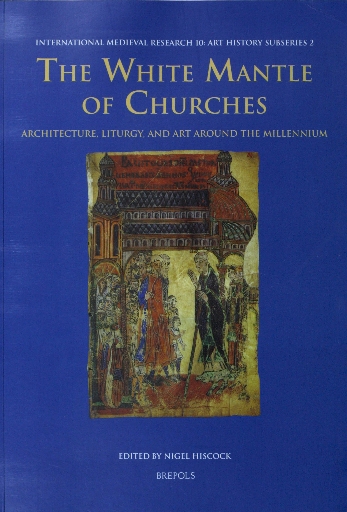
The White Mantle of Churches
When a monk living at the beginning of the last millennium described Europe ‘cladding itself everywhere in a white mantle of churches’ he precipitated several questions for historians to answer. Was there a surge in church-building at the time? If so what were the causes of this and what were the purposes? Does it help to explain our understanding of Romanesque architecture and art? Was there a connection between the ‘white mantle of churches’ and the millennium? Did people believe the world was coming to an end?
The supposition of apocalyptic expectations at the time was until recently dismissed as romantic myth but the arrival of our new millennium has brought a revival in interest in the dawn of the second millennium and new evidence of millennial fears. Yet millennial studies and architectural history largely continue to follow separate parallel paths. This book therefore aims to add the architectural evidence to the millennial debate and to examine this formative period in relation to the evolution of Romanesque architecture and art. As our own millennium gets under way with continuing hesitancy between European aspiration and national identity it is also of interest to compare our time with the Europe of a thousand years ago.
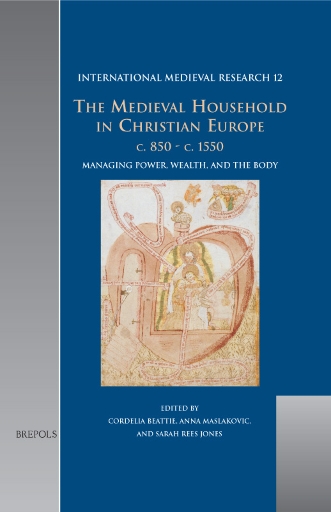
The Medieval Household in Christian Europe, c. 850-c. 1550
Managing Power, Wealth, and the Body
This volume asks whether there was a common structure ideology and image of the household in the medieval Christian West. In the period under examination noble households often exercised great power in their own right while even quite humble households were defined as agents of government in the administration of local communities. Many of the papers therefore address the public functions and perceptions of the household and argue that the formulation of domestic (or family) values was of essential importance in the growth and development of the medieval Christian state.
Contributors to this volume of collected essays write from a number of disciplinary perspectives (archaeological art-historical historical and literary). They examine socially diverse households (from peasants to kings) and use case studies from different regions across Europe in different periods within the medieval epoch from c. 850 to c. 1550. The volume both includes studies from archives and collections not often covered in English-language publications and offers new approaches to more familiar material. It is divided into thematic sections exploring the role of households in the exercise of power in controlling the body in the distribution of wealth and within a wider economy of possessions.
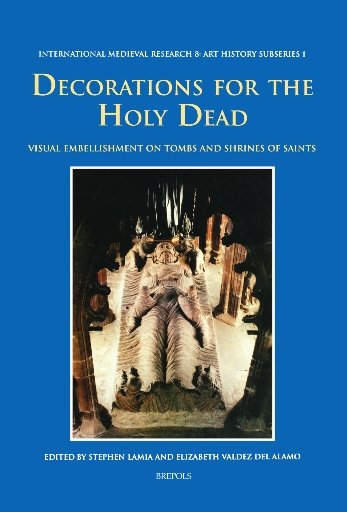
Decorations for the Holy Dead
Visual Embellishments on Tombs and Shrines of Saints
Devotion to saints their cult and memory was enormously popular in medieval Europe. Factual evidence in the form of tombs shrines reliquaries pilgrimages vitae and souvenirs is legion and attests to the all-pervasive nature of the phenomenon. Despite the massive bibliography on hagiography few if any books are devoted entirely to the study of saints’ burial places. The purpose of the papers gathered here based on presentations sponsored by the International Center of Medieval Art at the International Medieval Congress in Leeds (1999) plus additional papers commissioned by the editors is to examine the interaction between the visual arts at specific loci sancti and saints’ cults and further to enquire whether a corpus of more unusual motifs appeared at saintly sites beyond the more predictable narrative symbolic and iconic representations of saints. The papers address the active role saints’ tombs and their embellishments assumed within the fabric of medieval society: rituals enacted at saints’ burial places altarpieces reliquaries cloister as shrine the aura of the venerable past secular burial near saints’ tombs and political and feminist elements in devotional practice. Monuments from Spain France Italy Greece Hungary and England are examined and the volume incorporates 104 illustrations.
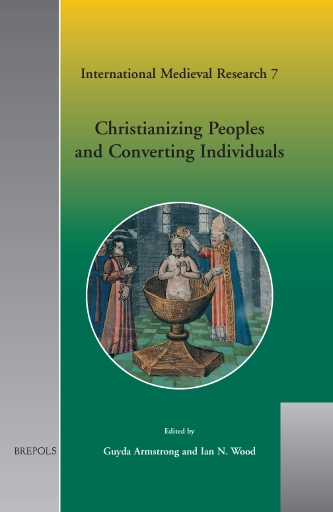
Christianizing Peoples and Converting Individuals
The anniversary of Augustine’s arrival in Kent in 597 and the subsequent christianization of England made conversion an obvious theme for the 1997 International Medieval Congress. It was also a theme which attracted massive interest and not just from early medievalists interested in the christianization of England and its near-contemporary parallels. This volume presents reworkings of 28 of these contributions.
The Early Middle Ages are represented in a number of papers concerned with Central and Eastern Europe and as far east as Georgia. Interest in the Baltic region took this aspect of the christianization of Europe well into the fourteenth century. Papers on these regions constitute a good proportion of the present volume and they provide a very useful point of entry into work currently being done on christinization in areas which are less well known to most historians than is Western Europe not least because of the range of languages involved.
With respect to later periods of the Middle Ages two issues predominated: one was the interface between Christians and Muslims in Spain and in the Holy Land and also between Christians and Jews once again in Spain but also in England and more generally in Western Europe. The other was the rather more theological question of the nature of conversion as discussed by Aquinas and in Franciscan writings. This wide-ranging volume concentrates on historical approaches to the topic. The different types of questions posed and materials used are a fascinating indication of the different interpretations to be found among specialists in different fields.
Christianization as a process affecting complete peoples or at least large groups attracts attention as does conversion of the individual. By putting these varying approaches together this collection indicates the range of current work on christianization and conversion history and the range itself quite apart from the individual studies is an eye-opener.