


Interdisciplinary Studies in the Middle Ages and the Renaissance
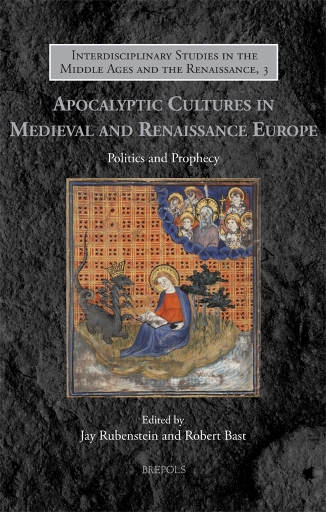
Apocalyptic Cultures in Medieval and Renaissance Europe
Politics and Prophecy
The essays in this collection were presented at the 2020 Symposium on Apocalypticism sponsored by the Marco Institute for Medieval and Renaissance Studies at the University of Tennessee. The authors offer new readings of medieval and Renaissance Apocalypticism in quotidian terms not as ‘counterculture’ but as the pragmatic expression of spiritualities that informed both debate and practice on subjects as mundane and diverse as warfare pilgrimage gender cartography environmentalism and governance. Topics include the origins of imperial eschatology; reflections on cosmology and the fate of the earth; the fusion of history prophecy and genealogy; Joachite readings of the political landscape of Italy; the influence of the Great Schism on Burgundian art; eschatology and gender in pilgrimage literature; the late medieval interpretation of the Revelationes of Pseudo-Methodius; and the appropriation of apocalyptic tropes in the propaganda and policies of the German emperor Maximilian I. The essays that open and close this collection offer meditations on the enduring legacy of Apocalypticism by focusing on the events — pandemic political unrest and the proliferation of conspiracy theories manifest in both — that mark the historical era in which this symposium took place.

Navigating Language in the Early Islamic World
Multilingualism and Language Change in the First Centuries of Islam
Traditional accounts of Arabicization have often favoured linear narratives of language change instead of delving into the diversity of peoples processes and languages that informed the fate of Arabic in the early Islamic world. Using a wide range of case studies from the caliphal centres at Damascus and Baghdad to the provinces of Arabia Egypt Armenia and Central Asia Navigating Language reconsiders these prevailing narratives by analysing language change in different regions of the early Islamic world through the lens of multilingualism and language change. This volume complicates the story of Arabic by building on the work of scholars in Late Antiquity who have abundantly demonstrated the benefits of embracing multilingualism as a heuristic framework. The three main themes include imperial strategies of language use the participation of local elites in the process of language change and the encounters between languages on the page in the markets and at work. This volume brings together historians and art historians working on the interplay of Arabic and other languages during the early Islamic period to provide a critical resource and reference tool for students and scholars of the cultural and social history of language in the Near East and beyond.
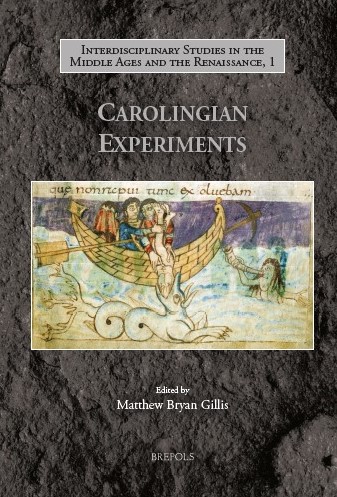
Carolingian Experiments
This volume presents essays exploring how the Carolingians (ca. 700-ca. 900 CE) - a regime known especially for concerns over imperial power order and moral correction - fostered a remarkable era of experimentation in medieval Europe. The scholars featured here ask new questions and conduct their own methodological experiments to uncover some of the many ways that people innovated within the Carolingian world. To that end numerous themes are covered in this volume: culture and society family and politics religion and spirituality literature and historiography law and hierarchy epistemology and science. This array of scholarly experiments reveals some of the range and depth of Carolingian invention. Furthermore the essays consider how Carolingian innovation can be found in places both more and less known today employing novel approaches to unearth some unexpected even uncanny phenomena. This volume consequently offers a defamiliarizing view of the Franks unveiling them as a people whose seemingly straightforward imperialism and reform were effective precisely because they stimulated and nurtured potent creative impulses. In fact one might argue that the Carolingian world’s conservative moralizing authorities - despite or perhaps at times because of their determination to instil correct thought and behaviour in their subjects - fostered many varieties of experimentation. Collectively the authors of this volume seek to inspire new thinking about the Carolingians while modelling alternative approaches and potential avenues for future research. Carolingian Experiments overall encourages readers to see that much remains unexplored unknown and even unexpected about the Carolingians and their world.