


Knowledge, Scholarship, and Science in the Middle Ages
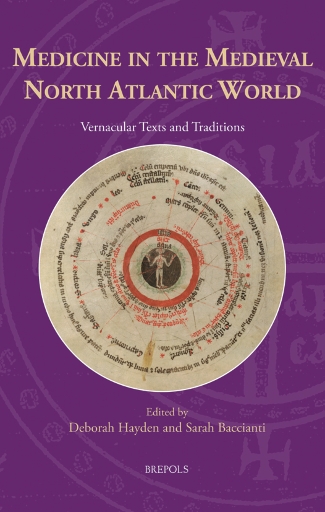
Medicine in the Medieval North Atlantic World
Vernacular Texts and Traditions
Studies of medical learning in medieval England Wales Ireland and Scandinavia have traditionally focused on each geographical region individually with the North Atlantic perceived as a region largely peripheral to European culture. Such an approach however means that knowledge within this part of the world is never considered in the context of more global interactions where scholars were in fact deeply engaged in wider intellectual currents concerning medicine and healing that stemmed from both continental Europe and the Middle East.
The chapters in this interdisciplinary collection draw together new research from historians literary scholars and linguists working on Norse English and Celtic material in order to bring fresh insights into the multilingual and cross-cultural nature of medical learning in northern Europe during the Middle Ages c. 700–1600. They interrogate medical texts and ideas in both Latin and vernacular languages addressing questions of translation cultural and scientific inheritance and exchange and historical conceptions of health and the human being within nature. In doing so this volume offers an in-depth study of the reception and transmission of medical knowledge that furthers our understanding both of scholarship in the medieval North Atlantic and across medieval Europe as a whole.
The Craft of History
Turning History into a Discipline in the Twelfth and Thirteenth Centuries
History is today an established academic discipline characterized by the use of footnotes and references to support claims. However attempts to codify history and impose disciplinary rigour were made in the Middle Ages even before the introduction of the modern apparatus. One such attempt was the use of the source mark a precursor of the modern footnote. Initially used in the works of lawyers and theologians the source mark indicated that a text and its ideas belonged to a named authority. The application of the source mark to historical writings marked a change in the way history was perceived.
This volume explores how history was transformed into a discipline by focusing on four key twelfth-and thirteenth-century sources: the anonymous Status Imperii Iudaici the Chronicle of Hélinand of Froidmont the Chronicle of Alberic of Trois-Fontaines and Vincent of Beauvais’s Speculum Historiale. By focusing on these four texts and examining the influences of surrounding disciplines such as law and theology the author explores how these historical writers drew on a wide range of different sources of information to provide a truthful account of the past. Furthermore the aim of producing a reliable narrative was combined with an awareness of the status of the author. Through these case studies this volume offers a fascinating reassessment of our modern understanding of the origins of the study of history.
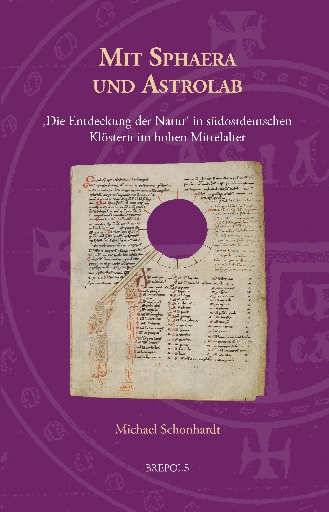
Mit Sphaera und Astrolab
‚Die Entdeckung der Natur‘ in südostdeutschen Klöstern im hohen Mittelalter
This book offers a study of the scientific landscape of medieval Bavaria during the higher Middle Ages. Based on manuscripts as well as medieval library catalogues it tries to quantify the so-called ‘Discovery of Nature’ and tries to analyse it from the perspective of a monastic landscape in which the arrival of the astrolab in the 11th century marked a significant turning point. By introducing new methods and questions into the traditional body of Carolingian astronomy monastic scholars of this area played a decisive albeit neglected role in the development of medieval astronomy.
The book reconstructs the studies of the monk Wilhelm von Hirsau who tackled some of the most urgent problems of astronomy of his time: correcting the dates of the solstices and finding latitude. These studies are then placed in the broader development of medieval science particularly focusing on his sphaera an instrument that has often been wrongly understood as a teaching device. In contrast the present study argues that this instrument is not only William’s lost astronomical clock but also the first example for stationary observational astronomy in medieval Europe as well as an important milestone towards the empirical astronomy of future centuries.
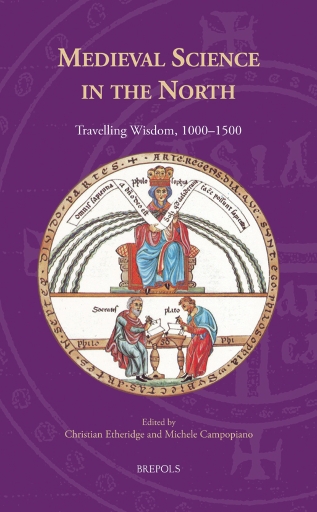
Medieval Science in the North
Travelling Wisdom, 1000–1500
Medieval science has become an increasingly popular area of academic interest over the past couple of decades but much of this work has up to now concentrated on France and the Mediterranean while relatively little attention has been paid to the north of Europe. This has led to the assumption that Northern Europe stood aside from the mainstream of scientific knowledge in the Middle Ages when in fact the region was a vital part of the medieval network of scientific scholarship. This important volume aims to redress the balance in scholarship by bringing together for the first time a collection of studies on medieval scientific knowledge that focuses on both Scandinavia and England.
The essays gathered here examine topics as wide-ranging as the intellectual network between Denmark and Paris; the role of Dominican friars in spreading scientific knowledge in Scandinavia; the practical application of technology by English armourers; fragments of scientific manuscripts found in early modern Swedish documents; the use of scientific volumes and descriptions of university life in medieval Icelandic literature; and fresh insights into the careers of the English scientists Roger of Hereford Roger Bacon and Robert Grosseteste. Together these papers show the dynamism and depth of science in the medieval North and offer new insights into how scientific wisdom travelled through across and between the peoples of this region.
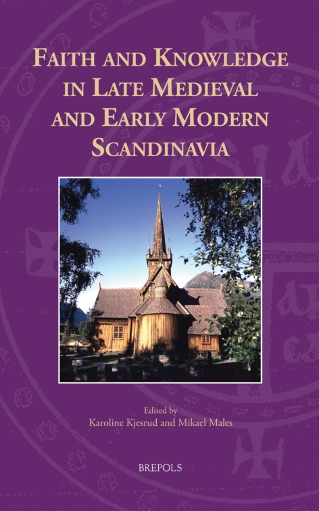
Faith and Knowledge in Late Medieval and Early Modern Scandinavia
This book investigates the interface between faith and knowledge in Scandinavia in the centuries before and after the Reformation a period in which the line between belief and knowledge was often blurred and local traditions remained influential. While Scandinavia was undoubtedly an integral part of Latin Christendom before the arrival of Lutheranism the essays gathered together in this volume demonstrate that religious discourse still took a unique form in this region. Faith was influenced by magical practices centred on remnants of Nordic paganism local wisdom literature and metaphoric language about the divine that diverged considerably from that of the Judeo-Christian tradition. Texts motifs and practices that were common throughout Europe were also transformed and altered within this northern setting.
Covering the late medieval up to the early modern period this volume offers new insights into intellectual culture in Scandinavia and the remarkable longevity of local beliefs even into the early post-Reformation period.