


LEMA
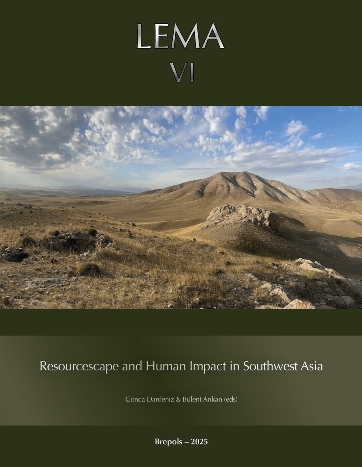
Resourcescape and Human Impact in Southwest Asia
Landscape archaeology has in recent years expanded as a discipline to include various aspects of human-environment interactions in the past. In line with this trend this volume offers a comprehensive perspective on three topics: theoretical and textual approaches to landscape which provides an important framework for interdisciplinary research; the use of land and resources which while a popular topic in Southwest Asian archaeology remains relatively understudied in connection to ancient technologies; and human impact on the highlands. The contributions gathered in this volume cover topics as diverse as agricultural practices metallurgy trade and environmental research and draw together evidence from both textual and material evidence to shed light on different places and periods from the Bronze Age through to the Roman era. Together these varied case studies offer new insights into how different methods can be utilized to assess unique patterns in human-environment interactions in Southwest Asia.
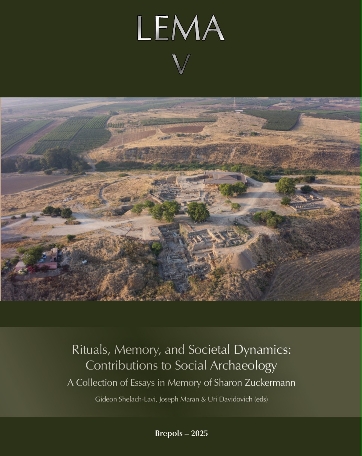
Rituals, Memory, and Societal Dynamics: Contributions to Social Archaeology
A Collection of Essays in Memory of Sharon Zuckerman
Thanks largely to the introduction of new methods of recovery and analysis archaeology is increasingly treated as a science. Yet it should continue to ask questions that are founded in the humanities. This is especially true of social archaeology which forms the core of this volume. Being based on the notion that ‘the social’ permeates all areas of life the chapters gathered here give priority to archaeological data and contexts which in turn form the prerequisite for analyzing how at particular times and places people negotiated or reaffirmed the society around them. Case studies from the Levant and the Eastern Mediterranean sit alongside selected comparative cases from other parts of the world and assess issues such as the development of cultural characteristics of societies societal continuity and collapse religious beliefs and rituals and the role of social memory as well as interactions within and between societies. The volume is dedicated to the memory of our colleague and friend Dr. Sharon Zuckerman who embraced the quest for ‘the social’ throughout her career.
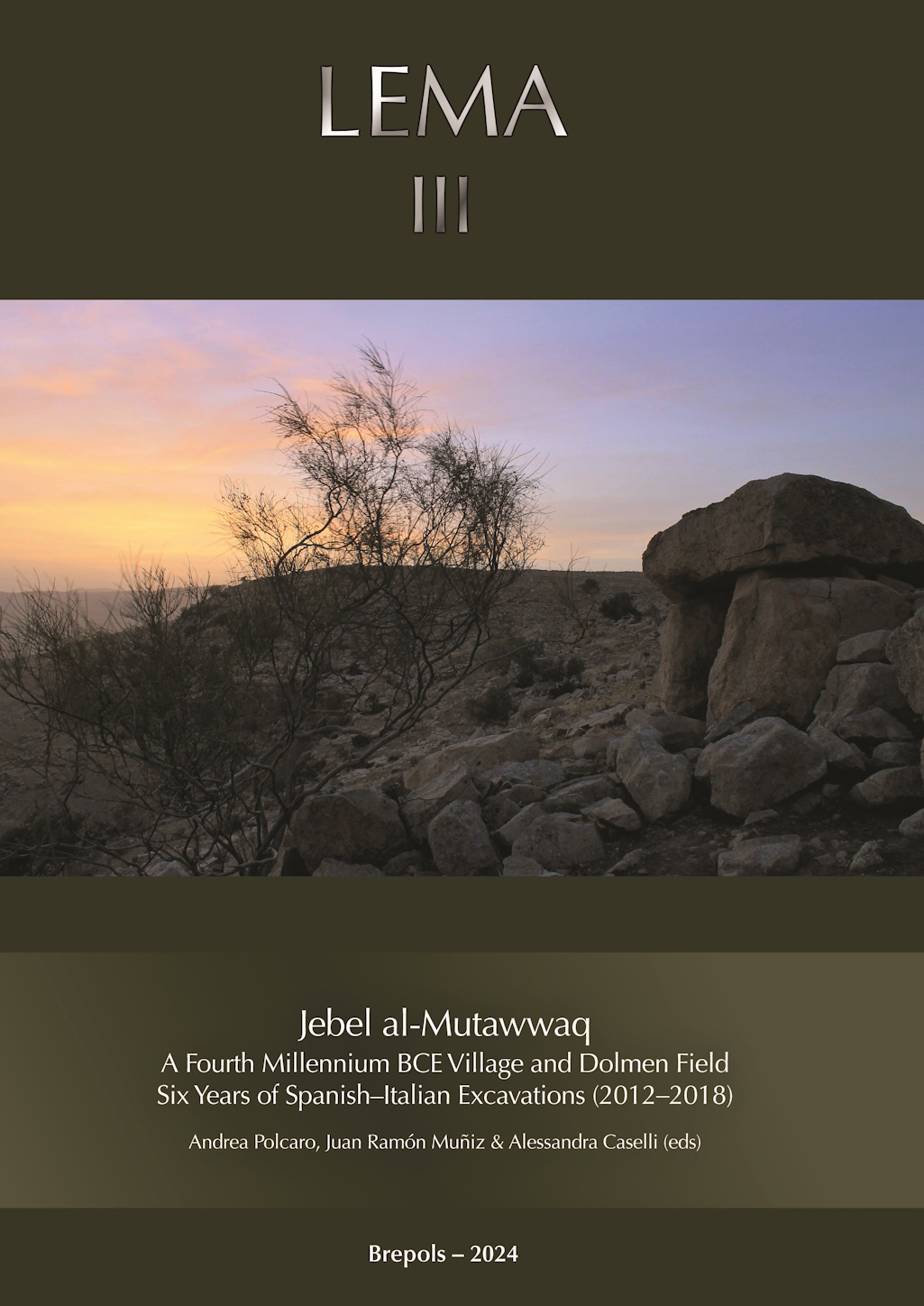
Jebel al-Mutawwaq
A Fourth Millennium bce Village and Dolmen Field. Six Years of Spanish-Italian Excavations (2012–2018)
The Early Bronze Age site of Jebel al-Mutawwaq located on a hill overlooking the Zarqa River in Jordan was a thriving centre of population from the second half of the fourth millennium into the third millennium bce. During this time the settlement developed both in population and social complexity undergoing the beginnings of an urbanization process that fundamentally changed the relationship between this community of the Transjordanian Highlands with the surrounding landscape until it was completely abandoned around 2900 bce. This volume offers a new assessment of the site by combining data from the first surveys of the site under a Spanish team led by J. A. Fernandez-Tresguerres with the new results from six seasons of excavations led by teams from Perugia in Italy and San Esteban in Spain. In doing so this work sheds new light on this walled settlement and its huge megalithic necropolises and offers a fresh understanding of the site.
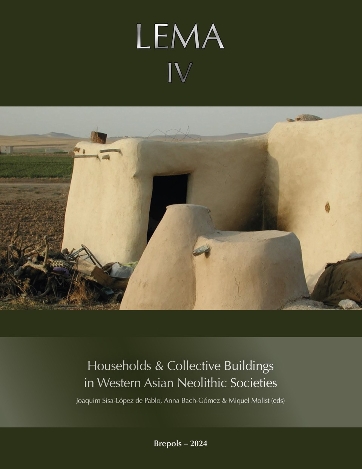
Households & Collective Buildings in Western Asian Neolithic Societies
Architecture and the layout of settlements are key elements of archaeological research that enable an understanding of past societies. In studying the built environment and the articulation of social spaces it is possible to shed light on the social relations of communities and on the ideology economy and cultural and social practices that underpinned how people lived. Taking a study of the built environment as its starting point this volume draws together contributions focusing on the Neolithic transition in south-western Asia. Covering a period that extends from the Early Pre-Pottery Neolithic through to the Late Neolithic (c. 10000–5500 BCE) the chapters gathered here explore the built environment from different regions perspectives and methodologies and draw on new theoretical and analytical approaches in order to expand our knowledge of the emergence of the Neolithic through the lens of architectural and settlement analysis.
Conceptualizing Bronze Age Seascapes
Concepts of the Sea and Marine Fauna in the Eastern Mediterranean in the Second Millennium bce
The Mediterranean has for millennia formed the heart of an intensive trading network of ideas goods and people. For the ancient populations of the Levant Cyprus and Southern Anatolia interactions with the sea — from fishing to seafaring and from trade to dye production — were a constant presence in their life. But how did the coastal peoples of the Bronze Age understand the sea? How did living on the shore influence their lives from daily practices to mythological beliefs? And what was the impact on their conceptual world? This volume seeks to engage with these questions by addressing the relationship between environment diet material production perception and thought formation through a combination of archaeological analysis and engagement with primary sources and in doing so it offers unique insights into the conceptual world of the ancient Mediterranean maritime cultures of the 2nd millennium BCE.
Bassit 2 (Syrie) - Fouilles Paul Courbin (1971-1984)
Le tell du xvi e siècle av. J.- C. au vi e siècle ap. J.- C.
À 50 km au Nord de Lattaquié le site côtier de Bassit a été étudié sous la direction de Paul Courbin : après l’acropole (1971-1972) (périodes hellénistique et romaine) et la nécropole du Fer (1973-1974) le « tell » a été fouillé de 1972 à 1984. Sont présentés ici une description détaillée de la stratigraphie et de l’architecture du « tell » des ensembles céramiques associés ainsi que le corpus du mobilier datant du Bronze Récent I et II. Bassit est installé aux marges Nord du royaume d’Ougarit à partir du milieu du xvi e s. av. J.-C.. Les importations chypriotes sont nombreuses durant tout le Bronze Récent mais la céramique égéenne apparaît très rare. Le site est détruit bien avant le passage des « peuples de la mer » (vers 1200). À l’âge du Fer la fonction constante de Bassit est de contrôler l’accès maritime depuis Chypre et le cabotage littoral. Le commerce de la céramique chypriote domine le Fer I et II celui des céramiques égéennes et étrusques puis attiques le Fer III. À l’époque hellénistique la production d’amphores et de monnaies confirme l’identification de Posideion avec Bassit. L’époque romaine est également marquée par une importante production de céramique.