


Medieval Church Studies

The Power of Words in Late Medieval Devotional and Mystical Writing
Essays in Honour of Denis Renevey
This volume honours Denis Renevey's contribution to late medieval devotional and mystical studies via a series of essays focusing on a topic that has been of central relevance to Denis's research: the power of words. Contributors address the centrality of language to devotional and mystical experience as well as the attitudes towards language fostered by devotional and mystical practices. The essays are arranged in four sections: 'Other Words: Figures and Metaphors: treating the application of the languages of romantic love medicine and travel to descriptions of devotional and mystical experience; 'Iconic Words: Images and the Name of Jesus; considering the deployment of words and the Word (Jesus) as powerful images in devotional practice; 'Testing Words: Syntax and Semantics; exploring the ways in which medieval writers stretch the conventions of language to achieve fresh perspectives on devotional and mystical experiences; and 'Beyond Words: The Apophatic and The Senses; offering novel perspectives on a group of texts that address the difficulty of expressing God and visionary experience with words.
The volume's global purpose is to demonstrate the attractions of an explicitly philological approach for scholars studying the Christian tradition.
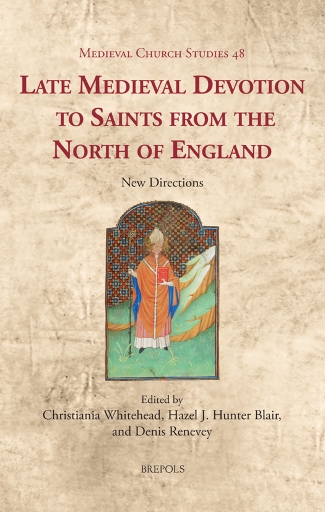
Late Medieval Devotion to Saints from the North of England
New Directions
This volume fills an important gap in the study of medieval English sanctity. Focused on the period 1150-1550 it examines later manifestations of pre-conquest northern English cults (John of Beverley Oswald Hilda Ætheldreda etc.) and the establishment and development of many more during the twelfth to fifteenth centuries (Godric of Finchale Robert of Knaresborough Oswine of Tynemouth Æbbe of Coldingham Bega of Copeland William of York etc.). It showcases the diversity of new northern cults that emerged after 1150 and pays particular attention to cultures of episcopal and eremitic devotion and hagiographic production in Yorkshire Cumbria and Lincolnshire.
Divided into five subsections the volume opens by exploring the relation of sanctity to constructions of northern identity through targeted examinations of northern textual and material cultures. It then turns to a series of case studies of northern saints’ cults grouped with reference to the eremitic life female networks and locations and the contextualisation of northern sanctity within national transnational and post-medieval currents of veneration. Underlying all these essays is a concern with the conflicted idea of ‘northernness’. This collection argues for a northern sanctity that is imagined in varying ways by different communities (monastic diocesan national etc.) allied to a series of conceptual ‘norths’ that differ significantly in accordance with the bodies of evidence under survey.
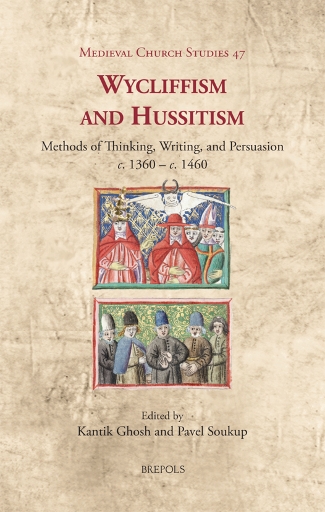
Wycliffism and Hussitism
Methods of Thinking, Writing, and Persuasion c. 1360 – c. 1460
John Wyclif (d. 1384) famous Oxford philosopher-theologian and controversialist was posthumously condemned as a heretic at the Council of Constance in 1415. Wyclif’s influence was pan-European and had a particular impact on Prague where Jan Hus from Charles University was his avowed disciple and the leader of a dissident reformist movement. Hus condemned to the stake at Constance gathered around him a prolific circle of disciples who changed the landscape of late medieval religion and literature in Bohemia just as Wyclif’s own followers had done in England.
Both thinkers and the movements associated with them played a crucial role in the transformation of later medieval European thought in particular through a radically enlarged role of textual production in the vernaculars (especially Middle English and Old Czech) as well as in Latin in the philosophical theological and ecclesiological realms.
This interdisciplinary volume of essays brings together cutting-edge research from scholars working in these and contiguous fields and asks fundamental questions about the methods that informed Wycliffite and Hussite writings and those by their interlocutors and opponents. Viewing these debates through a methodological lens enables a reassessment of the impact that they had and the responses they elicited across a range of European cultures from England in the west via France and Austria to Bohemia in the east.
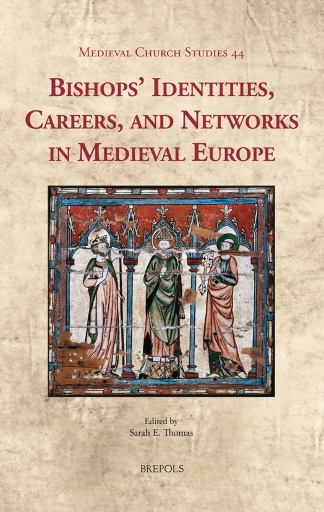
Bishops’ Identities, Careers, and Networks in Medieval Europe
Bishops were powerful individuals who had considerable spiritual economic and political power. They were not just religious leaders; they were important men who served kings and lords as advisers and even diplomats. They also controlled large territories and had significant incomes and people at their command. The nature of the international Church also meant that they travelled and had connections well beyond their home countries were players on an increasingly international stage and were key conduits for the transfer of ideas.
This volume examines the identities and networks of bishops in medieval Europe. The fifteen papers explore how senior clerics attained their bishoprics through their familial social and educational networks their career paths relationships with secular lords and the papacy. It brings together research on bishops in central southern and northern Europe by early career and established scholars. The first part features five case-studies of individual bishops’ identities careers and networks. Then we turn to examine contact with the papacy and its role in three regions: northern Italy the archbishopric of Split and Sweden. Part III focuses on five main issues: royal patronage reforming bishops nepotism social mobility and public assemblies. Finally Part IV explores how episcopal networks in Poland Sigüenza and the Nidaros church province helped candidates achieve promotion. These contributions will thus enhance of our understanding of how bishops fit into the religious political social and cultural fabrics of medieval Europe.
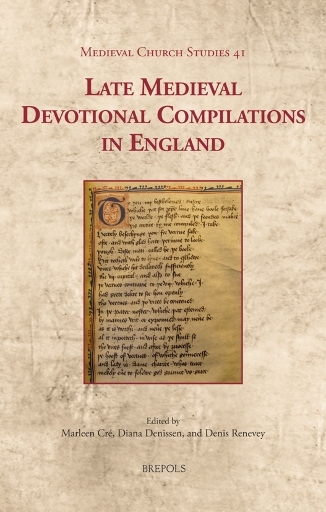
Late Medieval Devotional Compilations in England
Devotional compilations were the staple spiritual food for lay and religious readers in the late medieval period. As well thought-out assemblages of texts or extracts of texts they provided readers with material from basic catechetic instruction to advice and tools for the practice of contemplation. Their exploration enables a more sophisticated understanding of the authorial roles played by compilers the reading practices of their recipients and the patronage of compilations carried out by religious and secular individuals and communities. It also offers a new window into late medieval English religiosity as well as demonstrating the complexity and creativity associated with compiling activity.
In this volume leading scholars in the field of medieval English literature consider the role and impact of a substantial number of devotional compilations offering new evidence about the manuscripts sources and contexts that frame this important corpus.
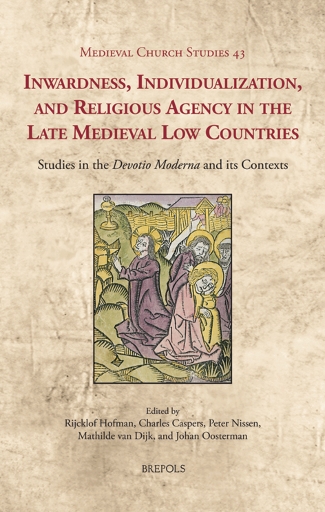
Inwardness, Individualization, and Religious Agency in the Late Medieval Low Countries
Studies in The 'Devotio Moderna' and its Contexts
Recent scholarship on the Middle Ages has highlighted the importance of individualistic tendencies in devotion in both the lay world and religious communities. This interaction between individualization and religious agency has been scrutinized in numerous studies focusing on the beginnings during the so-called ‘Twelfth- Century Renaissance’ and further development in the later medieval and early modern periods.
However there has hitherto been relatively little scholarship on the phenomenon in the Devotio Moderna: the flourishing of more personalized forms of devotion in north-western Europe during the later Middle Ages. The essays in this volume redress this gap by exploring the processes of inwardness and the emergent individualization of religious practices in the late medieval Low Countries. The essays explore issues including the early impact of the printing press on devotion; meditational aids such as identification with Christ prayer cycles practices of remembrance and devout songs; and the tension between inner devotion and the ideal of communal piety in male and female religious communities. They also discuss some leading individuals of the Devotio movement.
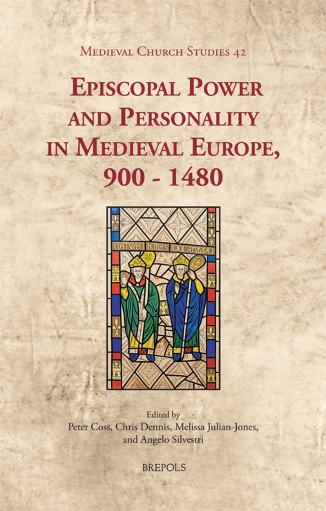
Episcopal Power and Personality in Medieval Europe, c. 900–c. 1480
The question of personality is a problematic one beset by complications of cultural distance the layers of the past and the limitations of the source material.
Recognising these difficulties this volume draws together character sketches based upon historical narratives and a range of sources including architecture liturgical manuscripts chronicles and hagiographical material to show a multifaceted range of means by which historians can construct reconstruct and deconstruct episcopal power through the person of the bishop.
Building on a previous volume of essays Episcopal Power and Local Society in Medieval Europe 900-1400 which examined the construction augmentation and expression of episcopal power in local society this second volume seeks to uncover the impact of the personalities behind that power. Through essays dealing with the construction of cultural and political personalities the shadows they cast and the contexts that forged them this volume brings to life the careers of bishops across medieval Europe from c. 900 to c. 1480. This geographical range and broad time span throws up the similarity in applications and bene ts of interdisciplinarity which can be applied to ecclesiastical history and presents a fascinating range of case studies for consideration.
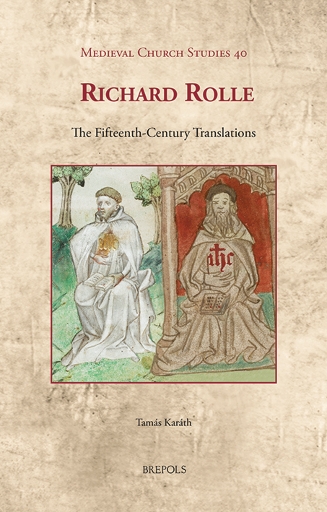
Richard Rolle
The Fifteenth-Century Translations
This book explores the fifteenth-century translations of Richard Rolle’s Latin and English writings into English and Latin respectively raising questions about the impact of translation on an author’s legacy through the editorial activity of his translators. The volume also discusses Rolle’s sensory mysticism - which was criticized by the ensuing generation of mystics - whilst looking into the ways in which translations of his work create a fifteenth-century version of Rolle. While the fifteenth-century translations did not represent the standard means of shaping Rolle’s authority this study illustrates individual encounters with Rolle’s writings in which interpretation was much more overt than in the devotional reuse of untranslated Rollean material. The volume asks if alternative and perhaps controversial portraits of the same author arise from the translations.
Richard Rolle has received many often conflicting labels in scholarship: the father of English prose the first medieval English author the first known mystic of English literature the runaway Oxford man the non-conformist hermit and the misogynist. This book is located in the context of the late medieval censorship culture which inevitably impacted the translators’ treatment of authority revelatory writing and theological speculations. The analysis of Rolle in translation highlights the various meanings practices and implications of translation in the fifteenth century.
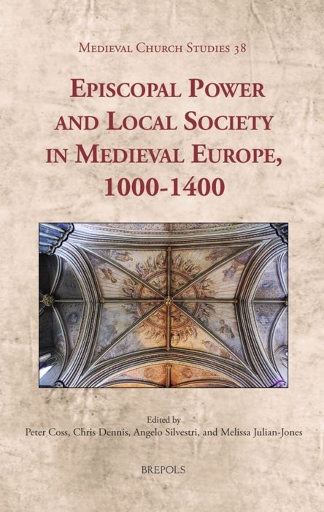
Episcopal Power and Local Society in Medieval Europe, 1000-1400
The medieval bishop occupied a position of central importance in European society between 900 and 1400. Indeed medieval bishops across Europe were involved in an assortment of ecclesiastical and secular affairs a feature of the episcopal office in this period that ensured their place amongst the most influential figures in their respective milieux. Such prominence has inevitably piqued the interest of modern scholars and a number of important studies focusing on individual aspects of the medieval episcopal office have emerged notably in recent years. Yet scholarly attention has often been drawn towards the careers of extraordinary bishops men whose renown was often due to their involvement in both ecclesiastical and secular activities that took them beyond the borders of their dioceses. As a result there has been a tendency to overlook the significance of the function of the episcopal office within local society and in particular the way that this context shaped episcopal power.
The purpose of this volume is to examine the foundations of episcopal power in medieval Europe by considering its functioning and development at the level of local society. This collection of essays derives from papers delivered at a conference at Cardiff University in May 2013 and is divided into three sections focusing on the construction of episcopal power in local society the ways in which it was augmented and the different forms through which it was expressed. The essays have a broad geographical scope and include studies focused on English French Italian and Icelandic dioceses.
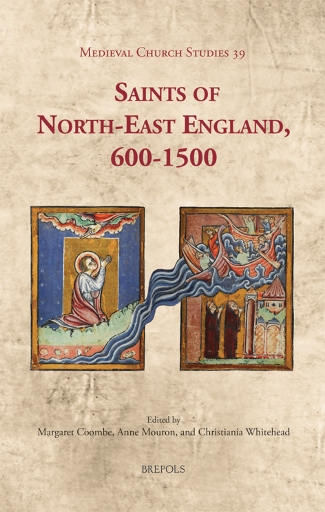
Saints of North-East England, 600-1500
During the seventh and early eighth centuries a number of influential saints’ cults were established within the Anglo-Saxon kingdom of Northumbria most notably the cult of St Cuthbert served by the monks of Lindisfarne. Reacting to the Danish incursions of the ninth century the Lindisfarne community gradually migrated south to Durham where in the early eleventh century the relics of further Northumbrian saints were collected to join those of Cuthbert. Following the re-foundation of the Durham church as a Benedictine house in 1083 the community sought to legitimise itself by stressing its links with an ancient saintly past. A century later the cults of new hermit saints such as Godric of Finchale and Bartholomew of Farne extensively modelled on St Cuthbert’s example were added to the north-eastern Durham familia.
This volume takes an interdisciplinary approach to these north-eastern saints offering a comprehensive snapshot of new scholarship within the field. The first section focuses on the most eminent saints and hagiographers of Anglo-Saxon Northumbria: Cuthbert Wilfrid and Bede. The second section examines their utility for the twelfth-century Anglo-Norman community at Durham and surveys the cults which emerged alongside including the early saint-bishops of Hexham Augustinian priory. The third section reviews the material culture which developed around these saints in the fourteenth and fifteenth centuries: their depiction in stained glass their pilgrimages and processions and the use of their banners in the Anglo-Scottish wars. A concluding essay re-evaluates the north-eastern cult of saints from post-Reformation perspectives.
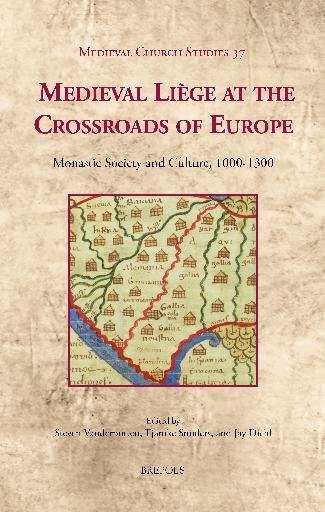
Medieval Liège at the Crossroads of Europe
Monastic Society and Culture, 1000–1300
During the high Middle Ages the bishopric of Liège found itself at a cultural crossroads between the German Empire and the French lordships. The Liègeois themselves summed up the situation when they declared that: ‘Gaul considers us its most distant inhabitants Germany as nearby citizens. In fact we are neither but both at the same time’. This same complexity is also echoed by present-day historians who have described Liège as a hub of interactions between two great civilisations. Medieval monastic communities in Liège were key sites of this exchange actively participating in the cultural developments social networks and political structures of both regions.
Bringing together the work of international scholars this collection of essays addresses the problem of monastic identity and its formation in a region that was geographically wedged between two major competing socio-political powers. It investigates how monastic communities negotiated the uncertainties of this situation while also capitalizing on the opportunities it presented. As such this book sheds light on the agency of monastic identity formation in a small but complex region caught at the crossroads of two major powers.
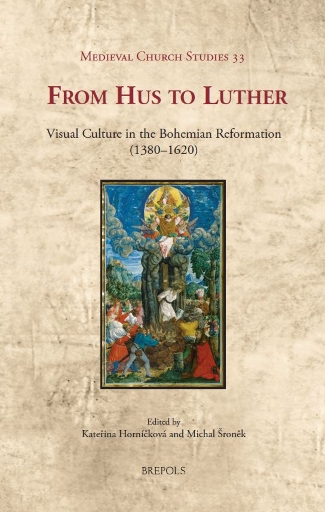
From Hus to Luther
Visual Culture in the Bohemian Reformation (1380-1620)
This book portrays a little-known phenomenon in Bohemian cultural and political history - the visual culture that grew up in the environment of Reformation churches in Bohemia from the time of the Hussites until the defeat of the Estates by the Habsburg coalition at White Mountain in 1620. It provides the first comprehensive overview of a forgotten era of artistic production over a period of approximately two hundred years when most of the population of Bohemia professed non-Catholic faiths.
During the fifteenth and sixteenth centuries a unique situation arose in Bohemia with five main Christian denominations (Utraquists Lutherans the Unity of Brethren Calvinists and Catholics) gradually coming to function alongside each other with a number of other religious groups also active. The main churches which had a fundamental influence on political stability in the state were the majority Utraquists and the minority Catholics. Yet the essays of this book establish that despite the particularities of the Bohemian situation the religious trends of Bohemia were an integral part of the process of Reformation across Europe.
Featuring over fifty illustrations including manuscript illumination panel painting and architecture the book also presents the surviving cultural products of the four non-Catholic Christian denominations ranging from the more moderate to radical Reformation cultures. The book also analyses the attitudes of these denominations to religious representations and illuminates their uses of visual media in religious and confessional communication. The book thus opens up both the Reformation culture of Bohemia and its artistic heritage to an international audience.
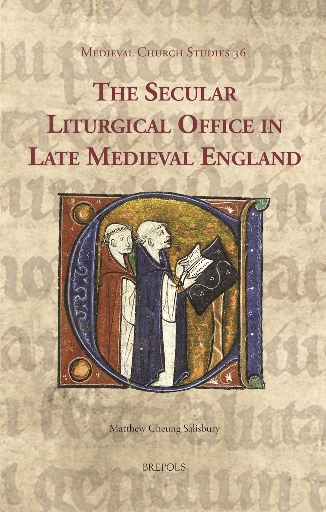
The Secular Liturgical Office in Late Medieval England
Until recently research on the late medieval English Office liturgy has suggested that all manuscripts of the same liturgical Use including those of the celebrated and widespread Uses of Sarum and York are in large part interchangeable and uniform. This study demonstrates through detailed analyses of the manuscript breviaries and antiphonals of each secular liturgical Use of medieval England that such books do share a common textual core. But this is in large part restricted to a single genre of text - the responsory. Other features even within manuscripts of the same Use are subject to striking and significant variation influenced by local customs and hagiographical and textual priorities and also by varying reception to liturgical prescriptions from ecclesiastical authorities. The identification of the characteristic features of each Use and the differentiation of regional patterns have resulted from treating each manuscript as a unique witness a practice which is not common in liturgical studies but one which gives the manuscripts greater value as historical sources. The term ‘Use’ often employed as a descriptor of orthodoxy may itself imply a greater uniformity than ever existed for the ways that the ‘Use of Sarum’ a liturgical pattern originally designed for enactment in a single cathedral was realised in countless other venues for worship were dependent on the times places and contexts in which the rites were celebrated.
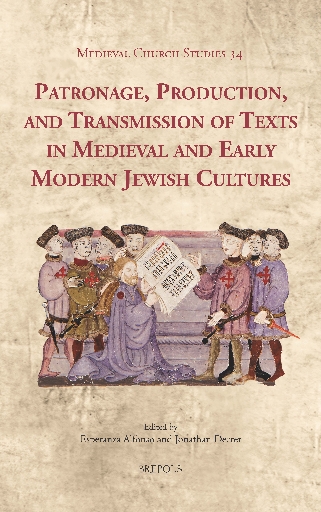
Patronage, Production, and Transmission of Texts in Medieval and Early Modern Jewish Cultures
Medieval and early modern cultural history has witnessed a recent shift from the study of manuscripts and early printed books as vehicles of texts and images towards their study as cultural objects in their own right. Rather than focusing solely on original authorship scholars have turned to subjects such as the patronage production circulation and consumption of texts. Codicological features annotations glosses ownership notes deeds of sale and other traces have revealed countless insights into the social worlds of texts - their patrons producers and readers.
This book contributes to this area of scholarship with respect to Jewish texts and Jewish social contexts by focusing on select cases in the production of Bibles Haggadot religious poetry and translations of and commentaries on scripture in the Eastern and Western Mediterranean between the tenth and sixteenth centuries. Individual essays consider models of patron-client relationships interconfessional patronage scenarios manuscript production through ‘multiple hands’ the (incomplete) transition from manuscript production to printed books and relationships among text image and reader as suggested by codicological features.
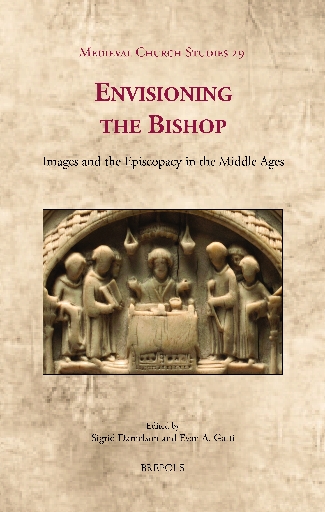
Envisioning the Bishop
Images and the Episcopacy in the Middle Ages
The bishop wielded significant authority in religious intellectual and political spheres during the Middle Ages but how was this influence articulated and once articulated how was it received? The essays in this volume represent a variety of disciplinary perspectives each tuned to the production of images made by for and about the medieval episcopacy. They present the bishop as a model of piety and intellectual life as well as political and religious action.
Considering material from Late Antiquity through the thirteenth century the essays offer a series of case-studies demonstrating that crafting episcopal imagery was a complicated endeavour employing pictorial historical literary and historiographic devices. Never a static institution the episcopacy was formed and reformed making it visible to the bishop to those with whom he interacted and to broader communities. These efforts at making present the power and authorities of the office asserted the duties expectations and ideals of the bishop in ways often specific to time and place.
The diverse perspectives on the episcopal image assembled here reveal the office not as a singular contour but as a succession of marks and erasures. Shaped by supporters and detractors alike medieval images of the bishop engaged with historical models responded to present realities and considered the eschatological future.
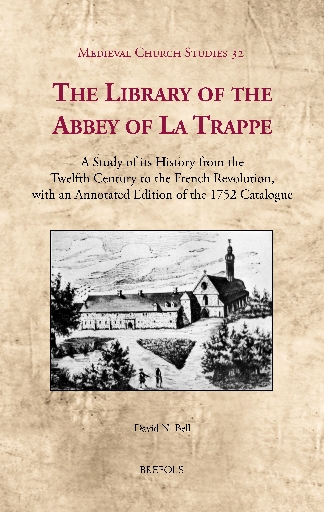
The Library of the Abbey of La Trappe
A Study of its History from the Twelfth Century to the French Revolution, with an Annotated Edition of the 1752 Catalogue
This volume presents a study of the library of the Cistercian abbey of La Trappe in Normandy from the twelfth century to the French Revolution together with an annotated edition of the library catalogue of 1752. The abbey was founded as a Savigniac house became Cistercian in 1147 and is inseparably linked with the name of Armand-Jean de Rancé the great monastic reformer and founder of the Order of Cistercians of the Strict Observance. When he became abbot of La Trappe in 1664 he brought with him many of his own books and had a new library built to house the monastic collection. Rancé died in 1700. Other books were then added over time until in 1752 the abbey possessed about 4300 volumes. The detailed catalogue is divided into two parts. The first part lists the books by subject beginning as might be expected with bibles; the second part lists the same books by author. The information presented in this study of the abbey and its library is of first importance not only for understanding the nature and development of Cistercian intellectual and spiritual life but also for the history of early modern libraries and the development of library cataloguing.

The Courtly and Commercial Art of the Wycliffite Bible
In 1409 Archbishop Thomas Arundel banned the Wycliffite Bible along with the heresy attributed to Oxford theologian John Wyclif for which it was named. Containing the first complete translation of the Bible into English the Wycliffite Bible is nonetheless the most numerous extant work in Middle English by a wide margin.
Nearly half the existing copies of the Wycliffite Bible are illuminated. This book offers the first sustained critical examination of the decoration of Wycliffite Bibles. This study has found that many copies were decorated by the most prominent border and initial artists of their eras. Many more were modeled on these styles. Such highly regarded artists had little to gain from producing volumes that might lead them to trial as heretics and ultimately to the stake.
This unprecedented study contributes to recent revisionist criticism and troubles long-standing assumptions about Wycliffism and the Wycliffite Bible. It contends that the manuscript record simply does not support a stark interpretation of the Wycliffite Bible as a marginalized text. Rather this study reveals a prolific and vibrant textual exchange within the book culture of late medieval England.
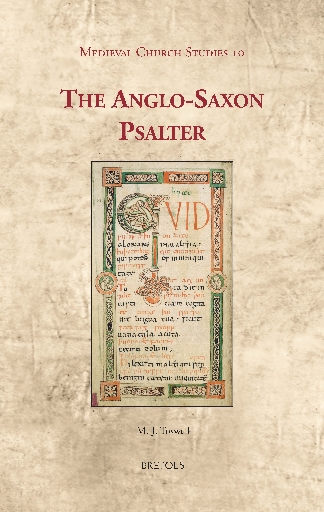
The Anglo-Saxon Psalter
The psalms are at the heart of Christian devotion in the Middle Ages and still today. Learned early and sung weekly by every medieval monastic and cleric the psalms were the language Christ and his ancestor David used to speak to God. Powerful and plaintive angry and anguished laudatory and lamenting: the psalms expressed the feelings and thoughts of the individuals who devised them and those who sang them privately or publicly in Anglo-Saxon England many generations later. Psalters from Anglo-Saxon England are the largest surviving single group of manuscripts and also form a very significant percentage of the fragments of manuscripts extant from the period. Psalters were central to the liturgy particularly for the daily Office and were the first schoolbooks for the learning of Latin and Christian doctrine. Moreover from Anglo-Saxon England comes the earliest complex of vernacular psalter material including glossed and bilingual psalters complete psalter translations and poems based on individual psalms and on psalmic structures. The lament psalms are remarkably similar to the Old English elegies in both form and imagery and the freedom with which vernacular adaptors of the psalms went about their work in Anglo-Saxon England suggests an appropriation of the psalter not as the sacred and unchanging Word but as words that could be turned to use for meditation study reading and private prayer. Worth investigation are both individual figures who used the psalms such as Bede Alfred and Ælfric and also the unknown compilers and scribes who developed new layouts for psalter manuscripts and repurposed earlier or Continental manuscripts for use in Anglo-Saxon England. In Latin and in the vernacular these codices were central to Anglo-Saxon spirituality while some of them also continued to be used well into the later Middle Ages.
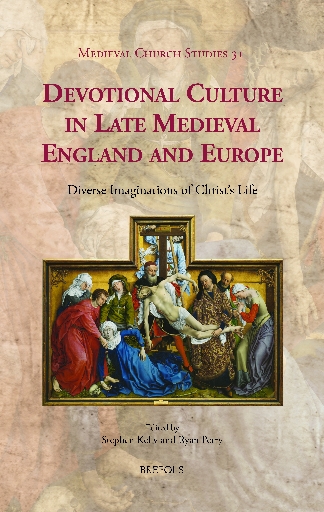
Devotional Culture in Late Medieval England and Europe
Diverse Imaginations of Christ’s Life
Christ’s life as related through the Gospel narratives and early Apocrypha was subject to a riot of literary-devotional adaptation in the medieval period. This collection provides a series of groundbreaking studies centring on the devotional and cultural significance of Christianity’s pivotal story during the Middle Ages.
The collection represents an important milestone in terms of mapping the meditative modes of piety that characterize a number of Christological traditions including the Meditationes vitae Christi and the numerous versions it spawned in both Latin and the vernacular. A number of chapters in the volume track how and why meditative piety grew in popularity to become a mode of spiritual activity advised not only to recluses and cenobites as in the writings of Aelred of Rievaulx but also reached out to diverse lay audiences through the pastoral regimens prescribed by devotional authors such as the Carthusian prior Nicholas Love in England and the Parisian theologian and chancellor of the University of Paris Jean Gerson.
Through exploring these texts from a variety of perspectives - theoretical codicological theological - and through tracing their complex lines of dissemination in ideological and material terms this collection promises to be invaluable to students and scholars of medieval religious and literary culture.
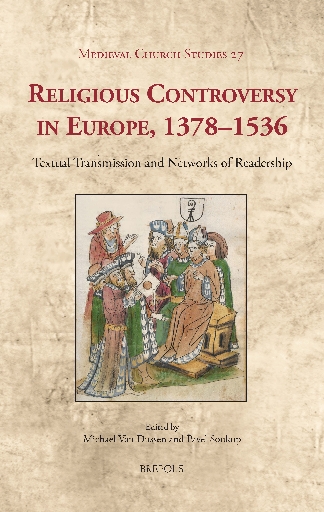
Religious Controversy in Europe, 1378–1536
Textual Transmission and Networks of Readership
This book gathers new work by scholars who share a common interest not only in the controversial texts of the period between 1378 and 1536 but also in how the use geographical movement and manipulation of texts contributed materially to the formation of groups and group identities. The period covered spans the traditional medieval/early modern divide and the concomitant transition from manuscript to print. The years between the eruption of the Great Schism and the outbreak of European reformations witnessed unprecedented rifts in communities institutions and alliances. Yet while the crises of this period gave rise to division they also prompted new groups to coalesce resulting in realignments of communication networks readership and textual circulation in Europe. The Councils of Constance and Basel facilitated the production and dissemination of vast quantities of documents. Movements challenging the Roman Church and efforts to reform the Church from within provoked a torrent of persuasive and polemical writings which gained further momentum with the introduction of printing. These new situations also fostered the development and expression of group identities defined by doctrine opposition vernacularity and a burgeoning sense of national self-consciousness. Religious Controversy in Europe 1378-1536 examines the textual and material circumstances of these developments.