


Mediterranean Nexus 1100-1700
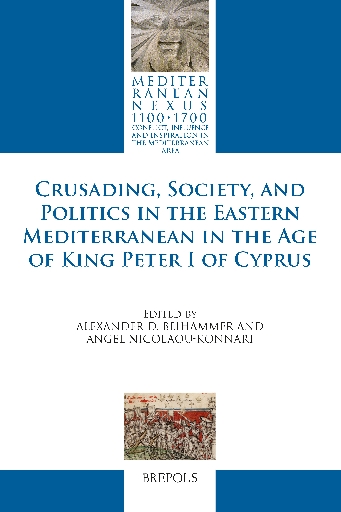
Crusading, Society, and Politics in the Eastern Mediterranean in the Age of King Peter I of Cyprus
The King of Cyprus Peter I of Lusignan (1359-1369) was one of the most fascinating figures in the history of the Latin East and the later crusades. He was involved in European power politics his crusading activities brought him into conflict with the Turkish beyliks of Anatolia and the Mamluk sultanate of Egypt and his rule was closely linked with broader developments in the Eastern Mediterranean such as the decay of Byzantium the East-West schism and the beginning of the Ottoman expansion in the Balkans. His adventurous life constitutes a captivating case study of court life feudal and chivalric ethos and political culture in the fourteenth century. This volume investigates developments in the Eastern Mediterranean before and during the reign of Peter I from a comparative perspective. It consists of five parts which treat the political diplomatic and ecological context of the crusading movement in the time between the fall of Acre (1291) and the sack of Alexandria (1365) Peter I’s crusading policy and the Alexandrian crusade Cypriot society and court life in the time of Peter I the situation in Muslim-Turkish Anatolia the second target of King Peter’s crusading policy and finally Byzantium its encounter with the Turks the schism of the Churches and theological trends in the time of the Hesychast Controversy.
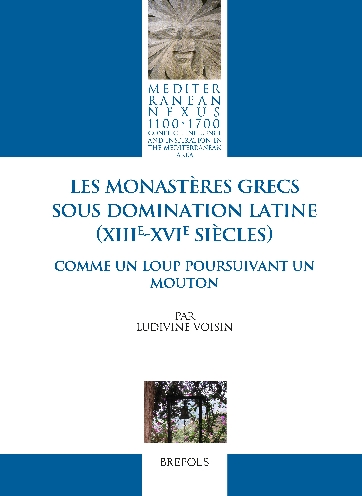
Les monastères grecs sous domination latine (xiii e-xvi e siècles)
Comme un loup poursuivant un mouton
Le sac de Constantinople en 1204 a convaincu des historiens que le monachisme grec ne peut survivre dans un environnement dominé par l'élément latin à Constantinople et ailleurs. L'extension chronologique et géographique de la domination latine au Moyen Âge permet de s'interroger sur la validité du modèle constantinopolitain dans les autres pays gréco-latins et de poser la question du maintien de l'identité monastique grecque après 1204. L'intégration d'une multitude de fondations dans une analyse comparative à grande échelle temporelle et géographique met en évidence des évolutions et des stratégies communes. Alors que le monachisme grec d'Italie du Sud décline aux xii e et xiii e siècles et que les monastères de Constantinople ne se relèvent pas le mouvement monastique renaît partout ailleurs et de manière continue. L'identité institutionnelle des fondations monastiques est aussi maintenue après 1204. Une évolution est toutefois notable : comme en Occident les pouvoirs religieux et civils tentent de réduire les pouvoirs des laïcs sur les établissements monastiques. Le projet pontifical de constitution d'une Église libre se manifeste aussi par la volonté de faire des clercs des individus libérés des obligations féodales ce qui pose problème pour les Grecs majoritairement dépendants. Finalement la tradition monastique est respectée : aucune restriction de statut n'empêche l'entrée en religion des Grecs. La correspondance pontificale démontre que le monachisme grec fait partie de l'Église universelle sans modifier son identité. La vitalité notamment économique et l'identité du monachisme grec ne sont pas altérées par la présence latine.
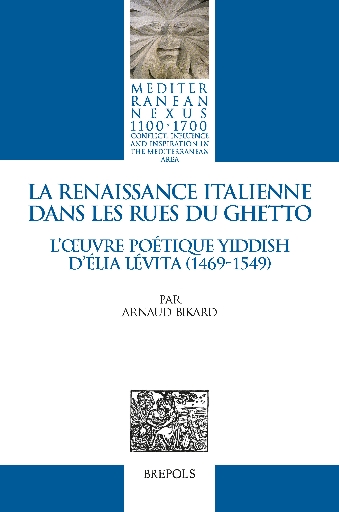
La Renaissance italienne dans les rues du Ghetto
L’œuvre poétique yiddish d’Élia Lévita (1469-1549)
Cet ouvrage constitue la première étude d’ensemble de l’œuvre poétique yiddish d’Élia Lévita (1469-1549) et cherche à définir sa place dans la littérature de la Renaissance en analysant les transferts esthétiques et culturels ayant présidé à sa production. Il situe l’œuvre vernaculaire de ce savant hébraïste proche des humanistes chrétiens dans les traditions poétiques juives hébraïques et yiddish et dans la logique d’une affirmation du rôle de l’écrivain séculier et de la langue vernaculaire dans la société juive. Il analyse également la portée des modèles extérieurs chrétiens en insistant sur l’inscription des romans de chevalerie de Lévita dans l’évolution générale du genre chevaleresque en Italie. L’Arioste et en particulier son Roland furieux ont joué un rôle majeur dans le raffinement progressif du projet esthétique du poète yiddish. Par son ampleur et par sa variété l’œuvre vernaculaire d’Élia Lévita constitue non seulement la première œuvre moderne de la littérature yiddish mais aussi un cas particulièrement évocateur de diffusion des modèles esthétiques de la Renaissance dans des catégories ethniques (les Juifs) et sociales (les classes populaires) que l’on aurait pu croire éloignées de ces mutations culturelles.
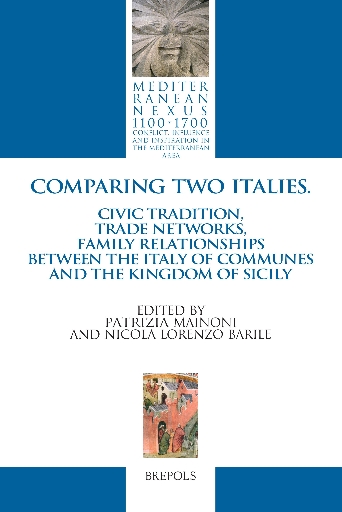
Comparing Two Italies. Civic Tradition, Trade Networks, Family Relationships between the Italy of Communes and the Kingdom of Sicily
The title of this volume recalls the famous 1977 book by David Abulafia The Two Italies about the origins of the so-called ‘unequal exchange’ and ‘dual economy’ between Northern and Southern Italy. These are supposed to have provided the ground for the so-called ‘Southern question’ (‘questione meridionale’) one of the foremost topics in the whole of Italian history. However trade is not the only relevant theme in a comparison between the Italy of Communes and the Kingdom of Sicily. This collection of essays points to different interpretative paths which concern not only trade networks but also less well-known aspects of the interrelation such as the rise of civic tradition the spread of Mendicant Orders and the circulation of wealth through family relationships women marriage and patrimonial assets.
Famagusta
Vol. II: History and Society
This is the second of two volumes on the history and archaeology of the port city of Famagusta in Cyprus from the beginning of the island’s Frankish rule in 1191 to the Ottoman conquest in 1571. The first volume entitled Art and Architecture and edited by Annemarie Weyl Carr was published in this series in 2014.
The volume provides a comprehensive survey of the four-century history of Famagusta under Frankish Genoese and Venetian rule down to the Ottoman siege and conquest supplemented by an account of the image of the medieval and Renaissance city in retrospect. Based on original research and often using unpublished sources fourteen acknowledged specialists study Famagusta’s political social economic and ecclesiastical history from a multi- and interdisciplinary approach that involves aspects such as institutional continuities and discontinuities military and spatial organisation religious and cultural exchanges gender roles and the city’s image in travelogues literature and art. Such an approach allows a better understanding of the evolution of the ethnically and religiously diverse Famagustian society from a rich commercial centre under the Lusignans to an enclave under the Genoese and a military outpost under the Venetians.
Trent and Beyond. The Council, Other Powers, Other Cultures
For centuries the Council of Trent has been studied as a fundamental episode in European history wherein doctrinal and institutional unity was lost. Although the Council decrees nowhere refer to the contexts of the peoples met by Christopher Columbus nor to the Cathay regions rediscovered by missionaries nor to their religions their superstitions or their political systems the Council was nonetheless a global event. The Roman Church which lost doctrinal control of the considerable part of Europe captured by different forms of Protestantism imposed itself upon its followers through the application of conciliar decrees. Freed of its exclusively European perspective it opened up to cultures of the rest of the world. The customs and traditions thus encountered the relationships with political authorities possibilities for the construction of a new Christianity offered by New Worlds disclosing spaces and contexts to the Tridentine Church with accommodations and cross-fertilizations with a return to origins and tradition obliged that it begin to think of itself perhaps for the first time as a universal Church.
The Council and Beyond suggests not only reconsideration of Europe through the prism of the Tridentine decrees and the long processes of their dissemination but also through an intercontinental consideration a spatial perspective that would become universal to the Church and to the normative texts that had been elaborated at Trent.
Slavery and the Slave Trade in the Eastern Mediterranean (c. 1000-1500 ce)
Slavery has played a significant role in the history of human society not the least in the greater Mediterranean region since ancient times. Long neglected by mainstream historians the medieval history of slavery has received an increasing amount of attention by scholars since the pioneering work of Charles Verlinden (1907–1996). Today historians have generally laid to rest the nineteenth-century preoccupation with whether slavery was a significant ‘mode of production’ in the post-classical period to concentrate on the changing face of the institution over time by looking at legal norms linguistic representations and social practice. This volume presents a multi-faceted and interdisciplinary approach to slavery and the slave trade in the Eastern Mediterranean region in the pre-modern period placing these into a larger historical and cultural context. It surveys the significance of slavery in the three monotheistic traditions the involvement of Eastern and Western merchants and other agents in the slave trade and offers new interpretations concerning the nature of this commerce.
Bullarium Hellenicum
Pope Honorius III's Letters to Frankish Greece and Constantinople
This volume gathers together 277 letters of Pope Honorius III (1216-1227) concerning Frankish Greece and Constantinople. These letters constitute an indispensable source for the early history of the territories conquered during and just after the Fourth Crusade of 1204 for which almost no local archival material survives. The Latin texts of many of the letters are published here for the first time and almost all the letters have been reedited from the manuscripts primarily the papal registers in the Vatican Archives. In addition the volume makes the letters available to non-specialists through exhaustive English summaries of all the letters and complete translations of the most significant ones. A lengthy historical introduction uses these letters to portray the dynamic world of the Latin Empire of Constantinople the Kingdom of Thessaloniki and the other states that replaced Byzantium as the precarious condition of the Latin states compelled the ecclesiastical authorities in Rome to temper their ambitions of transcultural religious unity with pragmatic measures. It explores how this mixture of cultural idealism practical necessity and divergent class structures manifested themselves in Honorius' policy towards the lower Greek clergy and Greek and Latin religious orders. Maps tables indices and a guide to papal letters make the volume a useful tool for future studies of this fascinating and controversial phase in the history of Greece and the papacy.
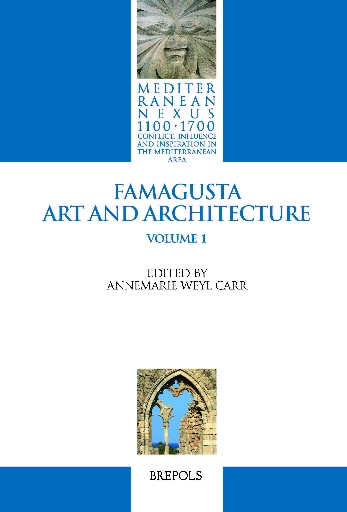
Famagusta
Art and Architecture
During the period of Latin rule on Cyprus (1191-1571) Famagusta went from being a small fishing village to a populous cosmopolitan center of international trade by the early fourteenth century. After the fall of Acre in 1291 the Lusignan kings of Cyprus now also kings of Jerusalem made Famagusta a quasi capital-in-exile with a new cathedral as the coronation church of the Kingdom of Jerusalem. The city began to stagnate with shifting trade patterns and the Black Death was annexed by the Genoese after their invasion and partition of the island in 1374 and was only reunited with the Kingdom of Cyprus in 1464 with King James II “the Bastard’s” reconquest. With the Venetian takeover of the island in 1474 Famagusta experienced a demographic economic and artistic renaissance. In 1571 after an epic siege the city fell to the Ottoman Turks and from then on visitors described the ruins of the once great Gothic jewel of the Eastern Mediterranean with melancholic nostalgia.
In its heyday Famagusta was home to Greeks Franks Armenians Jews Syrians of various religious backgrounds and numerous merchants from the Italian trading cities above all Genoa and Venice. Smaller groups completed the mix. With money pouring in from trade and the support of the crown in the fourteenth century the town was encircled with impressive walls still extant and dozens of churches were constructed adopting unique variations of the Gothic style including large Latin Greek and Syrian cathedrals. Many of these are still intact others consist of evocative ruins among the palm trees with the backdrop of the blue sea. This fascinating history and its heritage are dealt with within the present volume.
List of contributors: Annemarie Weyl Carr (editor) Justine M. Andrews Michele Bacc i Nicola Coldstream Michalis Olympios Tassos Papacostas Maria Paschali
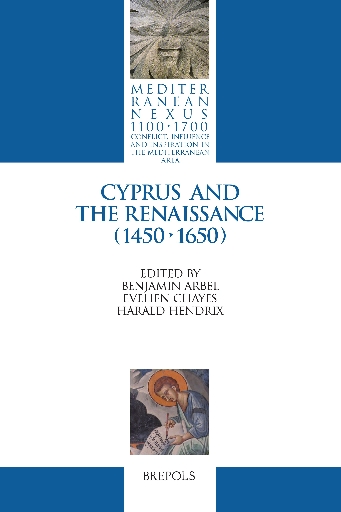
Cyprus and the Renaissance (1450-1650)
These twelve essays by leading scholars in the field are products of an international research project on early modern Cyprus and its relation to cultural developments in the West started in November 2009.
Cyprus an independent ‘Frankish’ kingdom from 1191 to 1473 became a Venetian protectorate then in 1489 a Venetian colony until its conquest by the Ottomans in 1570. Its population was diverse and rich in religious experience - preponderantly followers of the Greek rite but also Latins Eastern Christians and Jews.
Its heritage from Antiquity as well as from the Byzantine and Frankish periods its monasteries (which received reproduced and produced manuscripts) and its geopolitically pivotal site on East-West trade routes attracted numerous Westerners. The cultural magnet drew deeper interests than those of pilgrimage and tourism.
The continuous to and fro of Europeans many of them Venetian the island’s importance to economic and military strategies and the allure conferred by a mythological past stimulated and fostered a generous descriptive and allusive literature.
The present collection is the first of its kind centered on written culture and exchanges during the Renaissance period deepening their source-based documentary study as well as our knowledge of the island’s culture and heritage in relation to cultural developments in Western countries.