Medieval Identities: Socio-Cultural Spaces
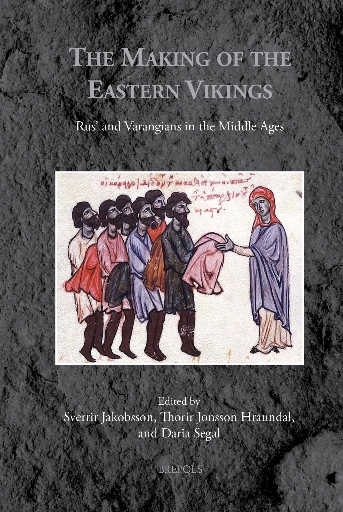
The Making of the Eastern Vikings
Rus’ and Varangians in the Middle Ages
Historiography on the Vikings of the East — the Rus' and the Varangians — has been both multiform and varied but it has been invariably focused on actual historical events and the extent to which these are accurately reflected in written sources. In contrast very little attention has been paid up to now to the narrators behind these medieval accounts to their motives in writing or to the context in which they were working.
This volume aims to redress the balance by offering a re-examination of medieval sources on the Eastern Vikings and by highlighting ongoing ‘debates’ concerning the identities of the Rus' and the Varangians in the medieval period. The chapters gathered here compare and contrast sources emanating from different cultures — Byzantium the Abbasid Caliphate and its successor states the early kingdoms of the Rus' and the high medieval Scandinavian kingdoms — and examine what significance these sources have attached to the Rus' and the Varangians in different contexts. The result is a new understanding of how different cultures chose to define themselves in relation to one another and a new perspective on the history of the Scandinavian peoples in the East.
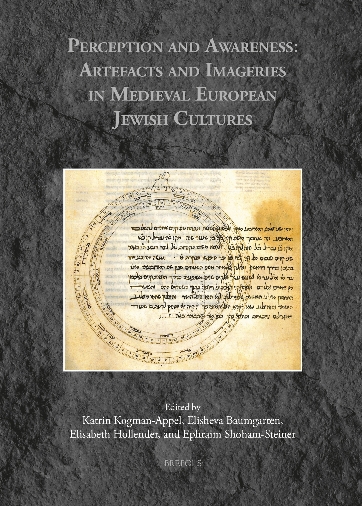
Perception and Awareness: Artefacts and Imageries in Medieval European Jewish Cultures
What did the world look like for Jews living in medieval Europe? How did they perceive and make use of the elements of their daily life from items on the street to religious iconography within holy spaces — in particular synagogues and at the exterior of churches — and profane elements from the home? And how did they experience the visual and material cultures of their non-Jewish neighbours?
These questions form the core of this volume which explores pre-modern Jewish approaches to images and material objects from a variety of perspectives. From clothing to manuscripts and from lighting devices to the understanding of the invisible the chapters gathered together in this multifaceted volume combine analyses of images and artefacts together with in-depth analyses of texts to offer fresh insights into the visual cultures that informed the world of European Jews in the Middle Ages.
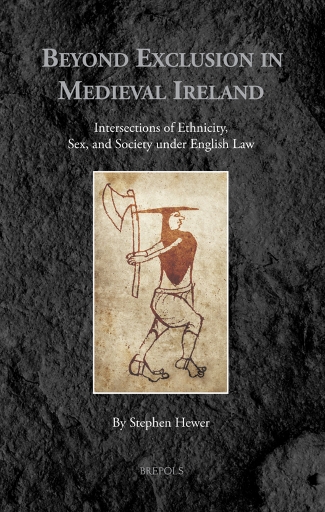
Beyond Exclusion in Medieval Ireland
Intersections of Ethnicity, Sex, and Society under English Law
The notion that upon the advent of the English in 1167 all Gaelic peoples in Ireland were immediately and ipso facto denied access to the English royal courts has become so widely accepted in popular culture that it is often treated as fact. In this ground-breaking monograph however the narrative of absolute ethnic discrimination in thirteenth- and early fourteenth-century English Ireland is for the first time tackled head-on through a thorough re-examination of the Irish plea rolls. Through a forensic study of these records the author demonstrates not only that there was a great deal of variation in how members of various ethnic groups and women who came before the English royal courts in Ireland were treated but also that there was a large - and hitherto scarcely noticed - population of Gaels with regular and unimpeded access to English law and that the intersections between gender/sex and ethnicity have too often been deeply misunderstood or disregarded. A close comparison between the treatment of Gaelic women and men and that of the English of Ireland together with an in-depth examination of other ethnicities from around the Irish Sea provide a new understanding of English Ireland in which it is clear that there was not a simple dichotomy between the English and the unfree but rather that people lived an altogether more complex and nuanced existence.
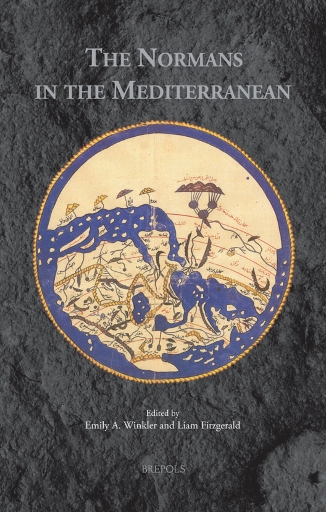
The Normans in the Mediterranean
In both popular memory and in their own histories the Normans remain almost synonymous with conquest. In their relatively brief history some of these Normans left a small duchy in northern France to fight with Empires conquer kingdoms and form new ruling dynasties. This book examines the explosive Norman encounters with the medieval Mediterranean c. 1000-1250. It evaluates new evidence for conquest and communities and offers new perspectives on the Normans’ many meetings and adventures in history and memory.
The contributions gathered here ask questions of politics culture society and historical writing. How should we characterize the Normans’ many personal local and interregional interactions in the Mediterranean? How were they remembered in writing in the years and centuries that followed their incursions? The book questions the idea of conquest as replacement examining instead how human interactions created new nodes and networks that transformed the medieval Mediterranean. Through studies of the Normans and the communities who encountered them - across Iberia the eastern Roman Empire Lombard Italy Islamic Sicily and the Great Sea - the book explores macro- and micro-histories of conquest its strategies and technologies and how medieval people revised rewrote and remembered conquest.
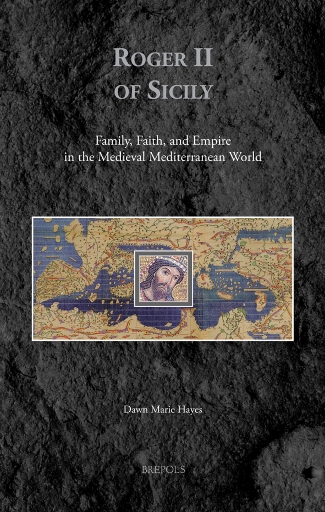
Roger II of Sicily: Family, Faith and Empire in the Medieval Mediterranean World
Roger II (c. 1095-1154) Sicily’s first king was an anomaly for his time. An ambitious new ruler who lacked the distinguished lineage so prized by the nobility and a leader of an extraordinarily diverse population on the fringes of Europe he occupied a Roger II (c. 1095-1154) Sicily’s first king was an anomaly for his time. An ambitious new ruler who lacked the distinguished lineage so prized by the nobility and a leader of an extraordinarily diverse population on the fringes of Europe he occupied a unique space in the continent’s charged political landscape. This interdisciplinary study examines the strategies that Roger used to legitimize his authority including his relationships with contemporary rulers the familial connections that he established through no less than three marriages and his devotion to the Church and Saint Nicholas of Myra/Bari. Yet while Roger and his family made the most of their geographic and cultural contexts it is convincingly argued here that they nonetheless retained a strong western focus and that behind the diverse mélange of Norman Sicily were very occidental interests.
Drawing together sources of political social and religious history from locations as disparate as Spain and the Byzantine Empire as well as evidence from the magnificent churches and elaborate mosaics constructed during his reign this volume offers a fascinating portrait of a figure whose rule was characterized both by great potential and devastating tragedy. Indeed had Roger been able to accomplish his ambitious agenda the history of the medieval Mediterranean world would have unfolded very

Contest, Translation, and the Chaucerian Text
This sophisticated volume sheds new light on the transmission of texts in the medieval period by drawing into dialogue a study of medieval translation between English and French with questions concerning the Chaucerian canon and its reception. The author takes as a focus point three Middle English translations of French-language works - The Romaunt of the Rose the Belle Dame Sans Mercy and An ABC to the Virgin - and assesses the way in which these works respond to and reconfigure their source material while at the same time questioning how the connection of these translations with Chaucer has influenced our critical understanding of them. In this book these three translations are therefore removed from their habitual place on the fringes of the English Chaucer canon and are instead analysed in the context of late-medieval literary and cultural hybridity. The result is a fascinating reconceptualization of these works as creative cross-channel participations in late- medieval debates and simultaneously a call for the reappraisal of ‘the Chaucerian’ as a critical category.
Conceptualizing the Enemy in Early Northwest Europe
Metaphors of Conflict and Alterity in Anglo-Saxon, Old Norse, and Early Irish Poetry
Despite the prominence of conflicts in all mythological and heroic literature perceptions of these conflicts and their participants are shaped by different cultural influences. Socio-economic political and religious factors all influence how conflict is perceived and depicted in literary form. This volume provides the first comparative analysis to explore conceptions of conflict and otherness in the literary and cultural contexts of the early North Sea world by investigating the use of metaphor in Old English Old Norse and Early Irish poetry. Applying Conceptual Metaphor Theory together with literary and anthropological analysis the study examines metaphors of conflict and alterity in a range of (pseudo-)mythological heroic and occasional poetry including Beowulf Old Norse skaldic and eddic verse and poems from the celebrated ‘Ulster Cycle’. This unique approach not only sheds new light on a wide spectrum of metaphorical techniques but also draws important conclusions concerning the common cultural heritage behind these three poetic corpora.
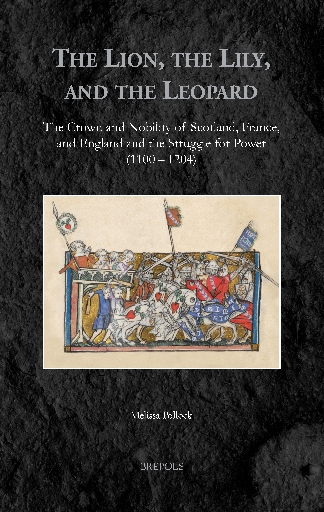
The Lion, the Lily, and the Leopard
The Crown and Nobility of Scotland, France, and England and the Struggle for Power (1100-1204)
This book examines the relationship between and identities within the three kingdoms of Scotland France and England from c. 1100 until the crown of England lost Normandy Anjou Maine and Touraine in 1204. Diplomatic and political relations were unique in the twelfth century because the three kingdoms were united by a ruling class that spanned the Channel. This aristocratic Anglo-French structure beginning with the Norman invasion in 1066 disrupted and delayed the development of a unitary national identity within each of the three kingdoms. Men and women identified themselves with more than one royal overlord as long as they held fees of multiple kings and as such national identity was a moveable feast. This situation created a complex political web that often damaged consistent loyalty to any one king or overlord as each member of a kin group changed alliances based on territorial threats and on the interests of their familial networks. Furthermore alliances formed between families in the Anglo-French realm had a significant impact on political decision-making in Scotland because the Anglo-French Scots were intimately bound to this structure through their own kin networks and land bases. Significantly this work dispels the prevailing myth that the Anglo-French who settled in Scotland did not see themselves as part of the cross-Channel world but as ‘Scots’ by the end of the twelfth century.
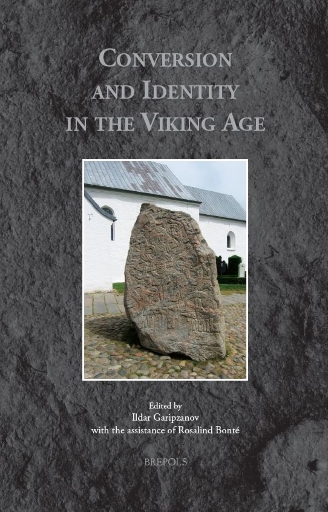
Conversion and Identity in the Viking Age
This volume presents a state-of-the-art collection of essays on the socio-cultural aspects of the conversion to Christianity in Viking-Age Scandinavia and the Scandinavian colonies of the North Atlantic. The nine scholars drawn from the disciplines of history archaeology and literary studies have been brought together to address the overarching topic of how conversion affected peoples’ identities - both as individuals and as members of broader religious political and social groups - on either side of the ‘divide’ between paganism and Christianity. Central to this exploration is the question of how existing and changing identities shaped the progress of conversion as a process of societal and more specifically cultural change.
Each of the papers in this volume provides examples of the complicated patterns of interaction influence and identity-modification that were characteristic of the transition from paganism to Christianity in the Viking world. The authors look for new ways of understanding and describing this gradual intermingling between the two fuzzy-edged religious communities and they provide a challenging redefinition of the nature of conversion in the Viking Age that will be of interest both to a wide variety of medievalists and to all those who work on conversion in its theoretical and historical aspects.
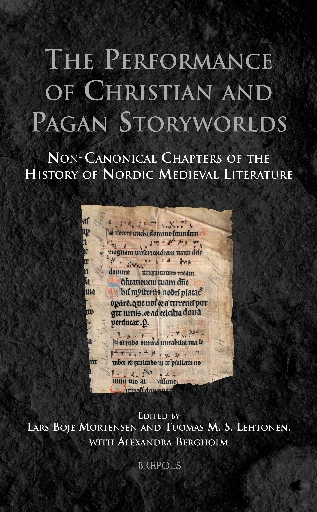
The Performance of Christian and Pagan Storyworlds
Non-Canonical Chapters of the History of Nordic Medieval Literature
The present collection explores a hitherto understudied body of Nordic medieval literature which although overlooked in traditional language-based narratives was in fact crucial in shaping social and religious identities.
By drawing on the ‘performance turn’ in cultural studies the volume identifies a number of minor and peripheral literary forms and texts that had a vital connection to ritual and ritualized speech. These neglected traditions therefore offer an alternative insight into Nordic literary life and the sets of cultural expression or storyworlds underlying Nordic culture.
The collected studies explore different aspects of verbal performances as a primary vehicle for the Nordic storyworlds with a preference for the Christian over the pagan traditions. Emphasis is placed on Latin Old Norse and Finnish traditions that were retold and reproduced over time. These ‘living’ literary forms highlight the importance of non-canonical texts for the interpretation of contact between the peripheries and centres of Nordic culture. Through the focus on the interaction between Latin and the vernacular between eastern Baltic and western Latin influences and between ritual and speech in religious practice this collection demonstrates the importance of ‘minor’ texts for the re-construction of medieval Nordic culture and history.