


Making the Middle Ages
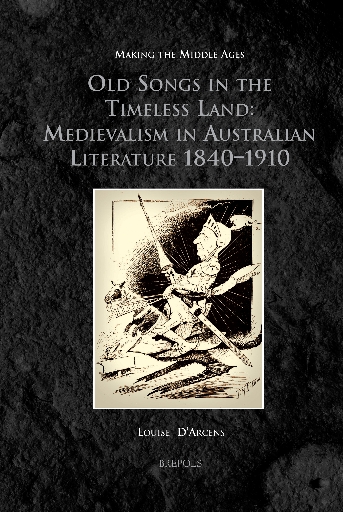
Old Songs in the Timeless Land: Medievalism in Australian Literature 1840-1910
This volume is the first close examination of the rich and diverse body of medievalist texts produced in late colonial and early Federal (ie post-1901) Australia. It examines the many ways in which early Australian novelists poets and dramatists drew on the motifs events and personages of the medieval past and places particular emphasis on how they used the European past to illuminate their sense of the Australian present. Broadly stated the book argues that a study of early Australian medievalist literature and theatre uncovers a rich and revealing drama in which the forces of cultural nostalgia and cultural amnesia sometimes contended against one another and sometimes harmonised to produce a unique and distinctive corpus. The book significantly extends current knowledge about nineteenth-century literary and theatrical medievalism by offering an exploration of how medievalist discourses and idioms came to be taken up within a major but as yet under-examined branch of Anglophone literature. It aims also to broaden the cultural ambit of nineteenth-century medievalism by offering analyses of popular and ephemeral instances alongside more ‘serious’ medievalist texts. The study balances an interest in how this medievalism responded to local conditions with an interest in its international complexion examining how Australian medievalist novels poems and plays participated in imperial and transpacific intellectual and entertainment circuits. While the emphasis of the volume is on close historically-contextualising interpretations of texts it has woven through its arguments a series of meditations on such theoretical matters as how we determine the boundaries of medievalism how we might develop an account of colonial medievalism as non-derivative whether medievalist discourses are equally amenable across gender class and ideological lines and how the premodern past is evoked as a means for formulating the present and the future.
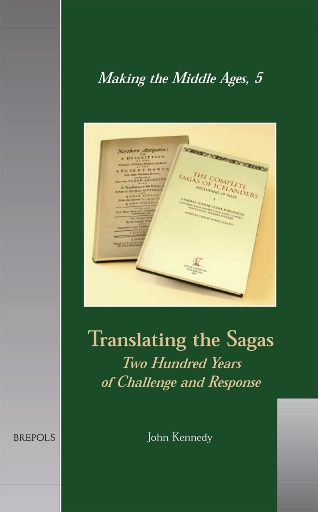
Translating the Sagas
Two Hundred Years of Challenge and Response
Few speakers of English have ever been able to read the Icelandic sagas in the original language and published saga translations have played a major role in shaping attitudes towards Viking Age Scandinavia and the great literary achievements of medieval Iceland in the English-speaking world. This book is the first publication to provide an extended examination of the history and development of Icelandic saga translations into English from their beginnings in the eighteenth century to today. It explores reasons for undertaking saga translation and the challenges confronting translators. Chapters are devoted to the pioneering saga translations the later Victorian and Edwardian eras the often-neglected period of the two World Wars and their aftermath and the upsurge of saga translation in the second half of the twentieth century. The contributions of individual translators and teams are reviewed from James Johnstone in the 1780s through major Victorians such as Samuel Laing George Webbe Dasent and William Morris distinguished twentieth century figures such as Lee M. Hollander Gwyn Jones Magnus Magnusson and Hermann Pálsson and George Johnston and the great co-operative project which produced The Complete Sagas of Icelanders at the century’s end. The book concludes with saga translation facing interesting new possibilities and challenges not least those generated by information technology.
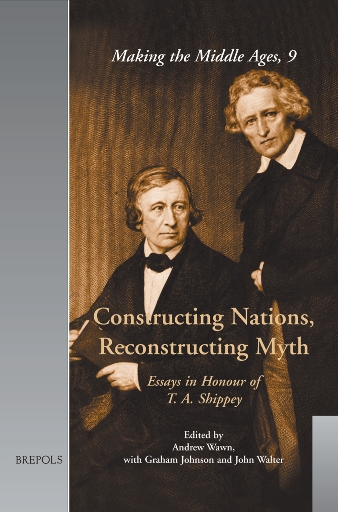
Constructing Nations, Reconstructing Myth
Essays in Honour of T. A. Shippey
This collection of essays examines the ‘Grimmian Revolution’ the paradigm shift in the humanities that came with the publication of Jacob Grimm’s Deutsche Grammatik. In doing so it honours T. A. Shippey who has been a leading figure in reconsidering the contributions of the Old Philology and its impact on the humanities particularly the rediscovery of the ancient languages and literatures of Northern Europe; the role this has played in the creation of national and regional identities; the attempts to extend the methods of comparative philology to comparative mythology; and the collection of folktales folk-ballads and the development of folkloristics. The sixteen essays in this collection focus on the impact made by nineteenth- and early-twentieth-century philology in the fields of medieval studies and language studies and in the construction of Northern European national identities mythologies and folklore.
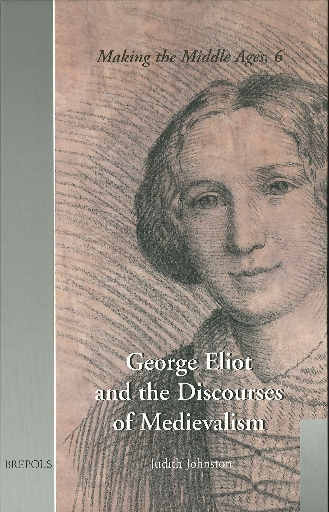
George Eliot and the Discourses of Medievalism
In George Eliot's last two novels Middlemarch (1871-72) and Daniel Deronda (1876) she abandons the realism she had explored and articulated so carefully most famously in Adam Bede 'a faithful account of men and things' for an unprecedented return to 'cloud-borne angels [...] prophets sibyls and heroic warriors'. This study addresses Eliot's exploitation of Victorian medievalism by considering the way in which she utilizes the discourses of medievalism both for their potential for subversiveness and their potential for mediation to affirm that change is possible socially culturally and politically in her modern contemporary world. The various medieval discourses are revealed as interstices within what initially appears to be a continuation of the realism of her earlier novels. They permit political and cultural readings of a different and often unexpected kind to the realist bourgeois values of novels like Adam Bede and to a lesser extent Felix Holt. These political and cultural readings reveal a more determined more obvious feminist and socialist polemic in her two last and possibly greatest novels.

Medievalism and the Gothic in Australian Culture
This collection opens up a new field of academic and general interest: Australian medievalism. That is the heritage and continuing influence of medieval and gothic themes ideas and cultural practices. Geographically removed from Europe and distinguished by its eighteenth-century colonial settlement Australia is a fascinating testing-ground on which to explore the cultural residues of medieval and gothic tradition. These traditions take a distinctive form once they have been 'transported' to a different topographical setting and a cultural context whose relationship with Europe has always been dynamic and troubled.
Early colonists attempted to make the unfamiliar landscape of Australia familiar by inscribing it with European traditions: since then a diverse range of responses and attitudes to the medieval and gothic past have been played out in Australian culture from traditional forms of historical reconstruction through to playful postmodernist pastiche.
These essays examine the early narratives of Australian 'discovery' and the settlement of what was perceived as a hostile gothic environment; exercises of medieval revivalism and association consonant with the British nineteenth-century rediscovery of chivalric ideals and aesthetic spiritual and architectural practices and models; the conscious invocation and interrogation of medieval and gothic tropes in Australian fiction and poetry including children's literature; the transformation of those tropes in fantasy role-playing games and subcultural groups; and finally the implication of the medieval past for discussions of Australian nationalism.
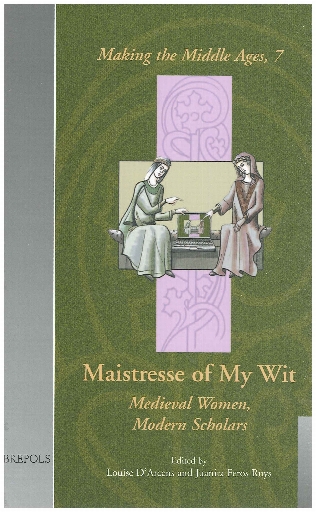
Maistresse of My Wit
Medieval Women, Modern Scholars
This volume explores the reciprocal relationships that can develop between medieval women writers and the modern scholars who study them. Taking up the call to ‘research the researcher’ the authors indicate not only what they bring to their study from their own personal experience but how their methodologies and ways of thinking about and dealing with the past have been influenced by the medieval women they study. Medieval women writers discussed include those writing in the vernacular such as Christine de Pizan and Margaret Paston those writing in Latin such as Hildegard of Bingen Heloise and Birgitta of Sweden and the works transcribed from women mystics such as Margery Kempe Hadewijch and Julian of Norwich. Attention is also given to medieval women as the readers consumers and patrons of written works. Issues considered in this volume include the place of ethics interestedness and social justice in contemporary medieval studies questions of alterity empathy essentialism and appropriation in dealing with figures of the medieval past the permeable boundaries between academic medieval studies and popular medievalism questions of situatedness and academic voice and the relationship between feminism and medieval studies. Linked to these issues is the interrelation between medieval women and medieval men in the production and consumption of written works both for and about women and the implications of this for both female and male readers of those works today. Overarching all these questions is that of the intellectual and methodological heritage - sometimes ambiguous perhaps even problematic - that medieval women continue to offer us.
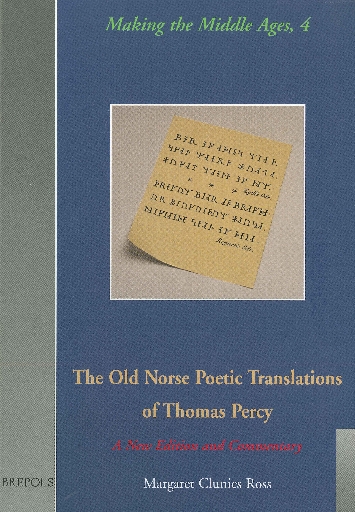
The Old Norse Poetic Translations of Thomas Percy
A New Edition and Commentary
Thomas Percy was the first serious translator of Old Norse-Icelandic poetry into English. He published his Five Pieces of Runic Poetry in London in 1763 and in 1770 published his translation of Mallet's very influential work on early Scandinavian literature and culture as Northern Antiquities (with extensive annotations and additions by Percy himself). In publishing Five Pieces Percy was influenced by the success of Macpherson's first volume of Ossian poetry (1760) and his own wide-ranging interest in ancient especially 'gothic' poetry. Five Pieces had a mixed reception and was never republished as a separate work but reappeared as an appendix to the second edn. of Northern Antiquities. Nevertheless it was a seminal work in the history of reception and understanding of Old Norse poetry in Britain and it also has more general significance in our understanding of the development of the discipline of Old Norse-Icelandic studies. This work makes available to the modern scholarly community the work of one of the pioneers of the discipline and produces in easily accessible format a text that is currently only available as a rare book. The study comprises a facsimile of the 1763 edition with facing-page notes to allow the modern reader to situate Percy's work in its intellectual context together with an introduction on Percy himself his work on Old Norse-Icelandic studies and the contemporary context of the reception of Old Norse poetry in Britain (and to some extent in the rest of Europe). In addition this study publishes eight other poetic translations (one from Old English and the others from Old Icelandic) that Percy completed about the same time as the translations now in Five Pieces of Runic Poetry but did not then publish due to the restrictions of contemporary tolerance for demanding or difficult 'ancient' poetry. This publication reveals his full range as a translator for the first time.
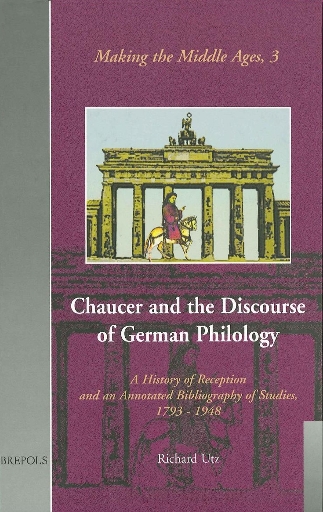
Chaucer and the Discourse of German Philology
A History of Reception and an Annotated Bibliography of Studies, 1793-1948
In the nineteenth and early twentieth century German-speaking scholars played a decisive role in founding and shaping the study of medieval and early modern English language and culture. During this process aesthetic and literary enthusiasms were gradually replaced first by broadly comparative and then by increasingly narrow scientistic practices all confusingly subsumed under the term 'philology'. Towards 1871 German and Austrian Anglicists were successful at imposing-- for about 30 years -- many of their philological discoursive practices on their English-speaking counterparts by focusing on strict textual criticism chronology historical linguistics prosody and literary history. After World War I these philological practices were rejected in the U.K. and the United States because they were 'Made in Germany' but have remained essential features of German medieval scholarship until the present day.
This book offers a case study of these foundational developments by investigating the reception of Geoffrey Chaucer by eminent scholars such as V.A. Huber W. Hertzberg B. ten Brink J. Zupitza E. Fluegel and J. Koch. The narrative of their nationalist scientist and self-fashioning efforts is complemented by a comprehensive annotated bibliography of German Chaucer criticism between 1793 and 1948.
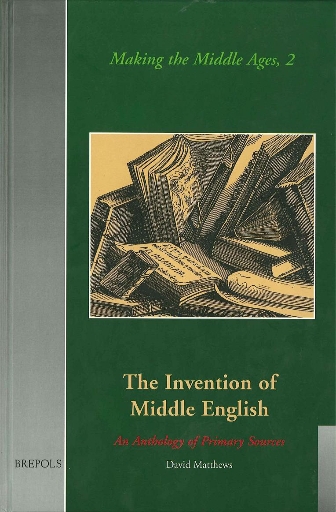
The Invention of Middle English
An Anthology of Sources, 1700-1864
In accounts of the emergence of medieval studies in the post-medieval period the growth of the discipline of Middle English has so far not been fully charted. This study provides the principal source materials for the study of the formation of Middle English most of which are rare and difficult to obtain. It enables the detailed study of the key documents in the growth of Middle English - gathered together for the first time. It will also enable the setting of courses in this field. Each extract is preceded by a full histroical and critical introduction and bibliography; any passages in late Latin and German are translated.
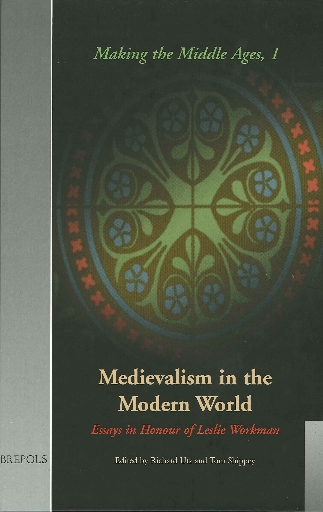
Medievalism in the Modern World
Essays in Honour of Leslie Workman
The twenty-six essays in this volume have been written by a select number of experienced practitioners of medievalism most of whom also happen to be friends and/or collaborators of Leslie J. Workman. While using different approaches and discussing topics in a variery of specialised fields all the contributors clearly centre on negotiating the reception of medieval culture in the Early Modern Modern and Contemporary periods thus presenting a broad and representative picture of current research in medievalism. The essays examine the process of creating the Middle Ages. In so doing they honour Workman by leading the academic study of medievalism towards the comprehensiveness which Lord Action as early as 1859 had promised: 'Two great principles divide the world and contend for the mastery: antiquity and the Middle Ages. These are the two civilizations that have preceded us the two elements of which ours is composed. All political as well as religious questions reduce themselves practically to this. This is the great dualism that runs through our society. '