


Medieval Voyaging

Islands in the West
Classical Myth and the Medieval Norse and Irish Geographical Imagination
This monograph traces the history of one of the most prominent types of geographical myths of the North-West Atlantic Ocean: transmarine otherworlds of blessedness and immortality. Taking the mythologization of the Viking Age discovery of North America in the earliest extant account of Vínland (‘Wine-Land’) and the Norse transmarine otherworlds of Hvítramannaland (‘The Land of White Men’) and the Ódáinsakr/Glæsisvellir (‘Field of the Not-Dead’/‘Shining Fields’) as its starting point the book explores the historical entanglements of these imaginative places in a wider European context. It follows how these Norse otherworld myths adopt adapt and transform concepts from early Irish vernacular tradition and Medieval Latin geographical literature and pursues their connection to the geographical mythology of classical antiquity. In doing so it shows how myths as far distant in time and space as Homer’s Elysian Plain and the transmarine otherworlds of the Norse are connected by a continuous history of creative processes of adaptation and reinterpretation. Furthermore viewing this material as a whole the question arises as to whether the Norse mythologization of the North Atlantic might not only have accompanied the Norse westward expansion that led to the discovery of North America but might even have been among the factors that induced it.
Journeying along Medieval Routes in Europe and the Middle East
Focusing on routes and journeys throughout medieval Europe and the Middle East in the period between Late Antiquity and the thirteenth century this multi-disciplinary book draws on travel narratives chronicles maps charters geographies and material remains in order to shed new light on the experience of travelling in the Middle Ages.
The contributions gathered here explore the experiences of travellers moving between Latin Europe and the Holy Land between southern Italy and Sicily and across Germany and England from a range of disciplinary perspectives. In doing so they offer unique insights into the experience conditions conceptualization and impact of human movement in medieval Europe. Many essays place a strong emphasis on the methodological problems associated with the study of travel and its traces and the collection is enhanced by the juxtaposition of scholarly work taking different approaches to this challenge. The papers included here engage in cross-disciplinary and interdisciplinary dialogue and are supported by a discursive contextualizing introduction by the editors.

The Indies and the Medieval West
Thought, Report, Imagination
Winner of The European Society for the Study of English - Book Award 2014 (Cultural Studies in English - Junior scholars)
This volume offers a wide-ranging and interdisciplinary treatment of European representations of the Indies between the twelfth and the fifteenth centuries. Drawing on encyclopaedias cosmographies and cartography romance hagiography and legend it traces the influence of classical late antique and early medieval ideas on the later medieval geographical imagination including the imagined and experienced Indies of European travellers. Addressing the evidence of Latin and vernacular manuscripts the book explores readers’ encounters with the most widely read travellers’ accounts in particular those of Marco Polo Odorico da Pordenone and Niccolò Conti. Chapters on The Book of Sir John Mandeville medieval Europe’s most idiosyncratic yet popular work of geography alongside world maps produced across Europe point to the ways in which representations of the Indies were inflected by temporal concerns specifically their relationship to Latin Christendom’s past present and future. The Indies relates the texts documents maps and manuscripts it discusses closely to the changing ideological concerns of their times notably those of mission and conversion crusade conquest and economics. Nonetheless the relationships that the work delineates between spatial representations and notions of dominance whether religious political economic or epistemic have implications for the post-medieval world.
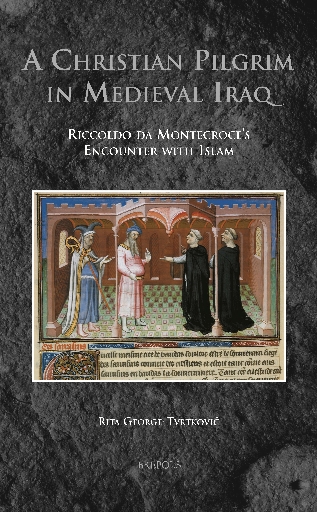
A Christian Pilgrim in Medieval Iraq
Riccoldo da Montecroce's Encounter with Islam
This book analyses the events of a decade long encounter between an Italian Dominican Riccoldo da Montecroce (c. 1243–1320) and the Muslims of Baghdad as recounted by the friar himself. While many of Riccoldo’s views of the Muslims are consonant with those of his medieval confrères the author examines the much more ambivalent sections of his writings such as his praise-filled descriptions of Muslim praxis his obvious love of Qur’anic Arabic his frequent references to personal encounters with Muslims and his candid descriptions of the wonder and doubt which these confrontations often elicited. The author argues that the tensions and inconsistencies inherent in Riccoldo’s account of Islam should not be viewed as defects. Rather she contends their presence illustrates the complex nature of interreligious encounter itself. In addition to a critical discussion this volume provides — for the first time — English translations of two remarkable Riccoldian texts: The Book of Pilgrimage (Liber peregrinationis) and Letters to the Church Triumphant (Epistolae ad ecclesiam triumphantem).