


Reinterpreting the Middle Ages
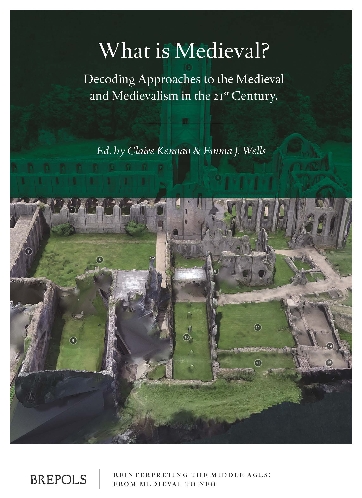
What is Medieval?
Decoding Approaches to the Medieval and Medievalism in the 21st Century
The Middle Ages and Medievalism have been used and abused throughout history–and this continues. This narrative deserves a reassessment. But what is Medieval? This is the central question that unifies the contributions in this volume.
‘Medievalism’ or the study of the Middle Ages in its broadest sense refers to the perception conceptualisation and movement towards the era post the fifteenth century. Its study is therefore not about the period otherwise referred to as the ‘Middle Ages’ but rather the myriad ways it has since been conceived. And the field of medievalism is still in its relative infancy which has led to the emergence of various existential questions about its scope remit theoretico-methodological and pedagogical underpinnings interpretation periodization and its relationship to established disciplines and more emerging subdisciplines and specialised fields—both within and without the academy.
In turn neomedievalism has allowed insight into and a response to the medieval often dominated by the modern. This has provoked debate over the nature of neomedievalism as a discipline subdiscipline genre field or offshoot in direct or contrasting relation to the more traditional medievalism.
Featuring interdisciplinary contributions from academics educational practitioners as well as museum digital and heritage professionals this volume provides a fresh reflection on past methods to emerging pedagogies as well as new avenues of enquiry into the ways we think about the medieval. It is by reconciling these seemingly disparate forms that we can better understand the continual interconnected and often politicised reinvention of the Middle Ages throughout cultures and study.
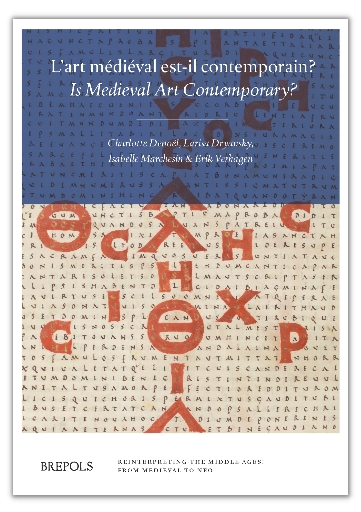
L’art médiéval est-il contemporain ? Is Medieval Art Contemporary?
This publication brings together essays by scholars of both medieval and contemporary art offering a cross-disciplinary approach of both periods. It investigates how contemporary artists and contemporary art historians perceive medieval art and reciprocally how medieval art historians envisage the echoes of medieval artforms and esthetics in contemporary art. The volume follows on from the symposium organized in conjunction with the exhibition "Make it New: Carte Blanche à Jan Dibbets" that was held at the Bibliothèque Nationale de France (Paris) in 2019 and which presented side by side Hrabanus Maurus’s De Laudibus Sanctae Crucis (In Praise of the Holy Cross) a masterpiece of Carolingian art with works by artists associated with conceptual art mininimal art and land art.
How and why has medieval art and particularly early medieval art inspired contemporary artists since the 1950s? What has medieval art contributed to contemporary art? How has medieval art’s treatment of figures color space geometry and rhythm provided inspiration for contemporary artists’ experiments with form? In what way does contemporary artists’ engagement with the topics of formatting writing semiosis mimesis and ornamentation draw inspiration from medieval models? To what extent and in what sense are the notions of authorship and performativity relevant for understanding conceptions of artmaking in both periods? Rather than focusing on medievalism and citational practices or on the theory of images—both approaches having already produced an important body of comparative readings of medieval and contemporary art—the essays in this volume address the question of medieval art’s contemporaneity thematically through three trans-chronological topics: authorship semiosis and mathematics and performance. Engaging the artists’ works as well as their writings these studies conflate conceptual and esthetic perspectives.