


Ritus et Artes
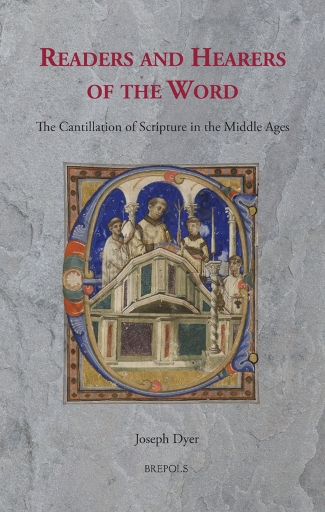
Readers and Hearers of the Word
The Cantillation of Scripture in the Middle Ages
Readers and Hearers is a broad multi-disciplinary treatment of the chanting of the Scriptures (epistle and gospel) at Mass in the Middle Ages. This form of chanting followed a procedure that continued to be used in the western Latin liturgy until the mid-twentieth century and in the traditional Latin Mass today. The readings were not simply spoken but chanted to formulae that stood halfway between heightened speech and song (cantillation). Specific clerics (lectors subdeacons deacons) distinctively vested were commissioned to chant the Scriptures employing a ritual that came to be surrounded by an elaborate ceremonial. For the gospel this involved acolytes processional movement and the employment of ecclesiastical ‘furniture’ (pulpit ambo and choir screen).
While the laity attending Mass could generally see all of the ritual actions what did they understand of the Latin text they were hearing? In areas where Latin was spoken in Antiquity the ability to comprehend Latin passively as it morphed into the Romance vernaculars survived longer than generally assumed. Naturally in Germanic lands christianized in the early Middle Ages that capability never existed. Several manuals were created to guide layfolk to engage in devotions suitable to the various parts of the Mass. How all of these elements - ceremony and devotional aids - united ‘readers’ with ‘hearers’ at Mass is the theme of the present volume which also covers Martin Luther’s guidelines for the chanting of the Scriptures in German.
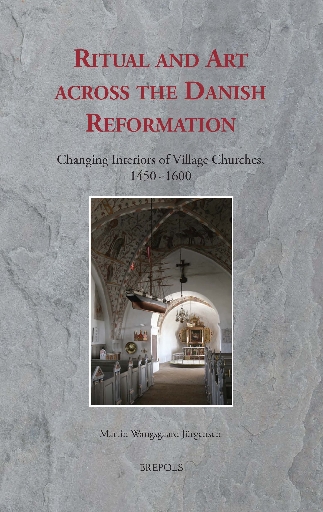
Ritual and Art across the Danish Reformation
Changing Interiors of Village Churches, 1450-1600
This volume presents a thorough study of the more than a thousand preserved Danish medieval rural parish churches. It traces the transformations of church interiors from c. 1450 to 1600 (thus covering both the emergence and impact of the Danish Reformation) by interpreting material changes within a broad historical perspective that highlights changes in religious practices and liturgy. The book explores the spatial and artistic implications of liturgy as well as the role of the congregation the donor and the clergy both in shaping and disrupting these interiors. It sets out to answer four basic questions: What did these rural churches look like by the middle of the fifteenth century? How did they change from the middle of the fifteenth century to the end of the sixteenth? How were they used and integrated into public as well as private ceremonies? And how may these churches have been perceived and experienced by the congregation and clergy?
This study seeks to establish a methodological framework that incorporates the disciplines of archaeology art history history and theology in order to facilitate an overall understanding of the architectural setting embracing spatial material and artistic elements within the church through liturgy.

The Idea of the Gothic Cathedral
Interdisciplinary Perspectives on the Meanings of the Medieval Edifice in the Modern Period
Central to many medieval ritual traditions both sacred and secular the Gothic cathedral holds a privileged place within the European cultural imagination and experience. Due to the burgeoning historical interest in the medieval past in connection with the medieval revival in literature visual arts and architecture that began in the late seventeenth century and culminated in the nineteenth the Gothic cathedral took centre stage in numerous ideological discourses. These discourses imposed contemporary political and aesthetic connotations upon the cathedral that were often far removed from its original meaning and ritual use.
This volume presents interdisciplinary perspectives on the resignification of the Gothic cathedral in the post-medieval period. Its contributors literary scholars and historians of art and architecture investigate the dynamics of national and cultural movements that turned Gothic cathedrals into symbols of the modern nation-state highlight the political uses of the edifice in literature and the arts and underscore the importance of subjectivity in literary and visual representations of Gothic architecture. Contributing to scholarship in historiography cultural history intermedial and interdisciplinary studies as well as traditional disciplines the volume resonates with wider perspectives especially relating to the reuse of artefacts to serve particular ideological ends.

Music, Liturgy, and the Veneration of Saints of the Medieval Irish Church in a European Context
This book opens up discussion on the liturgical music of medieval Ireland by approaching it from a multidisciplinary European perspective. In so doing it challenges received notions of an idiosyncratic ‘Celtic Rite’ and of the prevailing view that no manuscripts with music notation have survived from the medieval Irish Church. This is due largely to a preoccupation by earlier scholars with pre-Norman Gaelic culture to the neglect of wider networks of engagement between Ireland Britain and continental Europe. In adopting a more inclusive approach a different view emerges which demonstrates the diversity and international connectedness of Irish ecclesiastical culture throughout the long Middle Ages in both musico-liturgical and other respects.
The contributors represent a variety of specialisms including musicology liturgiology palaeography hagiology theology church history Celtic studies French studies and Latin. From this rich range of perspectives they investigate the evidence for Irish musical and liturgical practices from the earliest surviving sources with chant texts to later manuscripts with music notation as well as exploring the far-reaching cultural impact of the Irish church in medieval Europe through case studies of liturgical offices in honour of Irish saints and of saints traditionally associated with Ireland in different parts of Europe.
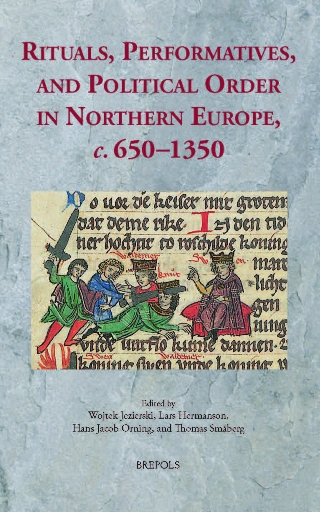
Rituals, Performatives, and Political Order in Northern Europe, c. 650–1350
This multidisciplinary volume draws together contributions from history archaeology and the history of religion to offer an in-depth examination of political ritual and its performative and transformative potential across Continental Europe and Scandinavia. Covering the period between c. 650 and 1350 this work takes a theoretical textual and practical approach to the study of political ritual and explores the connections between and changing functions of key rituals such as assemblies feasts and religious confrontations between pagans and Christians.
Taking as a central premise the fact that rituals were not only successful political instruments used to create and maintain order but were also a hazardous game in which intended strategies could fail the papers within this volume demonstrate that the outcomes of feasts or court meetings were often highly unpredictable and a friendly atmosphere could quickly change into a violent clash. By emphasising the conflict-ridden and unpredictable nature of ritual acts the articles add crucial insights into the meanings (ab)uses and interpretations of performances in the Middle Ages. In doing so they demonstrate that rituals far from being mere representations of power also constituted an important mechanism through which the political and religious order could be challenged and transformed.
Resonances
Historical Essays on Continuity and Change
Continuity and change enclose a problem field that is fundamental to the interpretation of historical material. On the one hand the notions that are necessary to perceive the historical account as a narrative: continuity tradition constancy consistency identity; on the other those that provide an impetus or drive to that account: change innovation rupture or discontinuity.
Resonances: Historical Essays on Continuity and Change explores the historiographical question of the modes of interrelation between these motifs in historical narratives. The essays in the collection attempt to realize theoretical consciousness through historical narrative ‘in practice’ by discussing selected historical topics from Western cultural history within the disciplines of history literature visual arts musicology archaeology philosophy and theology.
The title Resonances indicates the overall perspective of the book: how connotations of past meanings may resonate through time in new contexts assuming new meanings without surrendering the old.
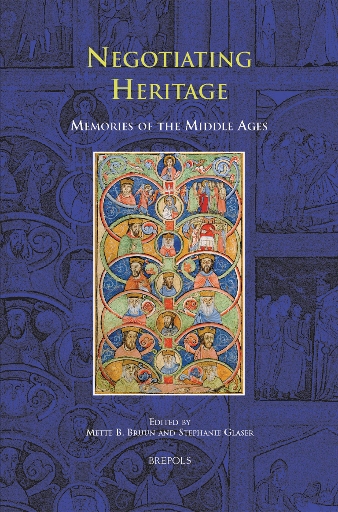
Negotiating Heritage
Memories of the Middle Ages
A key impulse of cultural transmission is engaging with the past for the benefit of the present. In seventeen essays on subjects that range from Paschasius Radbertus to Orhan Pamuk the Regularis Concordia to Kurt Weill and from Augustine to Adorno Negotiating Heritage examines specific historical case-studies that reveal the appropriation modification or repudiation of a legacy. The overall focus of this interdisciplinary volume is memory: medieval conceptions of memory resonances of the Middle Ages in later periods and memory as a heuristic methodological device. Through tokens or other vestiges of the past - the physical memorial of a tomb the ritualized retention of past acts or structures the reverberations of a doctrinal literary musical or iconographic topos or the symbolic reminiscences of a past ideal - memory acts as the manifestation of something absent. This anthology studies such tokens in a way that provides a fruitful new perspective for the field of research into memory and explores the methodological dimension of issues of heritage genealogy and tradition. Furthermore Negotiating Heritage also probes the reception and construction of the Middle Ages in later periods; exploring the shifting territory of the meaning of the medieval itself. In its movement between medievalism and the medieval period Negotiating Heritage is an important contribution to both established and emerging trends in critical thought.
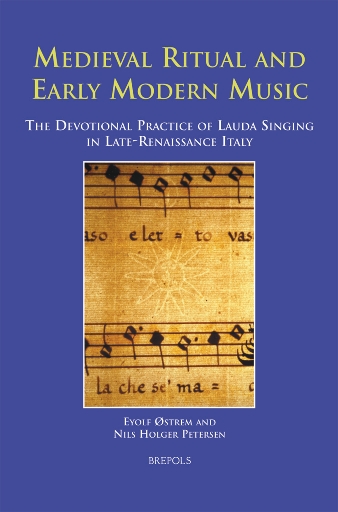
Medieval Ritual and Early Modern Music
The Devotional Practice of Lauda Singing in Late-Renaissance Italy
The polyphonic lauda had its place of prominence in the lay devotional confraternities in Italian cities in the late Middle Ages and the early modern period. A main theme of this volume is the influence of art music in devotional contexts dominated by ritual functionality where a modern aesthetic perspective is rarely employed. The authors raise fundamental questions about the validity of such a distinction between functional simplicity and aesthetic sensibility where the latter is usually reserved for advanced secular genres such as opera and the madrigal.
The question of an aesthetics avant la lettre as applied to devotional practices in the Middle Ages and the Renaissance is examined through analyses of records from youth confraternities in Renaissance Florence. Further the use during the seventeenth century of the traditional genre of the lauda in settings which stylistically reflect polyphonic art music is discussed and exemplified through the publication of nineteen polyphonic laude from a seventeenth-century manuscript found in the archives of the Cathedral of Florence.
Combining aspects of recent scholarship in musicology liturgical history and confraternity studies the authors (a musicologist and a church historian) explore both the devotional use of stylistically advanced music in the late sixteenth and early seventeenth centuries as well as the idea that the beauty of music enhances devotion.
The volume features an introduction and six chapters as well as a substantial appendix consisting of edited texts and music for several laude.
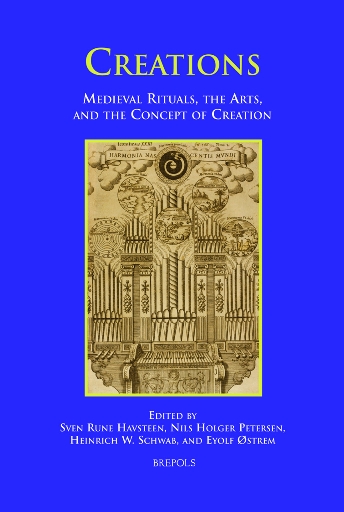
Creations
Medieval Rituals, the Arts, and the Concept of Creation
The meanings of the noun ‘creation’ and the verb ‘to create’ range from the traditional theological idea of God creating ex nihilo to a more recent sense of the process of artistic conception. This collection of thirteen essays written by scholars of music literature the visual arts and theology explores the complicated relationship between medieval rituals and theology and the development of an idea of human artistic creation which came to the fore in the sixteenth century.
The volume concentrates on the period from the Carolingians to the Counter-Reformation but also includes some twentieth-century musicians. Each essay is dedicated to a particular topic concerned with ritual or artistic beginnings inventions harmony and disharmony as well as representations or celebrations of creation. Central themes include the interplay of the ideas of God as creator of God acting and recreating in medieval liturgy of God as artist—the deus artifex of the Pythagorean cosmology which was occasionally referred to as recently as the early nineteenth century—and finally of the homo creator a concept in which man reflected (and eventually replaced) God in his artistic creativity.
This book therefore features new significant individual contributions from a range of scholarly disciplines but taken as a whole it also constitutes a complex interdisciplinary study with large-scale historical constructions.
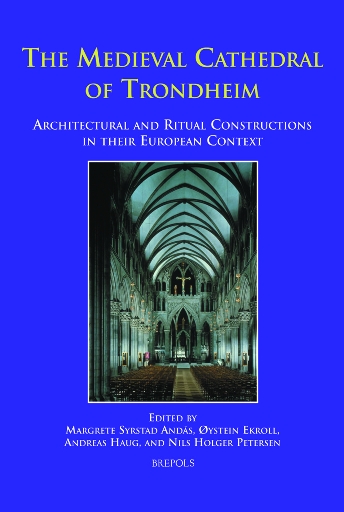
The Medieval Cathedral of Trondheim
Architectural and Ritual Constructions in their European Context
Medieval cathedrals and the various practices connected to them form an important and complex part of the European cultural heritage. The buildings themselves and their reception into the modern arts ensure their presence within today’s cultural memories and sensibilities. In the mid-twelfth century a new archbishop’s seat was erected in the Norwegian city of Trondheim (or Nidaros) in the far north of Europe. This interdisciplinary volume written by scholars of history architecture and liturgy explores the medieval cathedral of Trondheim as a local construction in a European context. As a see of the Western Church it was set in an international Latinate culture. At the same time the construction of the building itself and the ritual practices in and around it were influenced by local political religious and cultural conditions. The relationship between the physical construction of a cathedral and its function in medieval liturgical and other ritual practices is a topic of wide relevance for architectural and liturgical scholarship. The so-called Ordo Nidrosiensis the thirteenth-century ordinal of the province of Nidaros is an immense help in interpreting the architectural construction and sacred space of Nidaros Cathedral and the Ordo is dealt with in many of the articles. In accordance with general medieval practice both the Nidaros ordinal and this volume may be described as international in content but edited with regard to local considerations.