


Studia Antiqua Australiensia
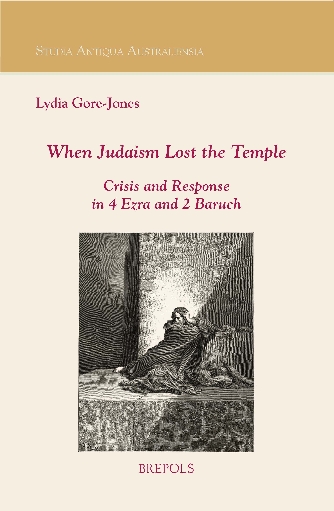
When Judaism Lost the Temple
Crisis and Reponse in 4 Ezra and 2 Baruch
This book presents a study of religious thought in two Jewish apocalypses 4 Ezra and 2 Baruch written as a response to the destruction of the Jerusalem Temple by the Romans in 70 CE. The true nature of the crisis is the perceived loss of covenantal relationship between God and Israel and the Jewish identity that is under threat. Discussions of various aspects of thought including those conventionally termed theodicy particularism and universalism anthropology and soteriology are subordinated under and contextualized within the larger issue of how the ancient authors propose to mend the traditional Deuteronomic covenantal theology now under crisis.Both 4 Ezra and 2 Baruch advocate a two-pronged solution of Torah and eschatology at the centre of their scheme to restore that covenant relationship in the absence of the Temple. Both maintain the Mosaic tradition as the bulwark for Israel’s future survival and revival. Whereas 4 Ezra aims to implant its eschatology into the Sinaitic tradition and make it part of the Mosaic Law 2 Baruch extends the Deuteronomic scheme of reward and retribution into an eschatological context making the rewards of the end-time a solution to the cycle of sins and punishments of this age. Considerable emphases are also placed on the significance of the portrayals of the pseudonymous protagonists Ezra and Baruch the use of symbolism in the two texts as scriptural exegesis as well as their relationship with each other and links with the Hebrew Bible and other Jewish and Christian writings.
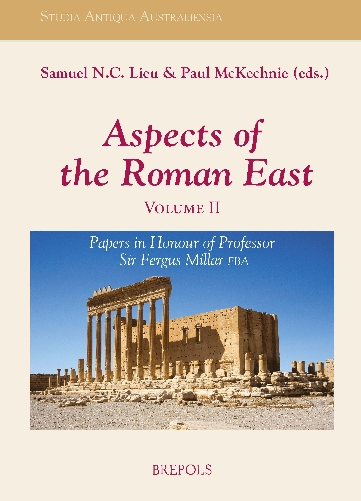
Aspects of the Roman East. Volume II
Papers in Honour of Professor Sir Fergus Millar FBA
This is the second of two volumes of papers in honour of Professor Sir Fergus Millar FBA formerly Camden Professor of Ancient History at the University of Oxford and the leading scholar of Roman History of his generation. This second volume contains papers on the Hellenistic and Roman East by scholars mainly based in the Southern Hemisphere.
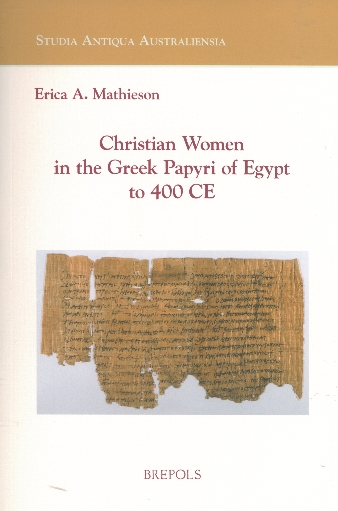
Christian Women in the Greek Papyri of Egypt to 400 CE
The documentary papyri are an unparalleled source for the study of women in antiquity. Among them are numbers of female-authored texts which allow women’s voices to be heard. In the period to 400 CE twenty-six of these texts provide information on Christian women’s religious lives. This book analyses these papyri. They give insight into Christian women’s knowledge and use of biblical texts their practice of prayer their theological understanding of God their lives and relationships. This book also examines texts written to Christian women or referring to Christian women among which are a valuable group referring to ascetic women. The perspectives of the papyri nuance what is known about women from other sources.
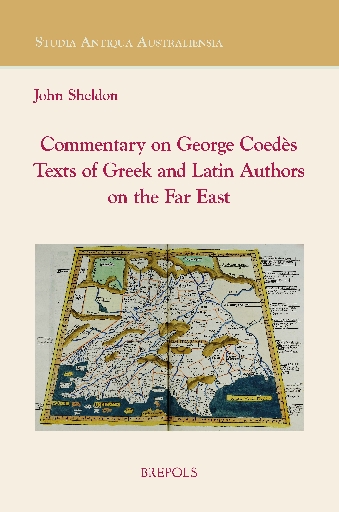
Commentary on George Coedès' Texts of Greek and Latin Authors on the Far East
This is a companion volume to Texts of Greek and Latin Authors on the Far East (Brepols 2010) originally compiled by George Coedès and recently translated by John Sheldon. There are nearly one hundred different authors whose writings have been quoted in the text volume. All these authors are introduced and all quotations are placed in context and given detailed literary linguistic and historical commentary by Dr Sheldon. The Greek and Latin texts have been re-examined and a number of suggestions for improved readings are made in the Commentary. In a number of places traditional interpretations of the ancient geography of the Far East have been superseded mainly owing to an improved understanding of the text. This volume which should be used in conjunction with the text volume will be a useful at times an essential tool for future researchers in this field.
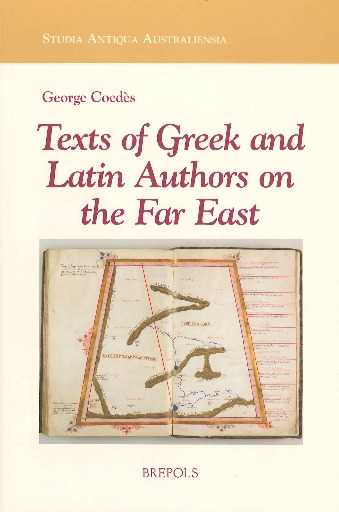
Texts of Greek and Latin Authors on the Far East
From the 4th C. B.C.E. to the 14th C. C.E.
This volume comprises a unique collection of Greek and Latin texts containing references to the Far East. Compiled by George Coedès (1886-1969) and published by him in 1910 these well-selected writings have waited until now for an English translation. The texts range from ‘Ctesias’ in the Fourth Century BCE to Byzantine writers of the 14th Century CE like Nicephorus Gregoras. There are allusions in literary works both prose and verse as well as extracts from geographers and historians some tangential others giving in-depth descriptions. Even when these are based on second or third hand information they are the basis for any study of the Far East seen through Western eyes. Coedès collected his information very thoroughly and his presentation of the material betokens a sound grasp of all the highly diverse though related literature. The Greek and Latin texts in this volume have been translated direct from the original languages by John Sheldon with an introductory essay by Sam Lieu as well as a translation by Greg Fox of the original preface and introduction by George Coedès.
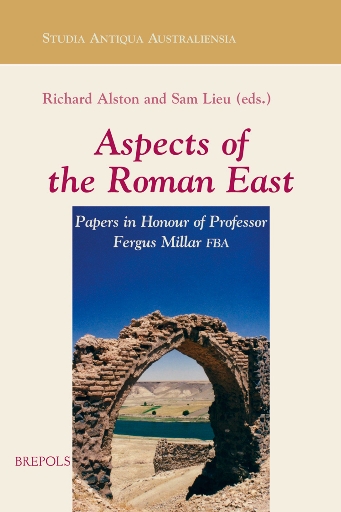
Aspects of the Roman East. Volume I
Papers in Honour of Professor Fergus Millar FBA
This is the first of two volumes of papers by scholars actively engaged in the study of the Roman East in honour of Professor Fergus Millar FBA formerly Camden Professor of Ancient History at the University of Oxford and the leading scholar of Roman History of his generation. The first volume mainly from contributors based in the Northern Hemisphere contains studies on the Roman Near East Egypt and early Byzantium. A second volume containing papers by scholars mainly based in the Southern Hemisphere is in preparation.
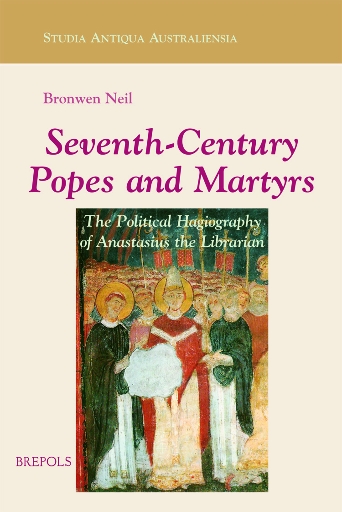
Seventh-Century Popes and Martyrs: The Political Hagiography of Anastasius Bibliothecarius
This collection of Latin texts published in a new edition with an English translation draws on the rich hagiographical corpus of Anastasius papal diplomat secretary and translator in late ninth-century Rome. The texts concern two controversial figures: Pope Martin I (649-653) whose opposition to the imperially-sponsored doctrines of monoenergism and monothelitism saw him exiled to Cherson where he died in 655 and Maximus the Confessor an Eastern monk condemned to suffer amputation and exile to Lazica for similar reasons in 662. The author seeks to place these works in their political context namely the growing hostility between the eastern and western churches in the late ninth century and to assess Anastasius's contribution to the deteriorating relations between the two through his translations of hagiography.
Dr Bronwen Neil is Burke lecturer in Ecclesiastical Latin at the Centre for Early Christian Studies Australian Catholic University Brisbane.
This is the 2nd volume in the series Studia Antiqua Australiensia produced within the Ancient HistoryDocumentation Research Centre Macquarie University.
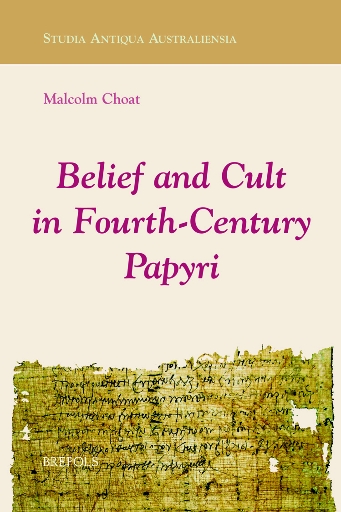
Belief and Cult in Fourth-Century Papyri
This study examines the terms and features in the Greek and Coptic documentary papyri from fourth-century CE Egypt which bear on the religious beliefs of their scribes composers senders and recipients. These include onomastics formulaic expressions invocations of particular deities the way the name of God is written titles of officials and linguistic choice. Where previous studies have often found predicative criteria and clear-cut boundaries here a new narrative of the development of late-antique religious vocabulary and scribal practice is found in the ambiguity and the confluence of religious traditions which the papyri reveal.
Malcolm Choat lectures and researches in the Ancient History Documentary Research Centre and the Department of Ancient History at Macquarie University Sydney.