


Sanctimoniales
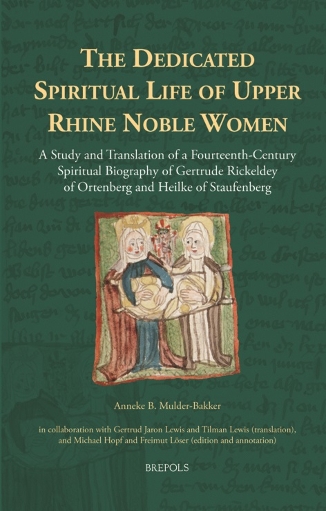
The Dedicated Spiritual Life of Upper Rhine Noble Women
A Study and Translation of a Fourteenth-Century Spiritual Biography of Gertrude Rickeldey of Ortenberg and Heilke of Staufenberg
Lady Gertrude Rickeldey of Ortenberg (d. 1335) was a noble widow who lived a spiritual but secular life in her own household first in Offenburg and later in Strasbourg the economic and cultural heart of southern Germany. Her life story was written by a lay woman from Gertrude’s entourage and was based on numerous stories told by Gertrude’s lifelong companion Heilke of Staufenberg (d. after 1335). The biographer gives us a view of the aristocratic household reports the many conversations that the women held with fellow believers and learned mendicants and shows how they led a life of devotion in their own home while also being full citizens of the city taking part in both the civic and religious politics of Strasbourg. The details of her account reveal that the women did not take vows or renounce their possessions. They did not abandon their own decision-making power. Instead they were mistresses of their own lives and developed into ethicae of stature.
Following historical investigations into Gertrude’s and Heilke’s life (Part I) is a translation of the fourteenth-century text on which these studies are based (Part II).
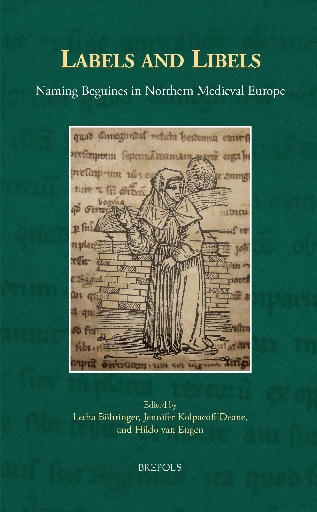
Labels and Libels
Naming Beguines in Northern Medieval Europe
This volume investigates the diverse meanings assigned to and adopted by lay religious women in northern Europe between the thirteenth and sixteenth centuries. While many outstanding studies have unearthed the local or regional significance of such women little comparative or transregional scholarship exists to date. Moreover traditional emphasis on medieval ecclesiastical condemnation of beguines has obscured the extent to which their communities were intertwined with supportive local social structures.
Exploring the multiplicity of contemporary perspectives in the Belgian Dutch French and German contexts over time the volume traces not only the women’s relationships to various authorities and institutions but also the specific terms used to represent and respond to ‘beguines’. Illuminating the kaleidoscopic ways in which medieval people categorized described and engaged with such women the collected essays also underscore the extent to which simple dualities of ‘clerical’ and ‘lay’ ‘elite’ and ‘popular’ and ‘orthodox’ and ‘heretical’ are insufficient constructs with which to map intersections of medieval gender lay religiosity and society. In doing so they propose new avenues and coordinates for exploring the sociospiritual topography of medieval Europe.