


Studies in Classical Archaeology
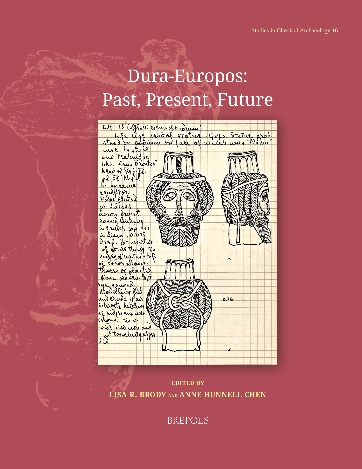
Dura-Europos: Past, Present, Future
This volume brings together an international and interdisciplinary host of scholars to reflect on the complicated legacies of exploration at the archaeological site of Dura-Europos situated on the western bank of the Euphrates River near modern Salihiyeh (Syria). A chance discovery after World War I kicked off a series of excavations that would span the next century and whose finds are today housed in collections worldwide including the Yale University Art Gallery the Louvre and the National Museum in Damascus. Dura-Europos exemplifies a multiethnic frontier town at the crossroads of major trade routes. Its textual remains and remarkably-preserved Christian Jewish and polytheist religious sanctuaries provide key resources for the study of antiquity and attest to the cross-cultural interconnectivity that was demonstrably central to the ancient world but which has been too often obscured by Eurocentric historiographic traditions and siloed disciplinary divisions.
Foreign-run large-scale archaeological campaigns of the early twentieth century like those at Dura-Europos have created narratives of power and privilege that often exclude local communities. The significance of these imbalances is entangled with the destruction the site has experienced since the 2011 outbreak of conflict in Syria. As a step toward making knowledge descendant of early excavations more accessible this volume includes Arabic summaries of each paper following up on the simultaneous Arabic interpretation provided at the 2022 hybrid conference whose proceedings form the core of this publication. The papers address topics connected to essential themes in relation to Dura-Europos: long-distance trade relations and cross-border interactions in antiquity including the exchange of technologies people and materials; Christianity Judaism and other religious practices and their relations to one another; contemporary trafficking of looted artifacts; cultural heritage and the Islamic State; and the evolving role of museum collections technologies and archival materials for research.

The Sanctuary of Parthenos at Ancient Neapolis (Kavala), Volume i
Incised and Painted Ceramic Inscriptions from the Sanctuary and in Aegean Thrace
The ancient city of Neapolis (modern Kavala Greece) was founded by Thasos in the seventh century bce at a strategic location where the Thracian hinterlands meet the Aegean Sea. The patron deity of this North Aegean polis was Parthenos (the Maiden) known to us through epigraphic and archaeological evidence. Her sanctuary came to light in the twentieth century during rescue excavations and yielded numerous finds most of which date from the Archaic period.
This monograph provides a discussion of the history of excavations at this sanctuary as well as a contextual examination of the material leading to a new interpretation of Parthenos’ identity. Among the wealth of finds from the site the corpus of incised and painted ceramic inscriptions stands out as it offers a unique glimpse into the history of the cosmopolitan temenos and the dedicatory practices and rituals that took place there. The inscribed vessels carry dedications numerical and other graffiti and dipinti as well as the initials of the goddess which designate them as sacred equipment. When considered in the context of the ceramic inscriptions from sanctuaries across Aegean Thrace they further underscore the important role of Neapolis and the Sanctuary of Parthenos in the commercial networks and cultural dynamics of the Aegean both in the early stages of Greek colonization and in the centuries that followed.
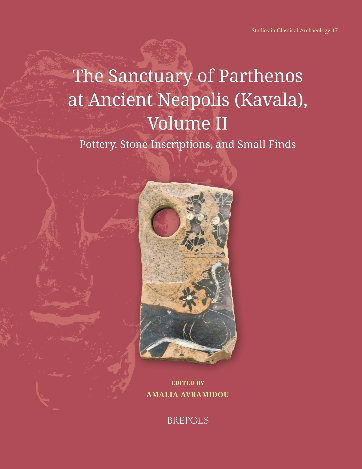
The Sanctuary of Parthenos at Ancient Neapolis (Kavala), Volume ii
Pottery, Stone Inscriptions, and Small Finds
The ancient city of Neapolis (modern Kavala Greece) was founded by Thasos in the seventh century BCE at a strategic location where the Thracian hinterlands meet the Aegean Sea. The patron deity of this North Aegean polis was Parthenos (the Maiden) a goddess often associated with Artemis and known to us through epigraphic and archaeological evidence. Her sanctuary came to light in the twentieth century during rescue excavations and yielded numerous finds most of which date from the Archaic period.
This edited volume draws together the material evidence from the Sanctuary of Parthenos with a particular focus on the ceramic wares stone inscriptions and small finds from the site. Published as a counterpart to an earlier publication in this series Amalia Avramidou’s monograph The Sanctuary of Parthenos at Ancient Neapolis (Kavala): Incised and Painted Ceramic Inscriptions from the Sanctuary and in Aegean Thrace the essays gathered here nonetheless form a stand-alone volume that sheds light on both the importance of the site as a place of cult and more broadly the role that it played within the commercial networks and cultural dynamics of the Aegean.