


Seminari del Centro interuniversitario per la storia e l’archeologia dell’alto medioevo
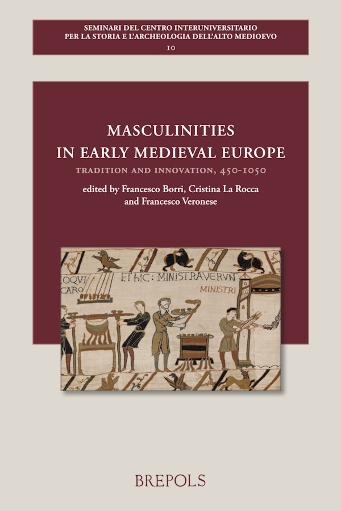
Masculinities in Early Medieval Europe
Tradition and Innovation, 450–1050
This volume brings together a collection of essays that delve into the shifts in ideas roles and practices of masculinities and male attitudes during the transition from late Antiquity to the early Middle Ages. This period was marked by significant changes including the collapse of Roman political authority in the West the fragmentation of imperial universalism in polities and the rise of Christianity which all challenged the gender roles inherited from Antiquity.
Within this historical context the book explores the evolution of men’s privileges responsibilities and burdens through eleven case studies focusing on different categories of men and manly behaviour. The volume brings to life husbands and fathers kings and workers clerics and warriors from both the East and the West as revealed through contemporary textual and material sources and preserved in the physical remains of male bodies and actions. In doing so this volume will bring to the fore new perspectives on masculinities and gender history.
Biens publics, biens du roi
Les bases économiques des pouvoirs royaux dans le haut Moyen Âge
Les sociétés politiques du haut Moyen Âge sont caractérisées par une forte centralité royale que l'historiographie a étudiée sous de multiples aspects comme les rituels et les formes de communication la parenté et les alliances entre groupes aristocratiques la compétition pour le trône ou la faveur du souverain etc. Le présent volume replace l'attention sur les fondements économiques des pouvoirs des pouvoirs des rois ducs et princes en une période où l'imposition directe d'origine tardoantique s'est étiolée au profit de la rente. Que s'est-il passé entre l'épuisement de l'impôt foncier direct aux vi e-vii e siècles et la diffusion à large échelle des pouvoirs seigneuriaux aux xi e-xii e siècles ? De quelles ressources foncières disposait le roi et quels étaient ses rapports avec l'exercice du pouvoir au niveau central et local ? Quels étaient les modes de redistribution de la terre publique de quelle manière était-elle h économique des pouvoirs du souverain ? Historiens et archéologues s'efforcent de répondre à ces questions pour la plupart des régions de l'Europe occidentale.
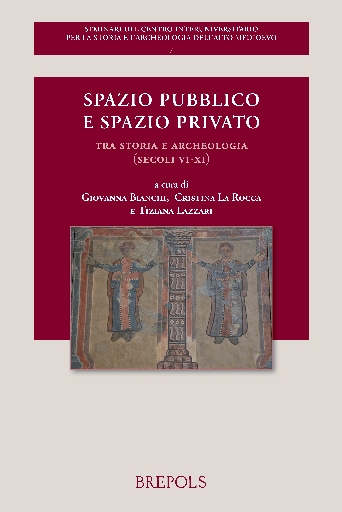
Spazio pubblico e spazio privato
Tra storia e archeologia (secoli VI-XI)
I contributi contenuti nel volume affrontano il tema degli spazi materiali e simbolici di ambito pubblico e privato tra Tarda Antichità e Alto Medioevo attraverso ricerche condotte su fonti scritte e materiali.
Il volume è suddiviso in tre sezioni. La prima Una nuova dimensione del pubblico e del privato raccoglie lavori che offrono quadri di insieme ampi ciascuno su un problema di lunga tradizione storiografica. La seconda sezione I luoghi del potere e gli spazi privati accosta ricerche basate sia su fonti scritte sia su fonti archeologiche per meglio definire gli spazi destinati all’esercizio del potere e quelli relativi alla sfera domestica. Nella terza sezione Gestione e controllo delle risorse sono contenuti contributi che attraverso i dati offerti dalle fonti materiali riflettono sui sistemi economici in relazione ai regimi proprietari e di sfruttamento delle risorse alla creazione di riserve alle forme di produzione destinate sia a una circolazione ristretta sia a una distribuzione di controllo pubblico.
La scelta di tematiche ad ampio raggio ha inteso offrire una riflessione articolata sull’utilità - e sulla possibilità stessa - di applicare la contrapposizione pubblico/privato allo studio degli spazi fisici e simbolici tardo antichi e altomedievali. Il volume raccogliendo l’insieme delle prospettive di indagine che sul rapporto pubblico/privato si sono sviluppate negli ultimi anni intende contribuire con nuovi spunti e strumenti di analisi alle future ricerche sul tema.
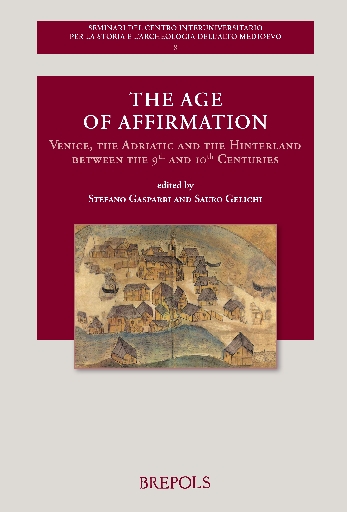
The Age of Affirmation
Venice, the Adriatic and the Hinterland between the 9th and 10th Centuries
This volume brings together the Proceedings of the seminar held on 29 and 30 October 2015 at the Department of Humanities of Ca’ Foscari University of Venice. The title of the book which is the same as the seminar refers to the “age of consolidation” of Venice that had been identified by the promoters of the initiative as the 9th and 10th centuries. All the papers in the volume therefore consider a Venetian reality as already formed even in its early days; a reality or rather a social economic and political community which at this moment in time reinforces its urban aspect and creates the basis for the growth that will characterize its history after the tenth century.
The book collects twelve papers of archaeological historical epigraphic and historical-artistic subject.
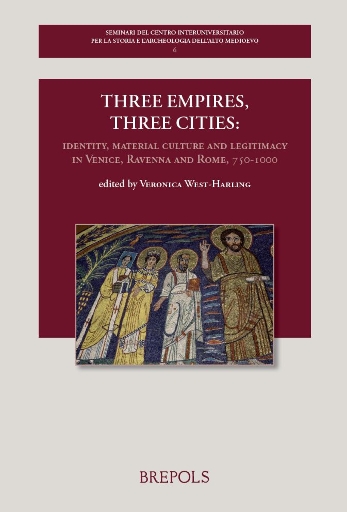
Three empires, three cities
Identity, material culture and legitimacy in Venice, Ravenna and Rome, 750-1000
This book focuses on three Italian cities in the early middle ages Rome Ravenna and Venice and looks at them in a new light. The unifying element linking them was their common Byzantine past since they remained in the sphere of imperial power after the creation of the Lombard kingdom in the late 6th century up to 750. What happened to them when their links with the Byzantine Empire were almost entirely severed in the 8th century? Did they remain socially and culturally heirs of Byzantium in the 9th and 10th centuries in their political structures social organisation material culture ideological frame of reference and representation of identity? Or did they become part of the next imperial powers of Italy the Carolingian and the Ottonian empires? A workshop in Oxford in 2014 brought together an international group of specialists to discuss these questions in a comparative context; the excitement of their debates is captured in the discussion sections linking the papers in this volume. Early medieval Italy can be seen in a new way as a result.
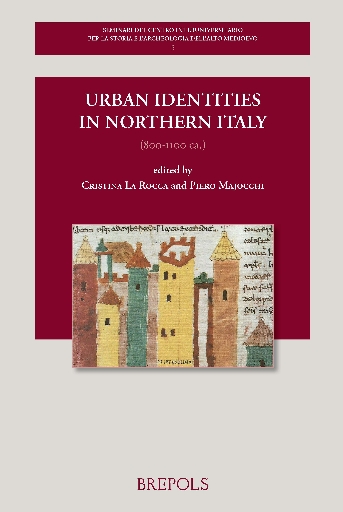
Urban identities in Northern Italy, 800-1100 ca.
The book aims to reflect on the characteristics of urban centers of the kingdom of Italy between the ninth and the eleventh centuries filling a noticeable historiographical gap. The cities in Northern Italy in this period have not yet been analysed with a multidisciplinary approach able to outline their specific and distinctive characteristics and to pose this ages in relation to the post-Roman past and also to the following 'Communal' phase. Urban identities are examined from different points of view: from a political perspective in relation to the dialectic between center and periphery and to the border areas of the kingdom; from an institutional and territorial standing point analyzing the structures of local power and public territorializations; according to social and military history approaches highlighting the continuities and transformations in comparison with former and following centuries. The issue of urban identities is also archaeologically investigated in relation to urban development and to topographic transformations and culturally explored examining mutual exchanges between the cities of the kingdom. Another aspect rarely addressed by previous literature is ultimately to compare the results of this research on the Italic kingdom with studies on the Transalpine Carolingian and post-Carolingian empire and kingdoms outlining common trends but also specific peculiarities.
Italy, 888-962: a turning point. Italia, 888-962: una svolta
IV Seminario Internazionale, Cassero di Poggio Imperiale a Poggibonsi (SI) 4-6 dicembre 2009
The years 888-962 are a period in which the Kingdom of Italy was not ruled by kings from across the Alps the only such period from the end of the eighth century to the end of the eleventh. They were for a long time accepted as a period of major political breakdown and failure and in north-central (not southern) Italy the start of the long run in to the early city communes and Italy’s future history as a radically disunited peninsula. In the light of not only recent historical reanalyses but also the emergence of a large quantity of archaeological data this image can be tested and in this book is by both historians and archaeologists. A far more subtle and nuanced picture emerges from the interdisciplinary work in this volume. This book will be an essential starting-point for all future work on Italy in this period.
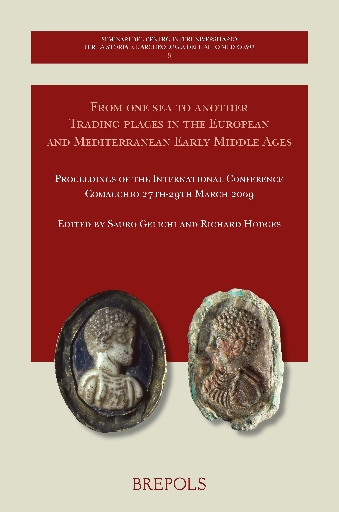
From one sea to another. Trading places in the European and Mediterranean Early Middle ages
Proceedings of the International Conference, Comacchio 27th-29th March 2009
Recent excavations at Comacchio as well as archaeological research in the Venetian lagoon are defining the northern Adriatic region as an especially dynamic area in demographic rather than economic terms during the early Middle Ages. This dynamism is best expressed in the form of new centres of settlement with specific characteristics principally associated with short- and long-distance trade. This phenomenon possesses a strong resemblance to the emergence of similar places along the North Sea coastline from more or less the same period. This phenomenon has been much debated by historians and archaeologists who have ascribed the source of these new specialized centres (defined as emporia or wics) as prototypes for future mercantile cities and the rebirth of the medieval economy.
The scope of the congress at Comacchio was to evaluate the most recent evidence in a historical and archaeological context addressingthe importance of these new Adriatic centres as well as considering comparisons for the first time with the more familiar northern European trading centres.
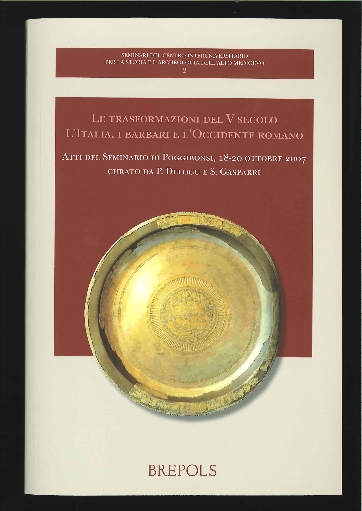
Le trasformazioni del V secolo. L'Italia, i barbari e l'Occidente romano
Atti del Seminario di Poggibonsi, 18-20 ottobre 2007
Il V secolo è l’epoca in cui avvennero eventi cruciali nella storia del mondo romano quali le invasioni barbariche e la fine del governo imperiale in occidente. Le conseguenze di questi eventi sono state oggetto di meditazione fin dalle origini della storiografia moderna: segnarono la fine del mondo e della civiltà antica dando inizio di fatto al medioevo come vuole una tradizione che va dagli umanisti italiani agli storici accademici tedeschi dell’Ottocento o si trattò piuttosto di una radicale trasformazione dell’ordinamento politico dell’occidente romano che però non mutò sostanzialmente l’organizzazione sociale e le tradizioni culturali delle province come ritengono oggi importanti filoni della ricerca storica ?
Alla luce di questa problematica il secondo seminario organizzato dal Centro interuniversitario di storia e archeologia dell’alto medioevo di cui questo volume raccoglie gli atti ha riesaminato molti aspetti fondamentali del V secolo con l’impostazione multidisciplinare che è propria del Centro focalizzando in particolare l’attenzione sulla situazione italiana messa a confronto con quella delle altre province dell’Occidente. Si sono indagati con originalità di prospettive e ricchezza di nuovi dati gli aspetti istituzionali e ideologici degli ultimi tempi dell’impero in Italia le testimonianze archeologiche dell’insediamento dei barbari nelle province le trasformazioni delle città e dell’insediamento rurale la dinamica demografica la produzione artistica e monumentale la cultura dei laici e degli ecclesiastici. I risultati di queste nuove indagini portano un contributo essenziale alla conoscenza e alla comprensione di un’epoca drammatica e feconda che costituisce un momento fondamentale nella storia d’Europa.
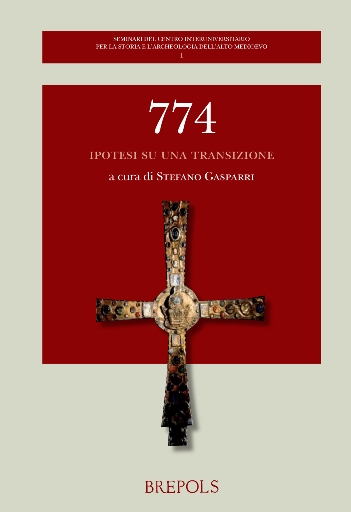
774, ipotesi su una transizione
Atti del seminario di Poggibonsi, 16-18 febbraio 2006
In questo volume sono editi gli atti del I seminario organizzatonel 2006 dal Centro interuniversitario per la storia e l’archeologia dell’alto medioevo (SAAME). Al centro del seminario è stato un tema di grande importanza per storia italiana: la conquista franca del regno longobardo e le sue conseguenze in tutti i campi dai mutamenti politici - indagati soprattutto dal punto di vista della loro rappresentazione - ai mutamenti nell’insediamento rurale e urbano (dalle campagne toscane a capitali come Roma e Ravenna) a quelli nelle attività artistiche (la costruzione di edifici di prestigio) e culturali (epigrafia documenti codici produzione normativa) nella circolazione monetaria (le zecche i mancosi) e nei flussi commerciali (con in primo piano l’Adriatico). Inoltre si è tentato di inserire la ‘transizione’ italiana ossia il passaggio della penisola sotto la dominazione carolingia nell’ambito di un quadro europeo prendendo in considerazione con alcuni affondi tematici la Turingia la Baviera l’Austrasia e infine la Spagna dove è avvenuta un’altra fondamentale transizione quella tra Visigoti e Musulmani.
Il titolo del libro che fa riferimento ad una data precisa fornita dalla storia politica l’anno 774 può apparire paradossale per presentare i risultati di un seminario nel corso del quale sono state interrogate allo stesso modo fonti scritte e fonti archeologiche e va inteso in senso soprattutto simbolico come un’ovvia allusione ad un altro anno cardine il 751 anch’esso oggetto di indagini recenti. Ma al tempo stesso tale riferimento è utile per ribadire l’assoluta necessità di coordinare insieme ai fini della ricostruzione del passato i tempi e i risultati della storia politica (in questo caso il passaggio dai Longobardi ai Carolingi) dell’archeologia della numismatica della storia della documentazione scritta della storia dell’arte e di tutte le altre storie.