


Studies in the Early Middle Ages
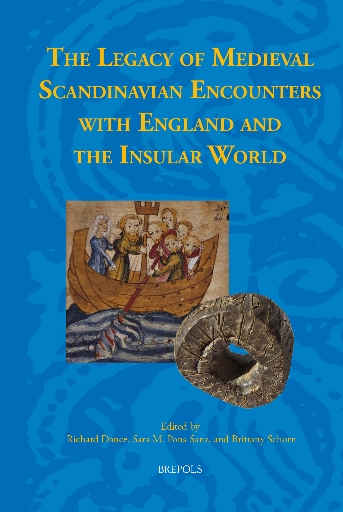
The Legacy of Medieval Scandinavian Encounters with England and the Insular World
The Vikings had a major and lasting impact on the English language. This volume is a unique companion to the study of Anglo-Scandinavian language contact providing expert discussions of its contexts backgrounds and the considerable afterlife of its effects through the Middle Ages and down to the present day. It contains thirteen new articles by leading specialists in the fields of early medieval languages literature and history specially commissioned in order to explore as wide a range as possible of the historical and cultural contexts for Anglo-Scandinavian encounters in the Viking Age and the evidence for them. These essays analyse in detail the Old Norse influence on English offering studies of words and their meanings in their textual and literary contexts and including lexicography dialectology and syntactic research; they explore findings from archaeology inscriptions and place-names; and they situate Anglo-Scandinavian contacts in the larger multilingual multicultural contexts of the North Sea and Irish Sea worlds.
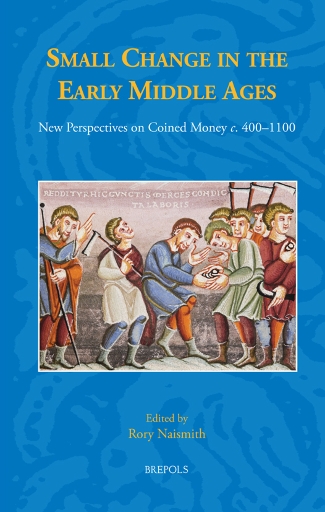
Small Change in the Early Middle Ages
New Perspectives on Coined Money, c. 400–1100
Coined money is a familiar part of day-to-day life and has been for millennia in many societies. In the early Middle Ages however it worked rather differently. People across the former Roman Empire and beyond continued to think in terms of monetary units of account but the supply and use of actual coin became highly uneven. Access to low-value coinage small change was particularly attenuated in western Europe where gold and silver pieces predominated. This volume explores how people and societies dealt with changes to monetary systems. It looks at the experiences of different groups in society from those who struggled with regimes that used only high value coins to the elites who tended to benefit from those same conditions. The ten contributions to this volume consider diverse geographical areas from Byzantine Egypt to Italy Francia and Britain identifying parallels and divergences among them. The chapters draw on cutting-edge archaeological and historical research to give a panorama of the latest thinking on early medieval money and coinage.
Meanings of Water in Early Medieval England
Water is both a practical and symbolic element. Whether a drop blessed by saintly relics or a river flowing to the sea water formed part of the natural landscapes religious lives cultural expressions and physical needs of medieval women and men.
This volume adopts an interdisciplinary perspective to enlarge our understanding of the overlapping qualities of water in early England (c. 400 – c. 1100). Scholars from the fields of archaeology history literature religion and art history come together to approach water and its diverse cultural manifestations in the early Middle Ages. Individual essays include investigations of the agency of water and its inhabitants in Old English and Latin literature divine and demonic waters littoral landscapes of church archaeology and ritual visual and aural properties of water and human passage through water. As a whole the volume addresses how water in the environment functioned on multiple levels allowing us to examine the early medieval intersections between the earthly and heavenly the physical and conceptual and the material and textual within a single element.
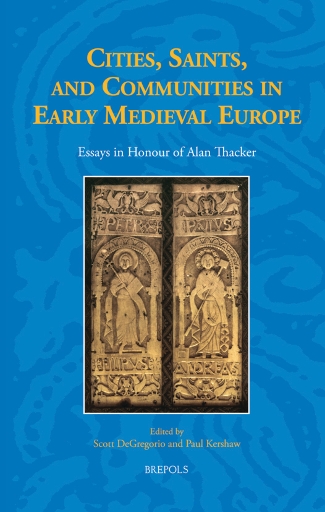
Cities, Saints, and Communities in Early Medieval Europe
Essays in Honour of Alan Thacker
This book honours the scholarship of English historian Dr. Alan Thacker by exploring the insular the European and more broadly the Mediterranean connections and contexts of the history and culture of Anglo-Saxon England in the age of Bede and beyond. It brings together original contributions by leading European and North American scholars of Late Antiquity and the early Middle Ages working across a range of disciplines: history theology epigraphy and art history. Moving from the Irish Sea to the Bosporus this collection presents a linked world in which saints scholars and the city of Rome all played powerful connective roles creating communities generating relationships linking east to west north to south and present to past.
As in Thacker’s own work Bede’s life and thought is a central presence. Bede’s attitudes to historical and contemporaneous conceptions of heresy to the Irish church and the evidence for his often complex relationships with his Northumbrian contemporaries all come under scrutiny together with groundbreaking studies of his exegesis christology and historical method. Many of the contributions offer original insights into figures and phenomena that have been the focus of Dr. Thacker’s highly influential scholarship.
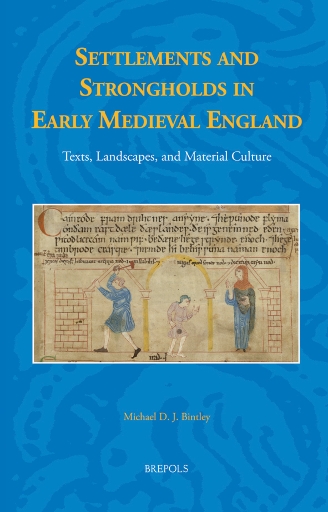
Settlements and Strongholds in Early Medieval England
Texts, Landscapes, and Material Culture
In recent years numerous advances in archaeological and historical studies have enhanced our understanding of the form and function of settlements and strongholds in the landscapes of early medieval England. Until now this groundbreaking work has not been matched in studies of early English literature where no concerted effort has been made to investigate how these findings can inform our understanding of their representation in texts - and vice versa.
This study shows that literary works offer considerable insight into the ways their authors readers and other audiences thought and felt about the constructed places and spaces in which they lived their lives. Covering a broad range of evidence from the end of Roman rule to the Conquest it is the first study of its kind to offer an interdisciplinary account of the relationship between the built environment as it appears in the material record and in a range of textual productions.
Settlements and Strongholds interrogates correlations and disjunctions between the stories found in the soil and in written works of various kinds focusing on vernacular texts and Latin works that informed their development. It argues for a deeper appreciation of the relationship between imaginative works and the material contexts in which they were created revealing the parallel development of ideas and concepts that were fundamental in shaping early medieval England.
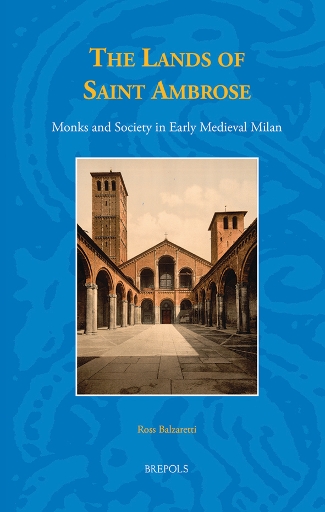
The Lands of Saint Ambrose
Monks and Society in Early Medieval Milan
This book is a history of Milan in the early medieval period. It investigates the political social and economic aspects of the transformation of the Roman world in one of its major centres. Its main theme is the role of monastic communities in this transformation. In the case of Milan a single monastery can be studied in great detail: the Benedictine community founded by Charlemagne c. 789 next to the basilica in which St Ambrose himself was buried. Surprisingly the impact which this important Carolingian foundation had upon the existing society of Milan has been underestimated by historians partly because the history of the monastery has been studied apart from the history of the city.
The book shows how successive generations of monks helped to change the social organisation of the city and much of its hinterland largely through their substantial dealings in property as recorded in one of the most important surviving collections of early medieval charters. This thesis challenges the views of earlier generations of scholars who downplayed the role of the monastery in the mechanisms of social change in favour of a ‘new’ mercantile class.
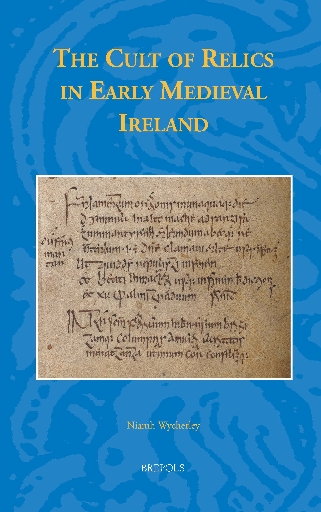
The Cult of Relics in Early Medieval Ireland
As the cult of saints became increasingly important to the Christian religion during the latter centuries of the Roman Empire so too the veneration of relics became a central element of Christian piety. The relics of holy men and women - the very tangibility of which ensured their lasting appeal - could be used to heal the sick improve the weather ensure victory in battle and represent power and authority. Even today in an era of declining church attendance famous relics such as the head of St Catherine of Siena or the tongue of St Anthony of Padua continue to draw hundreds of thousands of pilgrims; the need to preserve and venerate objects associated with the important and the famous is a well-established human trait.
This book is the first to explore the historical roots of the cult of relics in early medieval Ireland deepening our understanding of how the pagan Irish adapted to the new religion. Examining the cult of relics from the earliest Irish sources up to the ninth century it provides insights into the role of relics and the culture and people to whom they were so significant. The volume investigates how the Christian phenomenon of relic veneration developed in early Ireland and it evaluates the continuity between Irish practice and that on the continent. By offering a new model of how the cult of relics evolved and by exploring the extent to which it helped forge early Irish Christianity the arguments presented here have the potential to reshape views of the entire period.
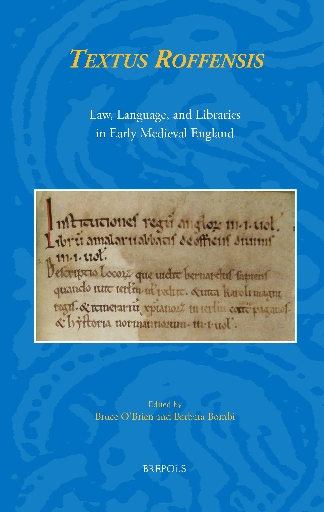
Textus Roffensis
Law, Language, and Libraries in Early Medieval England
Textus Roffensis a Rochester Cathedral book of the early twelfth century holds some of the most significant texts issued in early medieval England ranging from the oldest English-language law code of King Æthelberht of Kent (c. 600) to a copy of Henry I’s Coronation Charter (5 August 1100). Textus Roffensis also holds abundant charters (including some forgeries) narratives concerning disputed property and one of the earliest library catalogues compiled in medieval England. While it is a familiar and important manuscript to scholars however up to now it has never been the object of a monograph or collection of wide-ranging studies. The seventeen contributors to this book have subjected Textus Roffensis to close scrutiny and offer new conclusions on the process of its creation its purposes and uses and the interpretation of its laws and property records as well as exploring significant events in which Rochester played a role and some of the more important people associated with the See. The work of the contributors takes readers into the mind of the scribes and compiler (or patron) behind the Textus Roffensis as well as into the origins and meaning of the texts that the monks of early twelfth-century Rochester chose to preserve. The essays contained here not only set the study of the manuscript on a firm foundation but also point to new directions for future work.
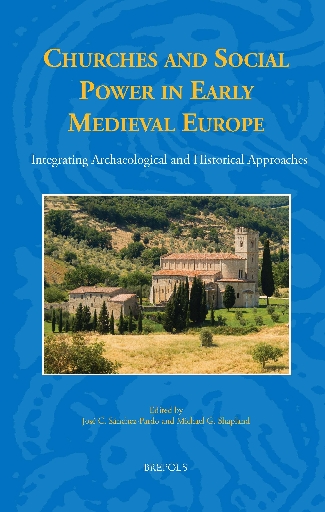
Churches and Social Power in Early Medieval Europe
Integrating Archaeological and Historical Approaches
Local churches were an established part of many towns and villages across early medieval Western Europe and their continued presence make them an invaluable marker for comparing different societies. Up to now however the dynamics of power behind church building and the importance of their presence within the landscape have largely been neglected.
This book takes a comparative and interdisciplinary approach to the study of early medieval churches drawing together archaeology history architecture and landscape studies in order to explore the relationship between church foundation social power and political organization across Europe. Key subjects addressed here include the role played by local elites and the importance of the church in buttressing authority as well as the connections between archaeology and ideology and the importance of individual church buildings in their broader landscape contexts.
Bringing together case-studies from diverse regions across Western Europe (Italy Spain Portugal Germany France the British Isles Denmark and Iceland) the seventeen contributions to this volume offer new insights into the relationships between church foundations social power and political organization. In doing so they provide a means to better understand social power in the landscape of early medieval Europe.
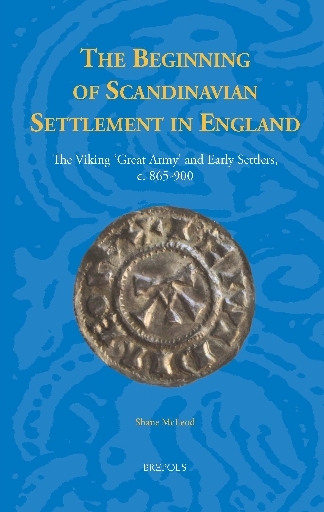
The Beginning of Scandinavian Settlement in England
The Viking 'Great Army' and Early Settlers, c. 865-900
The conquest and settlement of lands in eastern England by Scandinavians represents an extreme migratory episode. The cultural interaction involved one group forcing themselves upon another from a position of military and political power. Despite this seemingly dominant position by 900 CE the immigrants appear to have largely adopted the culture of the Anglo-Saxons whom they had recently defeated. Informed by migration theory this work proposes that a major factor in this assimilation was the emigration point of the Scandinavians and the cultural experiences which they brought with them.
Although some of the Scandinavians may have emigrated directly from Scandinavia most of the first generation of settlers apparently commenced their journey in either Ireland or northern Francia. Consequently it is the culture of Scandinavians in these regions that needs to be assessed in searching for the cultural impact of Scandinavians upon eastern England. This may help to explain how the immigrants adapted to aspects of Anglo-Saxon culture such as the issuing of coinage and at least public displays of Christianity relatively quickly. The geographic origins of the Scandinavians also explain some of the innovations introduced by the migrants including the use of client kings and the creation of ‘buffer’ states.
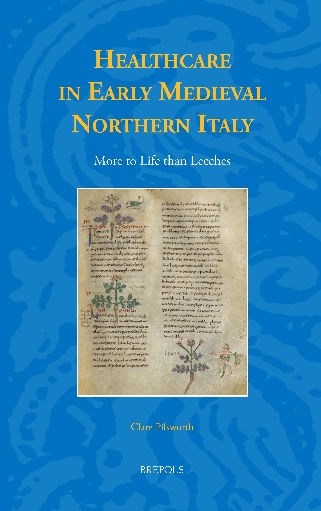
Healthcare in Early Medieval Northern Italy
More to Life than Leeches
After the fall of the last Western Roman Emperor in 476 AD Northern Italy played a crucial role - both geographically and culturally - in connecting East to West and North to South. Nowhere is this revealed more clearly than in the knowledge and practice of medicine. In sixth-century Ravenna Greek medical texts were translated into Latin and medical practitioners such as Anthimus famous for his work on diet also travelled from East to West. Despite Northern Italy’s location as a confluence of cultures and values modern scholarship has thus far ignored the extensive range of medical practices in existence throughout this region. This book aims to rectify this absence. It will draw upon both archaeological and written sources to argue for redefinitions of health and illness in relation to the Northern-Italian Middle Ages. This volume does not only put forward new classifications of illness and understandings of diet but it also demonstrates the centrality of medicine to everyday life in Northern Italy. Using charter evidence and literary sources the author expands our understanding of the literacy levels and social circles of the elite medical practitioners the medici and their lesser counterparts. This work marks a significant intervention into the field of medical studies in the early to high Middle Ages.

England and Rome in the Early Middle Ages
Pilgrimage, Art, and Politics
This volume explores the special connection that linked England and Rome between the seventh and the eleventh centuries a topic which in spite of its relevance and attraction has never before been dealt with in a publication of this scale and depth. By bringing together scholars from different countries and disciplines and by relying on important recent archaeological findings that have led to a firmer knowledge of early medieval Rome the volume provides a detailed and integrated investigation of the ways in which contacts between England and the Eternal City developed across the early Middle Ages. With special attention to major themes such as pilgrimage artistic exchange and ecclesiastical politics the essays in this volume show the continuity of the Anglo-Saxons’ relations with Rome as well as the ways in which over time these adapted to different circumstances. They also show that Anglo-Saxon England should not be thought of as just a passive recipient of influential cultural trends but rather as an important player in the multi-faceted world of early medieval Europe in which Rome by now the city of the popes kept its centrality as a source of spiritual and political power.
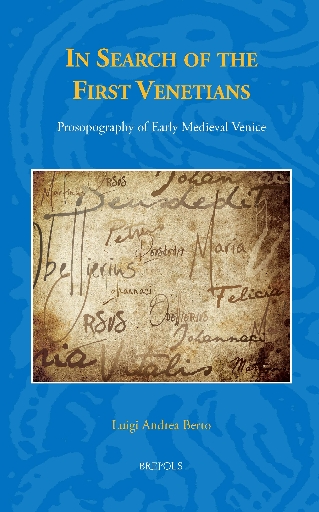
In Search of the First Venetians
Prosopography of Early Medieval Venice
This prosopographical study provides information about each Venetian living in the early Middle Ages from the invasion of the Lombards in 569 - an action that forced part of northeast Italy’s population to seek refuge on the islands of the Venetian lagoon - to the rule of Duke Petrus Ursoylus II (991-1008). There is an entry for each individual listing all available information and quoting the full text of primary sources within the footnotes. The data are organized in categories such as families first names rulers women office holders ecclesiastics occupations and places of residence (Venice was a duchy with different urban centres).
Venice is an extremely important place for this kind of analysis. It is the area in which family name use began for the first time in medieval Europe. Venice was never conquered by a ‘Germanic’ people and therefore it is possible to study the evolution of a post-Roman/Byzantine society by analyzing the names of the Venetians. Moreover scholars interested in later periods will be able to find the origins of all the most important Venetian families.
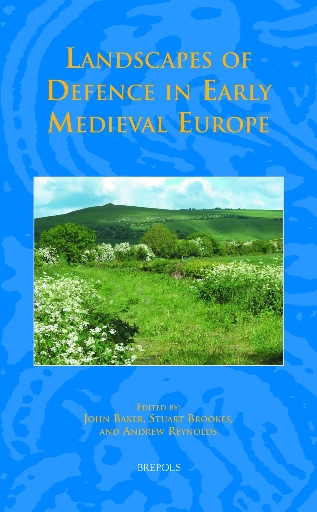
Landscapes of Defence in Early Medieval Europe
This volume is the result of a conference at University College London in 2007 which addressed the scale and form of civil defences in early medieval Europe c. 800-1000. Previous work has largely focused on individual sites or specific categories of evidence. These papers offer new interdisciplinary perspectives driven by a landscape approach. Several contributions focus on civil defence in England around the time of King Alfred the Great and together provide a new agenda for the study of Anglo-Saxon military landscapes. European case-studies facilitate a comparative approach to local and regional defensive structures and interpretive paradigms. Topics and themes covered include civil defence landscapes the organization and form of defensive structures and the relationships and dynamics between social complexity militarization and external threats. With papers ranging from England to Spain and Germany to Scandinavia the volume is of relevance to a range of disciplines including archaeology history onomastics geography and anthropology.
John Baker is Research Associate at the University of Nottingham Stuart Brookes is Research Associate and Andrew Reynolds is Professor in Medieval Archaeology both at the UCL Institute of Archaeology.
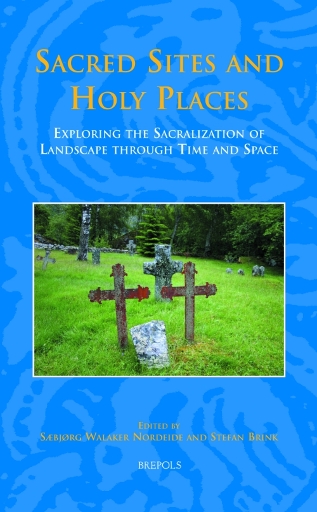
Sacred Sites and Holy Places
Exploring the Sacralization of Landscape through Time and Space
In this volume two important veins of interdisciplinary research into the medieval period in Scandinavia and the Baltic region are merged namely the Christianization process and landscape studies. The volume authors approach the common theme of sacrality in landscape from such various viewpoints as archaeology philology history of religion theology history classical studies and art history. A common theme in all articles is a theoretical approach complemented by illustrative case studies from the Scandinavian Baltic or Classical worlds. Aspects of pagan religion as well as Christianity and the establishment of the early Church are considered within both geographical setting and social landscape while the study of maps place names and settlement patterns introduces new methodologies and perspectives to expose and define the sacral landscape of these regions. The contributions are put into perspective by a comparison with research into the sacral landscapes of Central Europe and the Classical world.
New interdisciplinary research methods and new models have been developed by the contributors to present new vistas of sacrality in the Scandinavian and the Baltic landscape. To open up these case studies a selection of over sixty images and maps accompanies this cutting-edge research allowing the reader to explore sacralization and the Christianization process within its medieval setting.
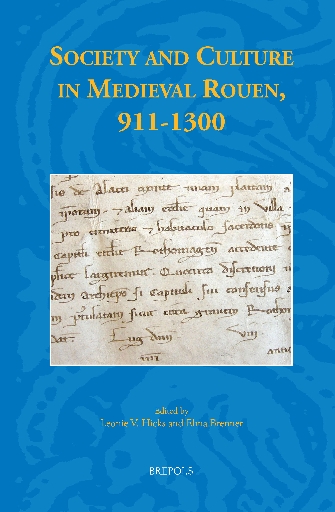
Society and Culture in Medieval Rouen, 911-1300
Rouen one of the leading cities of medieval Western Europe has long awaited detailed consideration in English by modern scholars. This book presents exciting new research on the society and culture of medieval Rouen by British and Continental historians. Divided into three sections addressing space and representation religious culture and social networks the volume is both wide-ranging and tightly focused. The key themes include Rouen’s relationship with its environs image and identity social and political relationships and Rouen’s status as the ‘capital’ of Normandy. The essays discuss topics ranging from urban development and charity the city’s aristocratic and ecclesiastical elites the Jewish community and the relationship of the Angevin kings with Rouen. Comparisons and contextualization as well as detailed maps make the book valuable not only to readers interested in Rouen and Normandy but also to those who wish to learn more about medieval cities culture and society.
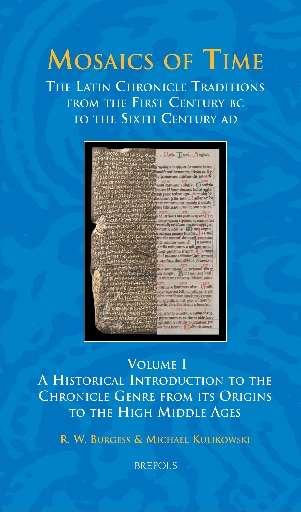
Mosaics of Time, The Latin Chronicle Traditions from the First Century BC to the Sixth Century AD
Volume I, A Historical Introduction to the Chronicle Genre from its Origins to the High Middle Ages
The multivolume series Mosaics of Time offers for the first time an in-depth analysis of the Roman Latin chronicle traditions from their beginnings in the first century BC to their end in the sixth century AD. For each chronicle it presents a comprehensive introduction edition translation and historical and historiographical commentary.
Chronicles seem to be everywhere in ancient and medieval history. Now for the first time R. W. Burgess and Michael Kulikowski present a diachronic study of chronicles annals and consularia from the twenty-fifth century BC to the twelfth century AD demonstrating the origins and interlinked traditions of the oldest and longest continuing genre of historical writing in the Western world. This introductory volume of Mosaics of Time provides both the detailed context for the study of the Latin chronicle traditions that occupies the remaining three volumes of this series as well as a general study of chronicles across three millennia from the ancient Egyptian Palermo Stone to the medieval European chronicle of Sigebert of Gembloux and beyond. The work is an essential companion to ancient and medieval history historiography and literary studies.
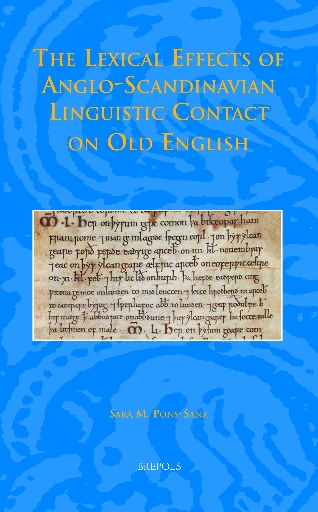
The Lexical Effects of Anglo-Scandinavian Linguistic Contact on Old English
Anglo-Saxon England experienced a process of multicultural assimilation similar to that of contemporary England. At the end of the ninth century speakers of Old Norse from present-day Denmark Norway and Sweden started to settle down in the so-called Danelaw amongst the Anglo-Saxon inhabitants and brought with them cultural traditions and linguistic elements that are still a very significant part of the English speaking world in the twenty-first century.
This book analyses the first Norse terms to be recorded in English. After revising the list of terms recorded in Old English texts which can be considered to have derived from Norse the author explores their dialectal and chronological distribution as well as the semantic and stylistic relationships which the Norse-derived terms established with their native equivalents (when they existed). This approach helps to clarify questions such as these: Why were the terms borrowed? At what point did the terms stop being identified as ‘foreign’? Why is a particular term used in a particular context? What can the terms tell us about the Anglo-Scandinavian sociolinguistic relations?
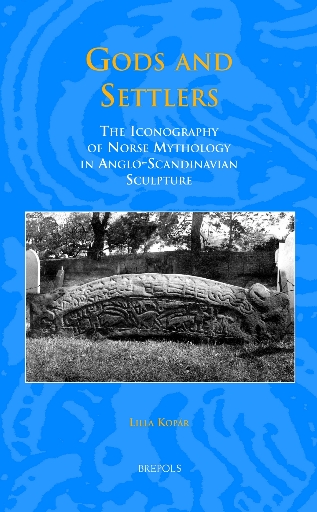
Gods and Settlers
The Iconography of Norse Mythology in Anglo-Scandinavian Sculpture
Stone sculpture constitutes the richest surviving corpus of Viking-Age artefacts from the British Isles. In northern England the geographical focus of the present study sculptural production in the Viking period increased dramatically compared to the previous centuries and stone monuments underwent changes in style and iconography as well as in function and patronage. Consequently stone sculpture provides rare visual evidence for the cultural changes that took place in the Scandinavian settlement areas and bears witness to intellectual and social processes that have otherwise left few traces in either the textual or material records.
Gods and Settlers is an interdisciplinary study that brings together iconography literature history and religious studies to investigate a unique subset of this sculptural corpus: stone monuments with mythological and heroic iconography of Scandinavian origins. These carvings are particularly interesting because of the ecclesiastical roots of stone sculpture as a mode of artistic expression in England and the undoubtedly Christian context of the majority of the surviving monuments. The first half of the book is a detailed survey of the relevant carvings from northern England and a wide range of textual and visual parallels together with an investigation of the sources and use of individual heroic and mythological characters and motifs. The second half focuses on the intellectual framework and social context of the artefacts and presents a new view of these sculptures as cultural documents of the conversion of the Scandinavian settlers of northern England.
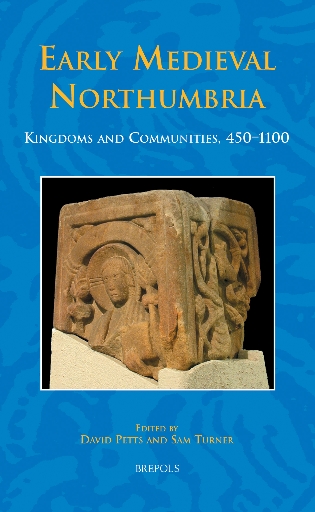
Early Medieval Northumbria
Kingdoms and Communities, AD 450–1100
Responding to renewed interest in the powerful early medieval kingdom of Northumbria this volume uses evidence drawn from archaeology documentary history place-names and artistic works to produce an unashamedly cross-disciplinary body of scholarship that addresses all aspects of Northumbria’s past. Northumbria at its peak stretched from the River Humber to the Scottish highlands and westwards to the Irish Sea producing saints kings and scholars with contacts across Europe from Scandinavia Ireland and Francia to Rome itself. This volume unites papers on all aspects of this major European power of its day from its origins in the fifth and sixth centuries from British and Anglo-Saxon chiefdoms through its ‘Golden Age’ as eighth-century Europe’s intellectual powerhouse to its role as a key element of an international Viking kingdom. Where traditional scholarship has centred on the ecclesiastical high culture of the age of Bede this work examines the kingdom’s social and economic life and its origins and decline as well. There is a stress on approaching established bodies of material from new perspectives and engaging with wider debates in the field including monumentality the development of kingships and the evolution of the early Church. Areas investigated include the kingdom’s political history its economy and society and its wider place within Europe. Its unique artistic legacy in the form of illuminated manuscripts and a rich sculptural tradition is also explored.